Artwork
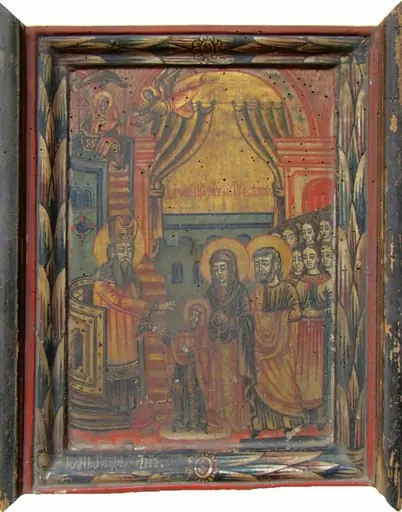
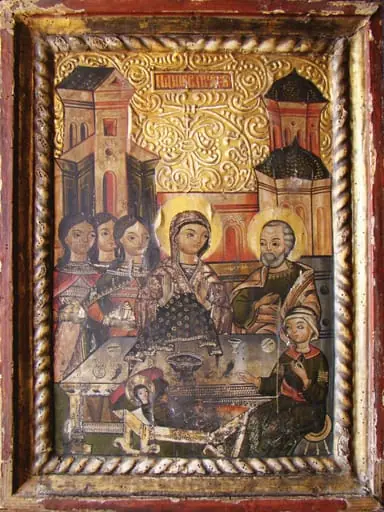
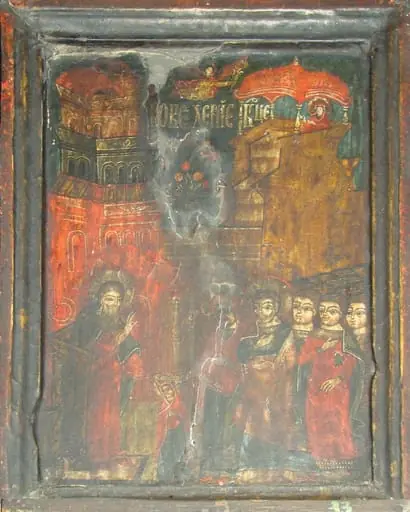
Întâmpinarea Domnului
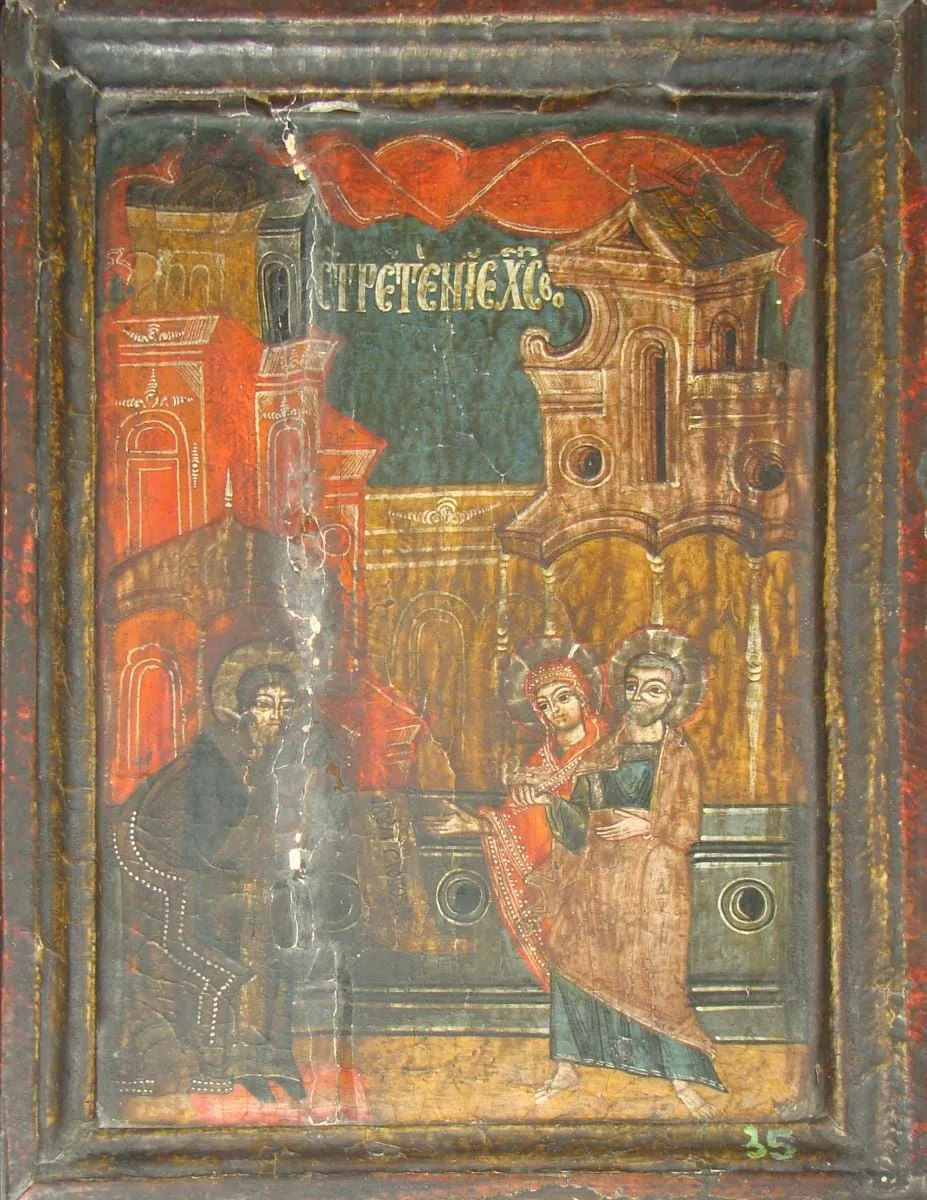
Întâmpinarea Domnului is an unspecified painting by the Byzantine icon painting artist Iacov Zugravul. It is held in the collection of the Alba Iulia Orthodox Archdiocese.
About this work
Overview
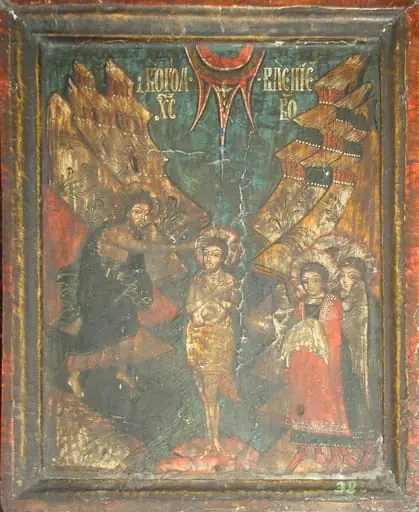
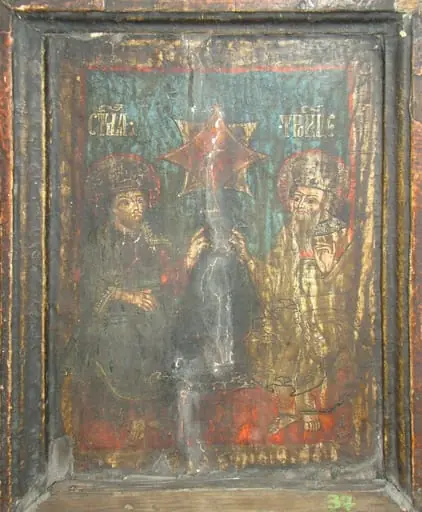
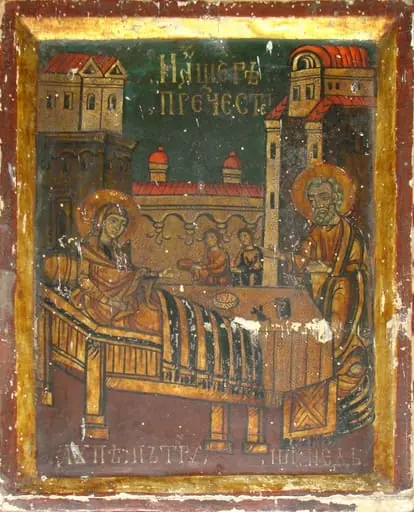
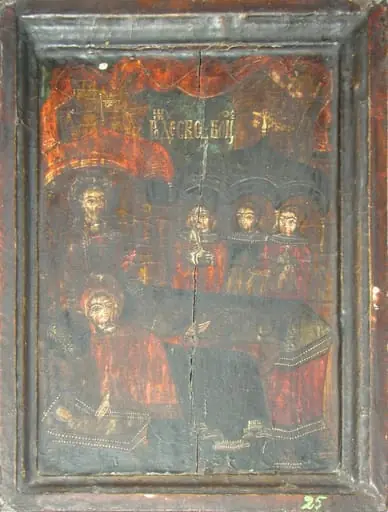
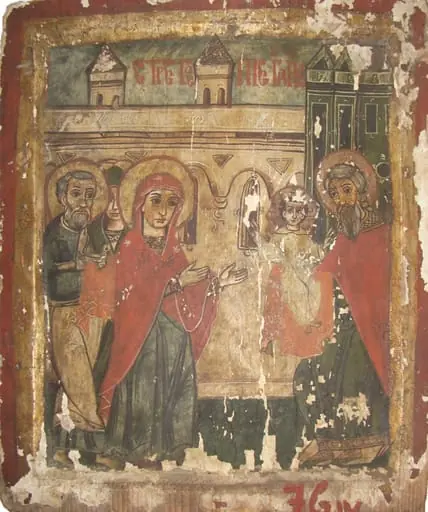
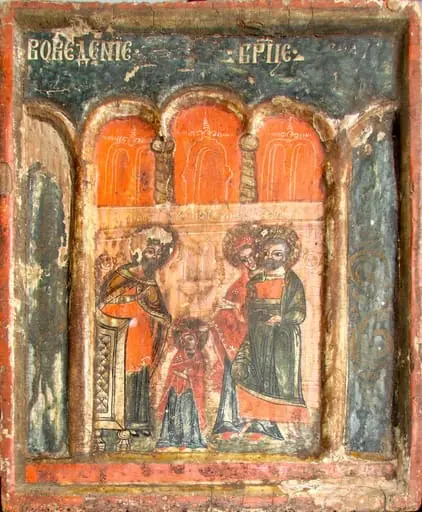
This religious painting, attributed to Iacov Zugravul, portrays the Encounter with the Lord, a moment from Christian liturgy.
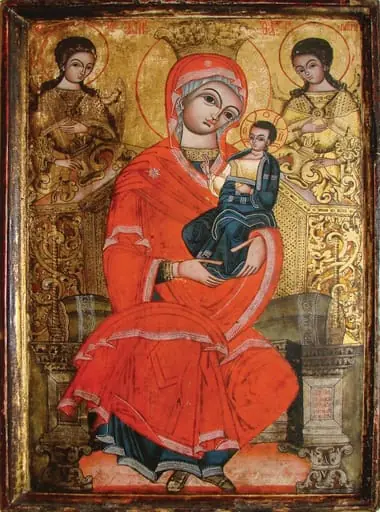
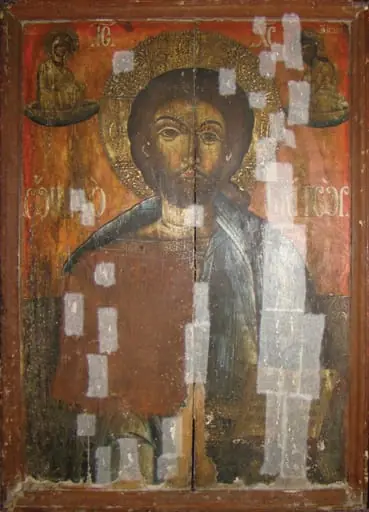
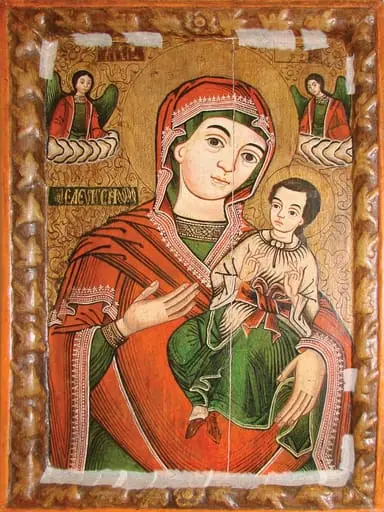
This religious painting, attributed to Iacov Zugravul, portrays the Encounter with the Lord, a moment from Christian liturgy. Three figures are arranged in a semicircle against a backdrop of arched architecture and a vivid red sky. The central figure holds a red cloth, signaling ritual significance. Bold outlines and saturated colors, especially red and gold, convey solemnity and sacred presence, aligning with traditional Eastern Orthodox iconographic conventions.
Subject & Meaning
The scene illustrates the liturgical moment of Christ’s entry into Jerusalem, known as Întâmpinarea Domnului in Romanian tradition. The two robed figures likely represent clergy or angels, while the central figure, draped in brown, may symbolize Christ or a procession leader. The red cloth suggests a ceremonial pall or veil, reinforcing the ritual’s gravity. The composition emphasizes reverence and divine encounter through spatial harmony and symbolic color.
Technique & Style
The work employs flat, stylized forms and strong contours typical of late medieval Romanian icon painting. Pigments are applied with high saturation, particularly in reds and golds, to denote holiness and celestial light. Background architecture is simplified, serving as a symbolic frame rather than a realistic setting. The lack of perspective and emphasis on pattern over volume reflect devotional priorities over naturalism.
History & Provenance
Attributed to Iacov Zugravul, a 17th-century Moldavian painter active in ecclesiastical workshops, the piece likely originated as part of a church interior or liturgical manuscript. Its survival suggests it was preserved within a monastic or parish setting in Moldavia. Documentation is sparse, but stylistic parallels with other works from the region support its dating and authorship.
Context
Created during a period of intensified religious expression in Moldavia under Ottoman suzerainty, the painting reflects a cultural effort to maintain Orthodox identity through visual tradition. Artists like Zugravul worked within established iconographic templates, adapting them locally. The use of red and gold aligns with Byzantine-derived aesthetics, emphasizing continuity with wider Eastern Christian practices.
Legacy
Though not widely known outside regional art history, the painting exemplifies the enduring influence of Romanian ecclesiastical painting in the early modern period. It contributes to understanding how local workshops sustained liturgical art under political constraints. Its preservation offers insight into the visual language of faith in Moldavian communities, bridging Byzantine heritage and regional expression.
Artist & collection
Artist
Iacov Zugravul’s small surviving body of work shows biblical scenes painted on wood or drawn in ink, made in the mid-1700s.