Artwork
Botezul lui Iisus
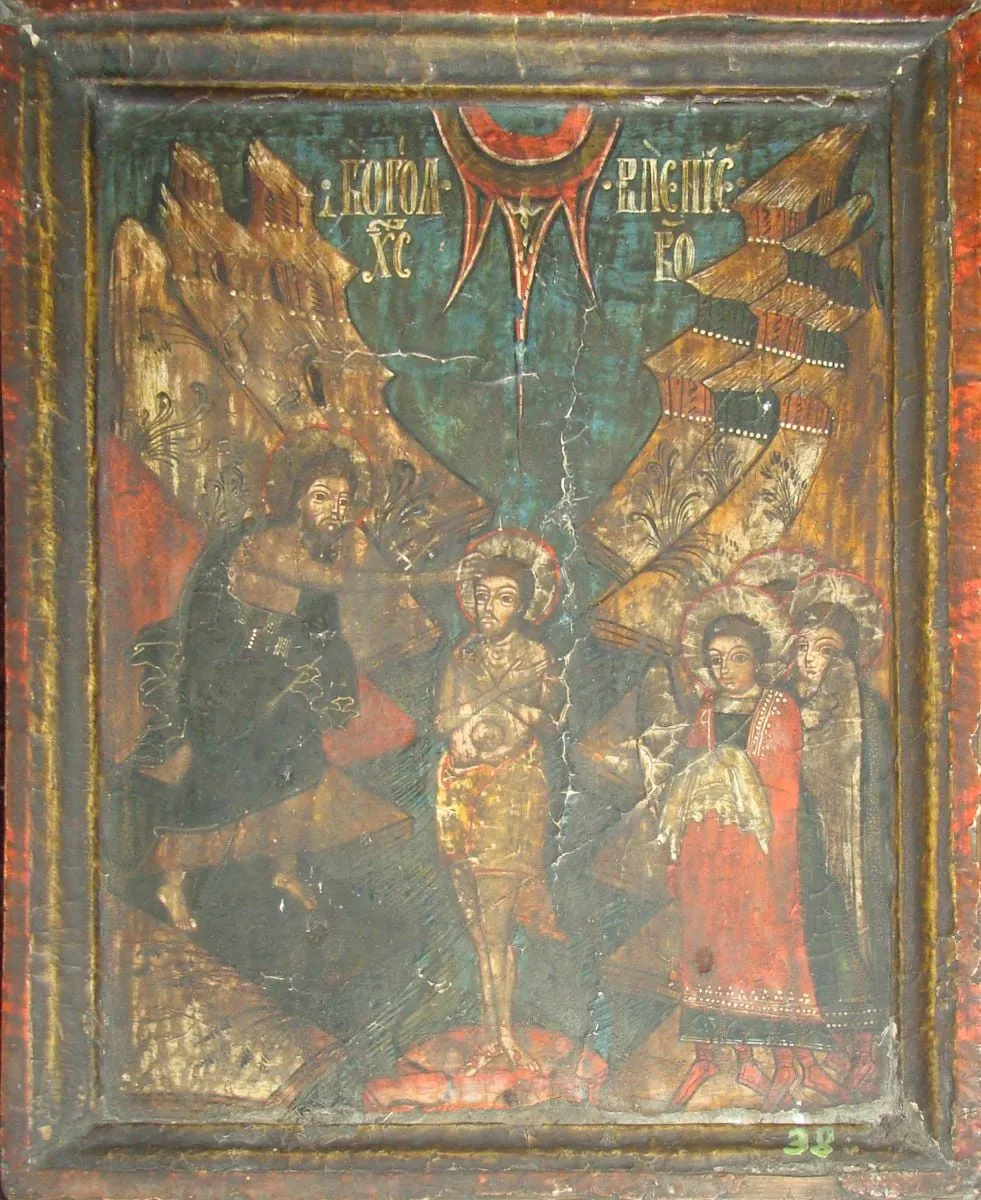
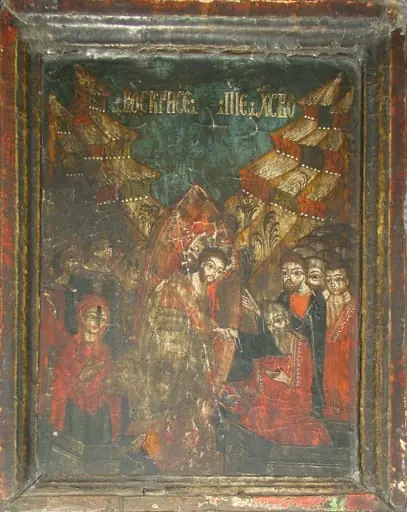
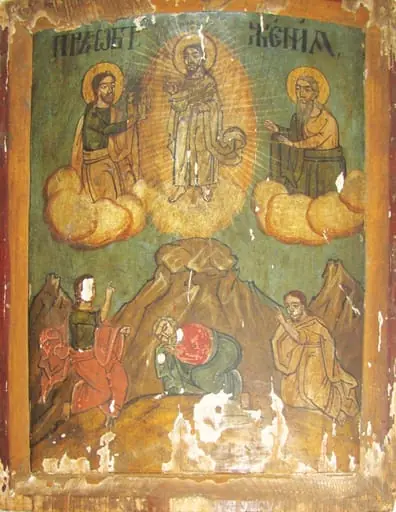
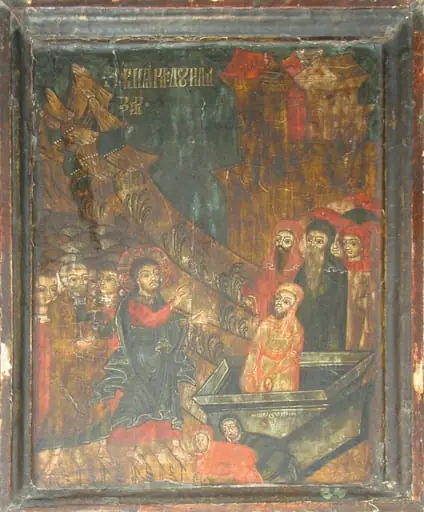
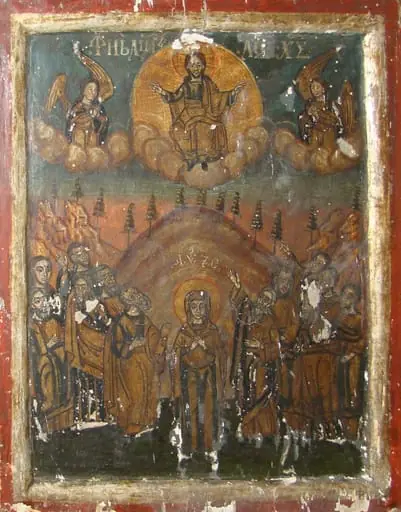
Botezul lui Iisus is an unspecified painting by the Byzantine icon painting artist Iacov Zugravul. It is held in the collection of the Alba Iulia Orthodox Archdiocese.
About this work
Overview
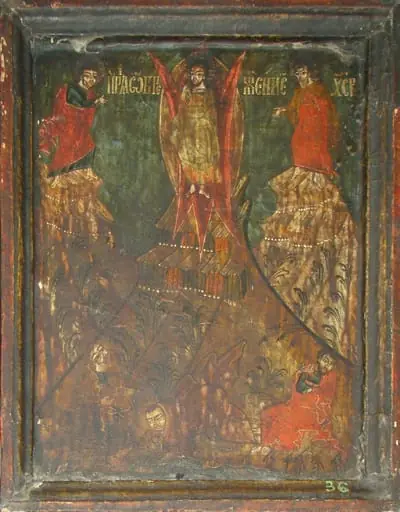
Botezul lui Iisus is a religious panel painting depicting the baptism of Jesus, held in the collection of the Museum of Ethnography.
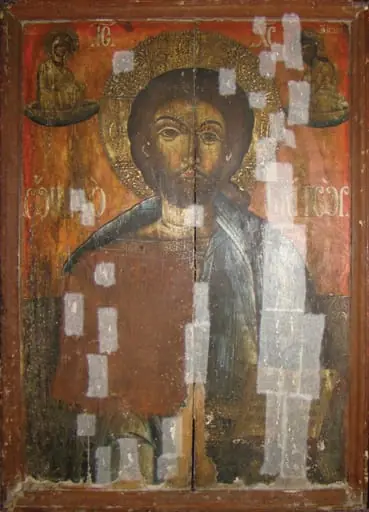
Botezul lui Iisus is a religious panel painting depicting the baptism of Jesus, held in the collection of the Museum of Ethnography. The work exhibits signs of age, including surface cracking and pigment fading, yet retains its spiritual presence. Its worn frame and weathered surface suggest long-term veneration and use in a devotional context, likely within a local ecclesiastical setting before entering institutional care.
Subject & Meaning
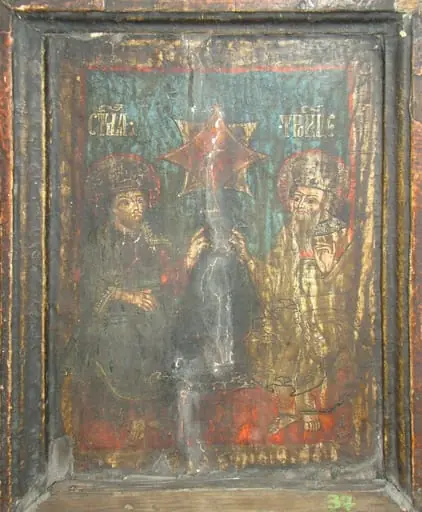
The central figure, Jesus, is identified by his halo and crossed hands, positioned as the focal point of the scene. Surrounding figures, also haloed, likely represent John the Baptist and other holy witnesses. The composition follows traditional iconographic models of baptism, emphasizing divine presence and sacred witness. The restrained palette and hierarchical arrangement reinforce the theological gravity of the moment.
Technique & Style
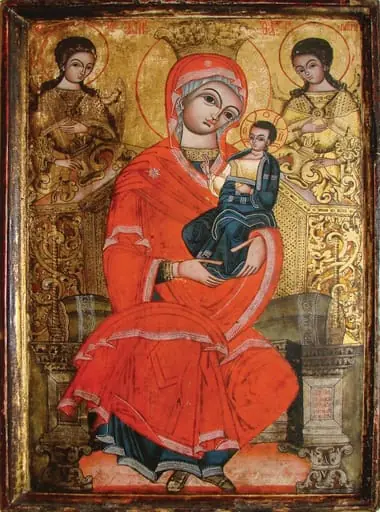
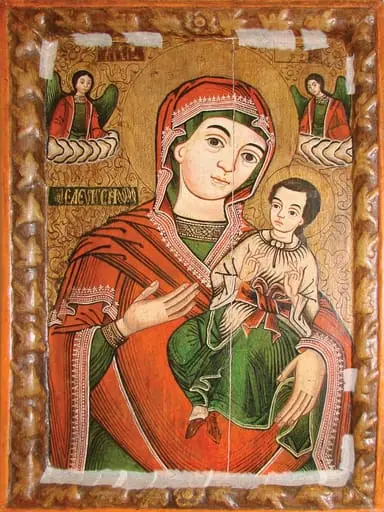
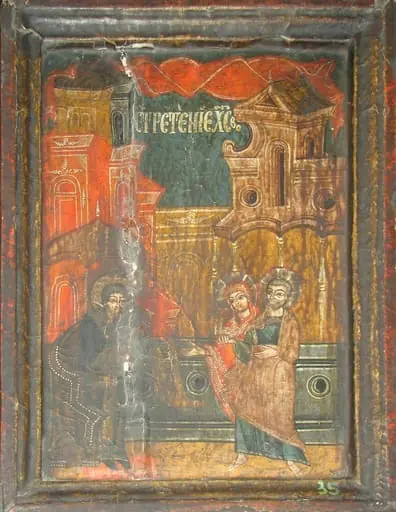
The painting employs a flat, stylized approach typical of late medieval Romanian iconography, with limited modeling and symbolic use of color. Blue and brown dominate the background, while red accents highlight key elements. The surface shows signs of aging, but the original technique reflects a deliberate, devotional hand, possibly influenced by Byzantine traditions and local folk aesthetics.
History & Provenance
The painting entered the Museum of Ethnography’s collection as part of a broader effort to preserve religious artifacts from rural Romanian communities. Its condition suggests it was once displayed in a church or private chapel, subjected to environmental wear and ritual handling. Its migration to a museum reflects 20th-century cultural preservation initiatives aimed at safeguarding vernacular religious art.
Context
Created during a period when Orthodox Christian communities in Romania relied on local painters for liturgical imagery, the work reflects a blend of Byzantine conventions and regional interpretation. Artists like Iacov Zugravul, known for chiaroscuro experimentation, may have influenced such works, though this piece remains more aligned with traditional iconography than naturalistic innovation.
Legacy
Botezul lui Iisus endures as a testament to the persistence of religious imagery in Romanian folk culture. Though not attributed to a major master, its survival and public display underscore the value placed on devotional art beyond elite artistic circles. It continues to serve as a reference for studies on regional iconography and the transmission of sacred visual language in pre-modern Eastern Europe.
Artist & collection
Artist
Iacov Zugravul’s small surviving body of work shows biblical scenes painted on wood or drawn in ink, made in the mid-1700s.