Artwork
Schimbarea la față
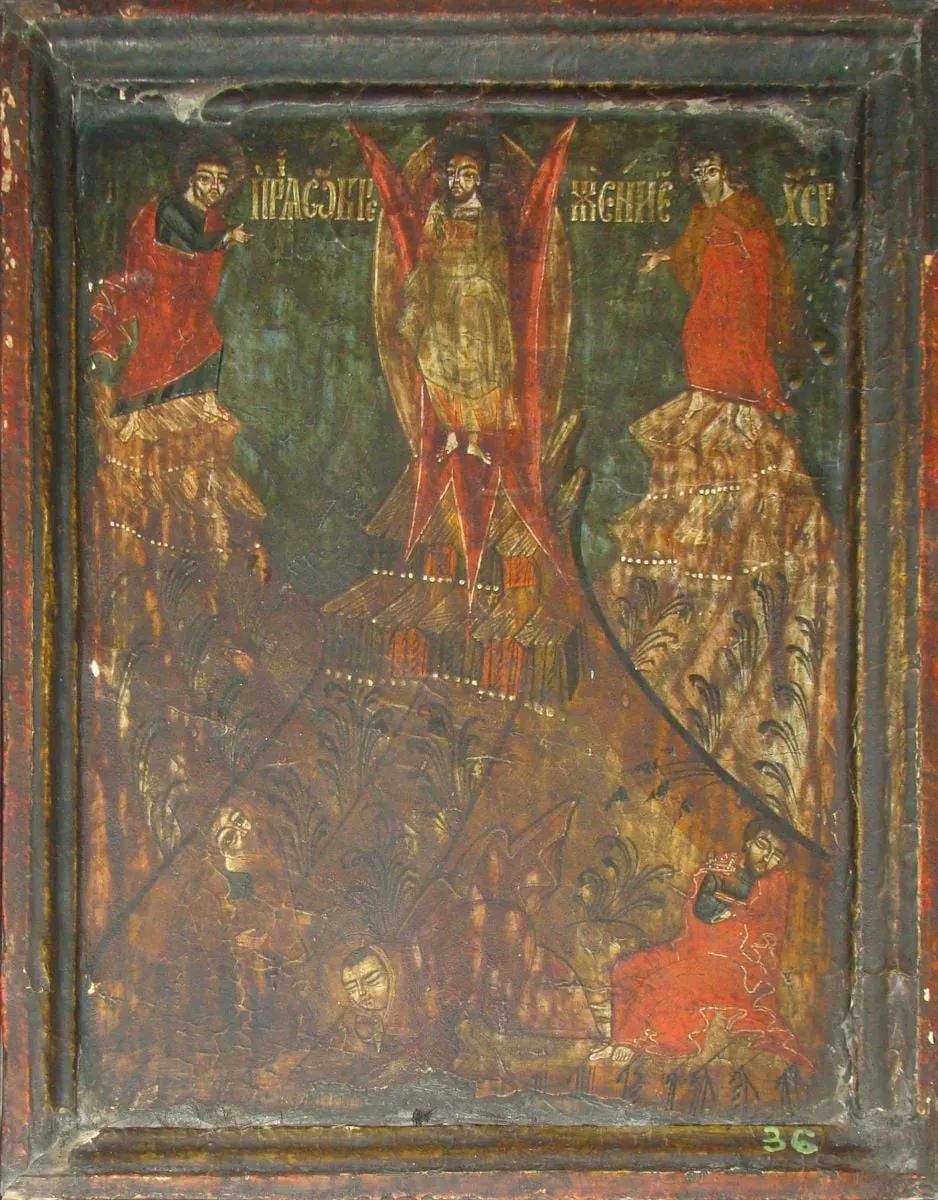
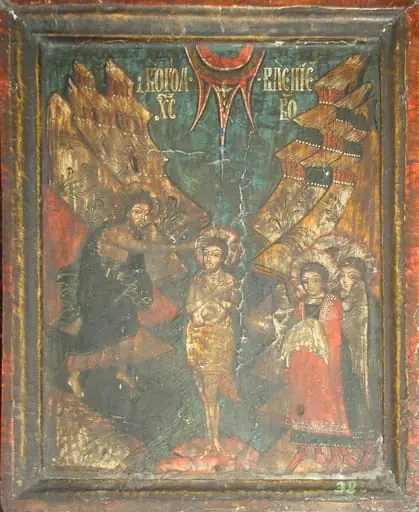
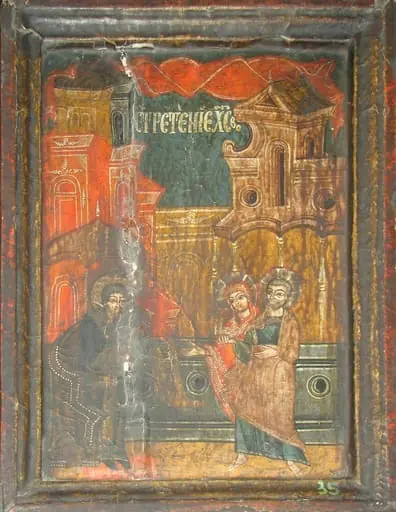
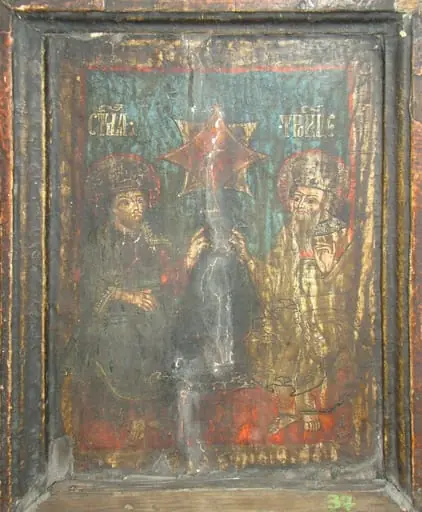
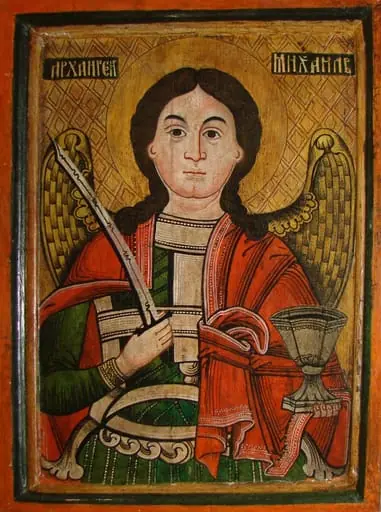
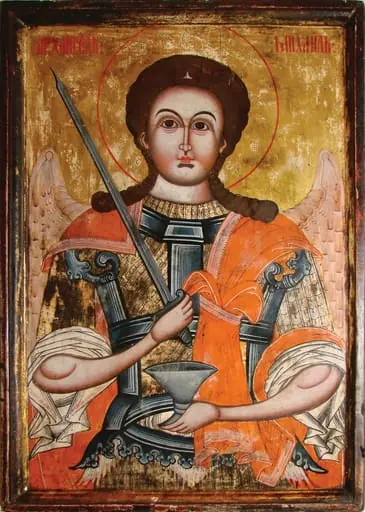
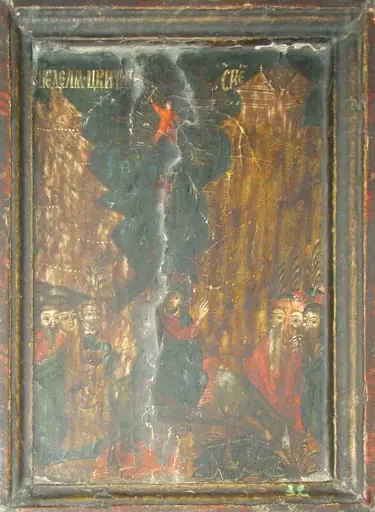
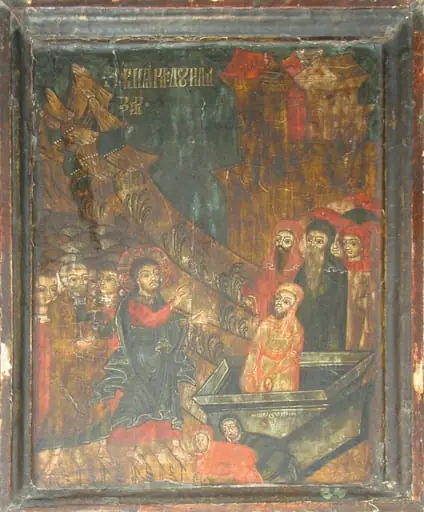
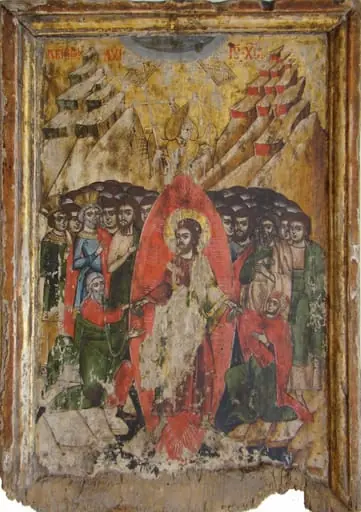
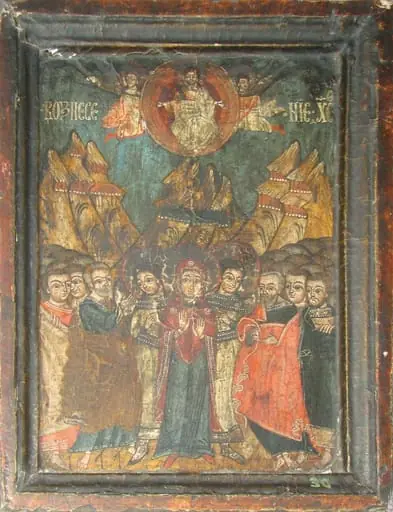
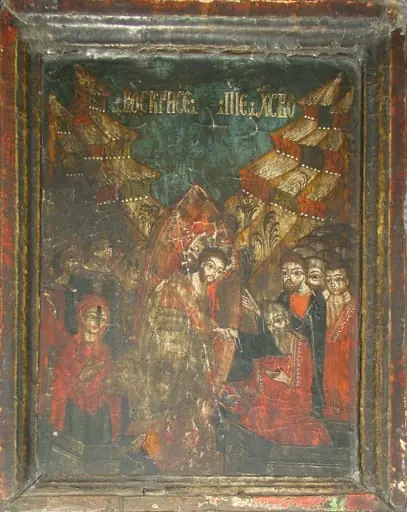
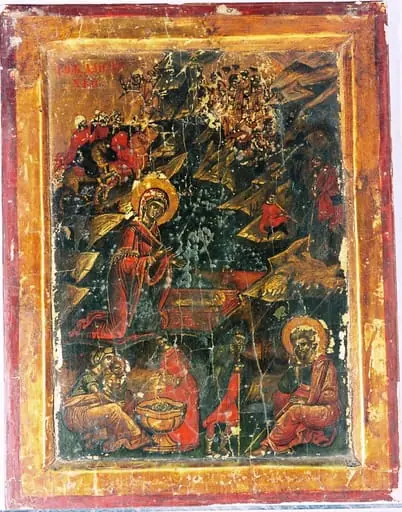
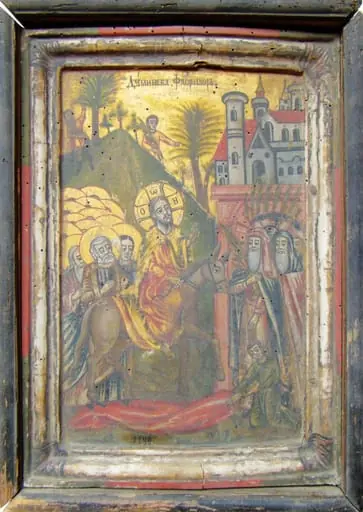
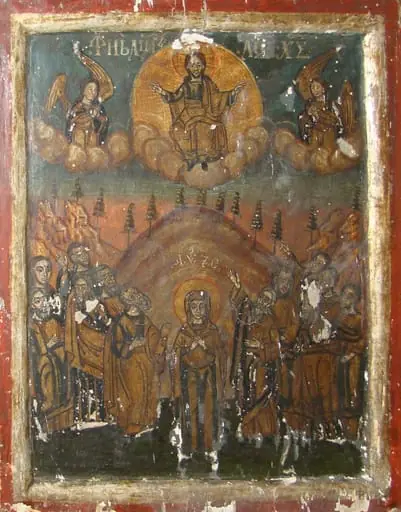
Schimbarea la față is an unspecified painting by the Byzantine icon painting artist Iacov Zugravul. It is held in the collection of the Alba Iulia Orthodox Archdiocese. This image depicts a celestial scene with three figures floating above a terrestrial landscape.
About this work
Overview
The use of gold leaf and vivid pigments signals the sacred nature of the moment, typical of devotional imagery from earlier periods.
This image depicts a celestial scene with three figures floating above a terrestrial landscape. The central figure, adorned in gold and wings, holds a white cloth, while two smaller figures gesture toward them. Below, a group of people stands in a natural setting with trees and architecture. The use of gold leaf and vivid pigments signals the sacred nature of the moment, typical of devotional imagery from earlier periods.
Subject & Meaning
The central figure, rendered with a blurred face and divine attributes, likely represents a holy being such as Christ or an archangel. The two flanking figures, in red robes and pointing gestures, may symbolize prophets or angels directing attention to the divine presence. The earthly group beneath suggests witnesses to a revelation, reinforcing themes of heavenly intervention and human reverence.
Technique & Style
Gold leaf is applied to the central figure’s robe and halo, enhancing luminosity and spiritual weight. Bright, non-naturalistic colors distinguish the celestial realm from the muted tones of the landscape below. The blurred facial features follow a traditional convention to convey divine mystery, avoiding human detail to emphasize transcendence over individuality.
History & Provenance
The work’s style and materials suggest it originated in a religious context, possibly as part of an altarpiece or devotional panel. Its composition aligns with medieval or early Renaissance traditions, where sacred narratives were rendered for contemplation rather than naturalism. Exact origins remain undocumented, but its iconography reflects widespread liturgical imagery of the period.
Context
In religious art of the time, celestial figures were often shown above earthly scenes to illustrate divine intervention in human affairs. The placement of witnesses below reinforced the idea of revelation witnessed by the faithful. Such images served both instructional and devotional purposes, guiding viewers toward spiritual reflection through symbolic arrangement and material richness.
Legacy
This image exemplifies a visual language used for centuries to convey sacred presence without literal representation. Its reliance on symbolism—gold, gesture, and blurred form—became a standard in religious painting, influencing later works even as naturalism emerged. The composition continues to inform how divinity is visually distinguished from the mundane in Western art traditions.
Artist & collection
Artist
Iacov Zugravul’s small surviving body of work shows biblical scenes painted on wood or drawn in ink, made in the mid-1700s.