Artwork
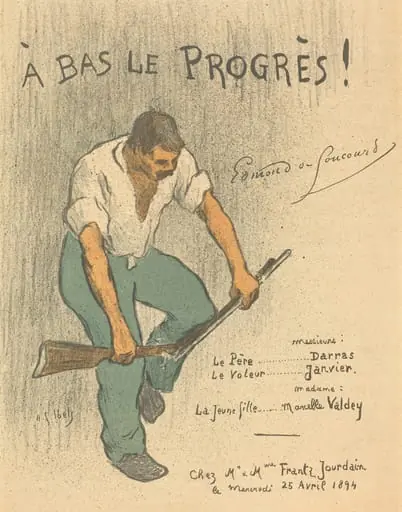
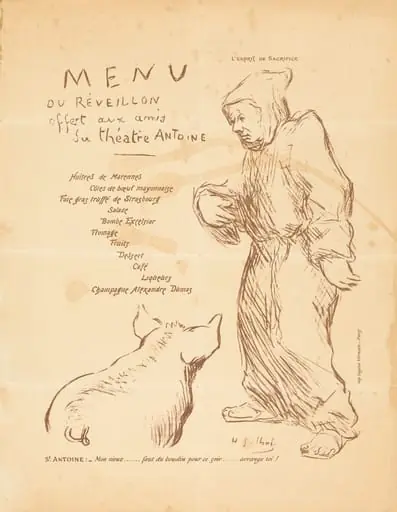
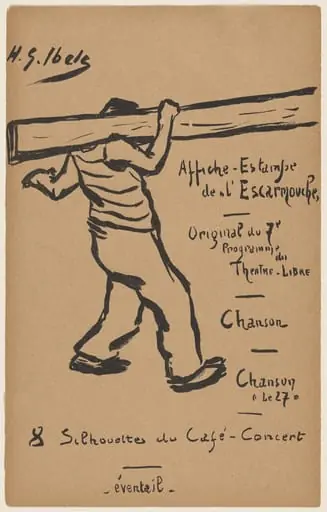
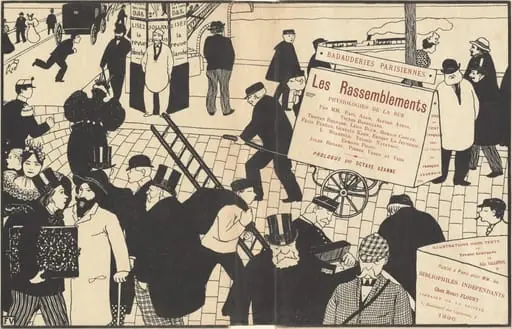
A Bas Le Progrès!; Mademoiselle Julie; Le Ménage Brésile
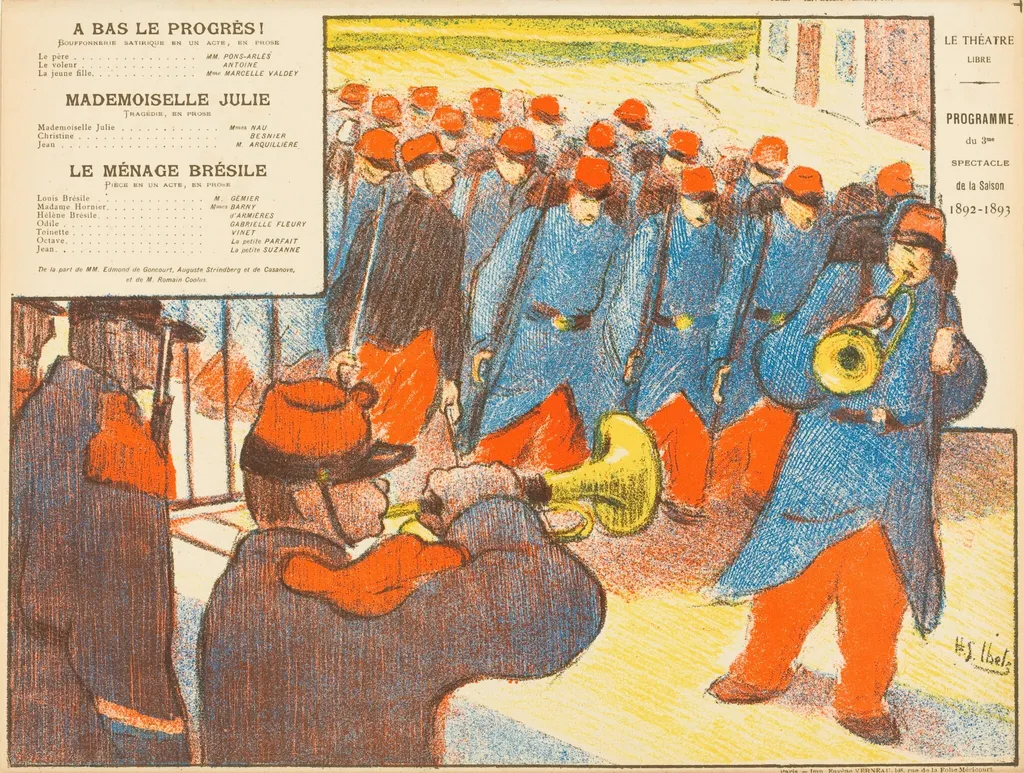
A Bas Le Progrès!; Mademoiselle Julie; Le Ménage Brésile is an ink print by the Impressionist artist Henri-Gabriel Ibels. It dates from 1893 and is held in the collection of the National Gallery of Art.
About this work
Overview
The print’s energetic layout and saturated hues reflect the artist’s engagement with contemporary Parisian street life and popular entertainment.
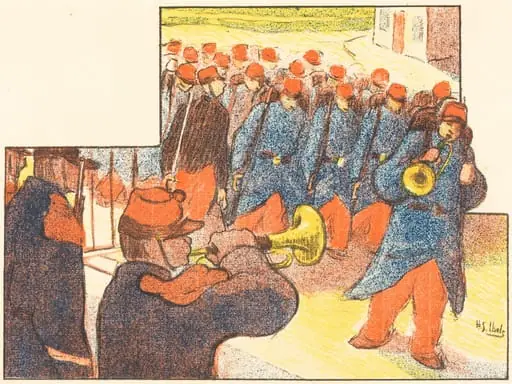
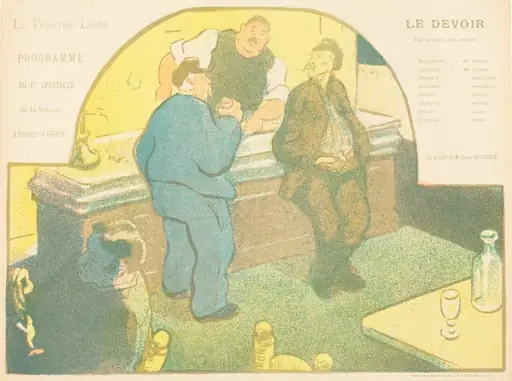
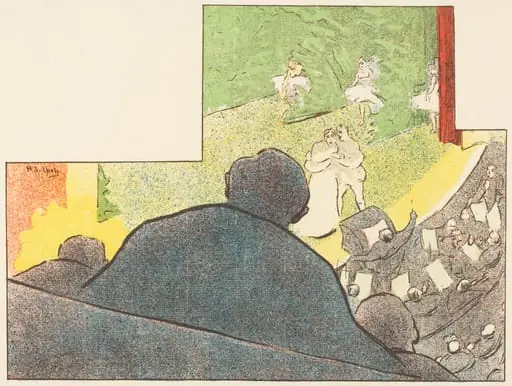
Created in 1893, this four-color lithograph by Henri-Gabriel Ibels captures a vibrant, noisy public scene. The composition centers on figures in blue uniforms and red headgear, their movements suggesting a ceremonial or festive procession. A prominent yellow horn dominates the foreground, drawing attention to sound as a visual theme. The print’s energetic layout and saturated hues reflect the artist’s engagement with contemporary Parisian street life and popular entertainment.
Subject & Meaning
The figures appear to belong to a civilian musical ensemble, possibly linked to a neighborhood festival or patriotic celebration. The presence of horns and synchronized attire hints at organized public performance, common in late 19th-century France. The title fragments suggest irony or satire, possibly commenting on national pride or the performative nature of civic rituals. Ibels avoids overt narrative, instead inviting interpretation through visual rhythm and color contrast.
Technique & Style
Ibels employed lithography to achieve bold, flat planes of color with sharp outlines, characteristic of the poster art movement. The limited palette—red, blue, yellow, and black—enhances visual impact while maintaining graphic clarity. Textural variation is achieved through ink density and line weight, not shading, giving the image a tactile immediacy. The composition’s diagonal energy and cropped figures reflect influences from Japanese prints and modern advertising.
History & Provenance
Produced during Ibels’s active years in Parisian avant-garde circles, this print likely originated as a poster or illustrated broadside. It was not commissioned for a specific event but rather emerged from his interest in documenting urban spectacle. The work entered public collections in the 20th century, preserved as an example of fin-de-siècle graphic design. No documented private ownership prior to institutional acquisition is known.
Context
In the 1890s, Paris saw a surge in public festivals, military parades, and brass band performances, often tied to republican ideals. Ibels, associated with the Nabis and satirical journals, used lithography to critique and celebrate these rituals. His work aligned with contemporaries like Toulouse-Lautrec in capturing ephemeral moments of modern life, blending observation with stylized form to reflect cultural tensions beneath festive surfaces.
Legacy
This lithograph remains a representative example of French graphic art from the 1890s, illustrating how lithography bridged fine art and mass communication. Ibels’s use of color and movement influenced later poster designers and illustrators. Though not widely exhibited today, it endures in museum collections as a quiet testament to the visual language of everyday spectacle in late 19th-century France.
Artist & collection
Artist
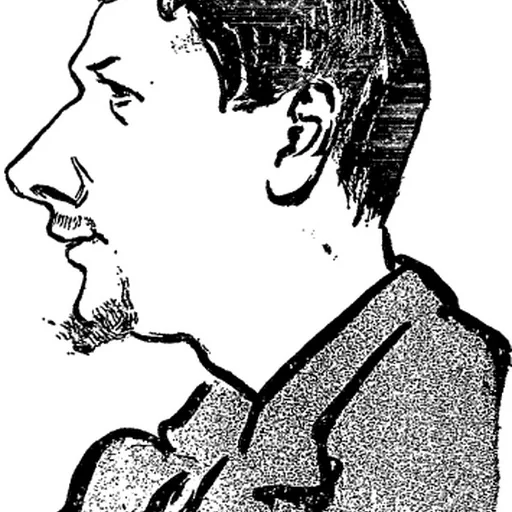
Henri-Gabriel Ibels (1867–1936) was a French artist, born in 10ᵗʰ arrondissement of Paris.

![Men Towing a Barge [Study for Boubourouche], by Henri-Gabriel Ibels](https://artifactworldgallery.com/img/henri-gabriel-ibels--men-towing-a-barge-study-for-boubourouche--2afc843c43c02cba-w320.webp)