Artwork
A Paris nous ne pouvions... aller a Versailles...
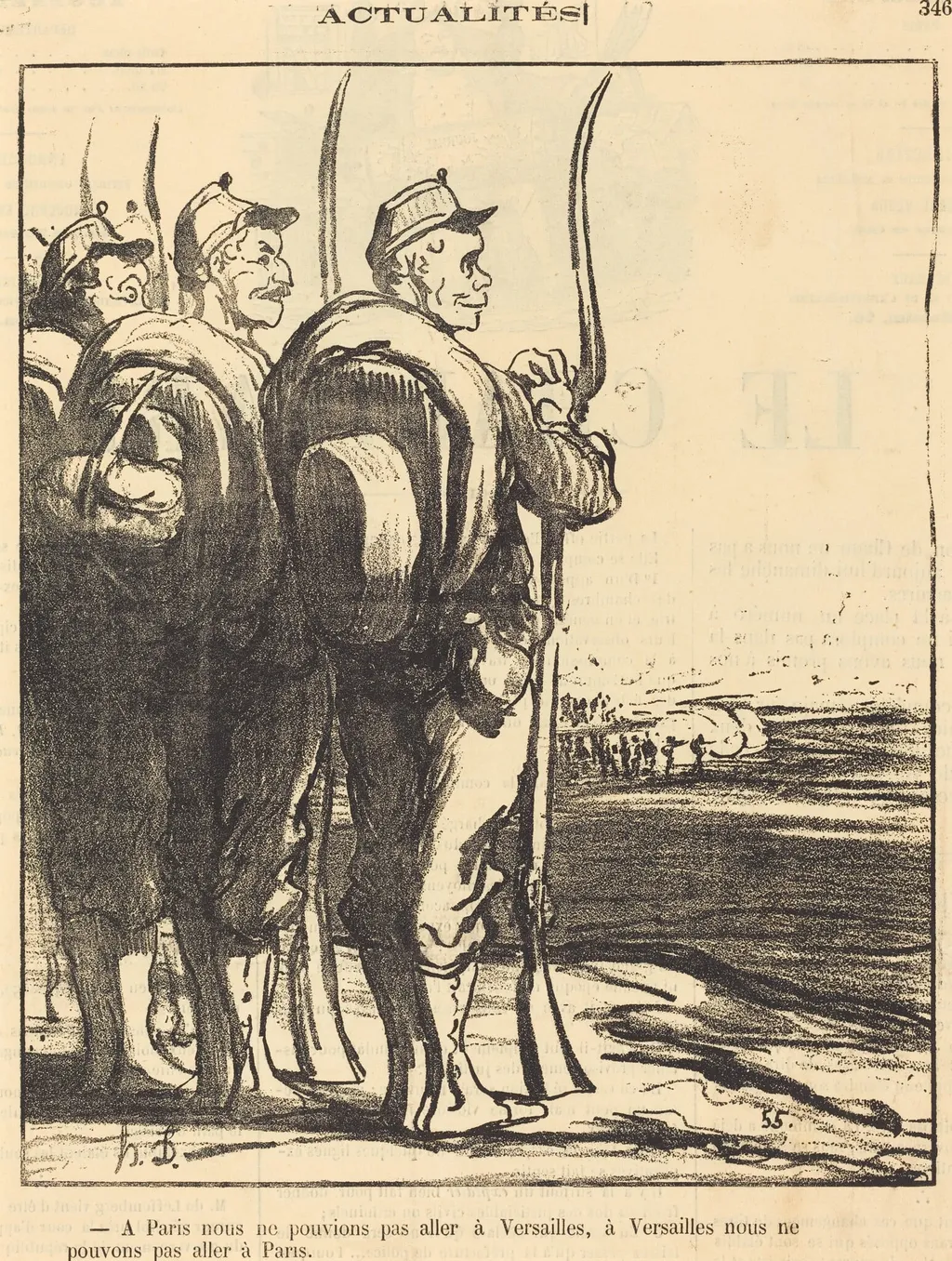
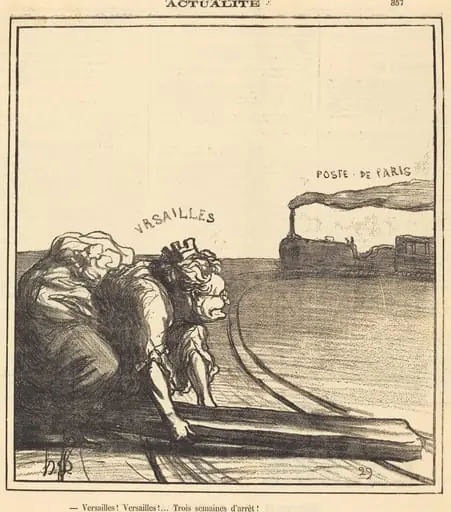
A Paris nous ne pouvions... aller a Versailles... is a print by the Impressionist artist Honoré Daumier. It dates from 1871 and is held in the collection of the National Gallery of Art. A Paris nous ne pouvions.
About this work
Overview
A Paris nous ne pouvions... aller à Versailles... is a 1871 print by Honoré Daumier, created using gillotype on newsprint. The work embodies Daumier's penchant for social and political commentary, characteristic of his career spanning satirical contributions to French publications.
Subject & Meaning
The print depicts a straightforward scene of individuals unable to visit Versailles, symbolizing the political tensions and restrictions of the time. It reflects Daumier's republican democratic stance amidst France's late 19th-century upheavals.
Technique & Style
Utilizing the gillotype process on newsprint, Daumier leveraged a technique facilitating mass production. This choice made the artwork broadly accessible, aligning with the artist's practice of creating socially engaged art for a wide audience through publications like *La Caricature* and *Le Charivari*.
History & Provenance
Created in 1871, the work falls within the tumultuous period following the fall of the Second French Empire. Daumier's body of work often targeted the monarchy, aristocracy, and clergy, situating this piece within his broader critique of French societal hierarchies.
Context
Emerging after the Revolution of 1830 and the downfall of the Second Empire in 1870, the print contextualizes the political and social unrest in France. Daumier's use of accessible media like newsprint reflects his goal of reaching a broad, potentially working-class audience.
Legacy
While the image itself is simple, the print's significance lies in its mass-producible technique, democratizing access to commentary on contemporary politics. It exemplifies Daumier's influence in making political art accessible to the general public.
Artist & collection

Artist
Honoré-Victorin Daumier was a French painter, sculptor, and printmaker, whose many works offer commentary on the social and political life in France, from the Revolution of 1830 to the fall of the Second French Empire in 1870.









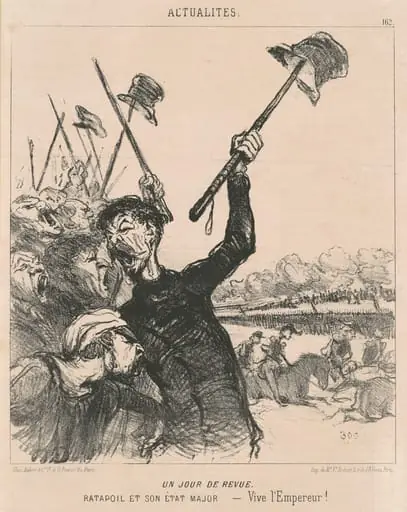 Un jour de revue
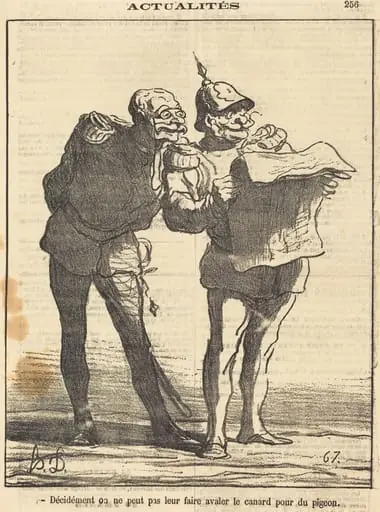 Décidément on ne peut pas...
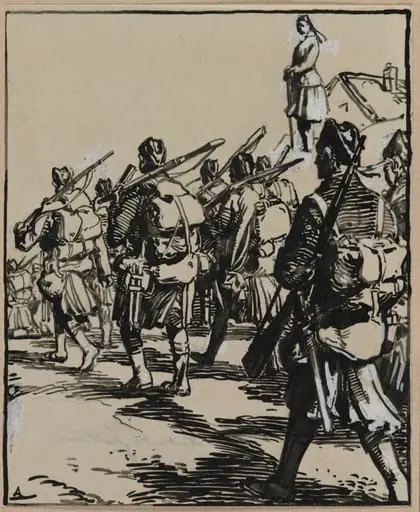 Bataille des frontières: groupe des soldats britanniques
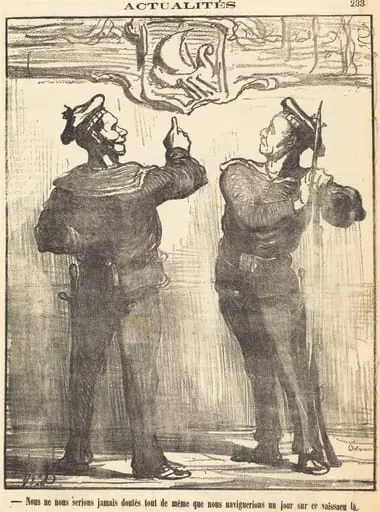 Nous ne nous serions jamais douté tout de même...
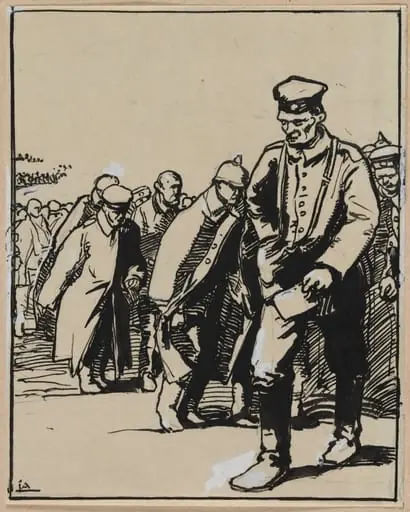 Marche d'un groupe de prisonniers allemands
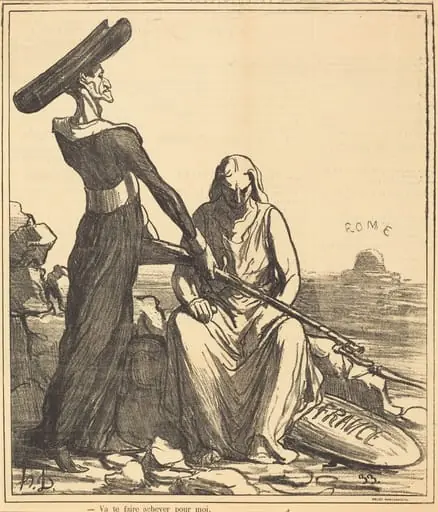 Va te faire achever pour moi
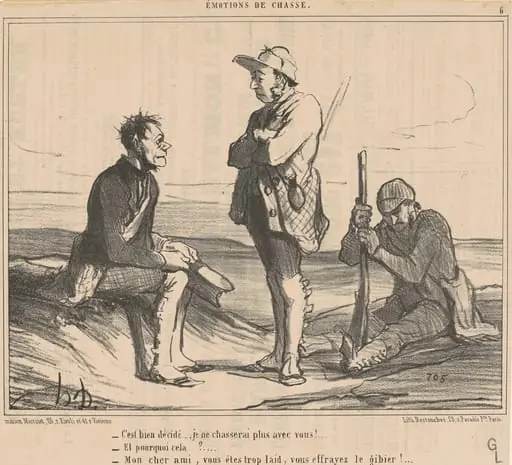 C'est bien décidé ... Je ne chasserai plus avec vous! ...
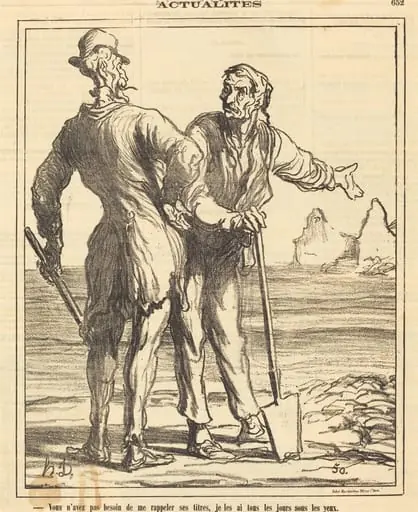 Vous n'avez pas besoin de me rappeler ses titres...
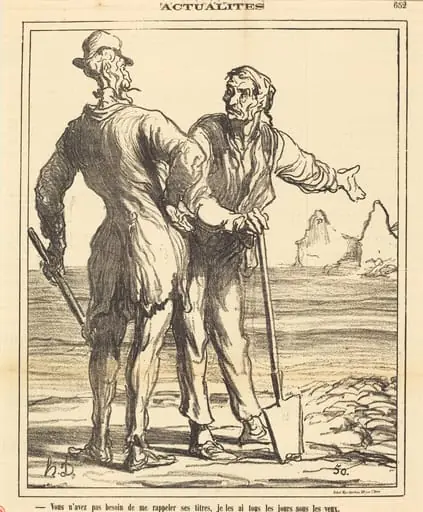 Vous n'avez pas besoin de me rappeler ses titres...
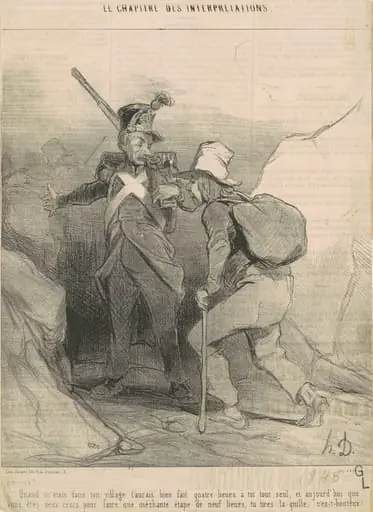 Quand tu étais dans ton village t'aurais ...
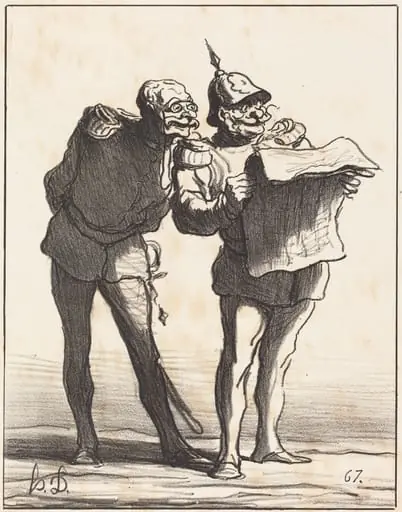 Décidément on ne peut pas...
 Versailles!... Trois semaines d'arrêt!