Artwork
Portret de tânără
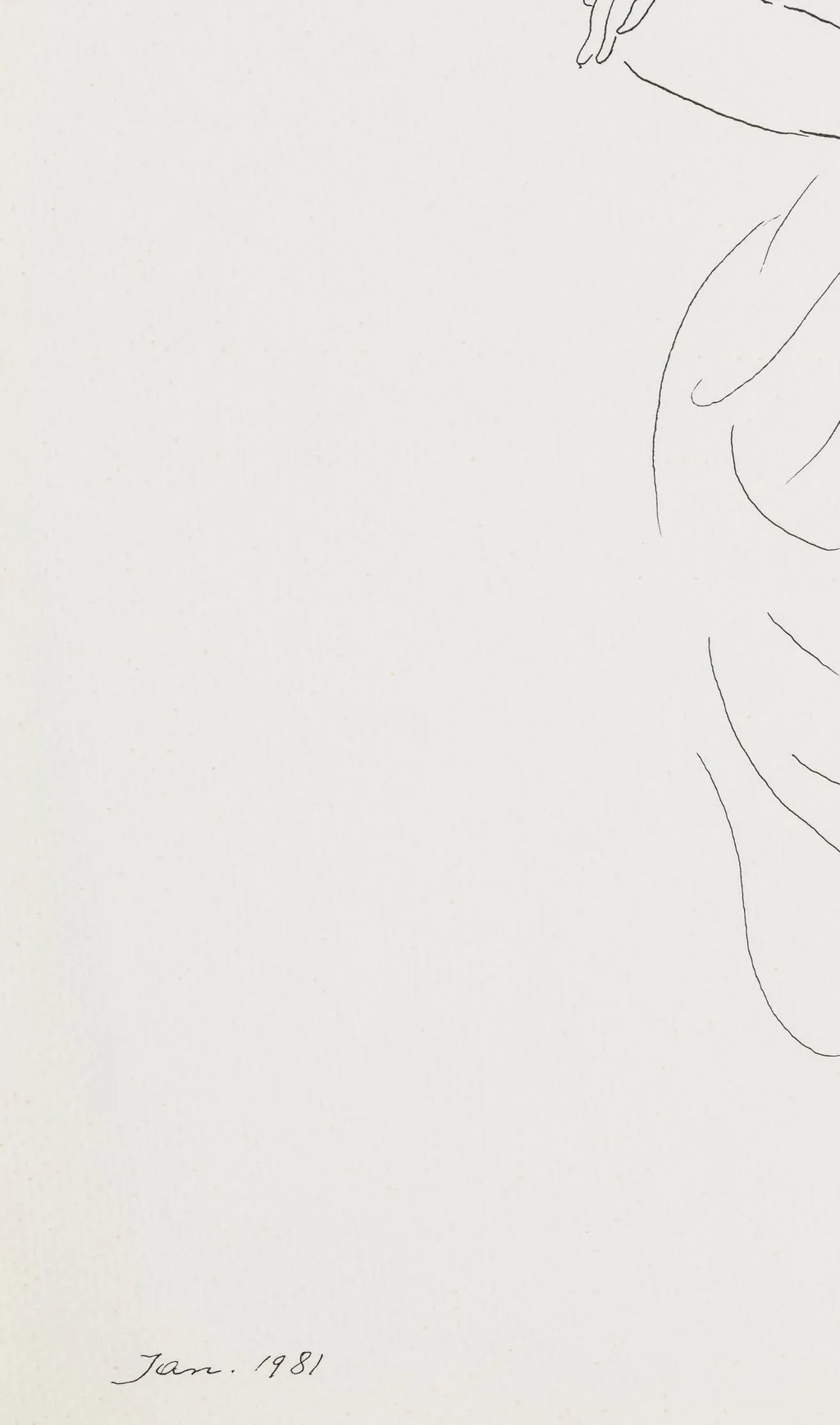
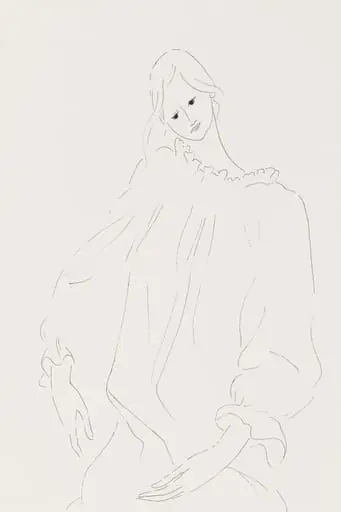
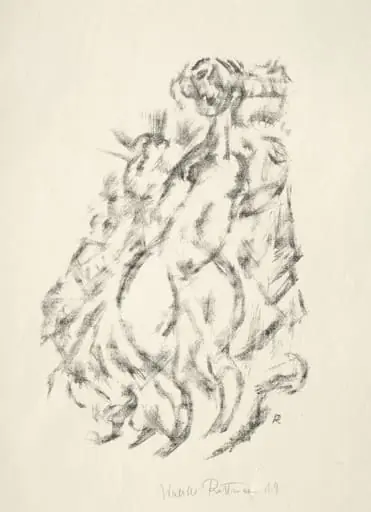
Portret de tânără is a drawing by Idel Ianchelevici. It dates from 1981 and is held in the collection of the National Museum of Art of Romania.
About this work
The paper is plain, and the lines are light, almost like a first try at capturing someone’s pose.
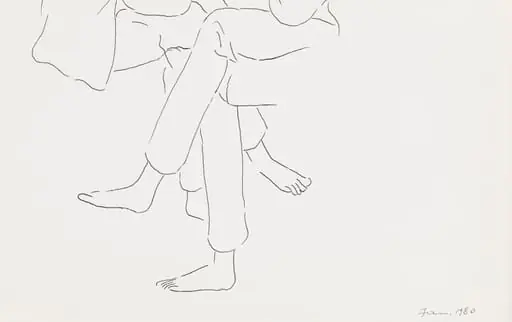
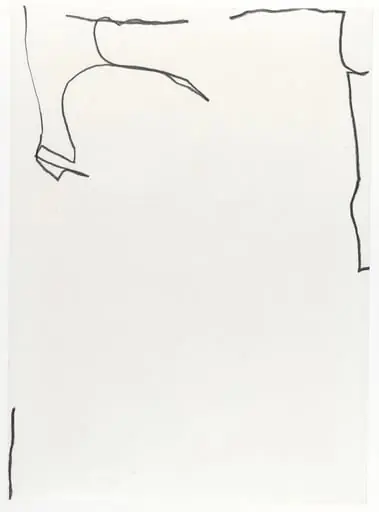
This sketch shows just a few loose, quick lines—a hand, a shoulder, and a hint of a face. The drawing is unfinished, with barely any detail beyond simple shapes. The paper is plain, and the lines are light, almost like a first try at capturing someone’s pose.
The date *Jan. 1981* is scrawled in the corner, meaning this was made over 40 years ago. It’s not polished, but that might be the point—it feels like a moment frozen in time.
If you like this style, check out cross-hatching next.
Overview
Created in January 1981, this drawing by Idel Ianchelevici is a modest, unpolished study of a young woman. Executed in light pencil on plain paper, it captures only fragments of the figure—a shoulder, a hand, and the faint suggestion of a face. The work lacks refinement, appearing as a spontaneous notation rather than a finished portrait. Its brevity and simplicity suggest an immediate, private observation rather than a formal commission.
Subject & Meaning
The subject is a young woman, rendered not as an idealized figure but as a fleeting presence. The absence of detail invites interpretation: is she a model, a passerby, or someone known to the artist? The sketch’s incompleteness emphasizes transience, as if the artist paused mid-thought. It conveys presence without narrative, focusing on the quiet dignity of an unposed moment rather than a staged identity.
Technique & Style
Ianchelevici employs minimal, tentative lines—light, loose, and unrehearsed—to suggest form. There is no shading, no cross-hatching, no attempt at texture or depth. The hand appears as a few curved strokes; the face, a contour barely outlined. The technique prioritizes immediacy over precision, reflecting a direct, almost instinctive response to the subject. The paper’s plainness reinforces the work’s unadorned character.
History & Provenance
The drawing bears a dated inscription—'Jan. 1981'—placing it firmly in the artist’s later period. Its survival suggests it was retained not as a failed attempt but as a meaningful record. No public exhibition history or documented ownership is known, indicating it likely remained in private hands. Its modest scale and unfinished state imply it was never intended for public display.
Context
Made during the final years of communist Romania, the work stands apart from state-sanctioned realism. While official art emphasized grandeur and clarity, this sketch embraces ambiguity and restraint. Its quietness may reflect the artist’s personal resistance to ideological pressure, or simply his preference for intimate, unmediated observation over public performance.
Legacy
This drawing exemplifies Ianchelevici’s interest in the ephemeral and the unpolished. It contributes to a broader understanding of his practice beyond monumental sculptures, revealing a sensitivity to fleeting gestures and private moments. Though not widely exhibited, it remains a quiet testament to his ability to convey humanity through minimal means.
Artist & collection
Artist
Idel Ianchelevici was a Romanian and Belgian sculptor and draughtsman born in present day Moldova.