Artwork
Untitled
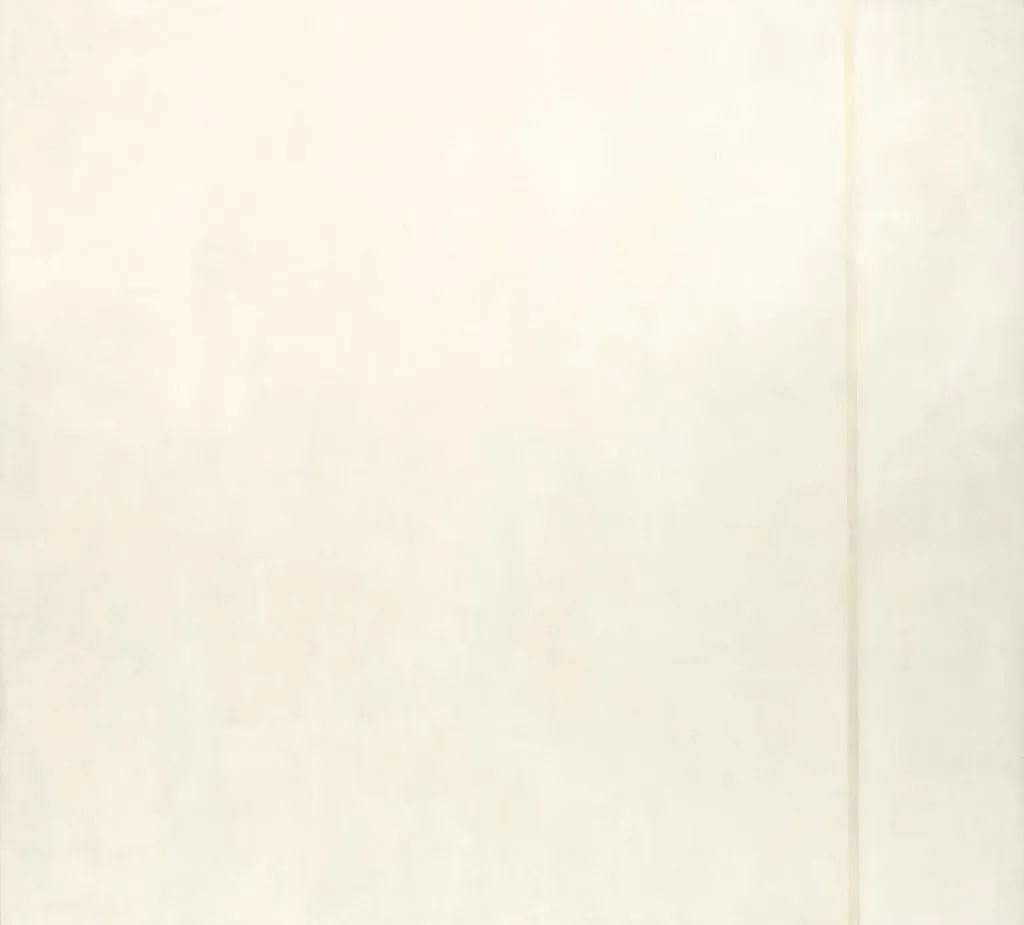
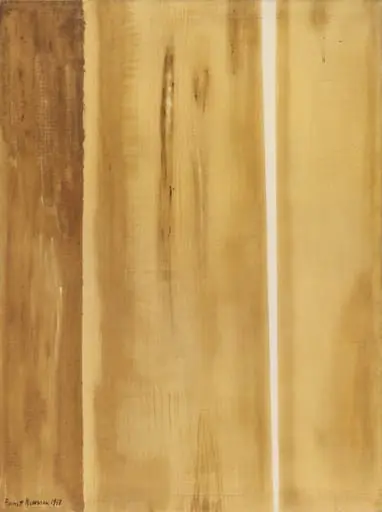
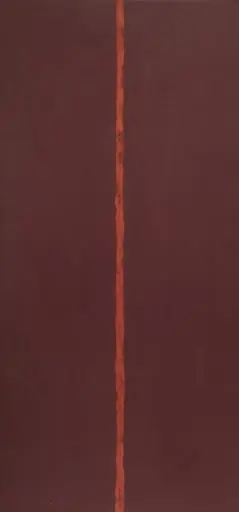
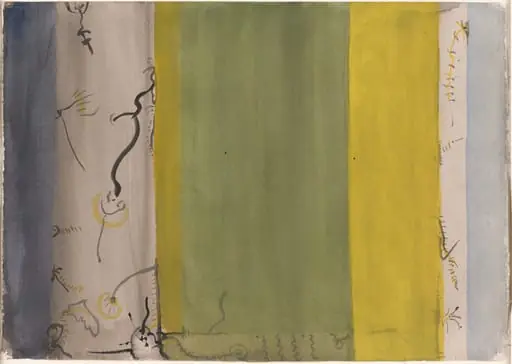
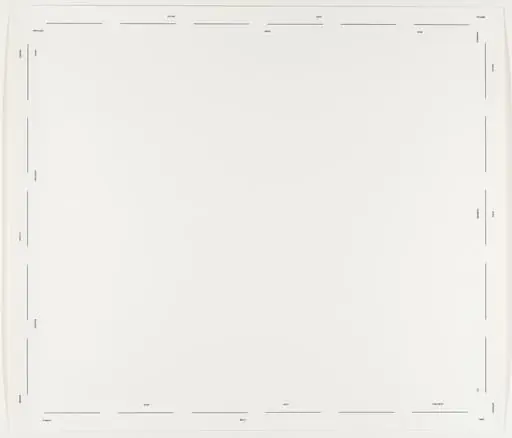
Untitled is a tempera painting by the Abstract Expressionist artist Barnett Newman. It dates from 1950 and is held in the collection of the Museum of Modern Art.
About this work
Overview
Created in 1950, this untitled work by Barnett Newman is an abstract painting executed in egg tempera and enamel on canvas.
Created in 1950, this untitled work by Barnett Newman is an abstract painting executed in egg tempera and enamel on canvas. Its restrained palette and minimal structure reflect Newman’s commitment to reducing form to essential elements. The piece belongs to The Museum of Modern Art’s collection and exemplifies his shift toward large-scale, meditative compositions that prioritize spatial presence over narrative.
Subject & Meaning
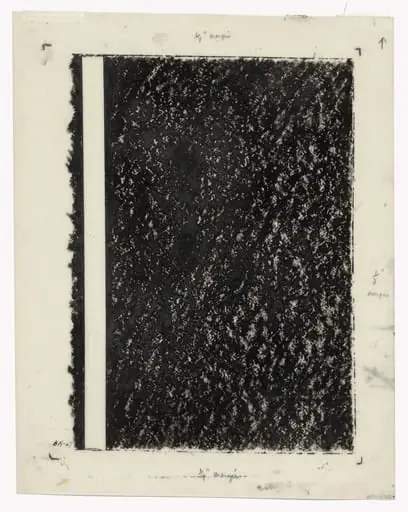
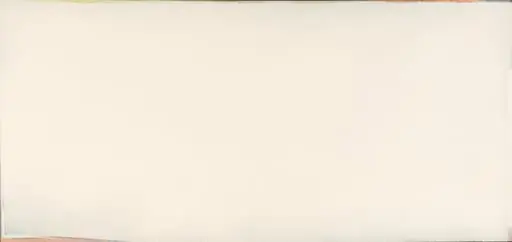
The painting contains no figurative elements, instead presenting a uniform cream field interrupted by a narrow, slightly darker vertical line near the right edge. This line, often termed a 'zip' in Newman’s lexicon, functions not as a mark but as a spatial divider that alters perception. It invites contemplation of boundaries, presence, and the viewer’s relationship to the canvas as a site of experience.
Technique & Style
Newman combined egg tempera with enamel to achieve a subtle surface variation—matte and glossy zones that catch light differently. The brushwork is deliberate but unobtrusive, avoiding visible strokes. The vertical line appears as a thin, almost architectural insertion, possibly applied with a ruler or masking technique. The result is a surface that feels both hand-crafted and impersonal, reinforcing the work’s quiet intensity.
History & Provenance
Painted in 1950, this work emerged during a pivotal phase in Newman’s career when he was refining his signature style. It entered The Museum of Modern Art’s collection shortly after its creation, reflecting early institutional recognition of his contributions to postwar abstraction. The painting has remained in the museum’s holdings since, consistently displayed as a key example of color field painting.
Context
In the early 1950s, Newman was part of a group of New York artists redefining painting through scale, color, and spiritual inquiry. Rejecting gestural abstraction, he sought to create immersive fields that evoked existential presence. This work aligns with contemporaneous efforts by Rothko and Still to evoke emotion through simplicity, though Newman’s approach emphasized structure over atmosphere.
Legacy
The painting’s reductive language influenced later movements including Minimalism and post-painterly abstraction. Its quiet authority demonstrated that emotional resonance could arise from restraint rather than dynamism. Art historians note that Newman’s 'zips' became foundational to discussions about the relationship between form, space, and perception in 20th-century art.
Artist & collection
Artist
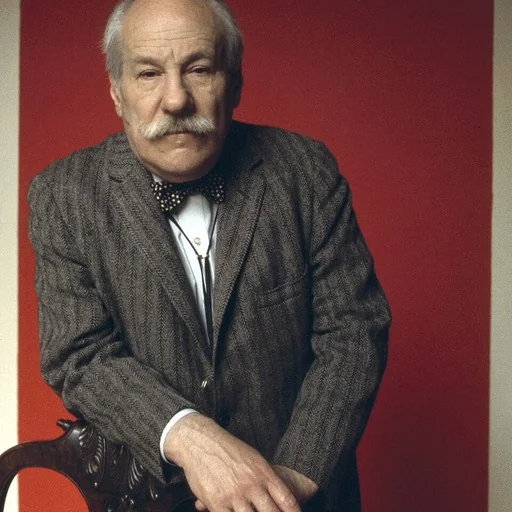
Barnett Newman (January 29, 1905 – July 4, 1970) was an American painter. He has been critically regarded as one of the major figures of abstract expressionism, and one of the foremost color field painters. His…