Artwork
Leiche (Corpse)
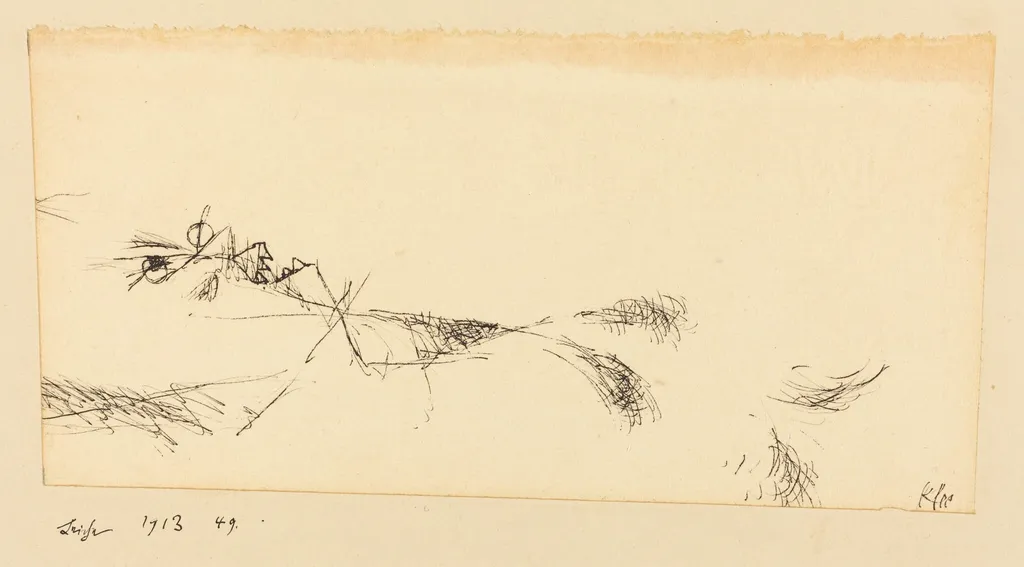
Leiche (Corpse) is an ink drawing by Paul Klee. It dates from 1913 and is held in the collection of the National Gallery of Art.
About this work
Overview
Executed with a pen and black ink, the work belongs to a period when Klee was refining his visual language through rapid, experimental mark-making.
Paul Klee produced *Leiche (Corpse)* in 1913 as a small ink drawing on laid paper. Executed with a pen and black ink, the work belongs to a period when Klee was refining his visual language through rapid, experimental mark-making. The medium’s simplicity—no color, minimal tonal variation—emphasizes line and gesture over detail, reflecting his interest in the raw potential of drawing as a primary mode of expression.
Subject & Meaning
The drawing suggests a fragmented human form, rendered in abrupt, irregular strokes that evoke decay or disintegration. Rather than depicting a literal corpse, Klee conveys an emotional or psychological state—vulnerability, absence, or the dissolution of the body. The title invites interpretation, but the image resists narrative clarity, aligning with his broader interest in the unseen and the symbolic over the representational.
Technique & Style
Klee employed quick, uneven pen strokes to construct the figure, avoiding smooth contours or shading. The lines are sparse and jagged, creating a sense of instability. Cross-hatching is minimal; form emerges through density and direction of marks rather than tonal gradation. The ink’s contrast against the light tan paper heightens the drawing’s immediacy, reinforcing its sketch-like quality and sense of spontaneity.
History & Provenance
Created during Klee’s time in Munich, *Leiche (Corpse)* belongs to a series of works from 1913 when he was intensively exploring abstraction and symbolic form. It was likely made in private, as part of his daily practice, and remained in his personal collection until later acquisition by a public institution. Its modest scale and unpolished appearance suggest it was not intended for public display at the time of creation.
Context
In 1913, Klee was influenced by Expressionist and Cubist tendencies, yet maintained a distinct personal vocabulary. His engagement with music, poetry, and occult symbolism informed his visual experiments. This drawing reflects a broader artistic shift away from naturalism toward internal, psychological representation—a trend evident in his contemporaneous watercolors and notebooks from the same period.
Legacy
*Leiche (Corpse)* exemplifies Klee’s belief in drawing as a direct conduit for thought. Its unfinished quality and emotional ambiguity anticipated later developments in modern art, particularly in the work of postwar artists who valued process over polish. The piece remains a quiet but significant record of his evolving approach to form, mortality, and the limits of visual representation.
Artist & collection
Artist
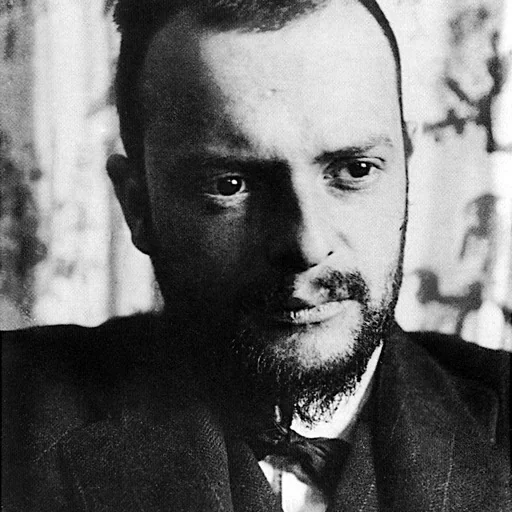
Paul Klee (German: ; 18 December 1879 – 29 June 1940) was a Swiss-born German artist.

 Study of "The Roman Orator (Germanicus)"
 Trees and Shrubs
 Study of a Standing Male Figure after the Antique
![Study for "Shoeing Calvary Horses at the Front" [verso], by John Singer Sargent](https://artifactworldgallery.com/img/john-singer-sargent--study-for-shoeing-calvary-horses-at-the-front-verso--6f6d1a163e84e9ab-w320.webp) Study for "Shoeing Calvary Horses at the Front" [verso]
Study for "Shoeing Calvary Horses at the Front" [verso] Head of the Artist's Son
![Mountains [verso], by John Singer Sargent](https://artifactworldgallery.com/img/john-singer-sargent--mountains-verso--6dbb48618d213d5c-w320.webp) Mountains [verso]
Mountains [verso] Pelicans
 A Man seen from Behind
 House Surrounded by Vegetation
 Pine Tree
![Trees [verso], by David Cox](https://artifactworldgallery.com/img/david-cox--trees-verso--2f59ba73e183df09-w320.webp) Trees [verso]
Trees [verso] Burial in the Vendeen Marsh (Un enterrement dans le marais Vendeen)