Artwork
Sushi-Maru II Hira Suzuki
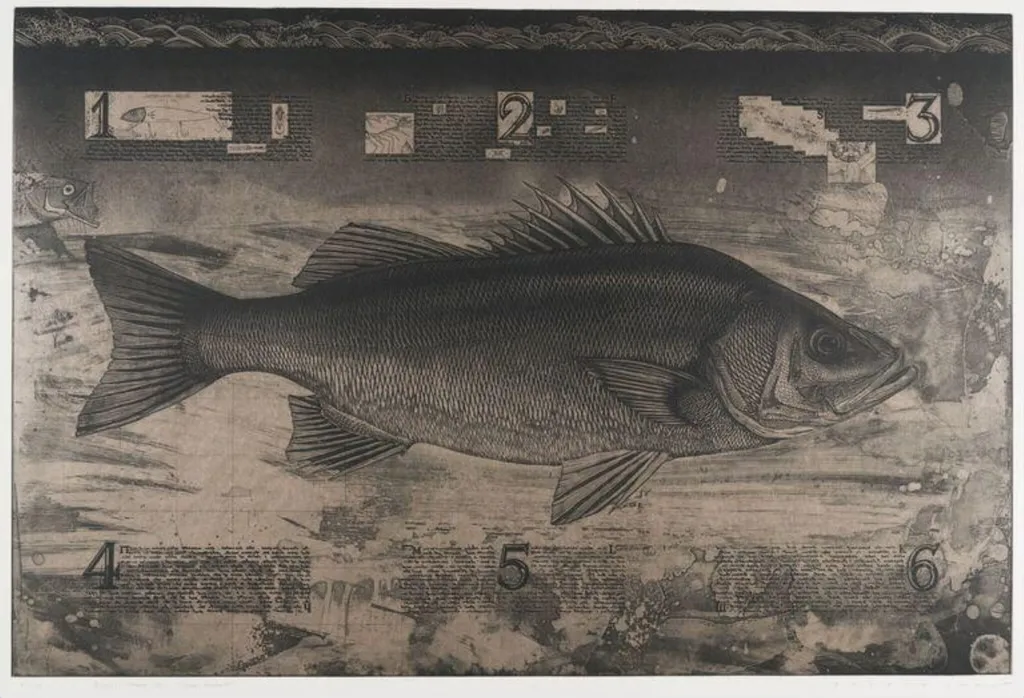
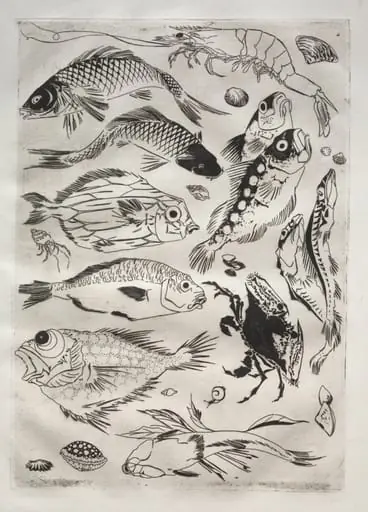
Sushi-Maru II Hira Suzuki is a print by Yosuki Imai. It dates from 1995 and is held in the collection of the Victoria and Albert Museum. Yosuke Imai began printmaking in 1987, focusing on etching and aquatint techniques.
About this work
Overview
His Sushi-Maru series documents fish caught in Japanese coastal waters, each piece tied to a specific catch and seasonal availability.
Yosuke Imai began printmaking in 1987, focusing on etching and aquatint techniques. His Sushi-Maru series documents fish caught in Japanese coastal waters, each piece tied to a specific catch and seasonal availability. The work reflects a personal ritual: fishing, measuring, eating, and then translating the experience into print. The use of chine collé—adhering thin Japanese ganpi paper to a sturdier French Arches sheet—enhances the delicacy of the imagery while grounding it in material contrast.
Subject & Meaning
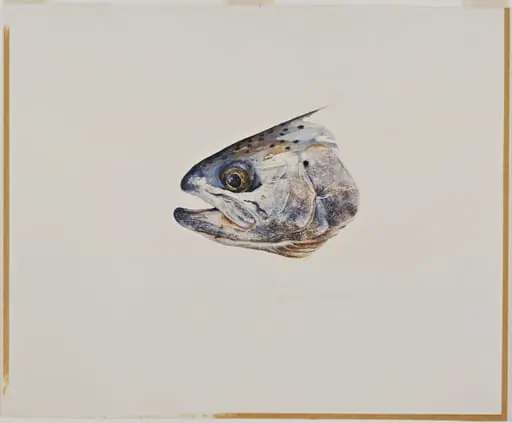
The central subject is a fish Imai caught off his hometown coast, measuring 88 centimeters, later consumed by his family. The image is not merely a specimen but a record of an intimate, cyclical act—capture, preparation, consumption, and artistic reflection. Surrounding motifs, possibly drawn from historical Japanese fishing manuals, suggest a dialogue between tradition and personal experience, framing the fish within a cultural context of sustenance and craft.
Technique & Style
Imai employs etching and aquatint to render fine tonal gradations, mimicking the texture of skin and scale. The chine collé technique integrates ganpi, a fragile paper made from the ganpi tree, onto a durable Arches support, allowing delicate lines to remain visible without tearing. He likens the printmaking process to cooking: acid bath duration corresponds to seasoning time, line depth to texture, and ink application to flavor balance—each step requiring intuitive judgment.
History & Provenance
The Sushi-Maru series emerged from Imai’s daily life and fishing practice, beginning in the late 1980s. Each print originates from a real catch, documented by size and location. The series has been exhibited in Japan and internationally, often in contexts emphasizing the intersection of art, ecology, and culinary tradition. The works remain closely tied to the artist’s personal history, with no reproductions or commercial reproductions outside his direct involvement.
Context
Imai’s work exists within a broader Japanese tradition of nature observation and seasonal awareness, akin to ukiyo-e’s focus on daily life and the natural world. Unlike historical prints made for mass distribution, his pieces are intimate records, rooted in local knowledge and personal ritual. The inclusion of archival fishing imagery connects his practice to older modes of marine documentation, transforming the print into a hybrid of art, science, and memory.
Legacy
The Sushi-Maru series has established Imai as a distinctive voice in contemporary Japanese printmaking, known for blending personal narrative with technical precision. His approach—treating printmaking as an embodied, seasonal act—has influenced younger artists seeking to reconnect art with material reality and ecological awareness. The works remain singular in their refusal to abstract the fish from its origin: caught, eaten, remembered, and rendered.
Artist & collection
Artist
This Japanese artist carved woodblocks of everyday life in the late 20th century.