Artwork
Fes [Fez] Makers at Tunis
![Fes [Fez] Makers at Tunis, by Charlotte Inglefield, watercolor, 1856](https://artifactworldgallery.com/img/charlotte-inglefield--fes-fez-makers-at-tunis--9ed73b21455079c2-w1024.webp)
Fes [Fez] Makers at Tunis is a watercolor work on paper by the British Romanticist artist Charlotte Inglefield. It dates from 1856 and is held in the collection of the Victoria and Albert Museum. This watercolour is one of 49 drawings compiled in an album, mostly depicting scenes from Ottoman and North African urban life.
About this work
Overview
The composition emphasizes quiet labor over spectacle, with natural light falling from the left to define forms without dramatic contrast.
This watercolour is one of 49 drawings compiled in an album, mostly depicting scenes from Ottoman and North African urban life. The work captures a hat-making workshop in Fez, rendered in soft, muted tones. Six figures are engaged in various stages of production, arranged around a central table. The composition emphasizes quiet labor over spectacle, with natural light falling from the left to define forms without dramatic contrast.
Subject & Meaning
The scene portrays artisans crafting traditional Fez hats, a craft closely associated with the city’s identity. Figures are shown in focused, routine activity—cutting fabric, handling tools, or resting—suggesting the rhythm of daily work. The presence of a small vase of flowers introduces a subtle domestic note, hinting at the personal space within a commercial environment. The title anchors the image in a specific cultural practice, not merely a generic workshop.
Technique & Style
The artist employs light washes of watercolour to suggest texture and volume without heavy detail. Forms are simplified, outlines are faint, and shadows are softly graded, creating a sense of immediacy. The plain brick walls and unadorned interior reinforce the functional setting. The palette is restrained, using earth tones and pale hues to maintain clarity and calm, aligning with the observational tone of the album as a whole.
History & Provenance
The drawing belongs to a larger collection assembled by members of the Inglefield family, likely during travels in the Ottoman Empire and North Africa in the mid-19th century. One sheet in the album bears the signature of A.A.H. Inglefield, indicating possible collaborative or familial involvement. The album’s structure—partly filled, partly blank—suggests it was a personal record rather than a formal commission, preserved as a documentary artifact.
Context
During the 19th century, European travelers and diplomats often documented local crafts as part of ethnographic interest. Fez was renowned for its hat-making industry, particularly the red felt fez, which had become a symbol across the Ottoman world. This image reflects a broader trend of recording artisanal labor, not as exotic spectacle but as a quiet, everyday reality within urban economies of the region.
Legacy
The album remains a modest but valuable record of 19th-century North African craftsmanship, preserved in the Victoria and Albert Museum’s collection. Unlike grander Orientalist works, this watercolour avoids romanticization, offering instead a restrained, attentive view of labor. Its significance lies in its unembellished documentation, contributing to historical understanding of artisanal life in Fez during a period of cultural transition.
Artist & collection
Artist
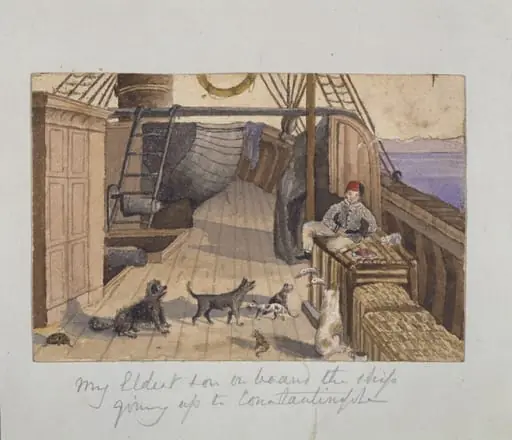
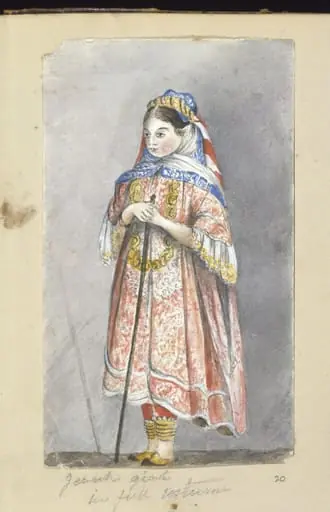
Charlotte Inglefield painted watercolours of people and places during the 1850s. She captured scenes like *My Eldest son on board the ship going up to Constantinople* and *Jewish girl in full costume*, showing travelers…

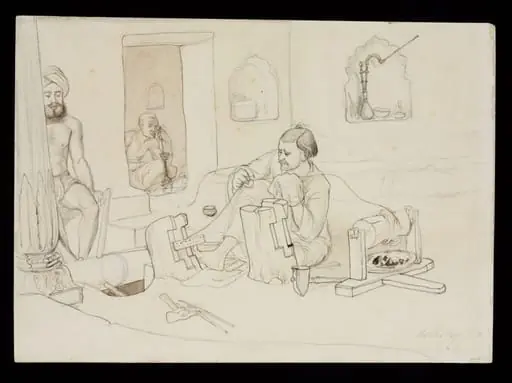 Three men in a workshop producing silver gilt wire
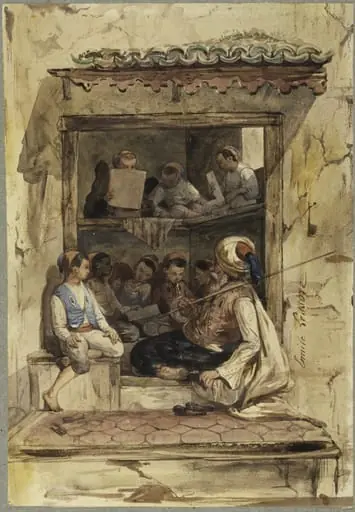 Boy's School
 A Turkish Coffee-House, Constantinople
 Un corps de garde peint par Decamps
 Marchand de la Place Juba
 A kebab shop near the Yeni Cami
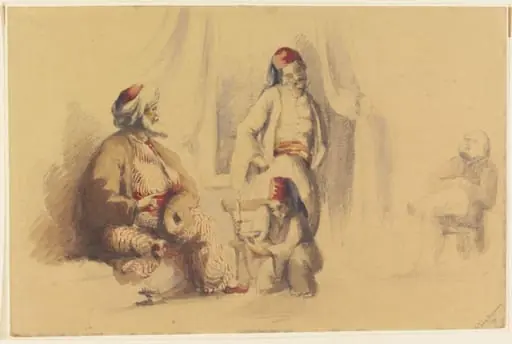 Cairo Magician
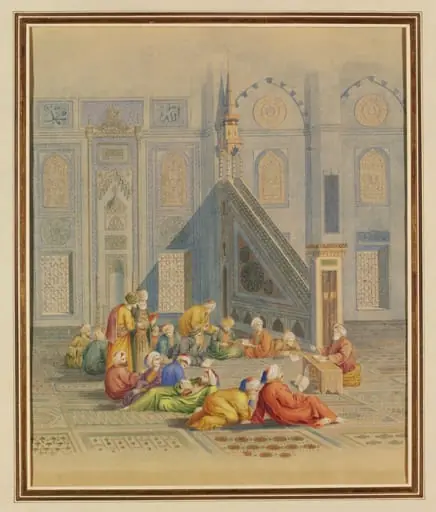 Mosquee di Chelazade
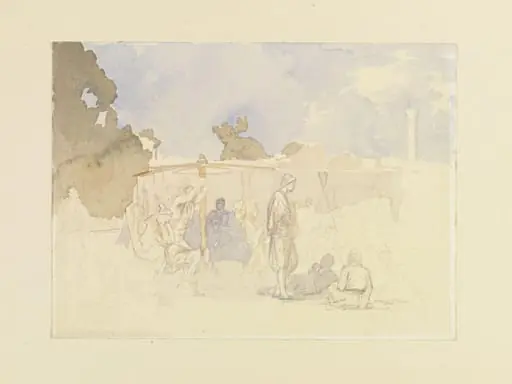 A group of figures in Eastern dress, Turkey
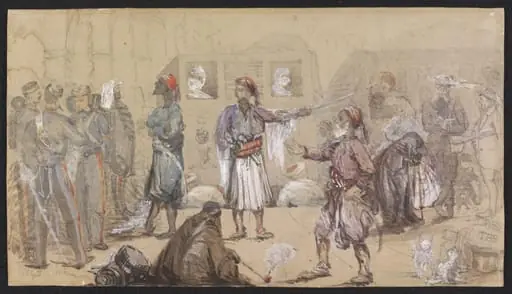 Railway Station, Alexandria
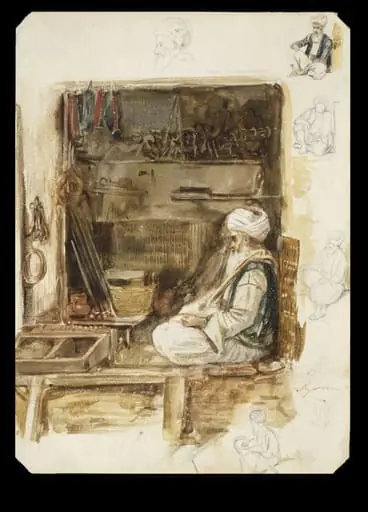 An old merchant in the Souk in Algiers; with figure studies
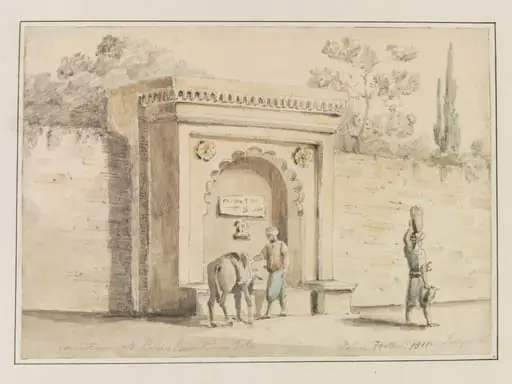 Fountain At Constantinople