Artwork
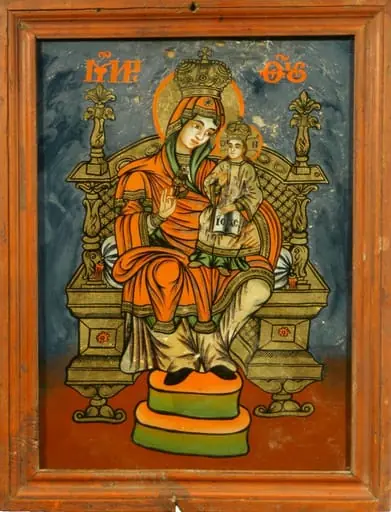
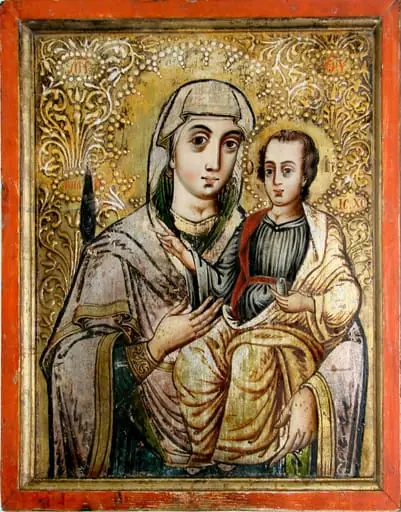
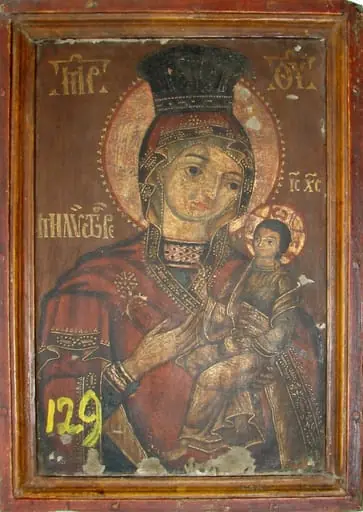
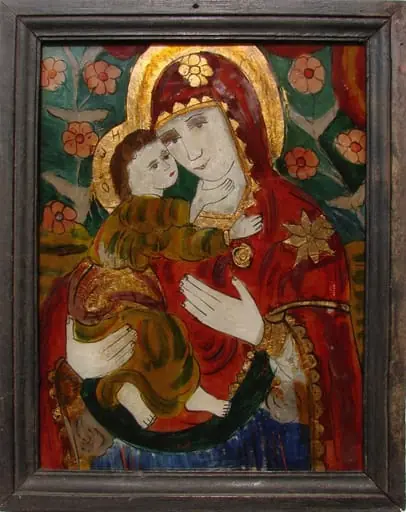
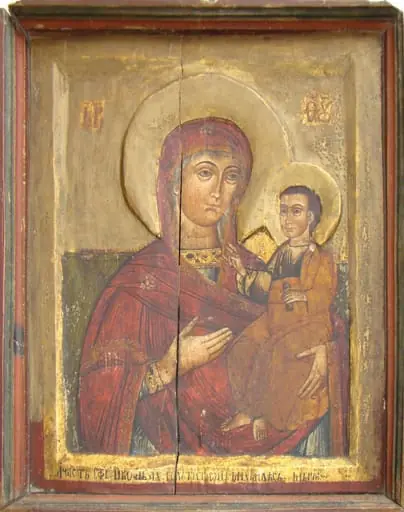
Maica Domnului cu Pruncul
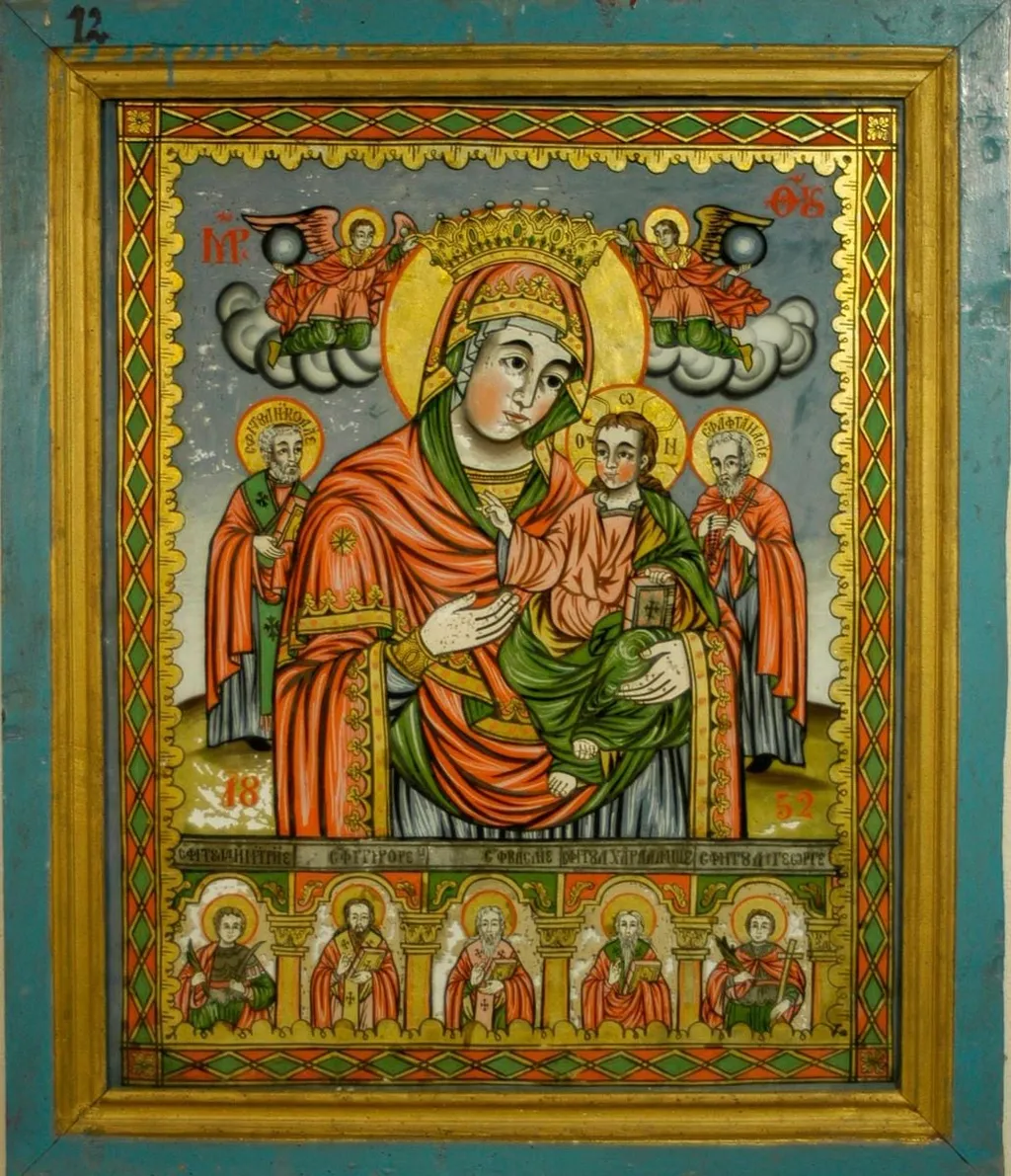
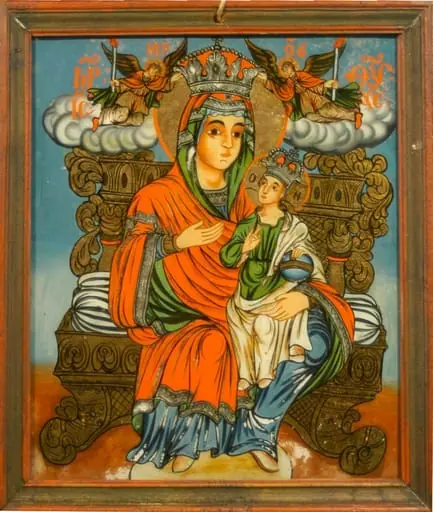
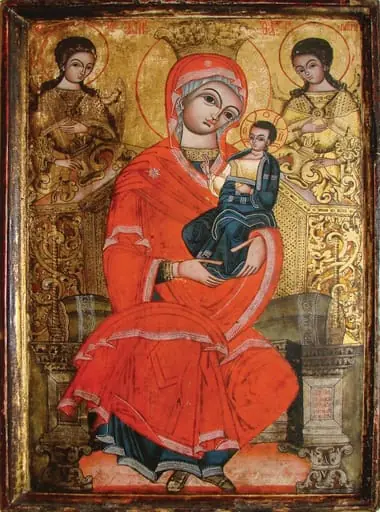
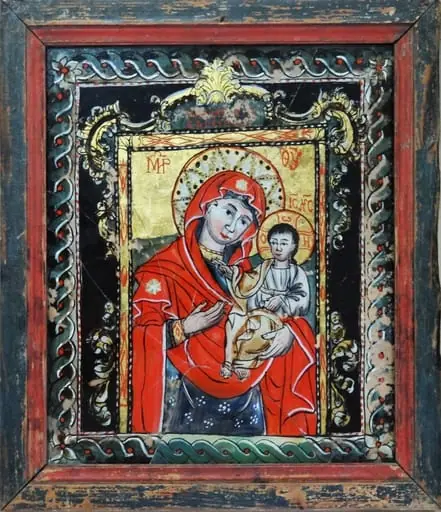
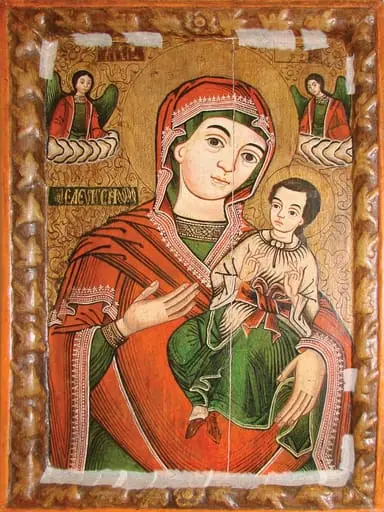
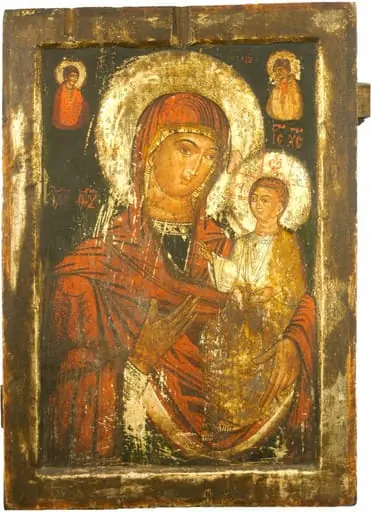
Maica Domnului cu Pruncul is an unspecified painting by the Baroque artist Ioan Pop de la Făgăraș. It dates from 1852 and is held in the collection of the Alba Iulia Orthodox Archdiocese.
About this work
Overview
Maica Domnului cu Pruncul, created by Ioan Pop de la Făgăraș in 1852, is a religious artwork housed at the Museum of Ethnography. The painting depicts a central female figure, identified by her attire and crown as the Mother of God, holding a child. The scene is populated by angels, robed men, and smaller figures, set against a distinctive pale blue sky adorned with gold stars and clouds.
Subject & Meaning
The artwork's central subject is the Mother of God (Maica Domnului) with the Child, symbolizing a sacred, divine moment.
The artwork's central subject is the Mother of God (Maica Domnului) with the Child, symbolizing a sacred, divine moment. The Mother wears a crown and holds a globe, emphasizing her divine role and dominion. The child's gesture toward her may signify devotion or a symbolic action, while the surrounding figures (angels and robed men) and the smaller, upward-looking crowd below reinforce the sacred and possibly the adoration or witness to the divine.
Technique & Style
Characterized by bold, flat colors and sharp, defining lines, the painting exhibits a style that prioritizes clarity and symbolism over realism. The flatness of the colors and the two-dimensional quality of the figures are reminiscent of traditional or folkloric religious art, suggesting an emphasis on the spiritual over the naturalistic.
History & Provenance
Created in 1852 by Ioan Pop de la Făgăraș, the artwork is currently part of the collection at the Museum of Ethnography, indicating its recognized cultural and historical significance within the institution's focus.
Context
The composition reflects traditional arrangements in religious art, where central figures of reverence are surrounded by angels, religious figures, and sometimes a crowd of worshippers or observers. The use of a pale blue sky with gold accents (stars and clouds) is a common motif in depicting heavenly or sacred scenes.
Artist & collection
Artist
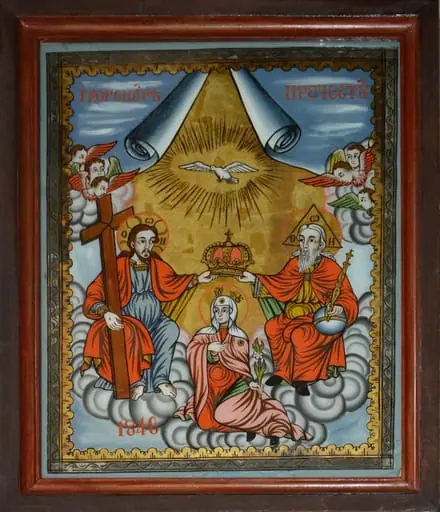
Ioan Pop de la Făgăraș painted religious scenes in the mid-1800s, like *Încoronarea Fecioarei* (1846) and *Duminica Floriilor*.