Artwork
Cina cea de taină
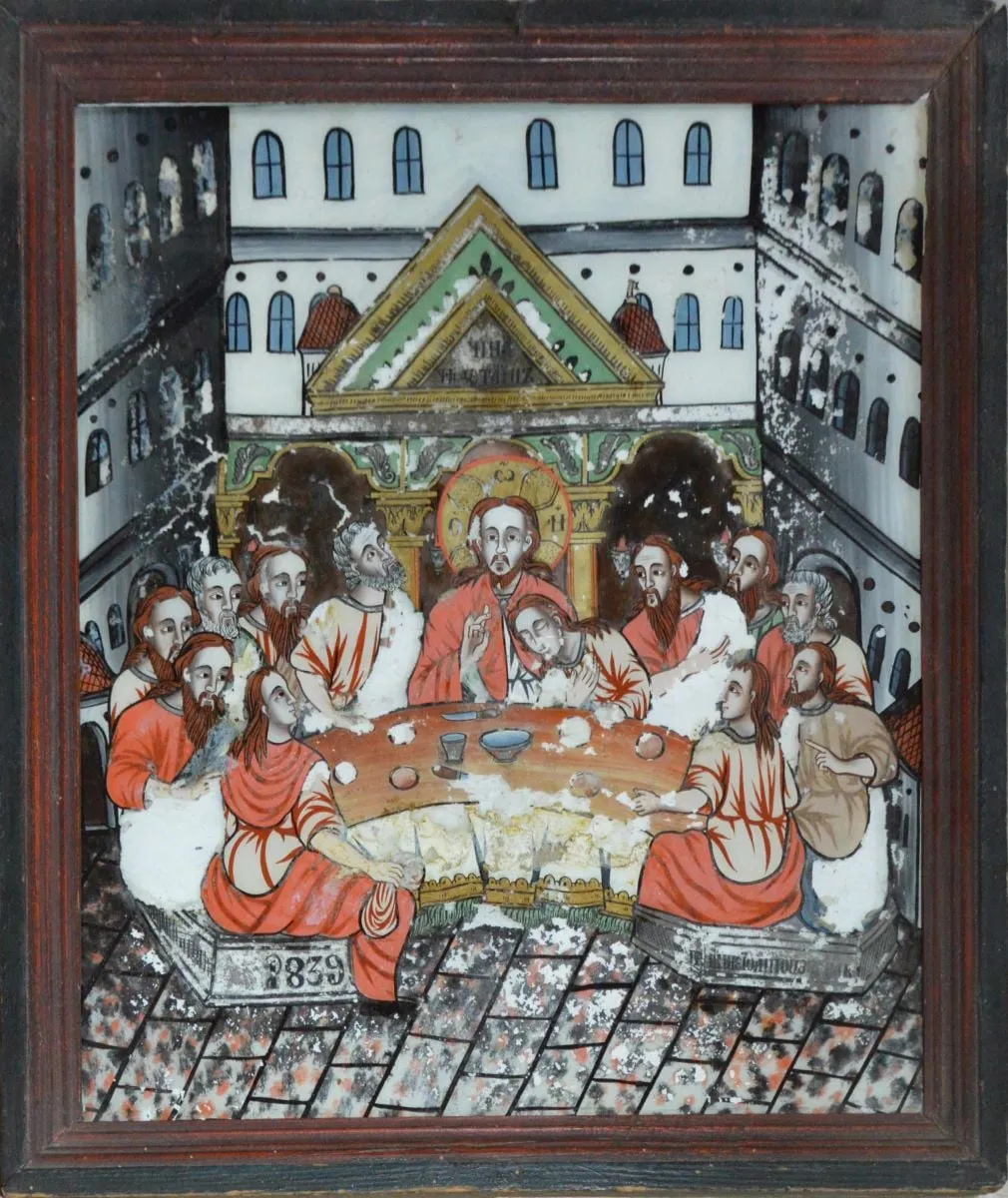
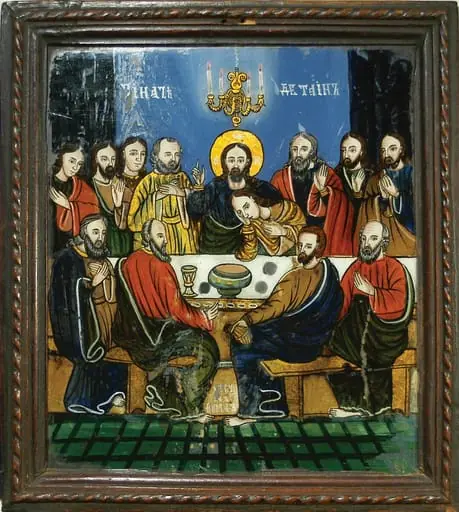
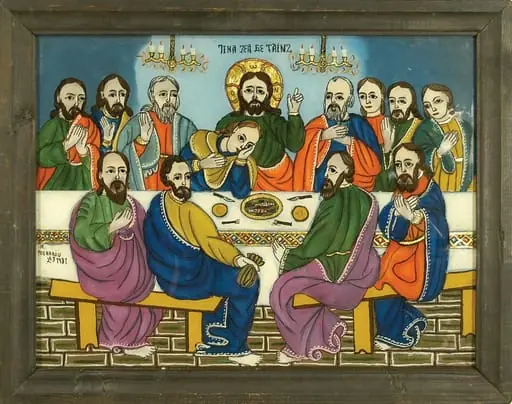
Cina cea de taină is an unspecified painting by the Baroque artist Ioan Pop de la Făgăraș. It dates from 1839 and is held in the collection of the Alba Iulia Orthodox Archdiocese.
About this work
Overview
Cina cea de taină, painted by Ioan Pop de la Făgăraș in 1839, is part of the collection of the Museum of Ethnography. The work depicts a thirteen‑person gathering around a long table, rendered in a stylized manner characteristic of early nineteenth‑century Romanian folk art.
Subject & Meaning
At the centre of the composition sits a figure distinguished by a golden halo, suggesting a sacred or revered role, while the surrounding participants are dressed in modest robes of red, white and gold. The arrangement evokes a communal meal, likely referencing a religious or ritual banquet.
Technique & Style
Pop de la Făgăraș employs a palette of bright, flat colors outlined with strong black lines, giving the scene a graphic clarity. The figures possess a slightly rigid, sculptural quality, reminiscent of carved wooden icons, and the background features arched windows and a tiled floor rendered in simplified perspective.
History & Provenance
Created in 1839, the painting entered the Museum of Ethnography’s holdings at an unspecified date, where it remains on display as an example of regional visual culture from the period.
Context
The work reflects the visual language of Romanian folk painting, where religious symbolism and everyday communal life often intersect. The use of a halo and the formal arrangement of participants align with iconographic conventions of the era, while the domestic setting grounds the scene in local tradition.
Artist & collection
Artist
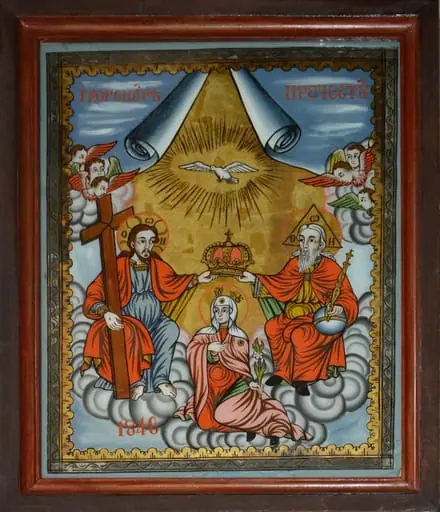
Ioan Pop de la Făgăraș painted religious scenes in the mid-1800s, like *Încoronarea Fecioarei* (1846) and *Duminica Floriilor*.
 Cina cea de taină
 Cina cea de Taină
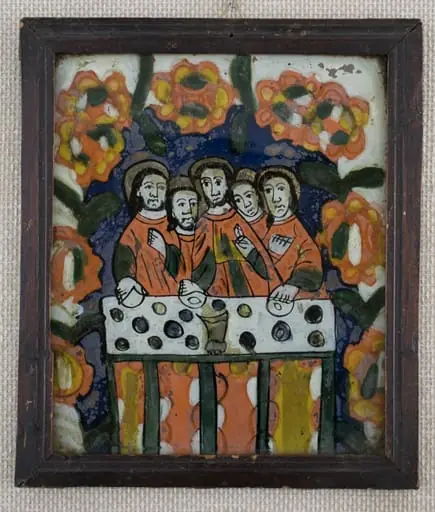 Tema iconografică este "Cina cea de taină", în cadrul căreia are loc instituirea celei mai importante taine a bisericii, Sfânta Euharistie. Este redată într-o manieră populară, naivă, cu un număr redus de personaje(datorită dimensiunilor reduse ale suportului, dar și tendinței de reducere la esențial) Grupul compact, format din Iisus având câte doi apostoli de fiecare parte este plasat central, în spatele unui mese înalte, dreptunghiulare, aflată în prim plan. Isus binecuvintează cu stânga, cu dreapta ia o pâine de pe masa unde se află un vas înalt, diform și mai multe pâini(azime) așezate deasupra unei învelitori albe. Este înveșmântat cu mantie roșie și chiton verde, la fel ca și apostolii, toți au nimburi aurite, trasate cu mâna liberă. Apostolul din stânga lui Isus, cu capul plecat pe umărul Lui, este apostolul Ioan, conform Evangheliilor. Câmpul este împărțit în două zone de un portal semicircular bogat drapat cu flori multicolore(roșu, alb, verde, galben): albastru ultramarin sub portal, alb în rest, creându-se perspectiva cromatică. Compoziția este echilibrată, desenul simplu, stângaci, paleta cromatică dominată de alb, roșu și albastru, culorile pale. Rama este alcătuită din patru stinghii profilate, culoare brun-roșcat, îmbinare oblică la colțuri. Dosul este din lemn subțire de brad.
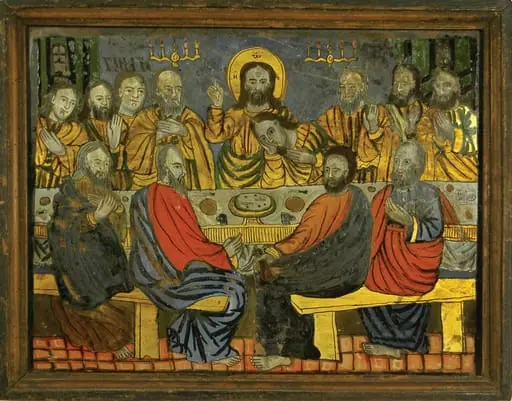 Cina cea de taină
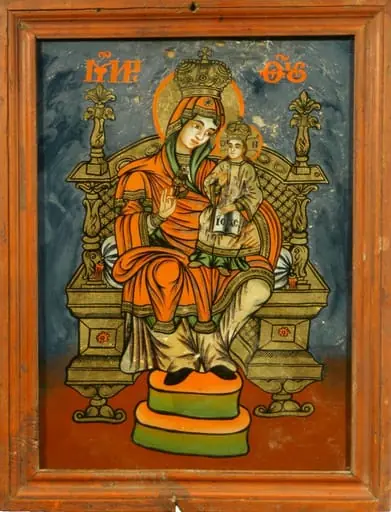
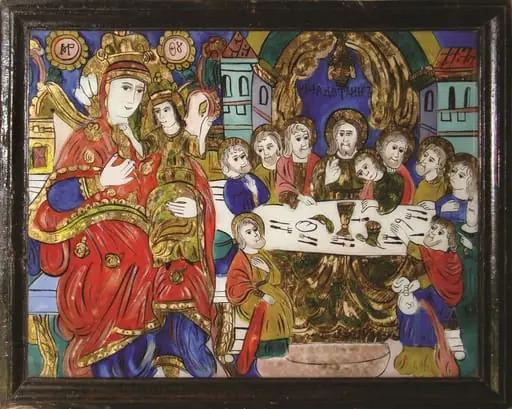 Maica Domnului cu Pruncul și Cina cea de taină
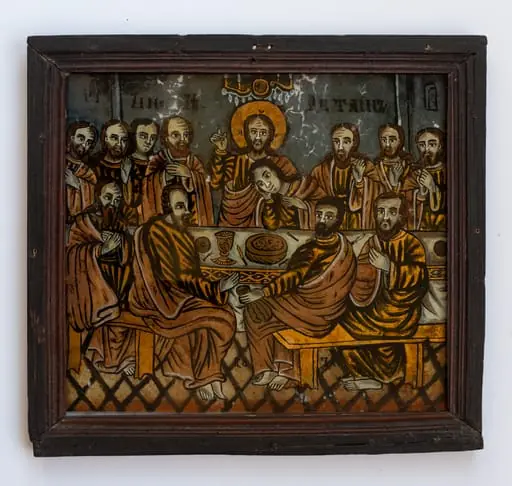
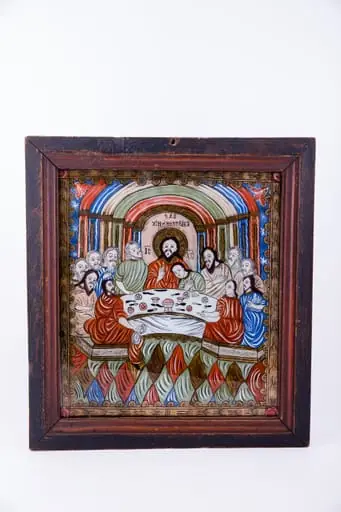 Scena Cinei celei de Taină se desfășoară într-un interior sugerat de elemente arhitectonice, coloane și șase arcade alternativ-cromatic pictate. În centrul icoanei este Mântuitorul Iisus Hristos binecuvântând mâncarea, la masă, alături de ucenici și apostoli. Cu brațul stâng îl ține lipit de piept pe Ioan cel iubit, Sfântul Apostol și Evanghelist Ioan, Teologul. Pe masă sunt așezate un potir pentru vin și tacâmuri și farfurioare mici și pâinici rotunde. Personajele au chipurile expresive, veșmintele personajelor și faldurile feței de masă, cât și draperiile sunt pictate cu măiestrie de pictor. Veșmintele sunt roșii, albastre, vernil și bej, cu liniuțe albe discrete. Cromatica este armonioasă și echilibrată, pornindu-se gradual dinspre exterior înspre interior, de la albastru spre roșu, ajungându-se la albul luminos al mesei celor dăruite. Compoziția este încadrată elemente de arhitectură, draperii, coloane, creându-se, astfel, intimitatea Cinei celei de Taină. Totul este concentric, strângându-se în jurul Potirului. De remarcat este alternanța romboidală din registrul inferior, policromatică. În registrul superior, sunt coloanele și arcadele policrome. Iuda Iscarioteanul este în partea stângă a mesei și se remarcă în mâna lui punga cu cei 30 de arginți, simbolul trădării și vicleniei. Pictura este specifică Țării Făgărașului și datorită compoziției echilibrate, simetrice și circulare. Icoana este pictată de Savu Moga, din Arpașu de Sus, Țara Făgărașului. Inscripția în chirilică se traduce ICXC Iisus Hristos Cina cea de Taină. Cromatica armonioasă este o caracteristică a icoanelor lui Savu Moga: roșu, albastru, vernil, gri, brun, alb, negru. Întreaga narațiune iconografică este încadrată într-un chenar geometrizant, ca de carte veche, asemenea unei dantelării cu colțișori.
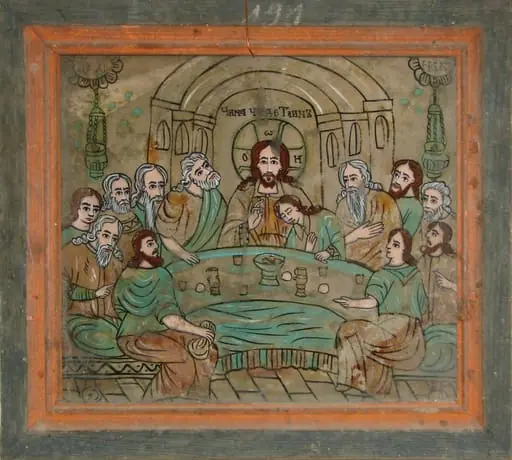 Cina cea de taină
 Cina cea de taină