Artwork
Sf. Nicolae
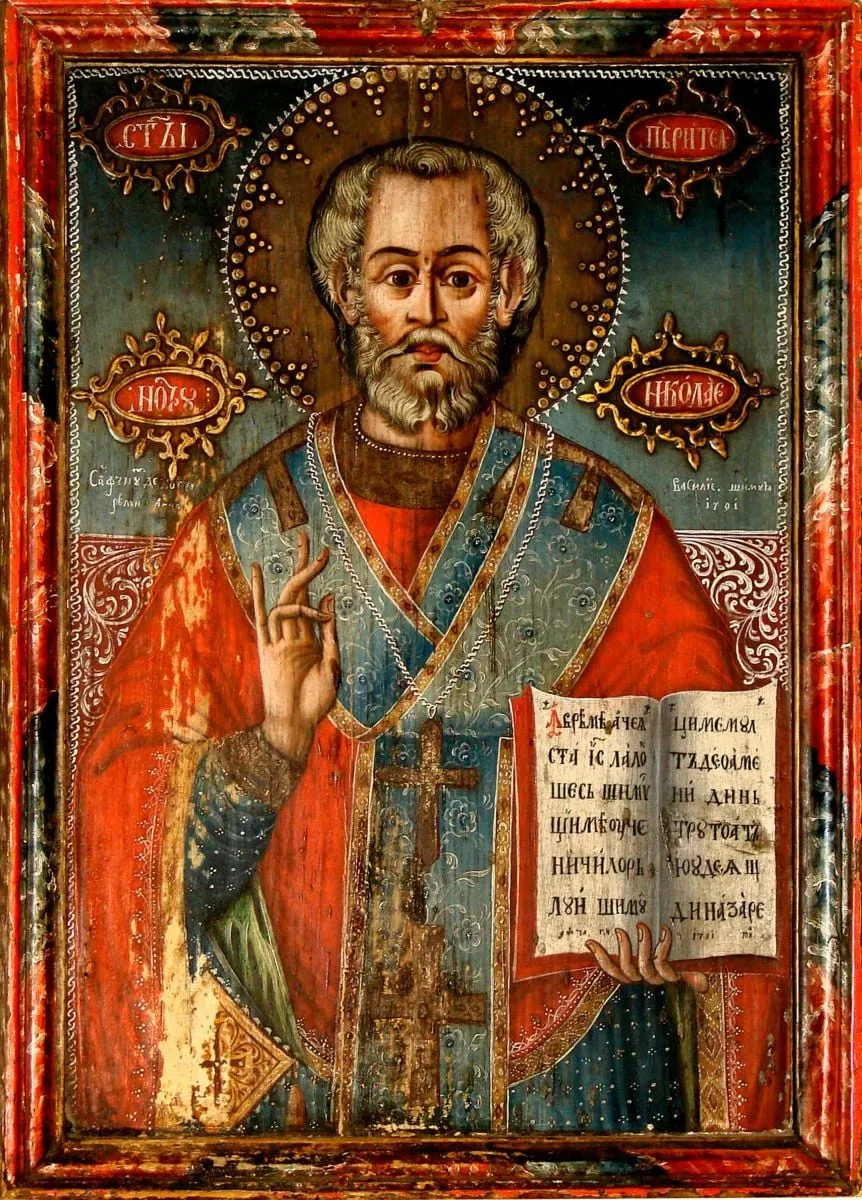
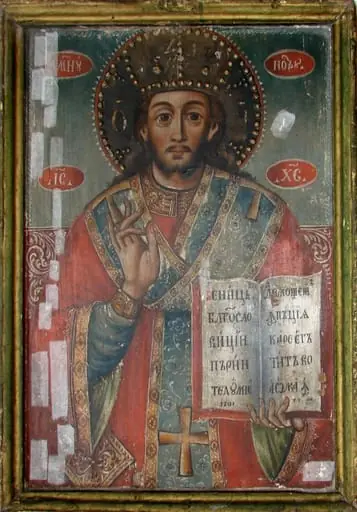
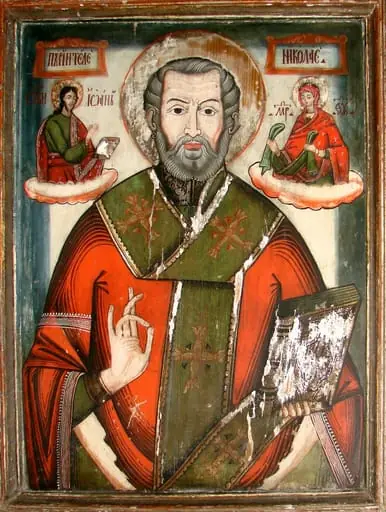
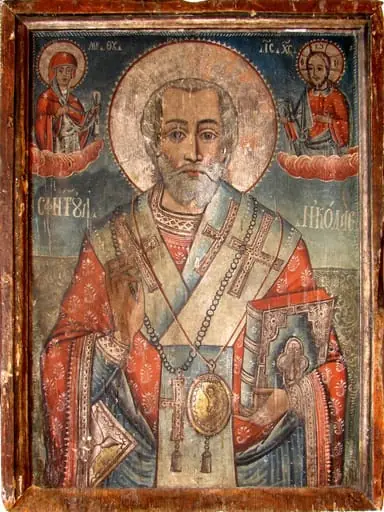
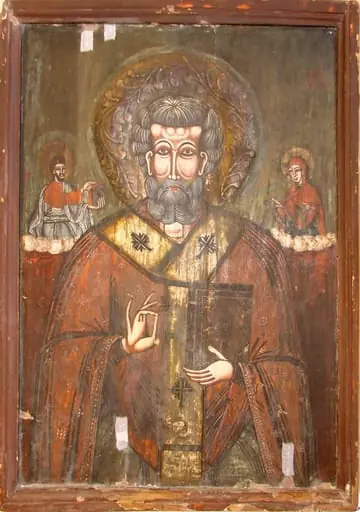
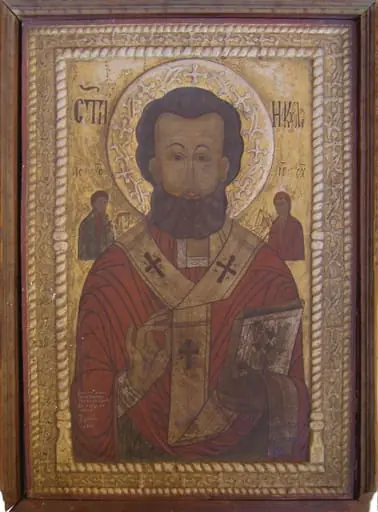
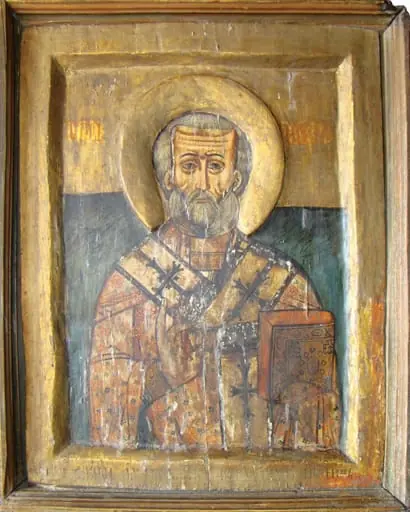
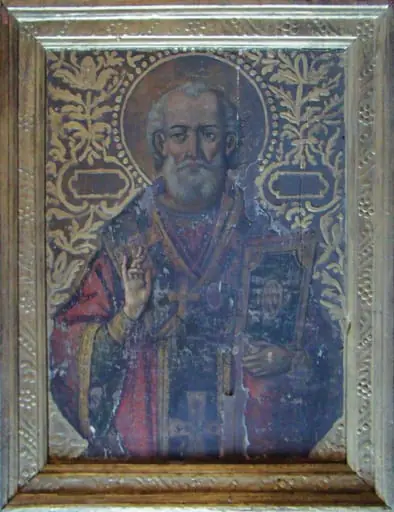
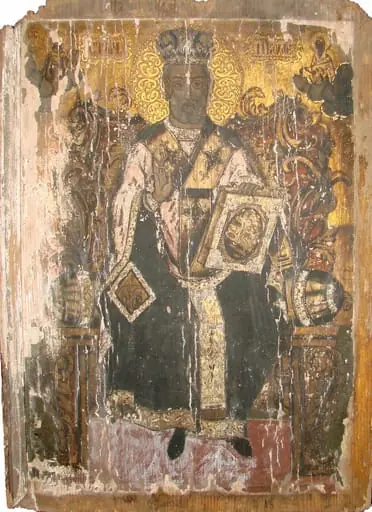
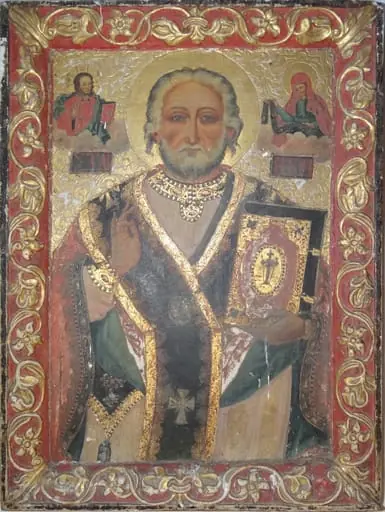
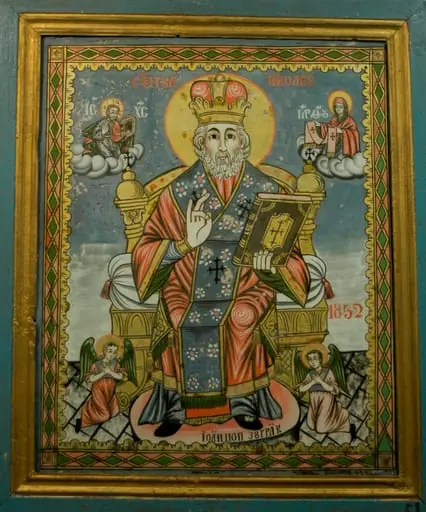
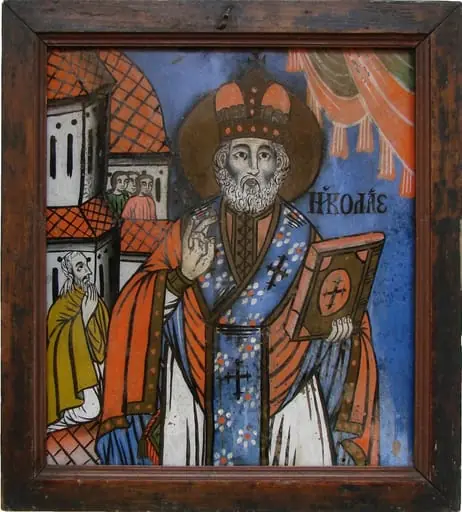
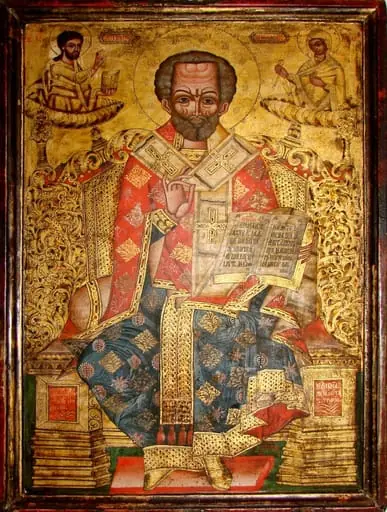
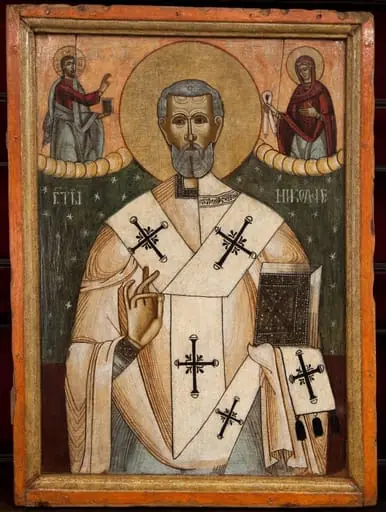
Sf. Nicolae is a drawing by the Romanticist artist Gheorghe fiul lui Iacov. It dates from 1791 and is held in the collection of the Alba Iulia Unification National Museum.
About this work
Overview
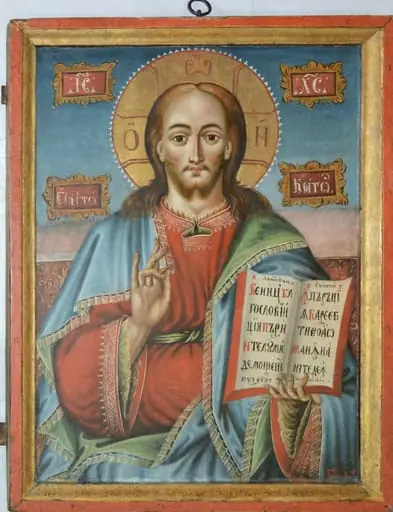
Painted in 1791 by Gheorghe fiul lui Iacov, this religious icon depicts Saint Nicholas, a figure venerated in Eastern Christian traditions.
Painted in 1791 by Gheorghe fiul lui Iacov, this religious icon depicts Saint Nicholas, a figure venerated in Eastern Christian traditions. Executed in tempera or oil on wood, the work resides in the Museum of Ethnography. Its formal composition and ornamental details reflect the enduring conventions of Byzantine-inspired iconography, adapted within the cultural context of 18th-century Romanian religious art.
Subject & Meaning
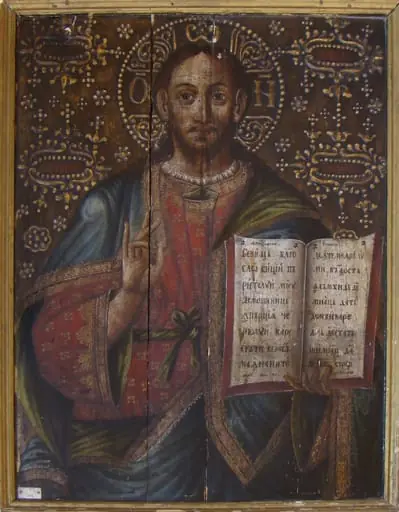
The figure represents Saint Nicholas, bishop and patron saint known for compassion and miracles. His halo signifies sanctity, while the book in his left hand denotes his role as a teacher of doctrine. The blessing gesture of his right hand conveys spiritual authority and protection. The imagery aligns with traditional hagiographic conventions meant to inspire reverence and devotion among the faithful.
Technique & Style
The painting employs fine brushwork to render intricate patterns on the saint’s robe, with gold leaf accents highlighting the halo and textile details. The dark blue-green background provides contrast, drawing focus to the figure. Color use—red robes, blue trim, and gold embellishments—follows symbolic conventions of Byzantine icon painting, emphasizing divine presence through luminous materials and controlled composition.
History & Provenance
Created in 1791, the work likely originated in a local church or private devotional setting in Moldavia or Wallachia. It entered the Museum of Ethnography’s collection as part of efforts to preserve regional religious artifacts. Its survival through centuries reflects its cultural significance and the continuity of Orthodox iconographic practices in Romanian communities.
Context
This icon was produced during a period when Romanian principalities maintained strong ties to Byzantine artistic traditions despite Ottoman political influence. Local artisans like Gheorghe fiul lui Iacov preserved liturgical imagery using inherited techniques, blending regional aesthetics with established ecclesiastical norms. Such works served both spiritual and communal functions in rural and urban worship.
Legacy
The painting stands as an example of 18th-century Romanian religious art that sustained medieval iconographic forms into the early modern era. It contributes to understanding how local communities maintained spiritual identity through visual culture. Today, it remains a reference point for scholars studying the evolution of Orthodox iconography beyond major centers like Constantinople or Mount Athos.
Artist & collection
Artist
This painter created religious scenes in 18th-century Romanian churches, where gold-leaf halos and deep cobalt blues were common.
Museum
Alba Iulia Unification National Museum
Continue through works from the same source collection.