Artwork
Sf. Paraschiva
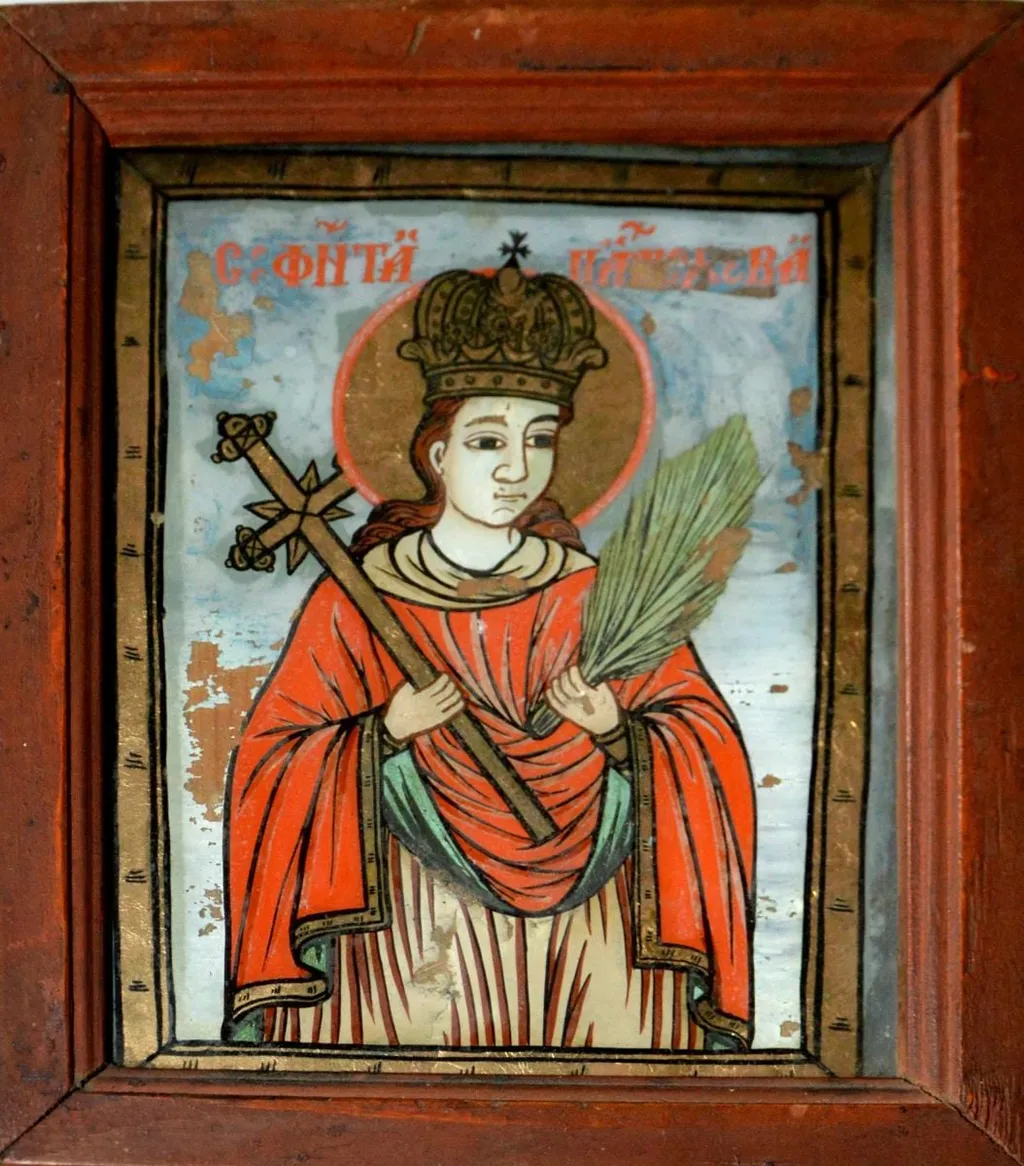
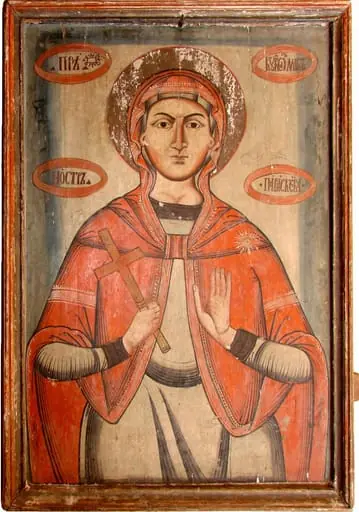
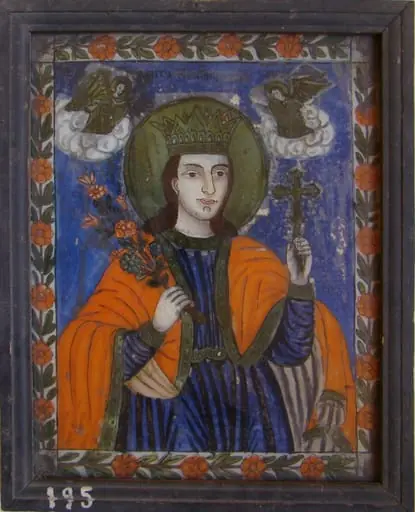
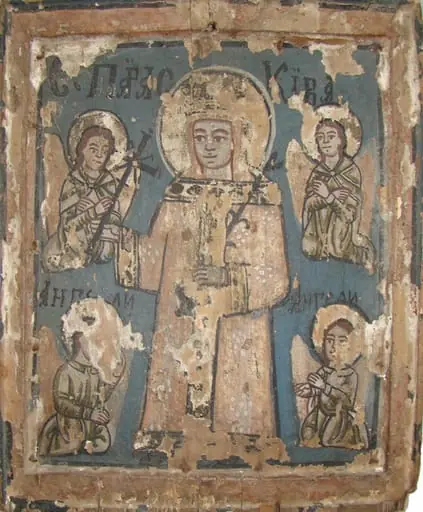
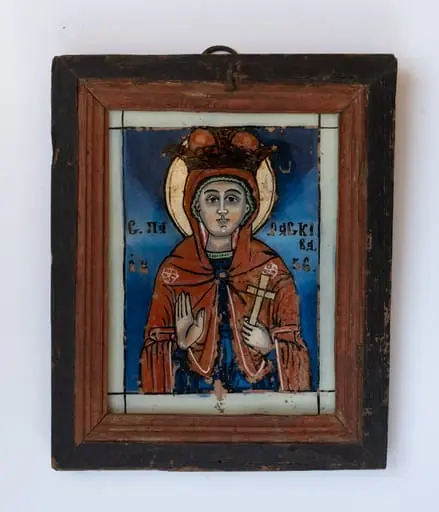
Sf. Paraschiva is a drawing by the Baroque artist Ioan Pop de la Făgăraș. It is held in the collection of the Alba Iulia Orthodox Archdiocese. This painted image portrays a female figure in a red robe, crowned and holding a cross in one hand and a sheaf of wheat in the other.
About this work
Overview
The figure’s attire and attributes align with traditional representations of saintly women in Eastern Orthodox iconography, suggesting a devotional purpose.
This painted image portrays a female figure in a red robe, crowned and holding a cross in one hand and a sheaf of wheat in the other. Set against a pale blue background with faint brown markings, the composition emphasizes symbolic elements over naturalistic detail. The figure’s attire and attributes align with traditional representations of saintly women in Eastern Orthodox iconography, suggesting a devotional purpose.
Subject & Meaning
The figure is likely Saint Paraschiva, a venerated Orthodox saint associated with healing and protection. The cross signifies her Christian faith and martyrdom, while the wheat alludes to abundance, resurrection, and the Eucharist. Together, these symbols convey spiritual nourishment and divine provision, common themes in folk religious art where saints bridge earthly needs and heavenly grace.
Technique & Style
The painting employs flat, decorative forms with minimal shading, typical of regional icon traditions. Colors are bold and unmodulated—red for vitality, blue for the divine realm—applied with straightforward brushwork. Details like the crown and hair are rendered with careful linearity, reflecting a hand-trained in local ecclesiastical art rather than academic conventions.
History & Provenance
Though no documented origin is recorded, the style closely resembles works attributed to Ioan Pop de la Făgăraș, a 19th-century Romanian painter known for religious illustrations in Transylvania. The piece likely originated in a rural church or private chapel, created during a period when local artisans preserved Orthodox iconographic norms through accessible, hand-painted images.
Context
In 19th-century Romanian villages, such images served as focal points for personal and communal prayer. Saint Paraschiva was especially revered in Moldavia and Transylvania for her miracles related to health and harvests. This painting reflects a broader tradition where saints were depicted not as distant figures but as accessible intercessors tied to daily life and agricultural cycles.
Legacy
The image contributes to a continuum of folk religious art in Romania, preserving iconographic motifs that persisted despite modernization. While not part of major museum collections, such works remain culturally significant in local communities, embodying a living tradition where faith, art, and rural identity intersected in quiet, enduring forms.
Artist & collection
Artist
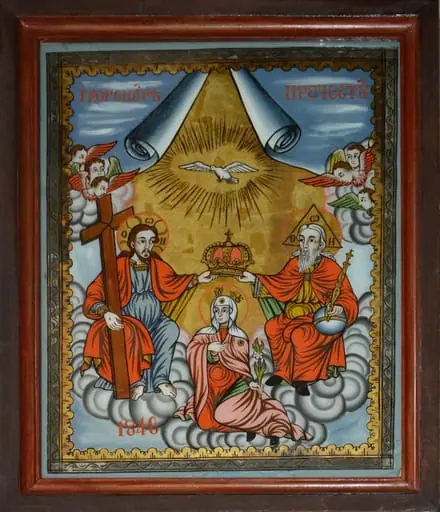
Ioan Pop de la Făgăraș painted religious scenes in the mid-1800s, like *Încoronarea Fecioarei* (1846) and *Duminica Floriilor*.