Artwork
一鵬斎芳藤画 「AMERIKAZIN (アメリカ人)遊興」|Americans on an Outing (Amerikajin yūgyō)
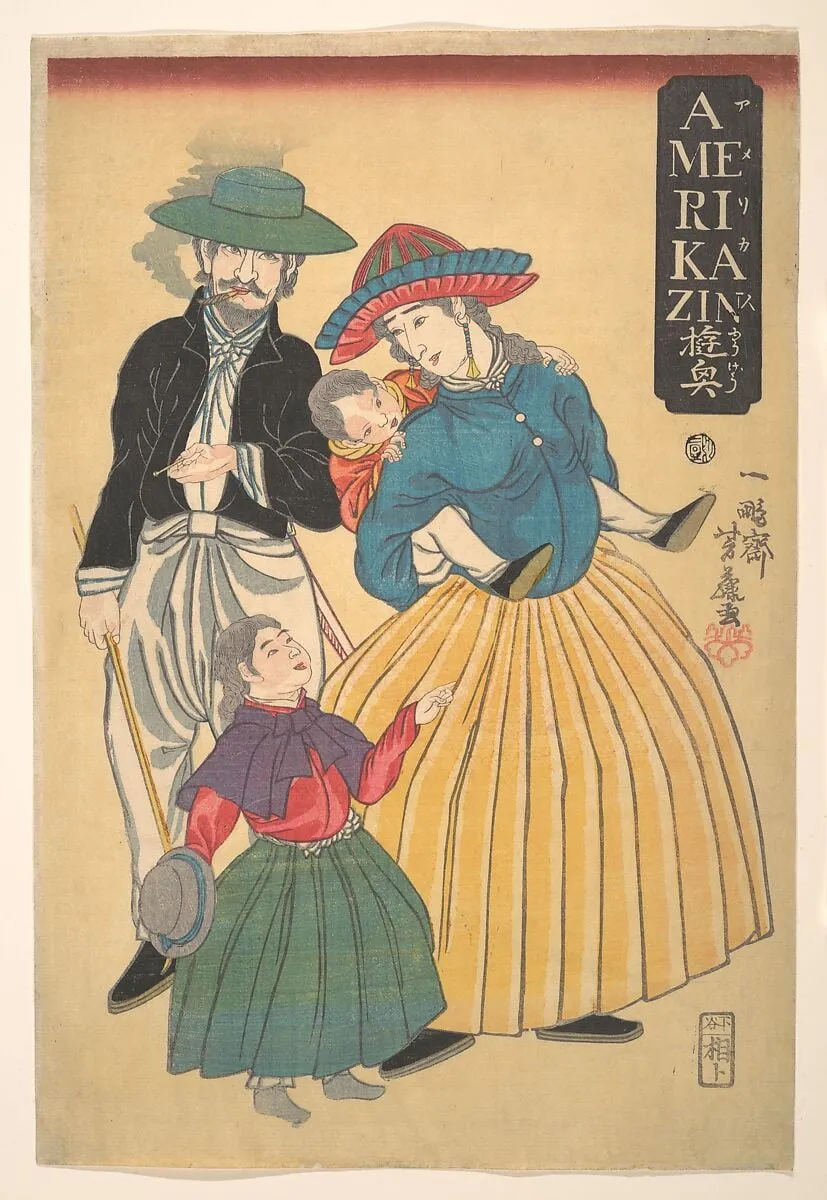
一鵬斎芳藤画 「AMERIKAZIN (アメリカ人)遊興」|Americans on an Outing (Amerikajin yūgyō) is an ink print by the Impressionist artist Ippōsai Yoshifuji. It dates from 1861 and is held in the collection of the Metropolitan Museum of Art.
About this work
The woman in a blue dress and red hat carries a baby, while a girl in a green skirt and red top holds a small fan.
This print shows a family of three Americans walking together. The man wears a wide-brimmed hat, dark coat, and striped pants, holding a cane. The woman in a blue dress and red hat carries a baby, while a girl in a green skirt and red top holds a small fan. A sign in the background reads "AMERIKAZIN" in bold letters.
The bright colors and bold outlines are typical of Japanese woodblock prints. This work was made in 1861, when foreigners visiting Japan were a new and curious sight.
Look up woodblock print (nishiki-e) to see how artists created these vivid images.
Overview
Created in 1861 by Ippōsai Yoshifuji, this nishiki-e woodblock print depicts a foreign family strolling in a Japanese urban setting. Rendered in vibrant ink and color on paper, the vertical ōban format reflects popular Edo-period print conventions. The work belongs to The Metropolitan Museum of Art’s collection and captures a moment of cultural encounter during Japan’s early engagement with Western visitors after the end of its isolationist policies.
Subject & Meaning
The scene portrays a Western family—father, mother with infant, and young daughter—walking together in a public space. Their attire, including the man’s cane and wide-brimmed hat, signals foreign identity through exaggerated detail. The prominent sign 'AMERIKAZIN' underscores their visibility as outsiders. Rather than satire, the image suggests quiet observation, reflecting Japanese curiosity toward the rare presence of Americans during the Bakumatsu period.
Technique & Style
The print employs nishiki-e techniques, using multiple carved blocks to layer vivid pigments with precise outlines. Bold contours define figures and clothing, while flat areas of color—blue dress, red hat, green skirt—create visual clarity. The background is minimally detailed, focusing attention on the figures. These stylistic choices align with ukiyo-e traditions, adapted here to render unfamiliar subjects with decorative clarity rather than naturalism.
History & Provenance
Produced in 1861, the print emerged during a transitional phase in Japan, as foreign presence increased following the 1853 Perry expedition. Such images were circulated among the urban public, satisfying fascination with foreigners. The work entered The Metropolitan Museum of Art’s collection through documented acquisitions of Japanese prints in the late 19th and early 20th centuries, preserving its role as a cultural artifact of cross-cultural encounter.
Context
In 1861, Japan was opening to limited foreign trade after centuries of seclusion. Americans, among the first Westerners permitted in designated ports, became subjects of public interest and artistic representation. This print reflects a broader trend in ukiyo-e: documenting foreign figures with a blend of accuracy and stylization. It captures a moment when Japan’s visual culture began absorbing and interpreting the outside world through its own aesthetic lens.
Legacy
As one of many prints depicting foreigners during the Bakumatsu era, this work contributes to the historical record of Japan’s encounter with the West. It preserves not only visual details of Western dress and behavior but also the Japanese perspective of foreignness—neither fully exoticized nor fully assimilated. Today, it remains a quiet testament to the early stages of global visual exchange in 19th-century Japan.
Artist & collection


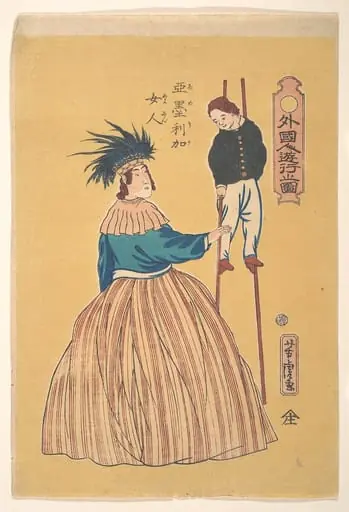 Amerika nyōjin|American Woman with Her Child on Stilts
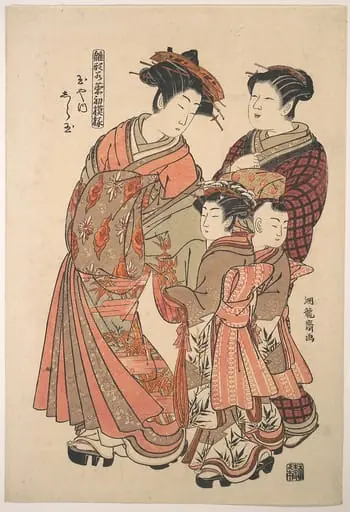 『雛形若菜初模様 玉や内 しら玉』|The Courtesan Shiratama of the Tamaya Brothel, from the series “A Pat-tern Book of the Year’s First Designs, Fresh as Spring Herbs” (“Hinagata wakana hatsu moyō”)
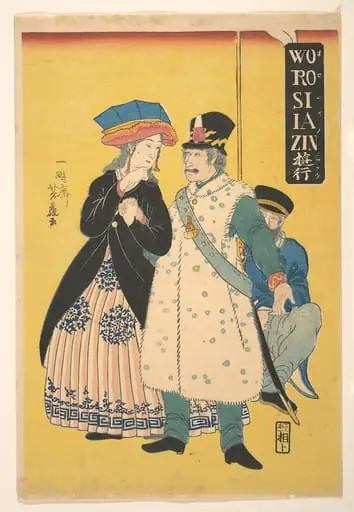
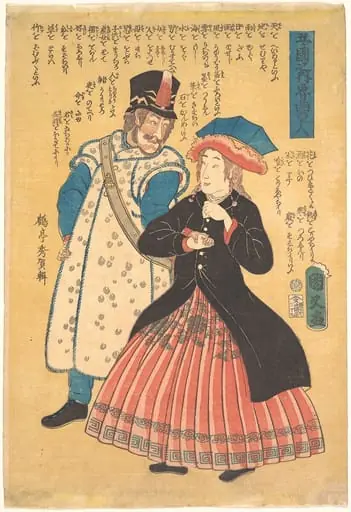 Roshiajin|Russians
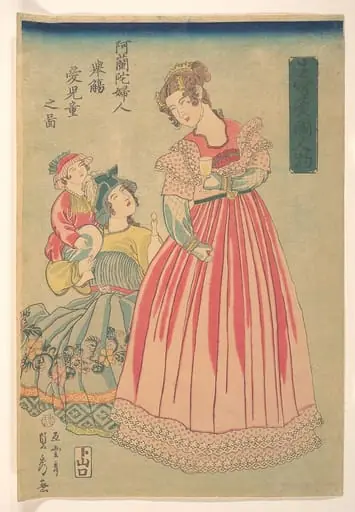 歌川五雲亭貞秀画 『生写異国人物 阿蘭陀婦人舉觴 愛児童之図』|Dutch Woman and Child (Seisha ikoku jinbutsu Oranda fujin aijidō no zu)