Artwork
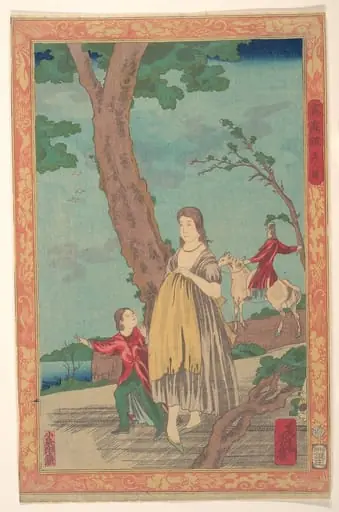
歌川五雲亭貞秀画 『生写異国人物 阿蘭陀婦人舉觴 愛児童之図』|Dutch Woman and Child (Seisha ikoku jinbutsu Oranda fujin aijidō no zu)
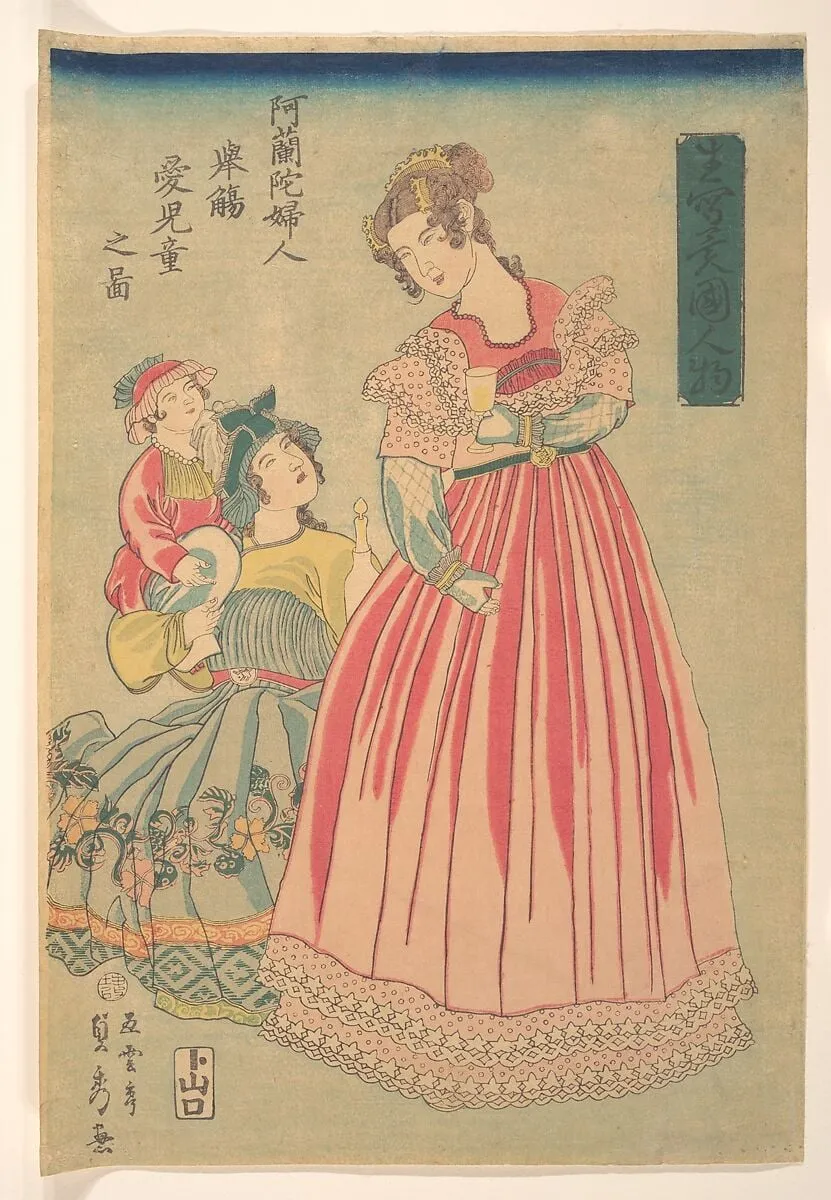
歌川五雲亭貞秀画 『生写異国人物 阿蘭陀婦人舉觴 愛児童之図』|Dutch Woman and Child (Seisha ikoku jinbutsu Oranda fujin aijidō no zu) is an ink print by the Impressionist artist Utagawa (Gountei) Sadahide. It dates from 1860 and is held in the collection of the Metropolitan Museum of Art. Utagawa Gountei Sadahide’s woodblock print, dated 1860, depicts a Dutch woman and child within a domestic scene.
About this work
Overview
Utagawa Gountei Sadahide’s woodblock print, dated 1860, depicts a Dutch woman and child within a domestic scene. Executed in the multicolour nishiki-e technique, the image combines ink outlines with vivid pigments on paper, presenting a compact composition that foregrounds the figures against a minimal backdrop of foliage and patterned floor covering.
Subject & Meaning
The central figure, a woman dressed in a pink gown trimmed with lace, raises a glass, suggesting a toast or ceremonial gesture. Flanking her are two smaller children, one clad in red, the other in yellow, who gaze upward toward the adult, emphasizing a familial or instructional moment that reflects Western domestic customs observed by Japanese audiences.
Technique & Style
Sadahide merges traditional Japanese woodblock methods with visual elements drawn from European art, evident in the use of linear perspective to suggest depth despite the overall flatness of the colour fields. The bold, saturated hues and stylised clothing patterns illustrate the artist’s engagement with rangaku (Dutch learning) influences while retaining the crisp line work characteristic of ukiyo‑e.
History & Provenance
Printed in the late Edo period, the work belongs to a series titled "Seisha ikoku jinbutsu," which documented foreign peoples and customs for a Japanese market increasingly curious about the outside world. The print’s survival in museum collections attests to its role as a visual record of cross‑cultural encounters during Japan’s opening to the West.
Context
Produced shortly after the 1854 opening of Japan’s ports to foreign trade, the image reflects the growing fascination with Dutch attire and domestic life. Sadahide, known for his travel sketches and depictions of foreign subjects, used this print to convey contemporary Japanese perceptions of European family scenes.
Legacy
The print exemplifies the hybrid aesthetic that emerged in mid‑nineteenth‑century Japanese art, influencing later artists who explored Western motifs. It remains a valuable resource for scholars examining the visual exchange between Japan and Europe during the early Meiji transition.
Artist & collection

Artist
Utagawa Sadahide , also known as Gountei Sadahide, was a Japanese artist best known for his prints in the ukiyo-e style as a member of the Utagawa school.

 Untitled
 Untitled
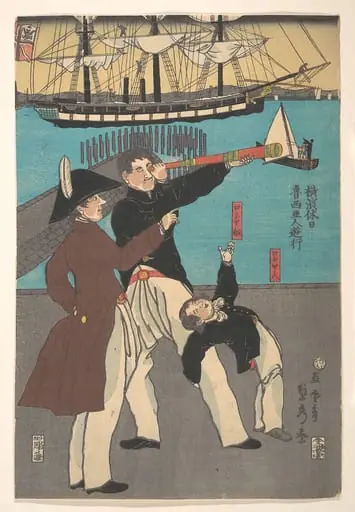 歌川五雲亭貞秀画 『横浜休日 魯西亜人遊行』|Russians Enjoying a Holiday in Yokohama (Yokohama kyūjitsu Roshiajin yūkō)
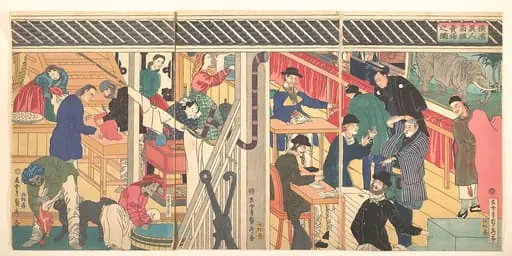 「横浜異人商館買場之圖」|Foreign Business Establishment in Yokohama (Yokohama ijin shōkan uriba no zu)
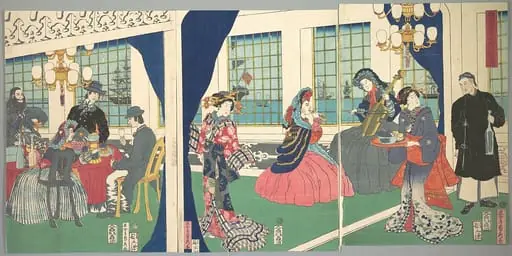
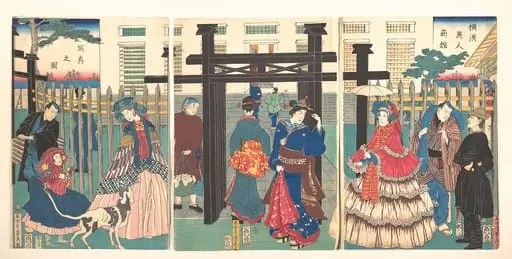 歌川五雲亭貞秀画 『横浜異人商館 写真之図』|Foreign Business Establishment in Yokohama (Yokohama ijin shōkan shashin no zu)
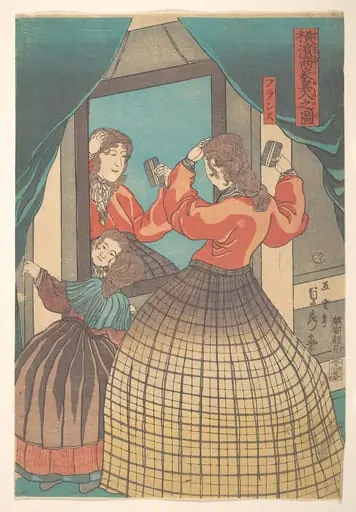 歌川五雲亭貞秀画 『横浜商家異人之図』|French Woman and Girl, from the series Foreign Merchants in Yokohama (Yokohama shōka ijin no zu)
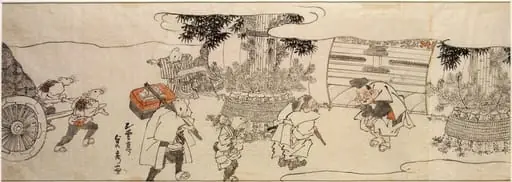 Daikoku and rats bringing rice bales to Ebisu
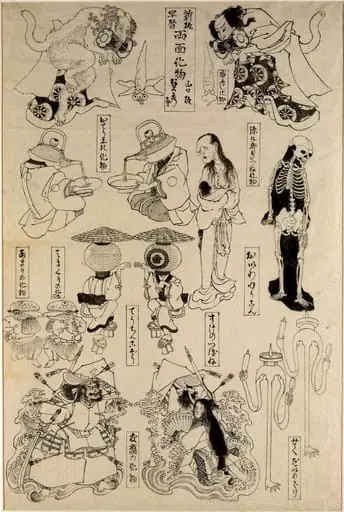 Fox-Genkurô and Others
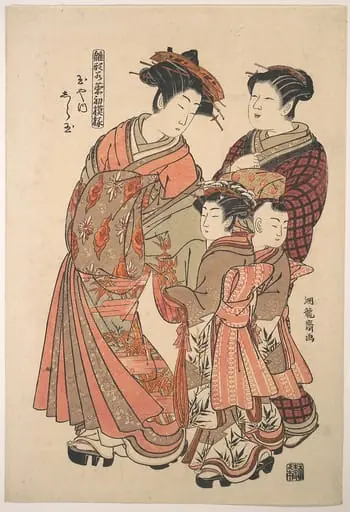 『雛形若菜初模様 玉や内 しら玉』|The Courtesan Shiratama of the Tamaya Brothel, from the series “A Pat-tern Book of the Year’s First Designs, Fresh as Spring Herbs” (“Hinagata wakana hatsu moyō”)
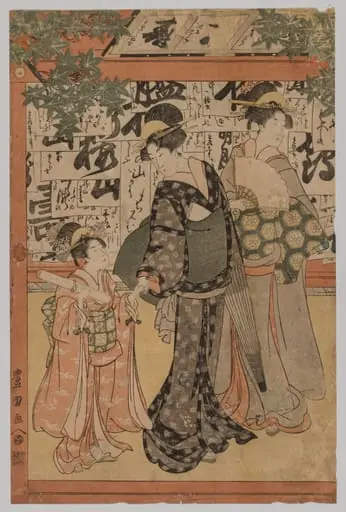 Examination for Writing
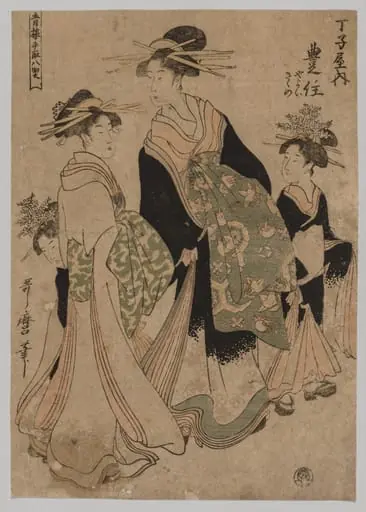 Courtesans and Attendants
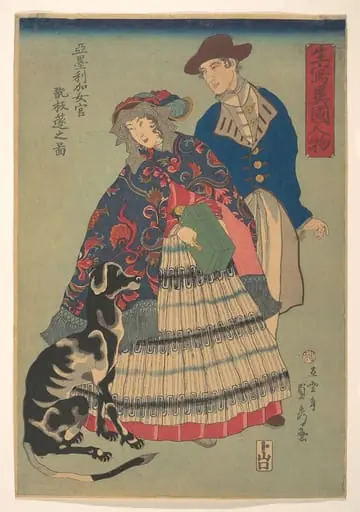 「生寫異國人物」|American Woman Playing a Concertina, from the series Life Drawings of People from Foreign Nations
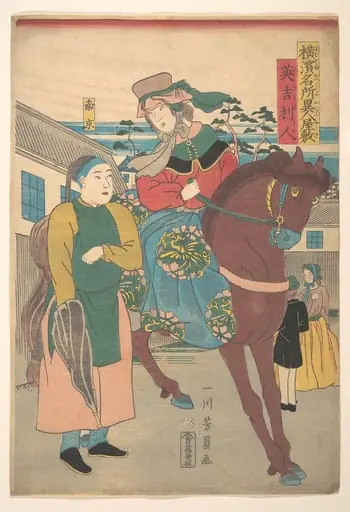 Igirisujin|An English Woman with a Chinese Servant in the Foreign District, from the series Famous Places in Yokohama
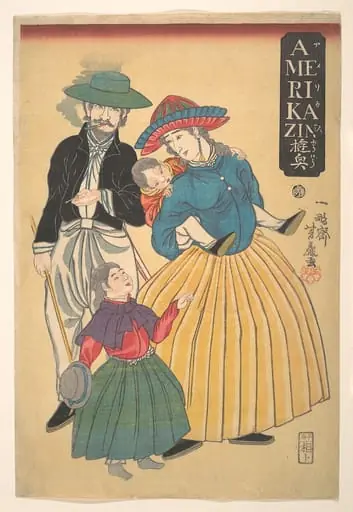 一鵬斎芳藤画 「AMERIKAZIN (アメリカ人)遊興」|Americans on an Outing (Amerikajin yūgyō)
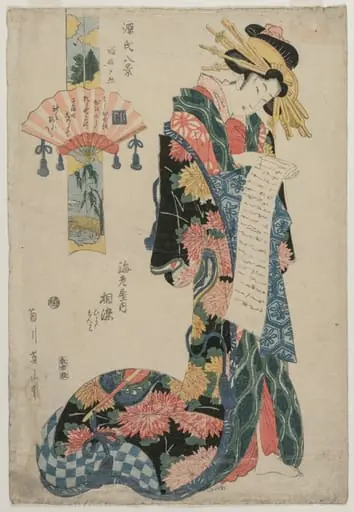 The Courtesan Aizome of the Ebiya (From the series Eight Views of the Tale of Genji)
 Bijin zu|Beauties
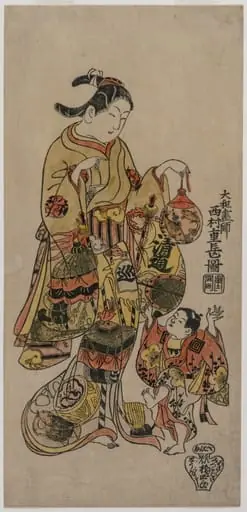 Child Reaching for a Fishbowl
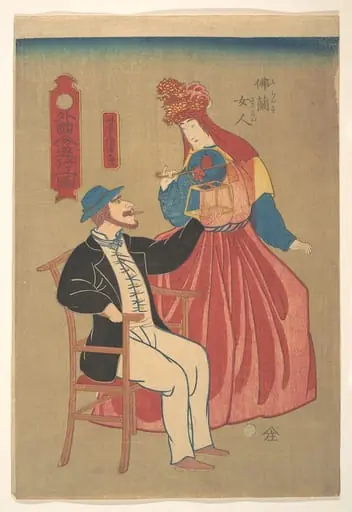 Furansu nyōjin|French Housewife and Her Husband