Artwork
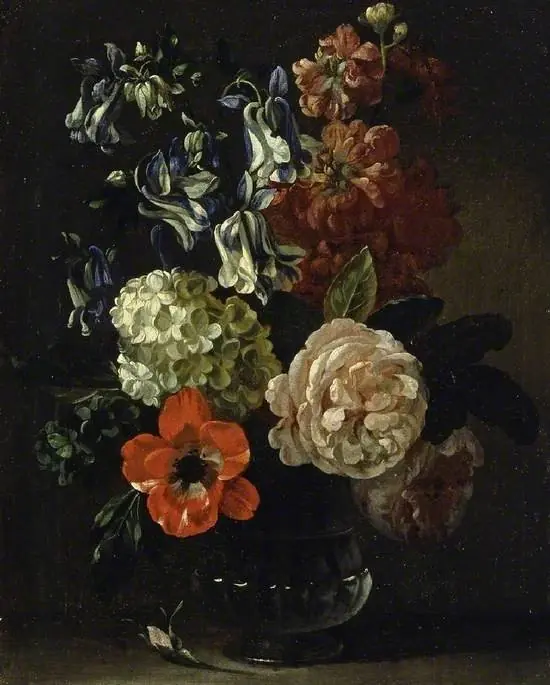
Glass vase of flowers
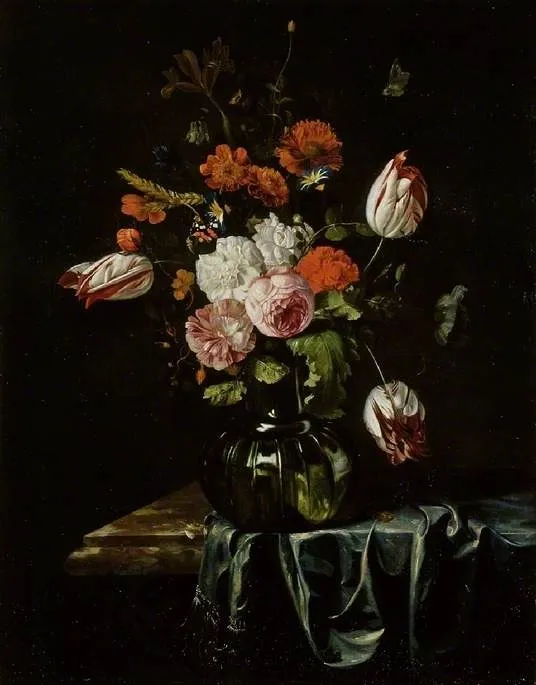
Glass vase of flowers is an oil painting by Isaac Denies. It dates from 1678 and is held in the collection of the Fitzwilliam Museum.
About this work
Overview
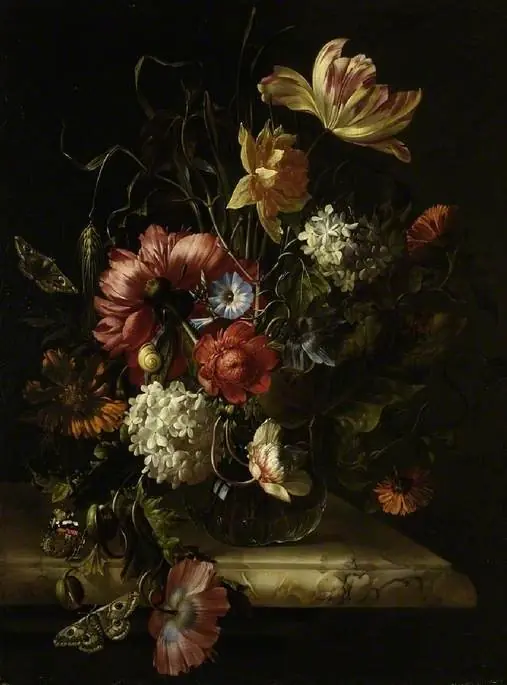
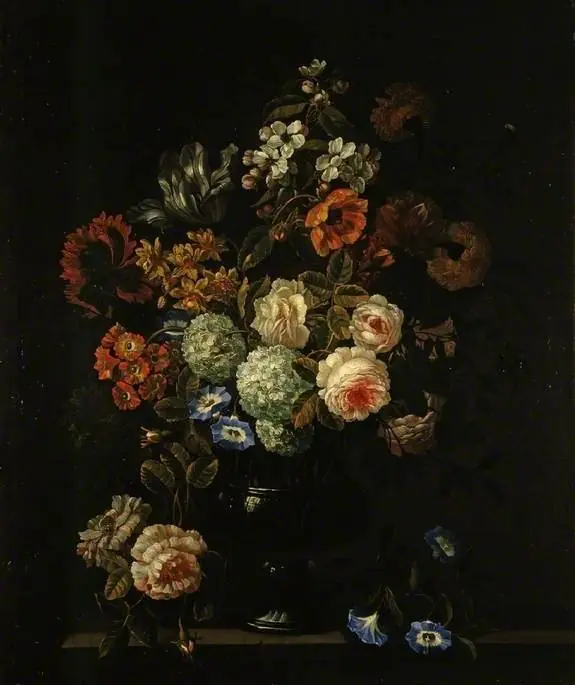
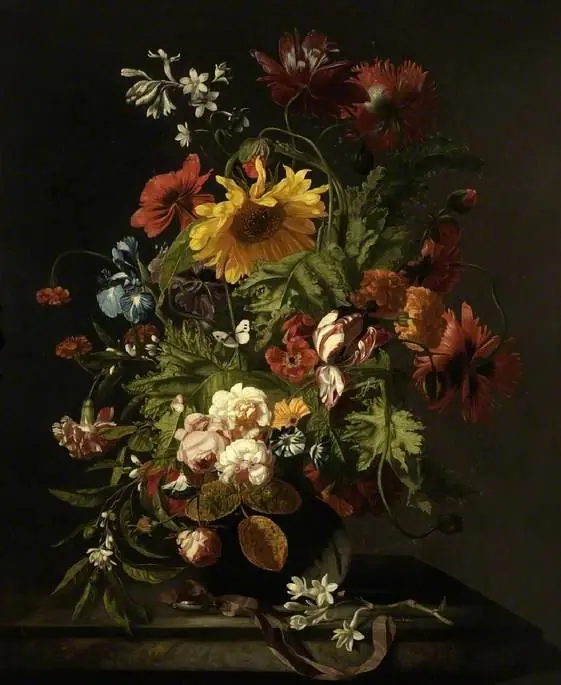
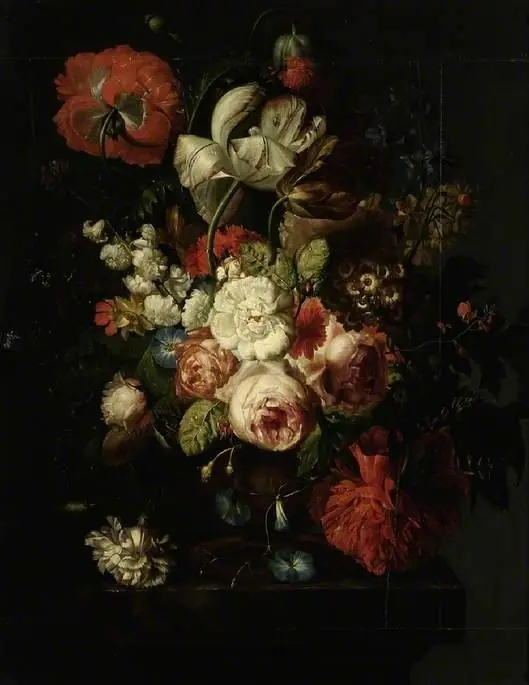
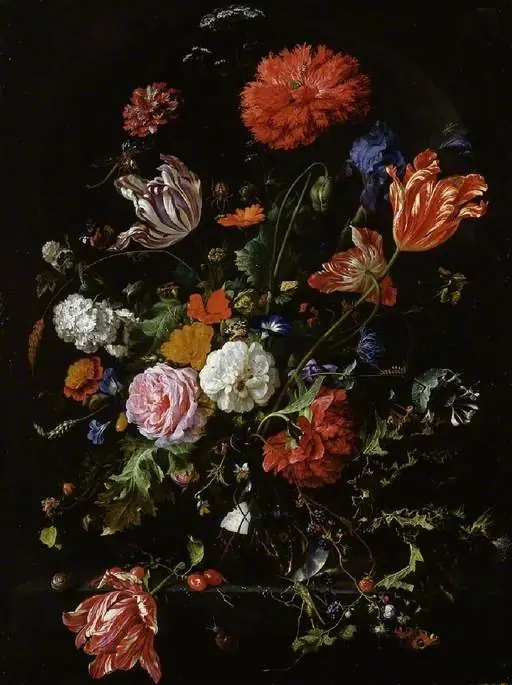
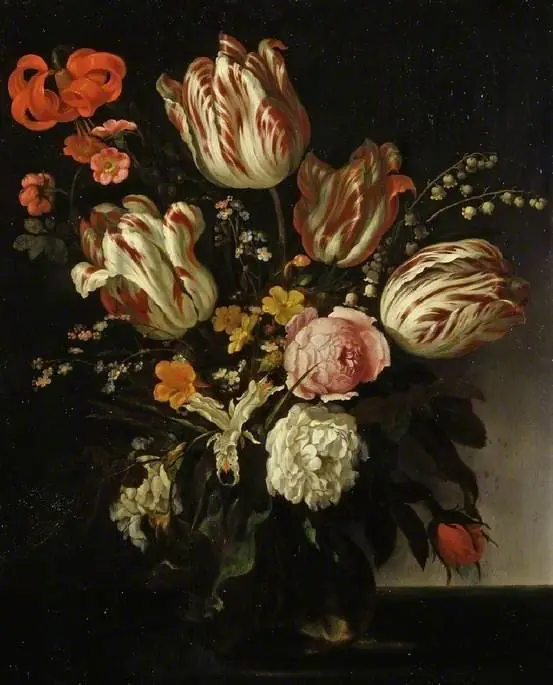
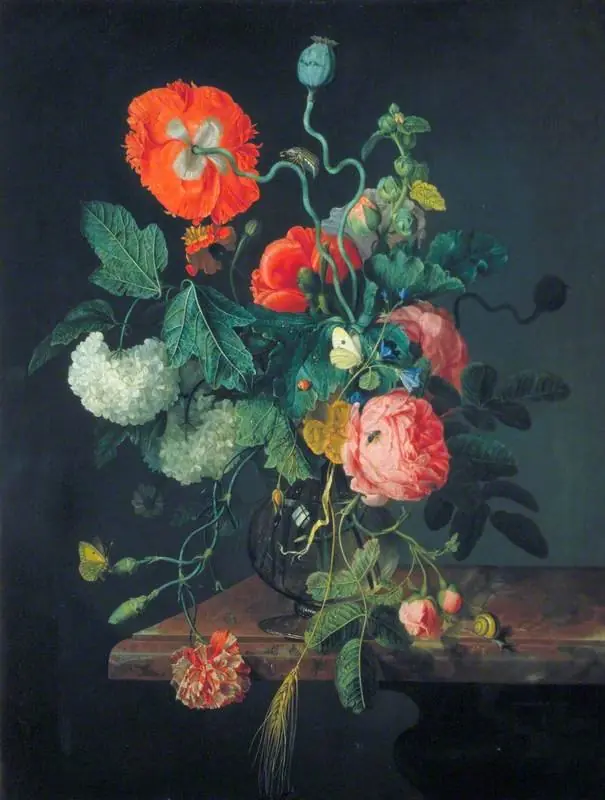
Painted around 1678, this oil-on-canvas still life by Isaac Denies presents a modest arrangement of flowers in a dark green glass vessel.
Painted around 1678, this oil-on-canvas still life by Isaac Denies presents a modest arrangement of flowers in a dark green glass vessel. Set atop a table draped with a folded green cloth, the composition emphasizes quiet harmony over theatrical display. The work belongs to the Fitzwilliam Museum’s collection, where it stands as a representative example of Dutch still-life painting from the late seventeenth century.
Subject & Meaning
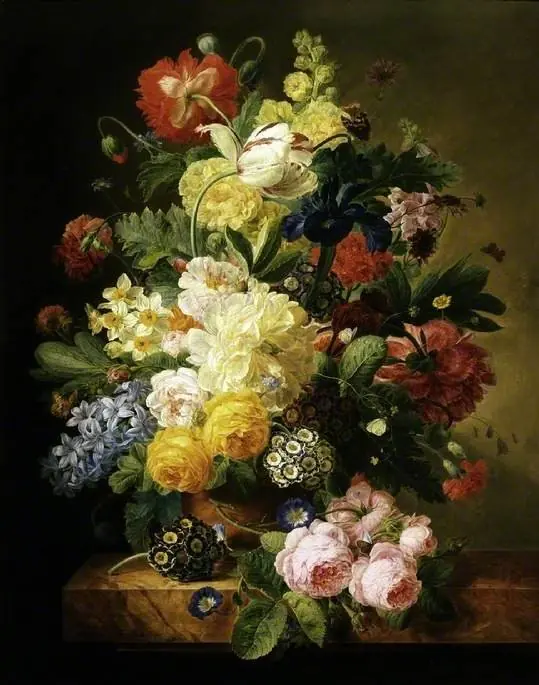
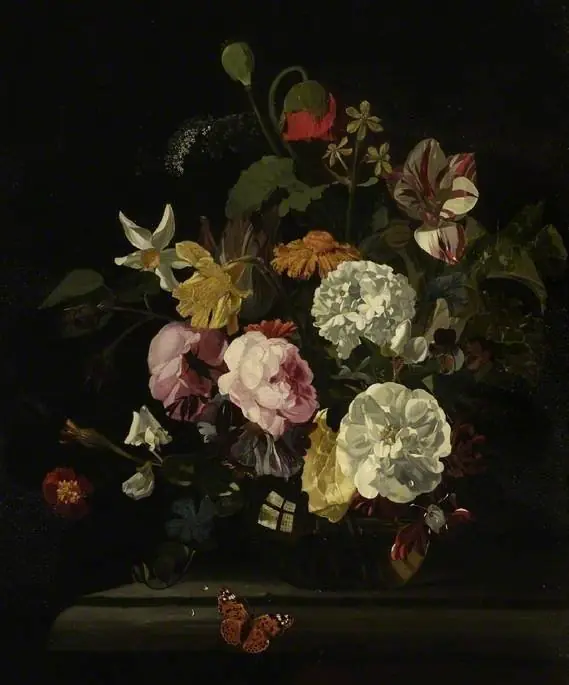
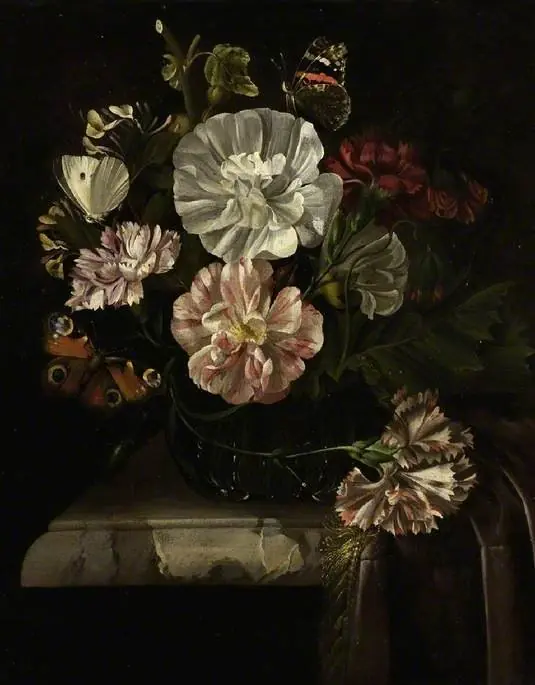
The arrangement includes pink, white, and orange blooms, accompanied by naturalistic leaves and stems, arranged without rigid symmetry. The flowers, likely chosen for seasonal variety, reflect the period’s fascination with botany and the fleeting nature of life. Their loose, unforced placement suggests an intimate, observed moment rather than a staged display, reinforcing themes of transience and quiet beauty.
Technique & Style
Denies employs fine brushwork to render the transparency of the glass vase and the delicate textures of petals and foliage. Light is handled subtly, catching the edges of petals and the curve of the vessel without dramatic contrast. The palette is restrained, favoring muted tones that enhance the painting’s calm, contemplative mood. The composition avoids excess, focusing attention on form and materiality.
History & Provenance
The painting has been in the Fitzwilliam Museum’s collection since at least the early twentieth century. Its attribution to Isaac Denies, a lesser-known Dutch painter active in the 1670s, is based on stylistic comparison with signed works from the period. Little is documented about its earlier ownership, but its preservation suggests it was valued by collectors interested in Dutch still-life traditions.
Context
Created during the height of Dutch still-life painting, this work aligns with a broader cultural interest in natural observation and domestic serenity. While grand floral arrangements by artists like Jan Davidsz. de Heem were popular, Denies’ restrained approach reflects a quieter, more personal strand of the genre. Such paintings often appealed to urban middle-class patrons who prized order, refinement, and the beauty of everyday objects.
Legacy
Though Isaac Denies is not widely recognized today, this painting contributes to the understanding of regional variations within Dutch still-life painting. Its modest scale and unadorned elegance offer insight into the diversity of artistic expression beyond the more famous florists of the era. It remains a quiet testament to the skill and sensitivity of artists who found profundity in simplicity.
Artist & collection