Artwork
Sukarn, gavef nom
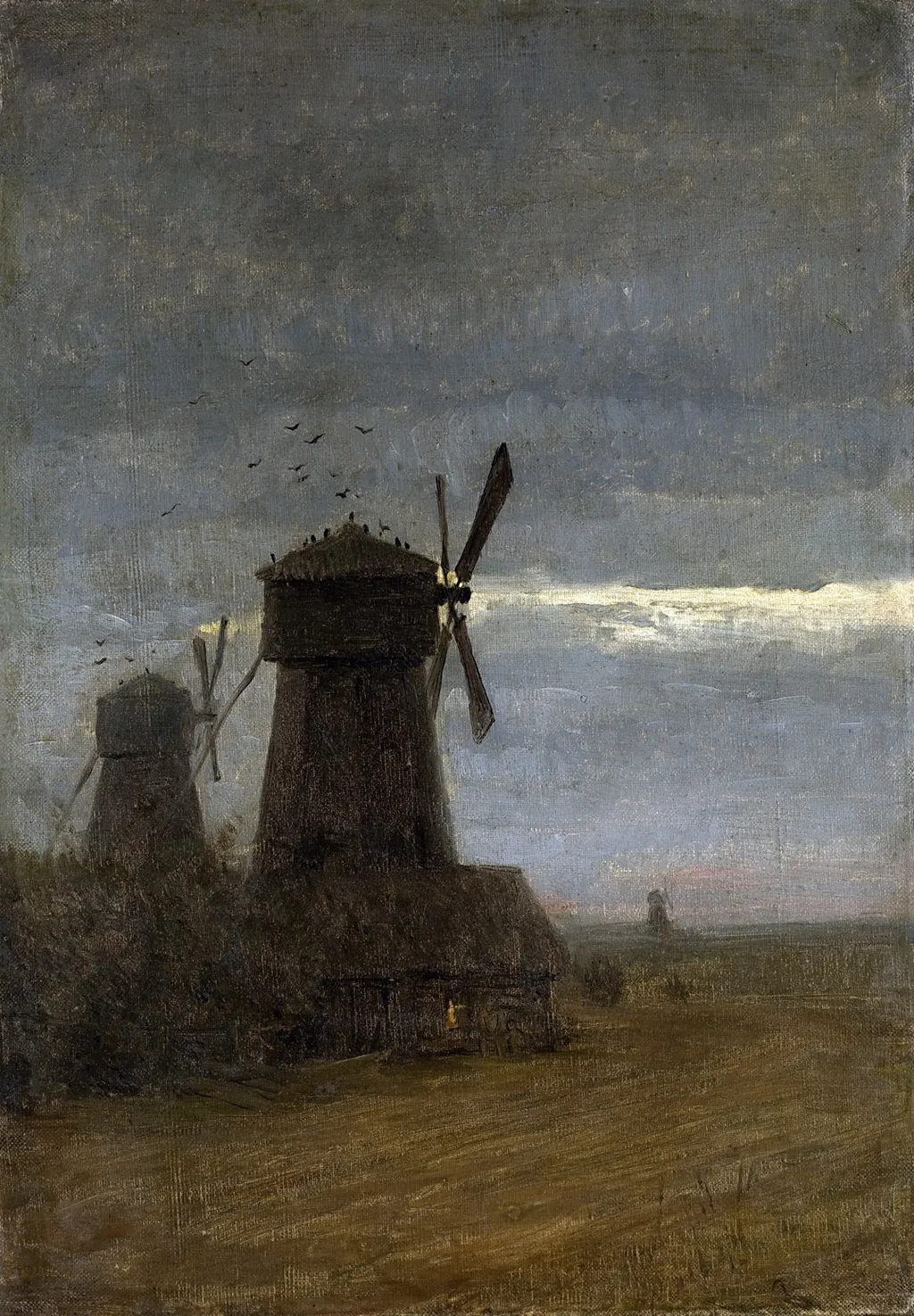
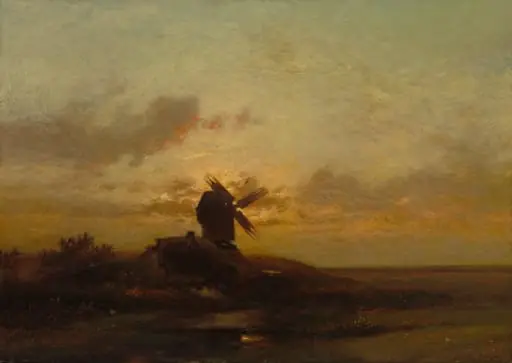
Sukarn, gavef nom is an unspecified painting by Isaac Levitan. It dates from 1890 and is held in the collection of the Tretyakov Gallery. Created circa 1890, the canvas depicts a solitary windmill set in an open, level field under a muted sky.
About this work
Overview
Created circa 1890, the canvas depicts a solitary windmill set in an open, level field under a muted sky. The structure rises dark against a grey, cloud‑filled horizon, while a few birds trace faint arcs overhead. The composition conveys a restrained atmosphere of quietude, inviting contemplation of space and stillness.
Subject & Meaning
The lone windmill serves as the focal point, symbolising isolation within an expansive landscape. Its stark silhouette against the empty plain emphasizes the relationship between human‑made forms and the surrounding environment, suggesting a contemplative reflection on solitude and the passage of time.
Technique & Style
Levitan employs a restrained palette of greys, browns and muted greens, using delicate tonal shifts to render light and shadow. Soft, blended brushwork creates atmospheric depth, while the precise rendering of the windmill’s wheel and door provides a subtle contrast between detail and the broader, hazy surroundings.
History & Provenance
The work entered the collection of Moscow’s Tretyakov Gallery, where it remains on display. It was acquired in the early 20th century as part of the museum’s effort to assemble representative works of Russian landscape painting, reflecting Levitan’s reputation within that genre.
Context
During the late 19th century Levitan helped define the Russian “mood landscape,” a genre that prioritises emotional resonance over topographical accuracy. This painting exemplifies that approach, focusing on atmospheric conditions and the inner feeling evoked by a seemingly simple rural scene.
Artist & collection
Artist
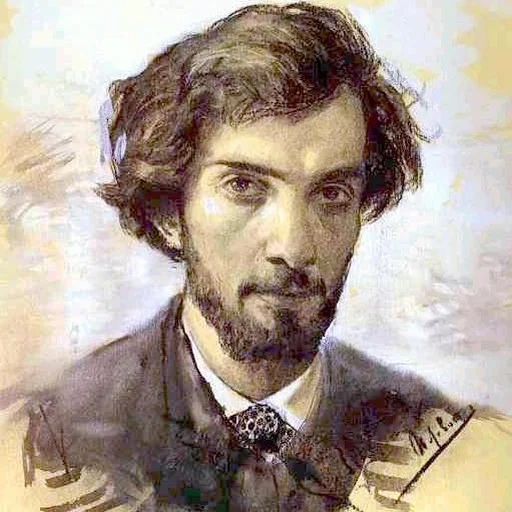
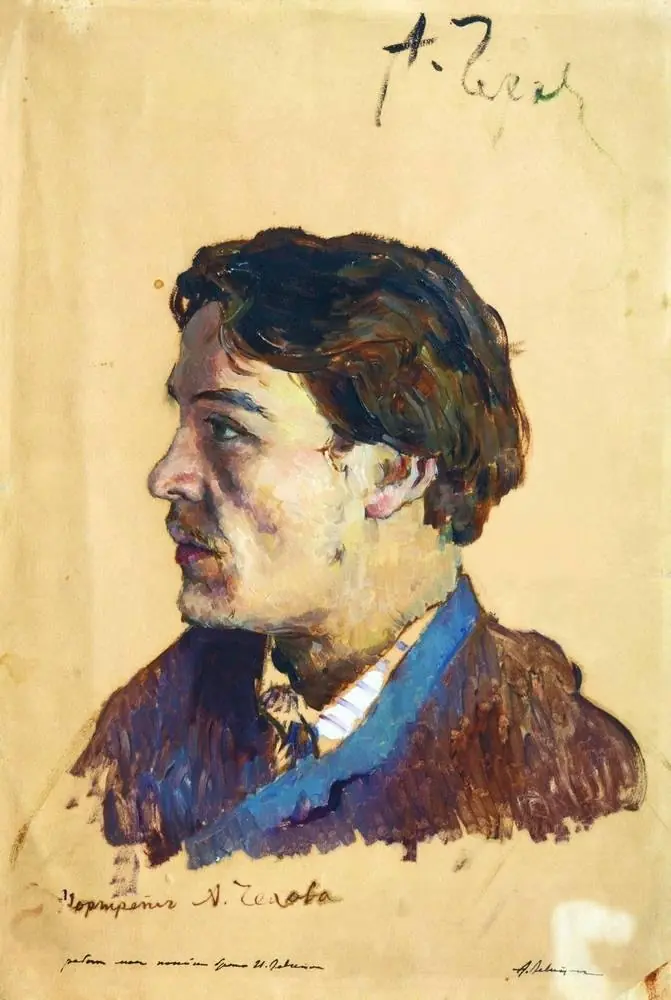
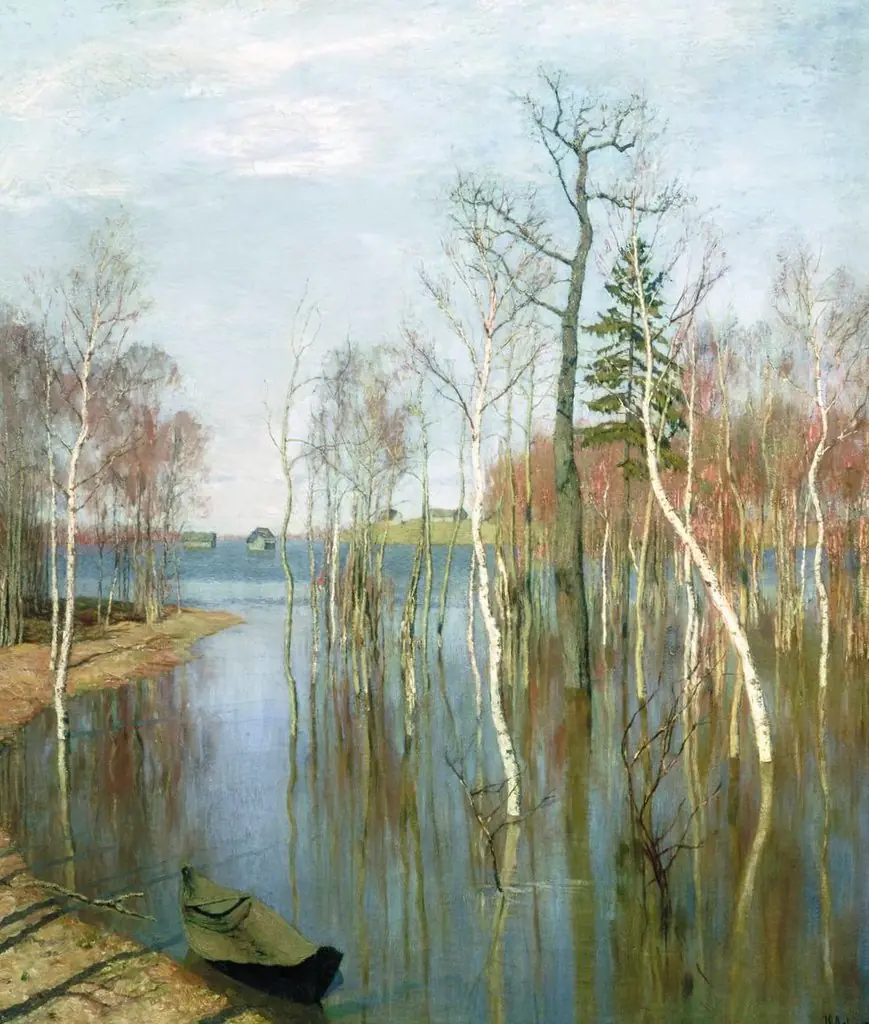
Isaac Ilyich Levitan (Russian: Исаа́к Ильи́ч Левита́н; 30 August 1860 – 4 August 1900) was a Russian landscape painter who advanced the genre of the "mood landscape".

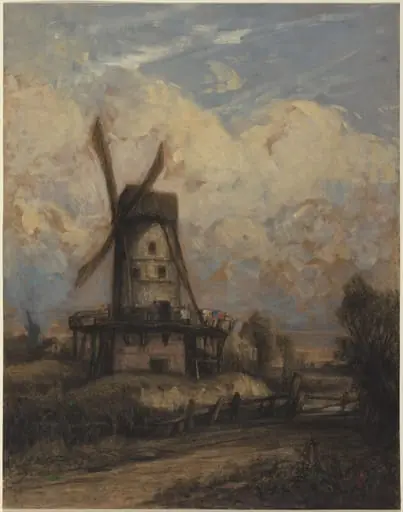 A Windmill against a Cloudy Sky
 The Windmill
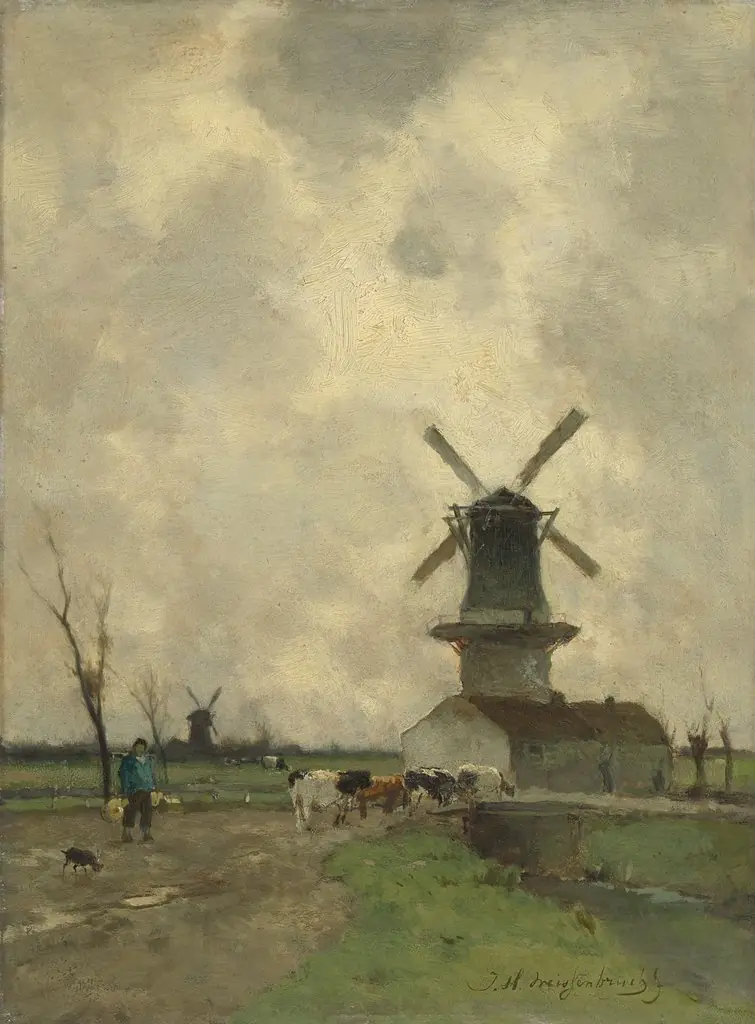 The mill
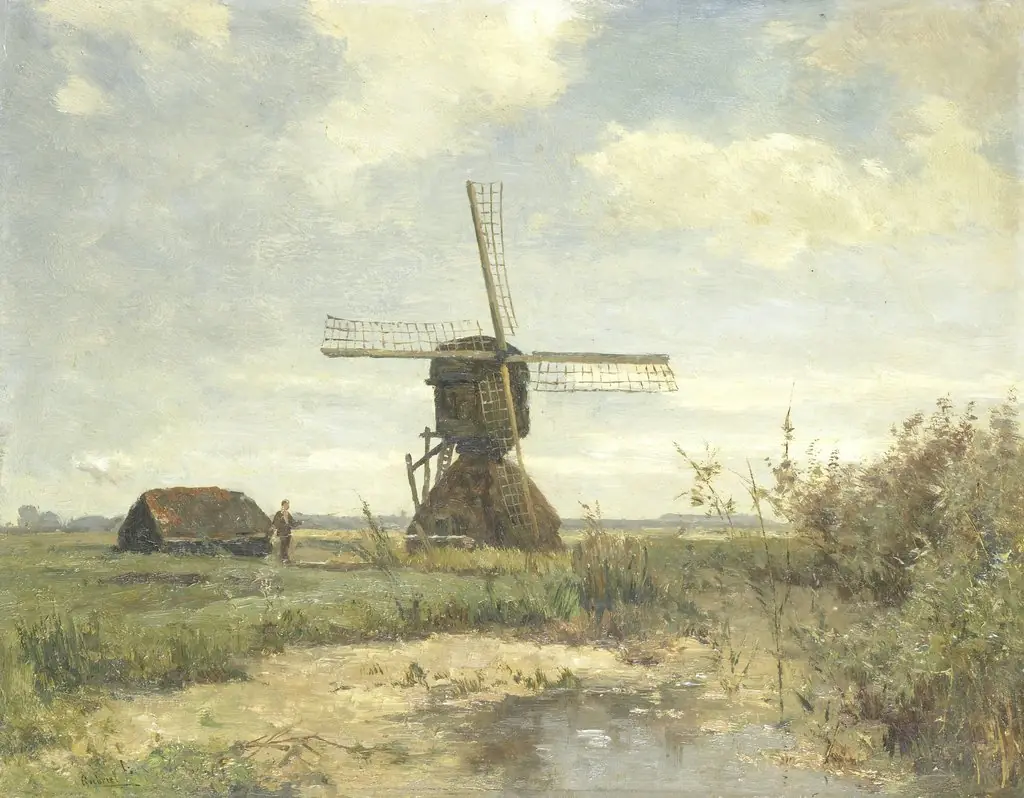 ‘Sunny Day’: a windmill on a watercourse
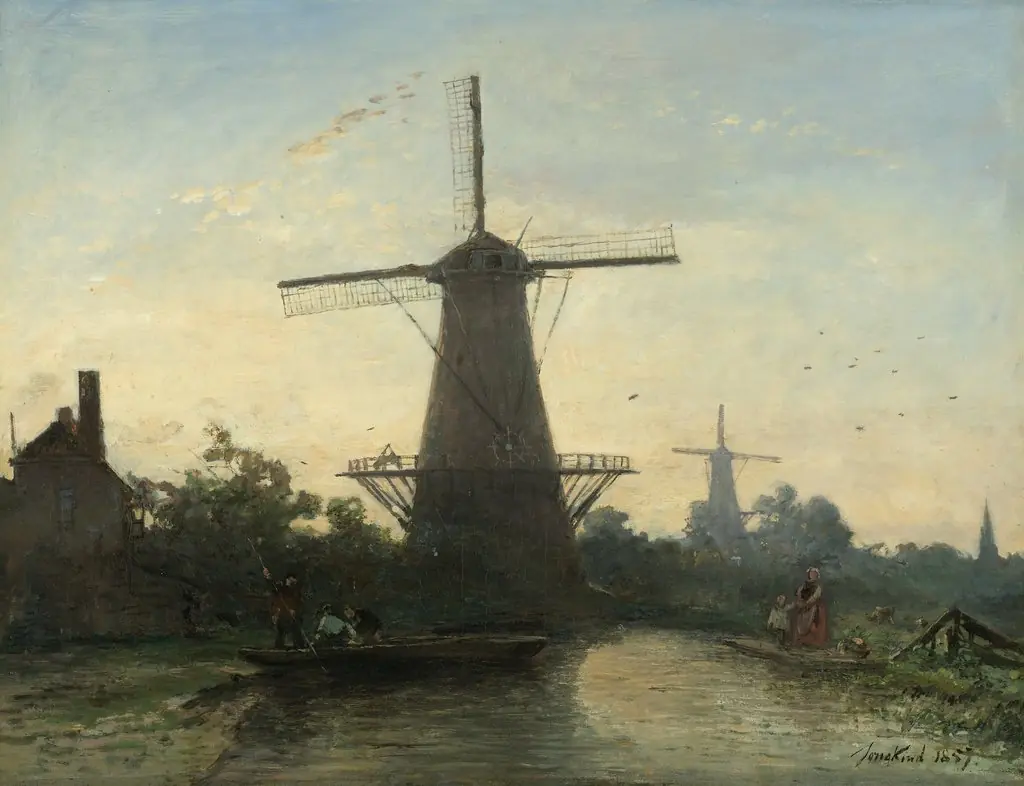 Windmills near Rotterdam
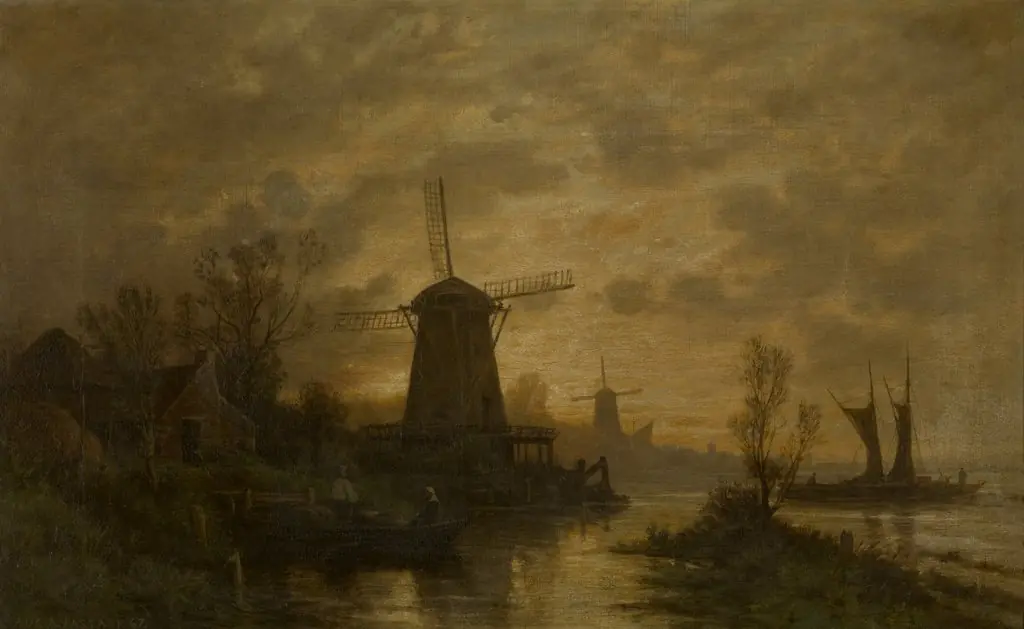 Windmills in Schiedam
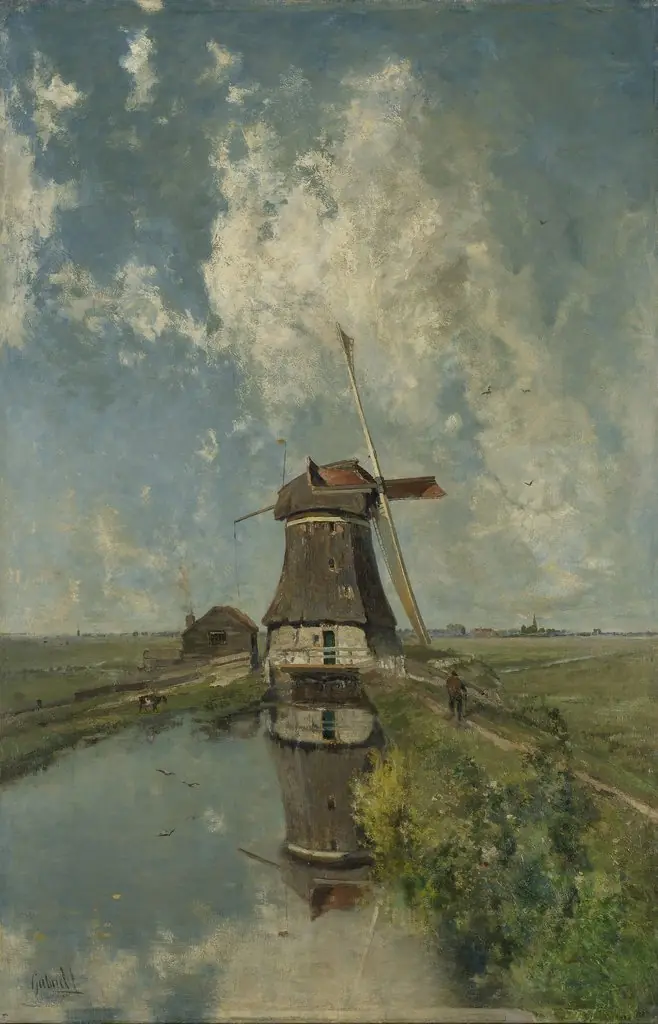 A Windmill on a Polder Waterway, Known as ‘In the Month of July’
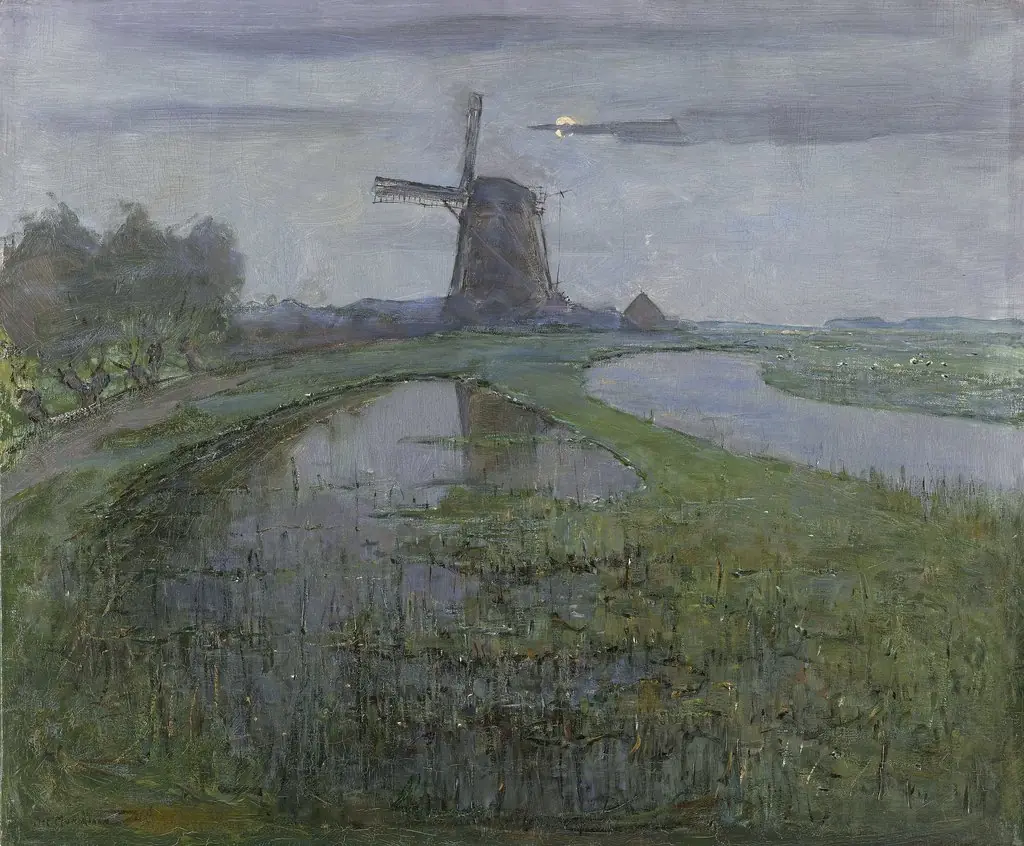 Oostzijdse Mill along the River Gein by Moonlight
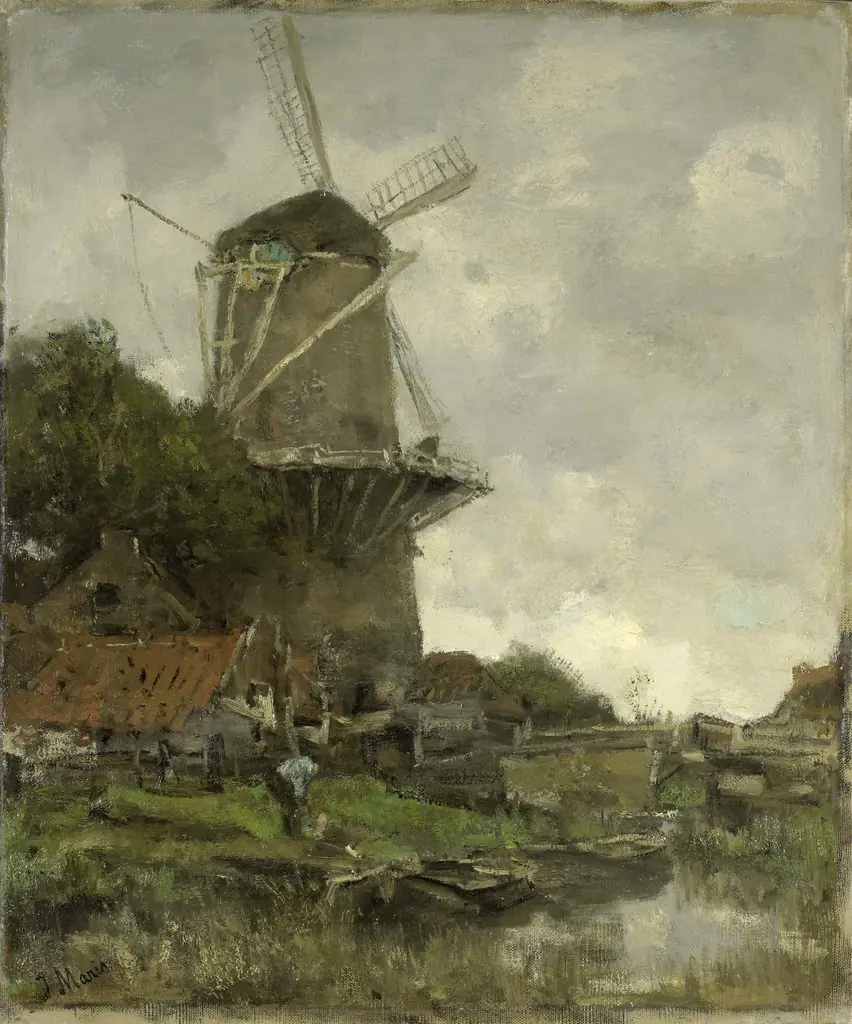 The Windmill
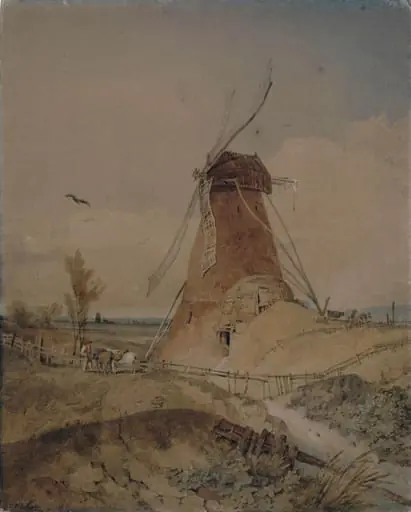 Windmill, Lincolnshire
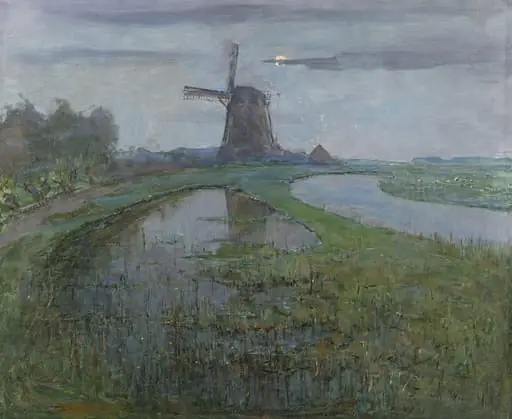 Oostzijdse Mill along the River Gein by Moonlight
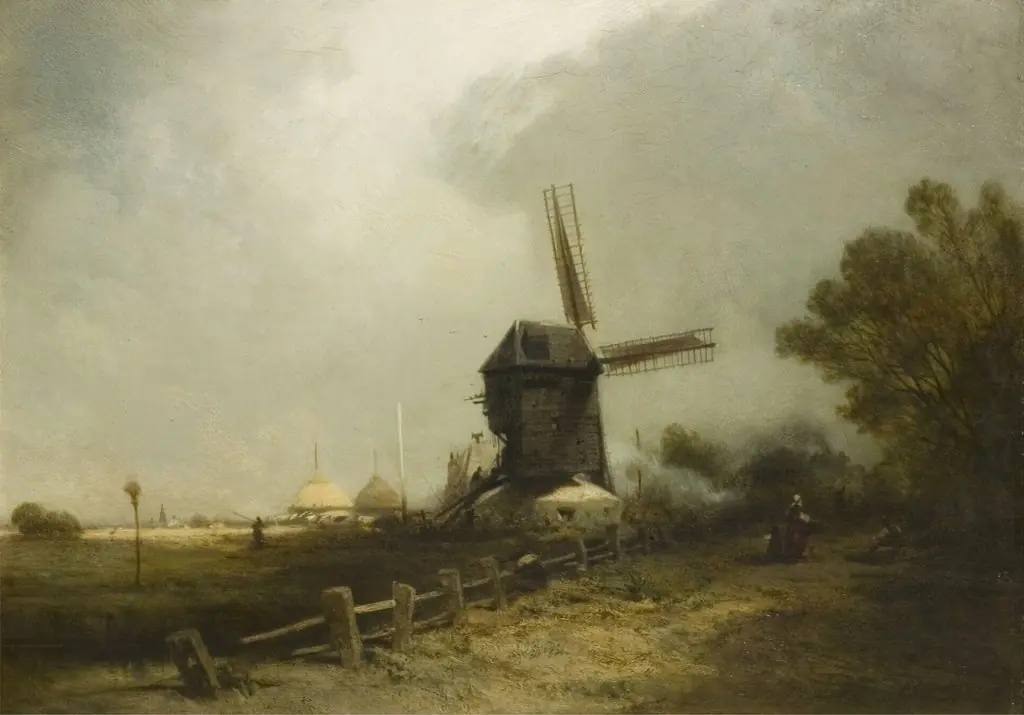 The Windmill