Artwork
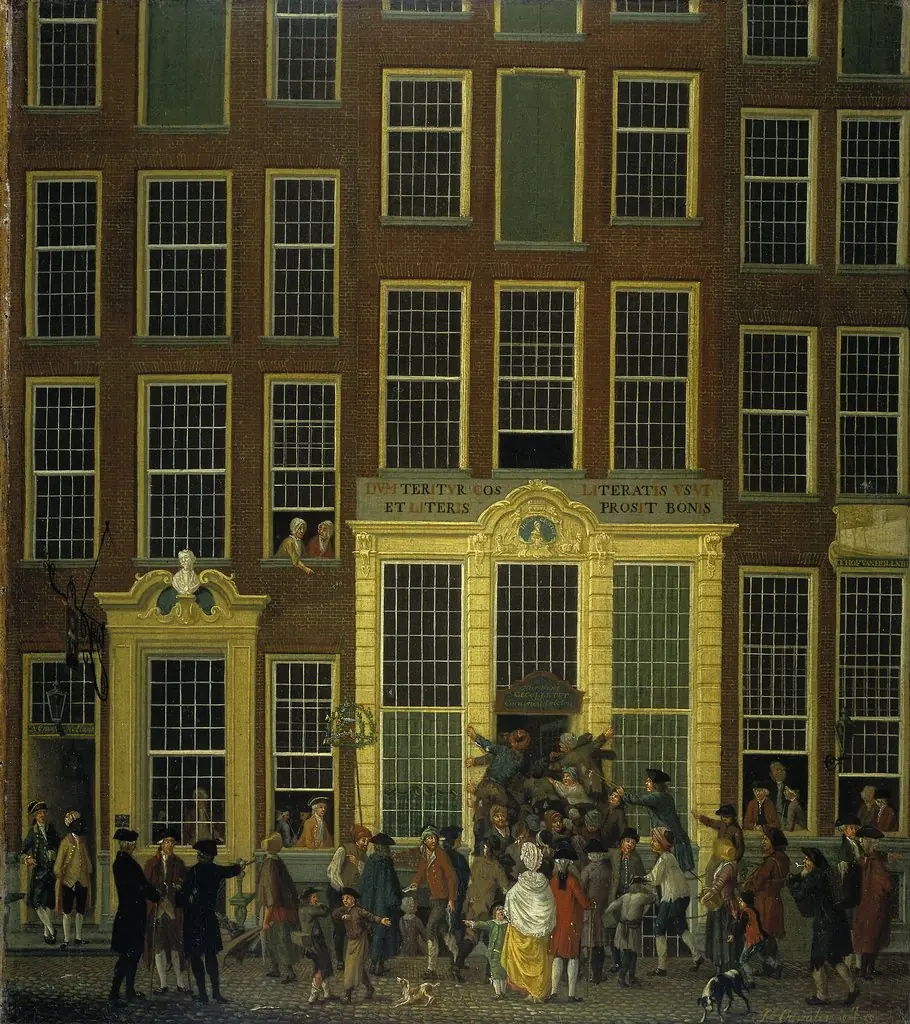
The Sint-Antoniuswaag in Amsterdam
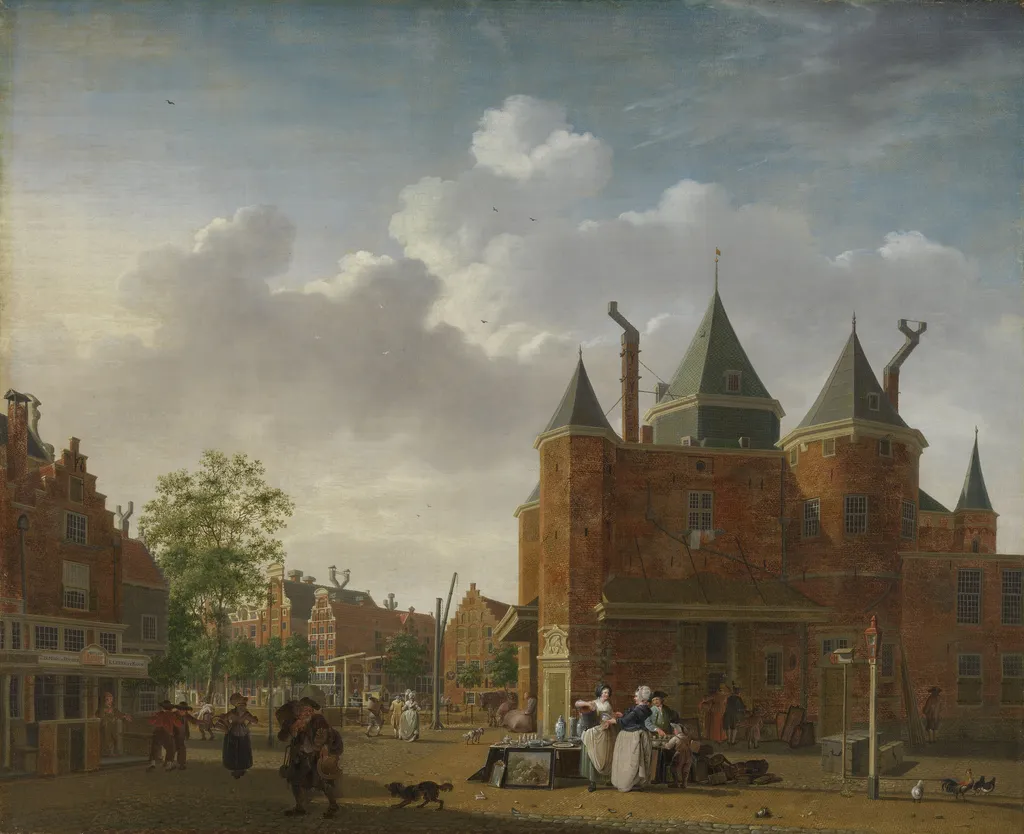
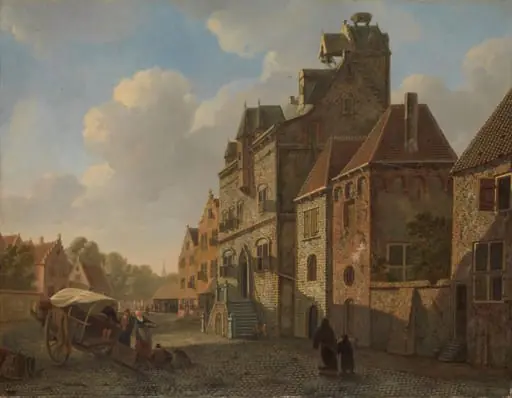
The Sint-Antoniuswaag in Amsterdam is an oil painting by the Rococo painting artist Isaac Ouwater. It dates from 1793 and is held in the collection of the Rijksmuseum.
About this work
Overview
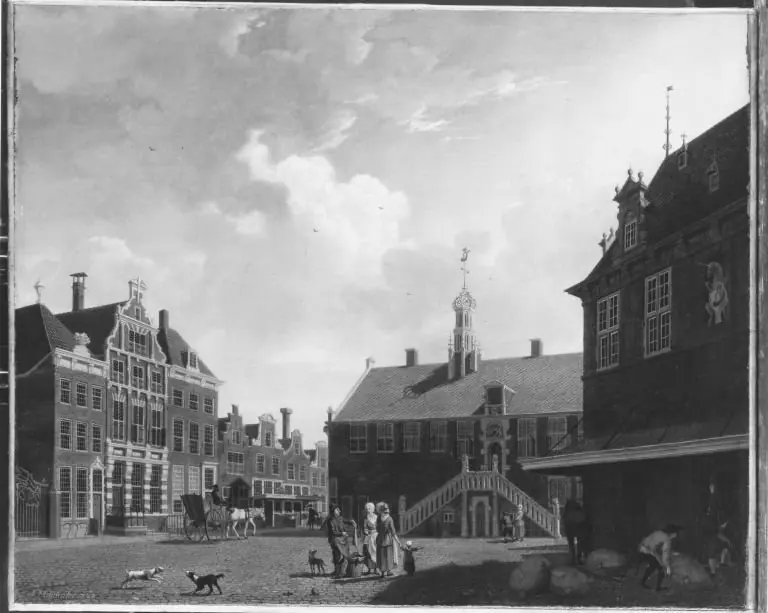
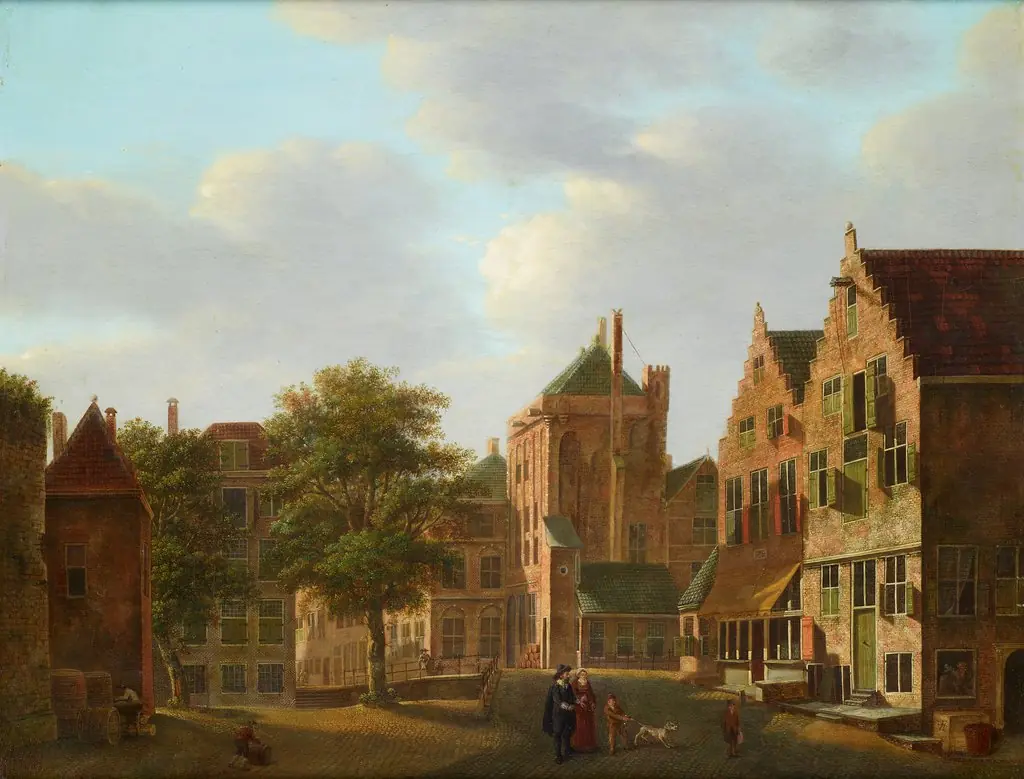
Isaac Ouwater’s 1793 oil painting depicts the Sint‑Antoniuswaag, a prominent brick weighing house in Amsterdam, framed by its tall towers and gate. The bustling street scene captures pedestrians in period attire, a small market table with jars, and a dog, all set beneath a bright sky dotted with voluminous clouds.
Subject & Meaning
The work records everyday urban life in late‑18th‑century Amsterdam, emphasizing the waag’s role as a commercial hub. Figures are shown conversing and trading, suggesting the building’s function as a gathering point for merchants and townspeople, while the surrounding architecture underscores the city’s mercantile prosperity.
Technique & Style
Ouwater employs a subtle chiaroscuro, contrasting warm, earthy tones on the figures and façades with cooler blues of the sky. Light falls across faces and garments, creating depth, while the rendering of brickwork and steep roofs demonstrates meticulous attention to architectural detail.
History & Provenance
Created in 1793, the painting entered the Rijksmuseum’s collection, where it remains on display. Its acquisition reflects the museum’s focus on documenting Dutch urban environments and the artistic output of the period.
Context
The Sint‑Antoniuswaag was a central weighing house for goods entering Amsterdam’s markets. Ouwater’s depiction aligns with a broader Dutch tradition of cityscape painting that recorded civic architecture and daily commerce, offering a visual record of the city’s economic infrastructure.
Own this work as a print
Artist & collection