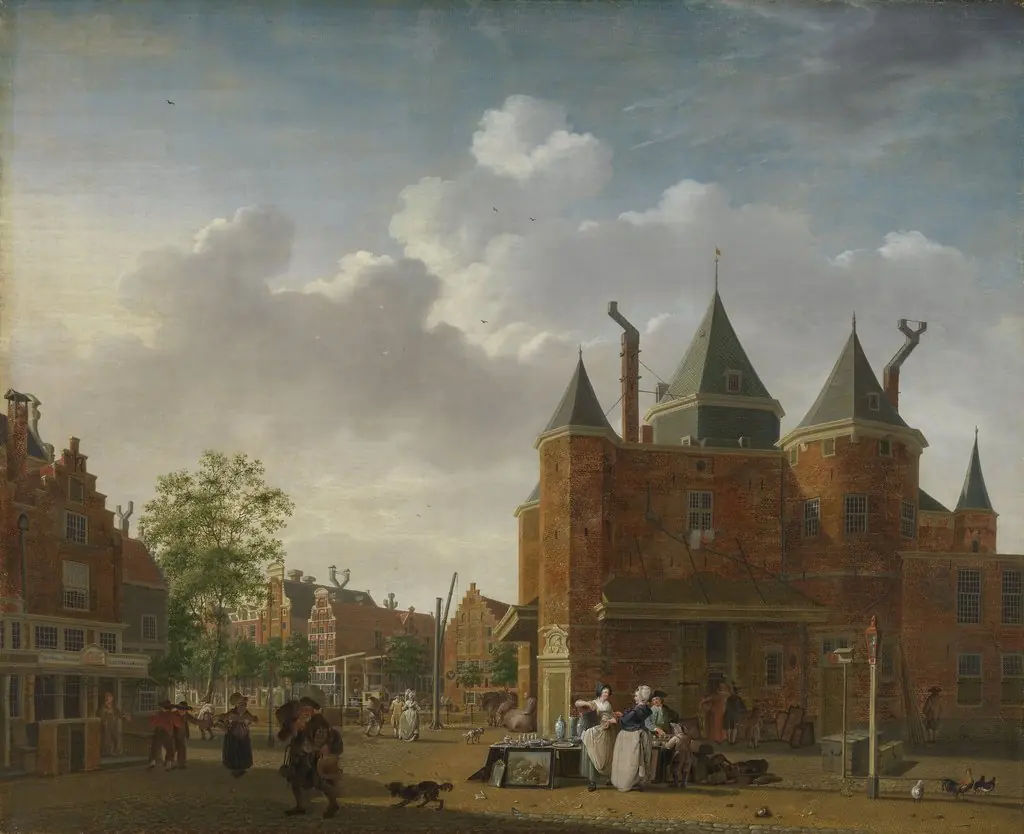
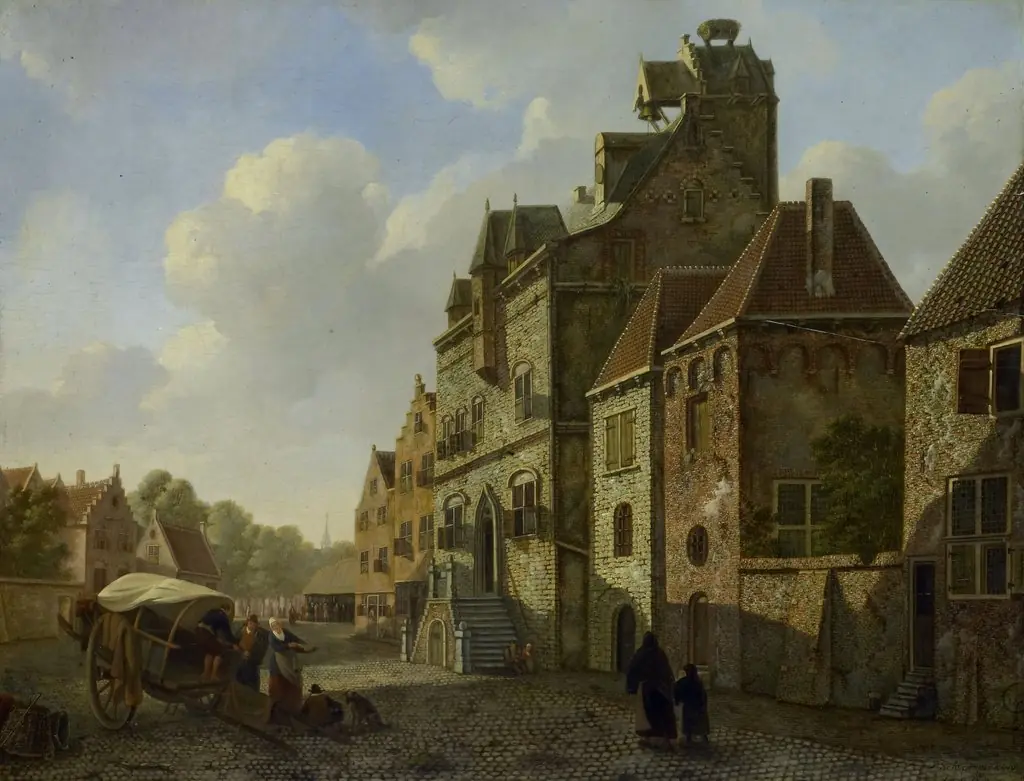
Artwork
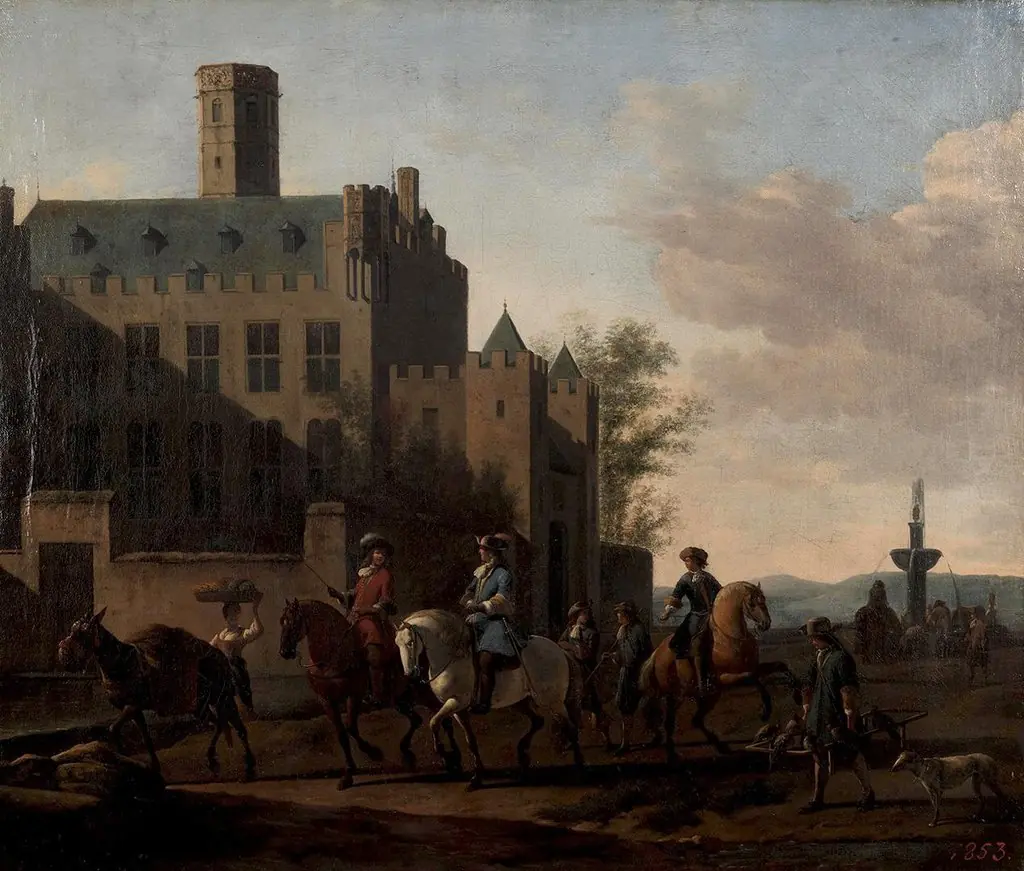
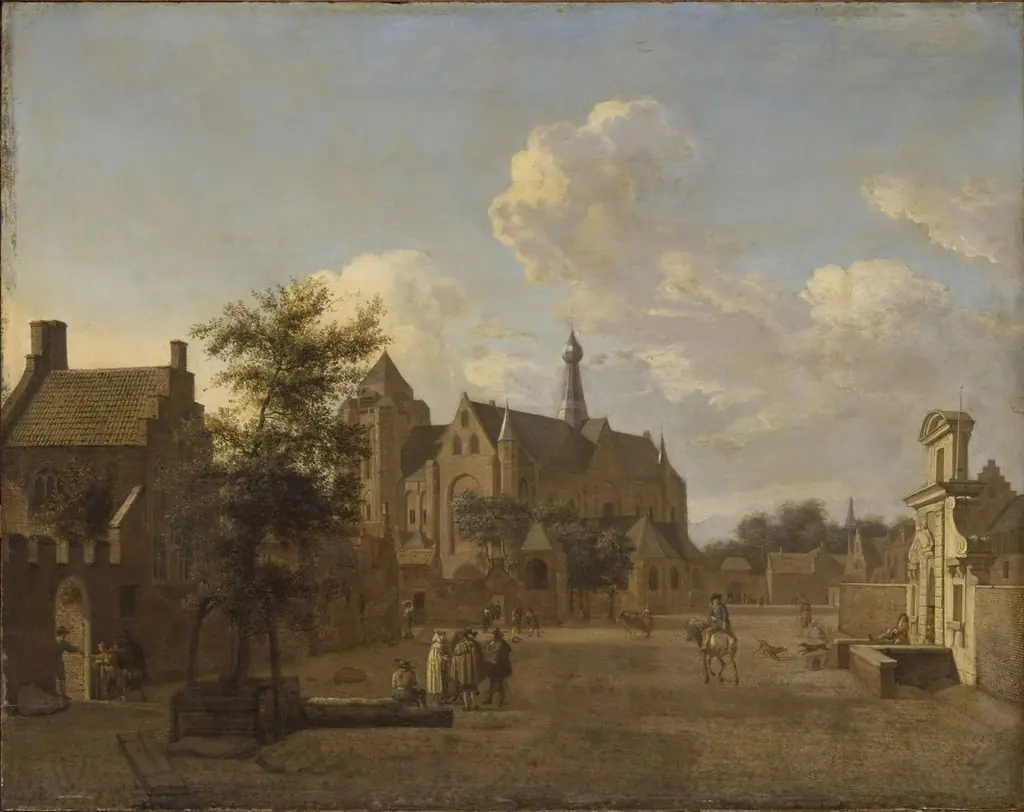
A hunting party near the Hofvijver in The Hague, seen from the South
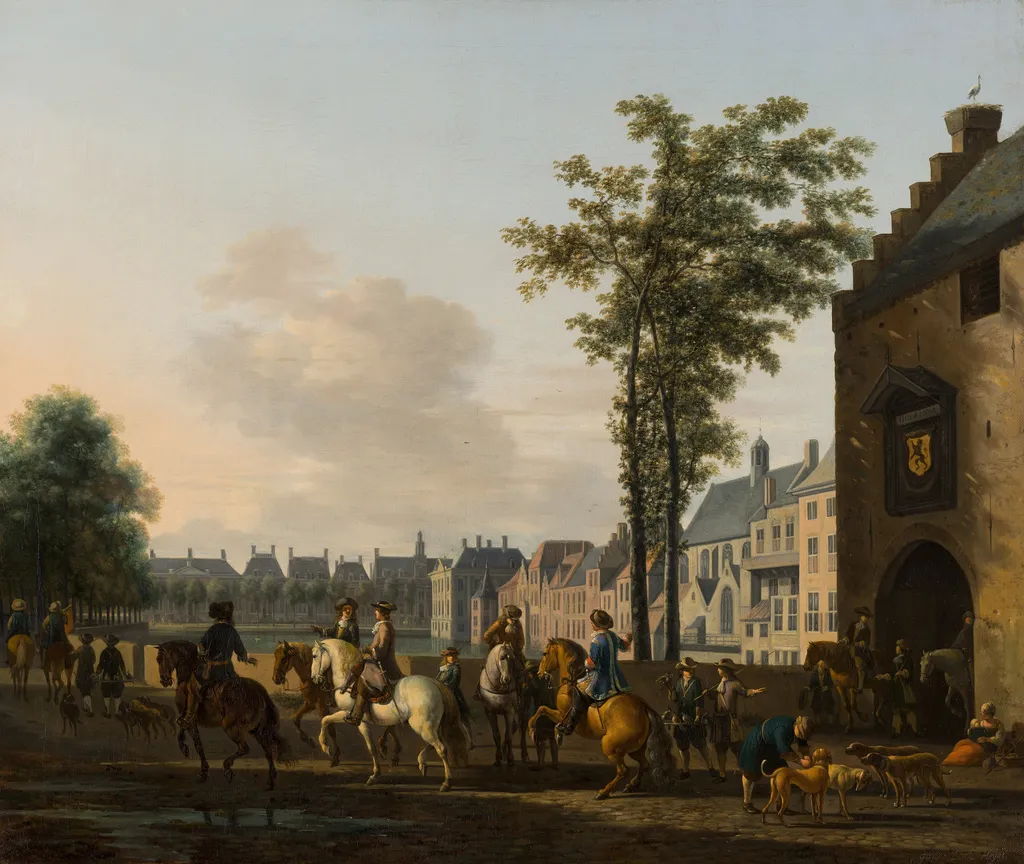
A hunting party near the Hofvijver in The Hague, seen from the South is an oil painting by the Dutch Golden Age artist Gerrit Adriaenszoon Berckheyde. It dates from 1696 and is held in the collection of the Mauritshuis.
About this work
Overview
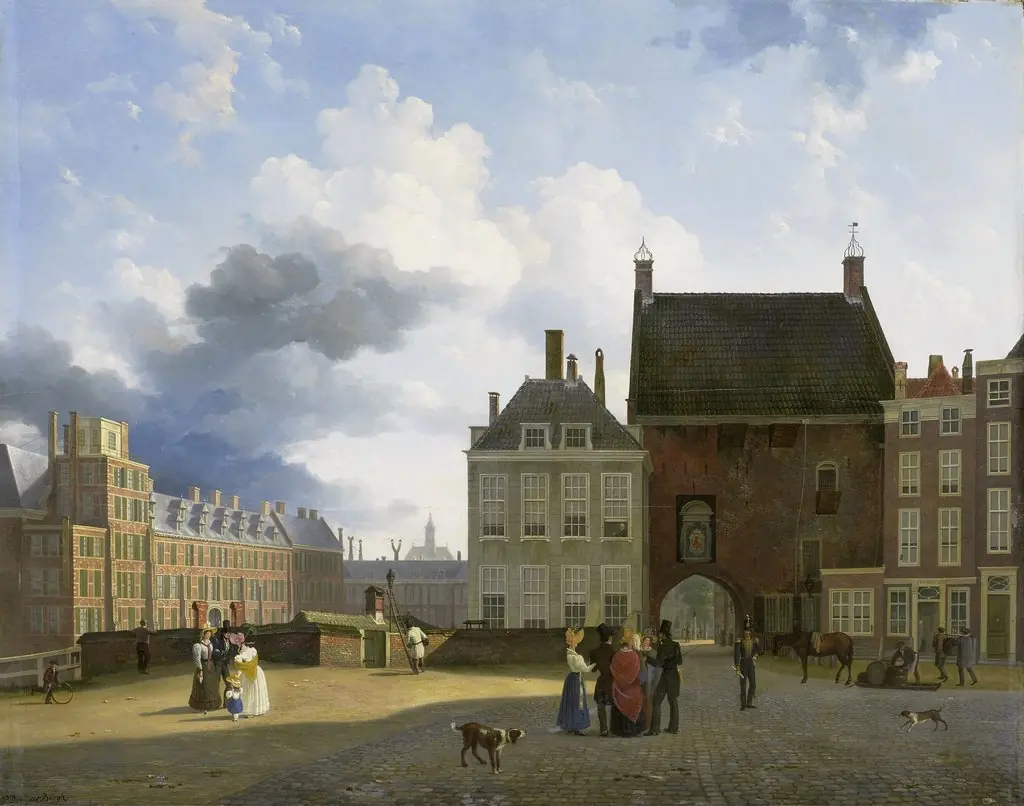
Painted in 1696 by Gerrit Adriaenszoon Berckheyde, this oil on canvas captures a quiet moment of aristocratic leisure near The Hague’s Hofvijver.
Painted in 1696 by Gerrit Adriaenszoon Berckheyde, this oil on canvas captures a quiet moment of aristocratic leisure near The Hague’s Hofvijver. The scene is viewed from the south, framing the Gevangenpoort and surrounding architecture with a sense of calm order. Figures on horseback move through the foreground, their presence subtle against the structured landscape, reflecting the painter’s focus on urban tranquility rather than dramatic action.
Subject & Meaning
The painting portrays a hunting party, a common pastime among the Dutch elite, but without overt spectacle. The riders, dressed in period attire and carrying hunting gear, are integrated into the landscape rather than dominating it. The inclusion of the Gevangenpoort—a former prison—hints at the civic context of the scene, suggesting a blend of private recreation and public space, typical of The Hague’s social fabric in the late 17th century.
Technique & Style
Berckheyde employs a restrained palette of earth tones and soft atmospheric hues, enhancing the painting’s quiet realism. Brushwork is precise yet unobtrusive, with careful attention to architectural detail and the texture of clothing. Light falls naturally across the scene, modeling forms and deepening spatial recession. The composition balances foreground activity with distant structures, creating a measured rhythm that reflects Dutch cityscape traditions.
History & Provenance
The painting entered the Mauritshuis collection in the 19th century, likely through acquisition from a Dutch private collection. It has remained in the museum’s holdings since, consistently cataloged as a representative example of Berckheyde’s later urban views. Its preservation reflects its status as a documented work from the artist’s mature period, though it has never been widely exhibited outside the Netherlands.
Context
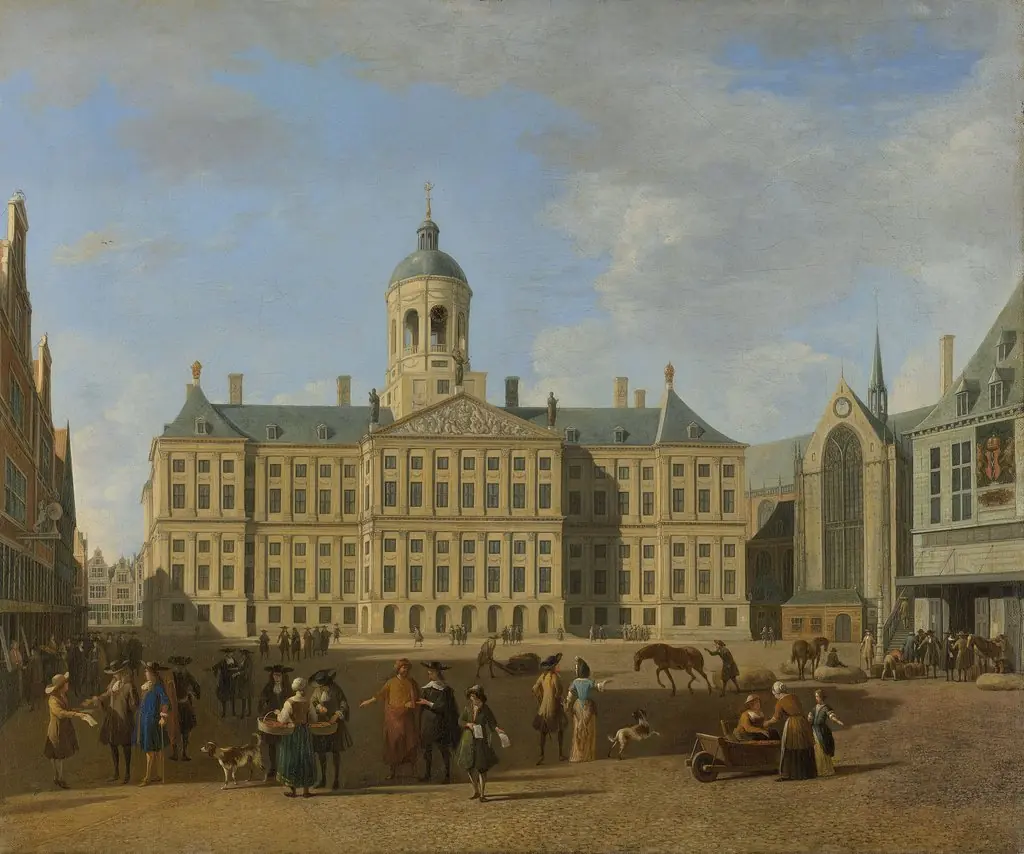
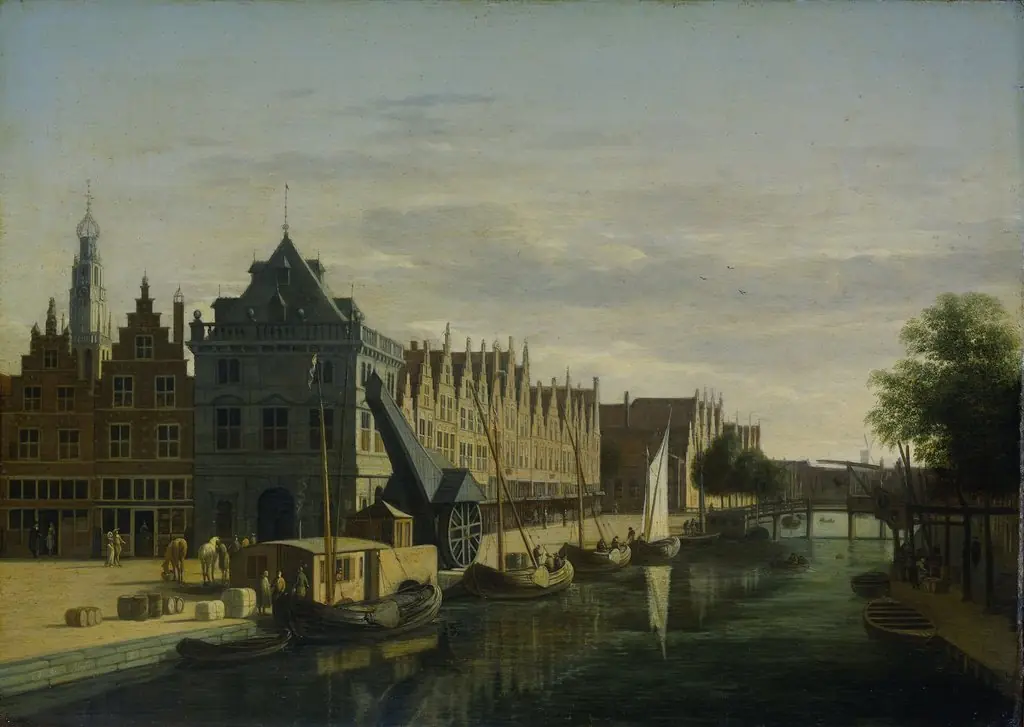
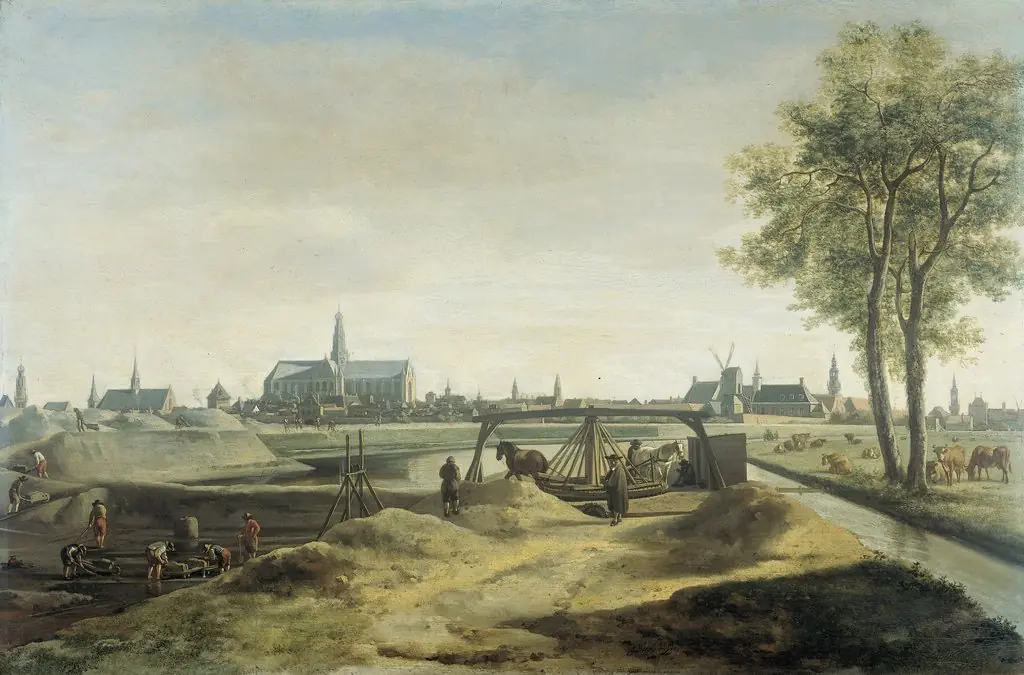
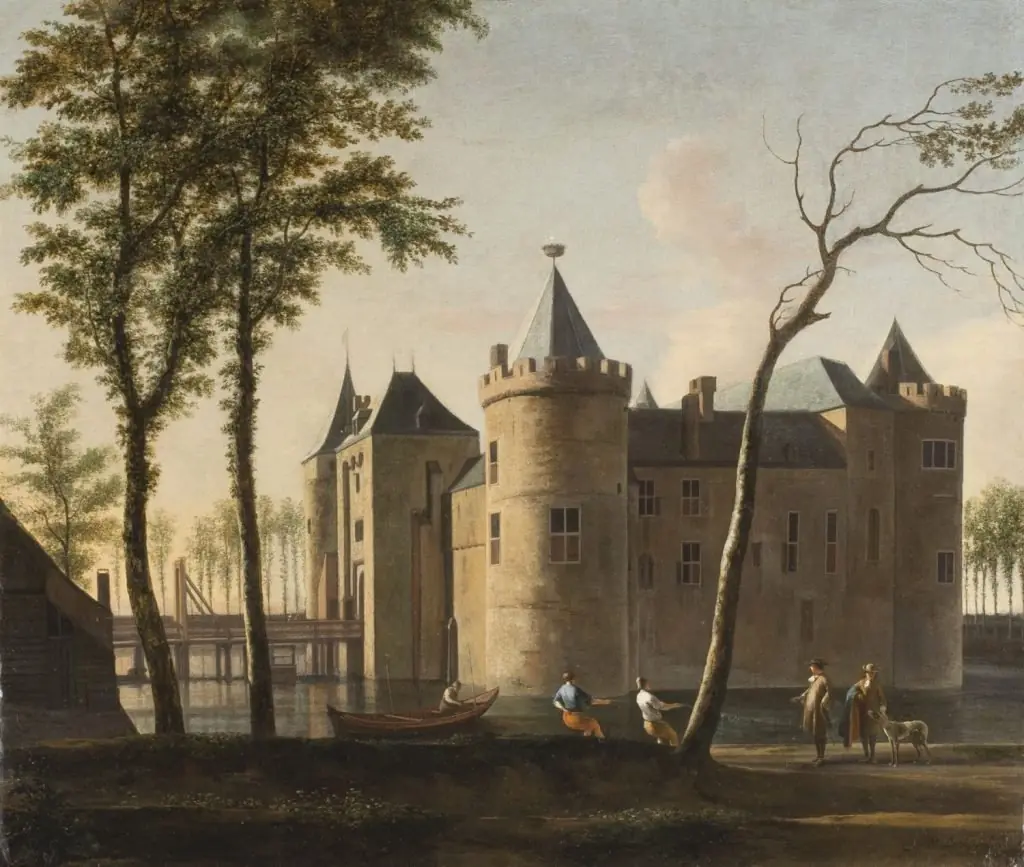
In the late 1600s, The Hague was the political center of the Dutch Republic, and its elite often engaged in hunting as both sport and social ritual. Berckheyde, known for his architectural precision, turned increasingly to cityscapes after moving from Haarlem. This work aligns with a broader trend among Dutch painters to depict civic life with dignity and restraint, emphasizing place over narrative drama.
Legacy
Berckheyde’s work, including this painting, contributed to the development of Dutch topographical painting, influencing later artists who sought to document urban environments with accuracy and composure. Though not as celebrated as his contemporaries, his careful renderings of The Hague’s landmarks remain valuable records of the city’s appearance and social customs at the close of the Golden Age.
Own this work as a print
Artist & collection
Artist
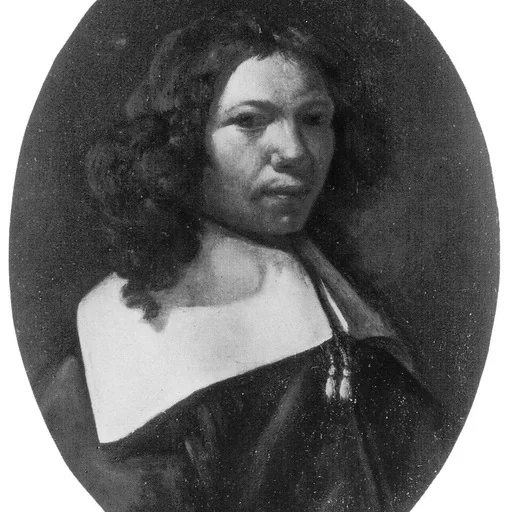
Gerrit Adriaenszoon Berckheyde
Gerrit Adriaenszoon Berckheyde (1638 – 10 June 1698) was a Dutch Golden Age painter, active in Haarlem, Amsterdam, and The Hague, who is best known today for his cityscapes.