Artwork
Dans
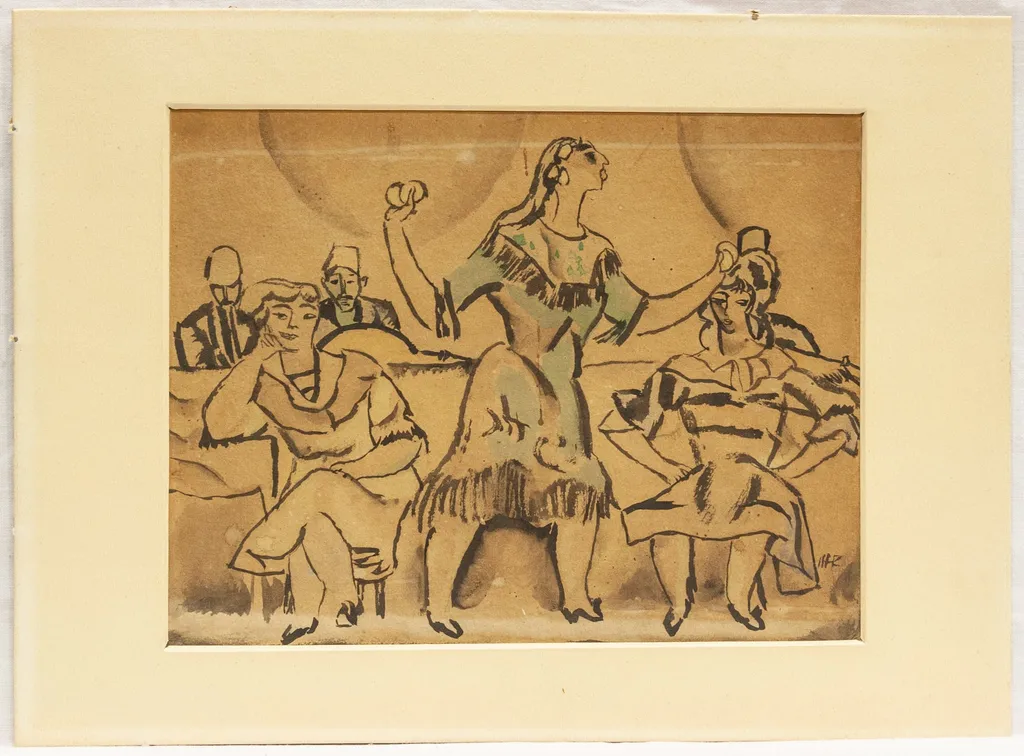
Dans is a drawing by Iosif Iser. It dates from 1950 and is held in the collection of the Gavrila Simion Eco-Museum Research Institute Tulcea.
About this work
Overview
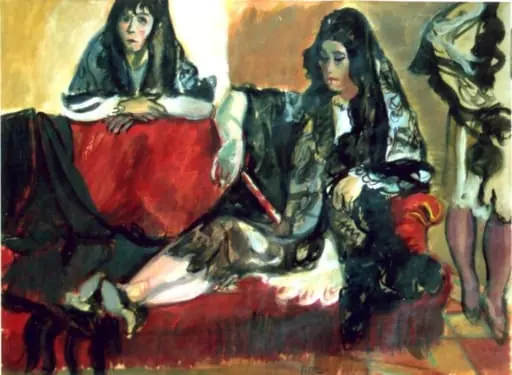
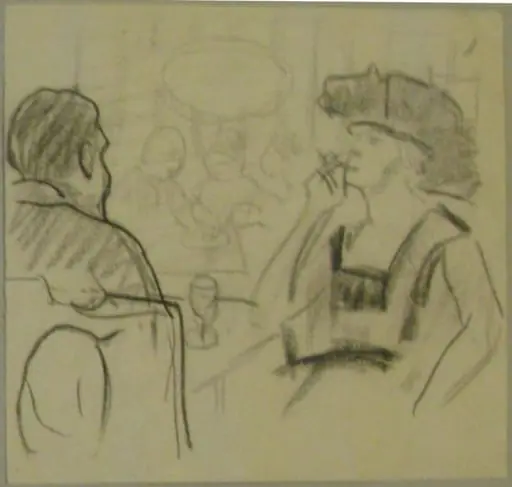
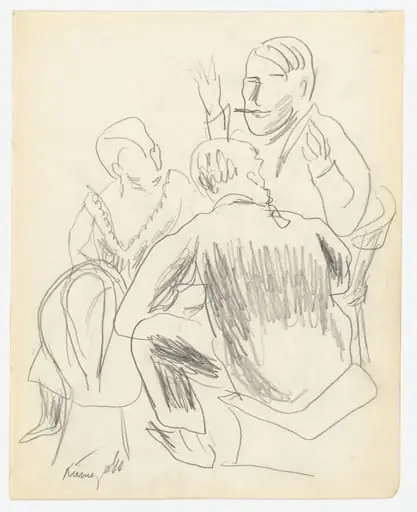
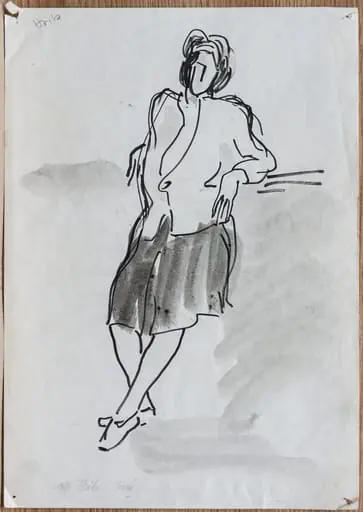
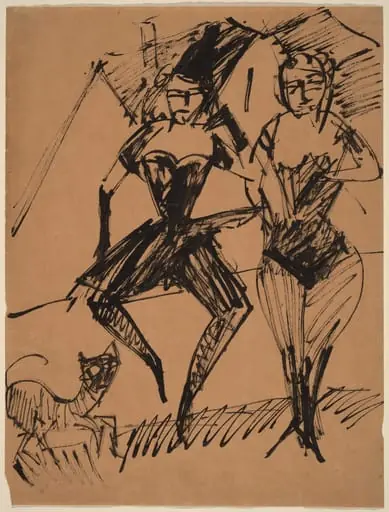
Created around 1950 by Romanian artist Iosif Iser, this ink drawing captures a moment of communal motion. The work is part of the collection at the Museum of Ethnography. Rendered with swift, confident lines, it depicts a group of figures gathered in a loose, dynamic arrangement. The composition avoids detailed realism, instead emphasizing gesture and rhythm to convey a sense of lived experience.
Subject & Meaning
No narrative is spelled out, but the grouping implies social cohesion and shared movement, grounded in everyday cultural practice.
The central figure is a woman with arms raised, standing amid seated and standing companions. Her posture suggests dance or ritual, while the surrounding figures respond with varied stances—some attentive, others relaxed. The scene evokes a moment of collective expression, possibly rooted in folk tradition. No narrative is spelled out, but the grouping implies social cohesion and shared movement, grounded in everyday cultural practice.
Technique & Style
Iser employs minimal shading and unmodulated ink lines to define form and motion. The drawing’s economy of detail directs attention to posture and flow rather than individual features. Bold contours outline bodies, while subtle variations in line weight suggest weight and direction. The absence of background or context intensifies focus on the figures’ interplay, creating a sense of immediacy and spontaneity.
History & Provenance
The drawing entered the Museum of Ethnography’s collection in the mid-20th century, likely through acquisition or donation tied to Iser’s documented engagement with Romanian rural life. Its preservation reflects institutional interest in documenting vernacular culture through modern artistic interpretation. No earlier provenance is publicly recorded, but its style aligns with Iser’s broader practice of sketching folk scenes during this period.
Context
Iser worked during a time when Romanian artists increasingly turned to ethnographic subjects as a means of cultural affirmation. His drawings often captured moments from village life, avoiding idealization in favor of observed authenticity. This piece fits within a broader postwar effort to preserve and reinterpret traditional customs through modernist visual language, distinct from state-sanctioned socialist realism.
Legacy
Though not widely exhibited outside specialized collections, the work contributes to the understanding of how mid-century Romanian artists engaged with folk traditions. Iser’s approach—unembellished, observant, and rhythmically composed—offers a quiet counterpoint to more monumental representations of national identity. The drawing remains a testament to the vitality of informal, communal rituals in everyday life.
Artist & collection

Museum
Gavrila Simion Eco-Museum Research Institute Tulcea
Continue through works from the same source collection.