Artwork
Untitled
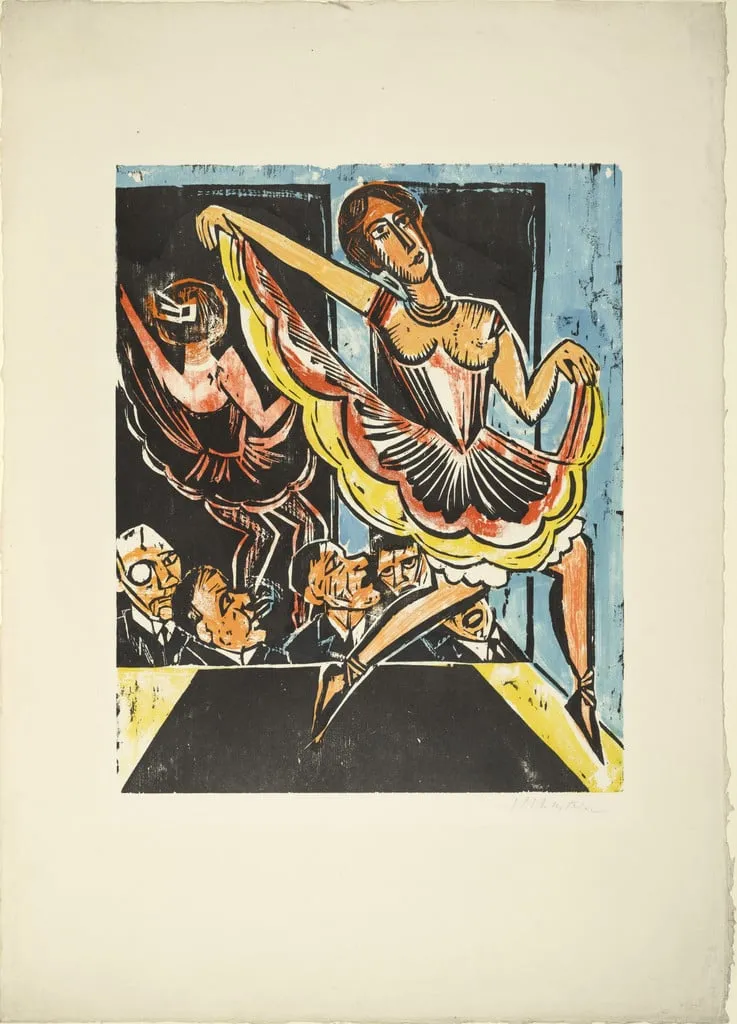
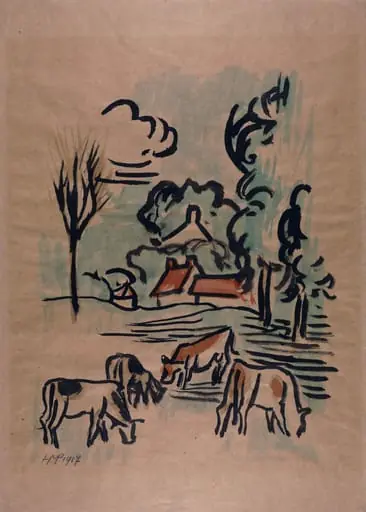
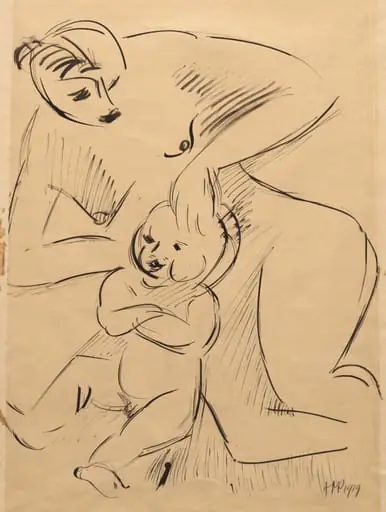
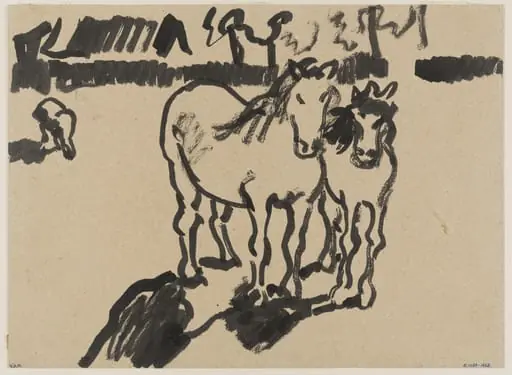
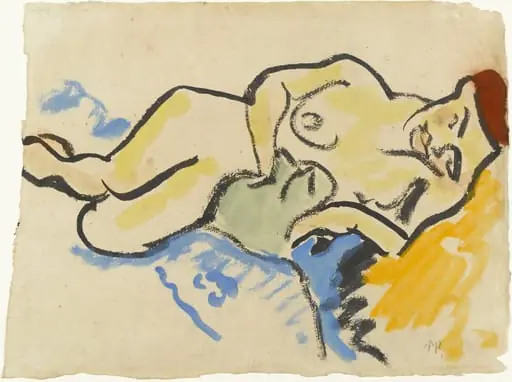
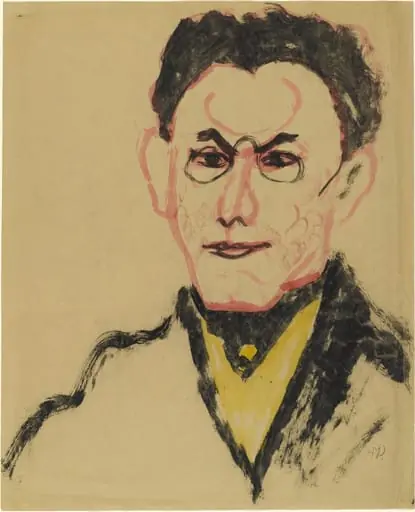
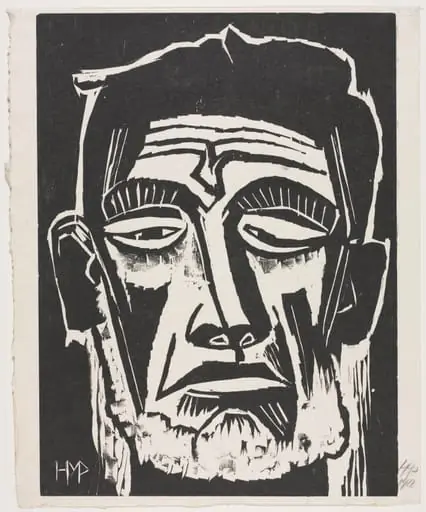
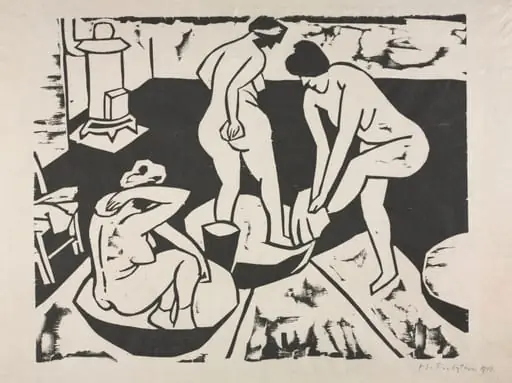
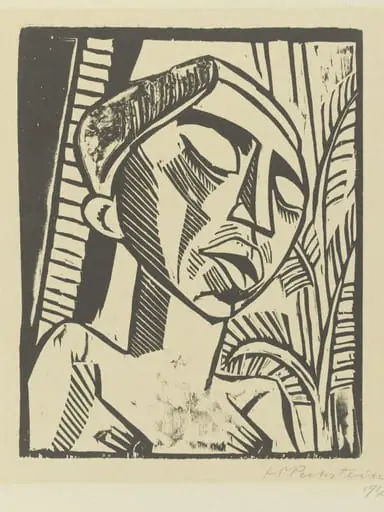
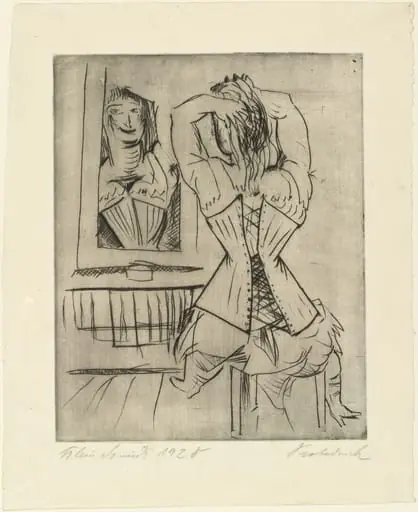
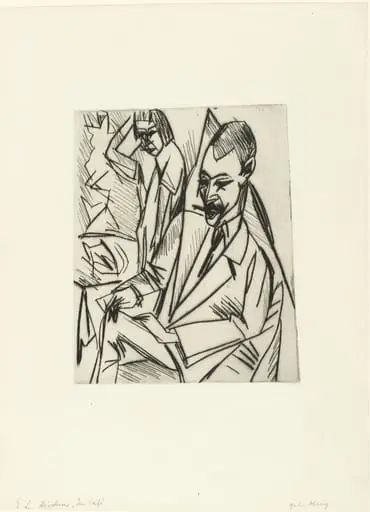
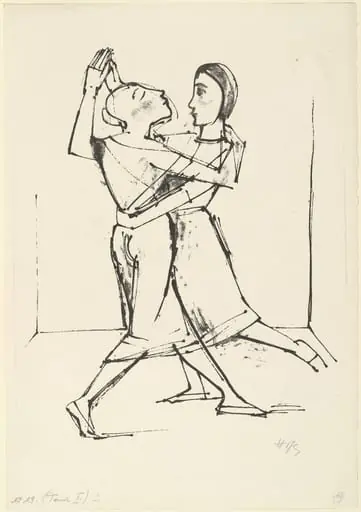
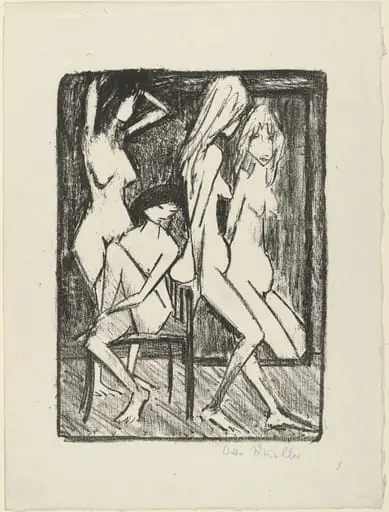
Untitled is an ink print by Max Pechstein. It dates from 1923 and is held in the collection of the Museum of Modern Art.
About this work
Overview
Created in 1923, this woodcut by Max Pechstein is one of many prints produced during his active years with the Die Brücke group.
Created in 1923, this woodcut by Max Pechstein is one of many prints produced during his active years with the Die Brücke group. The work exemplifies his commitment to printmaking as a primary medium, distinct from but complementary to his paintings. Its stark graphic quality and dynamic composition reflect the expressive priorities of early German modernism, emphasizing emotional intensity over naturalistic detail.
Subject & Meaning
The composition centers on two figures in heightened motion—one with arms raised, the other leaning forward—as if caught in a moment of urgency or ritual. Surrounding them, fragmented faces emerge from shadowed areas, suggesting collective presence or inner turmoil. The scene resists clear narrative, instead evoking psychological tension and communal energy, consistent with Expressionist interests in inner states over external reality.
Technique & Style
Pechstein carved the image into wood, using sharp, angular lines to define forms and create rhythmic contrast. Flat areas of intense red, yellow, and blue are applied with minimal gradation, enhancing the print’s visual immediacy. The technique emphasizes the materiality of the wood grain and the hand-carved mark, resulting in a bold, almost primal aesthetic that prioritizes emotional impact over refinement.
History & Provenance
This print was made during a period when Pechstein was deeply engaged with Die Brücke’s ideals, before the rise of the Nazi regime. Though not widely exhibited at the time, it belongs to a body of work later condemned as 'Degenerate Art.' Its survival reflects its status as part of private or institutional collections that preserved modernist prints despite official suppression.
Context
In the early 1920s, German artists like Pechstein turned to woodcut as a means of reconnecting with raw, pre-industrial forms of expression. The medium’s accessibility and graphic power aligned with Expressionist goals of breaking from academic traditions. This work emerged amid broader cultural shifts in Weimar Germany, where art sought to confront social and psychological upheaval through direct visual language.
Legacy
Pechstein’s woodcuts, including this one, contributed to the redefinition of printmaking as a serious modern art form. His use of color and distortion influenced later generations of printmakers, particularly those interested in emotional expression and non-Western aesthetics. Though overshadowed by his paintings, these prints remain vital documents of early 20th-century German artistic experimentation.
Artist & collection
Artist
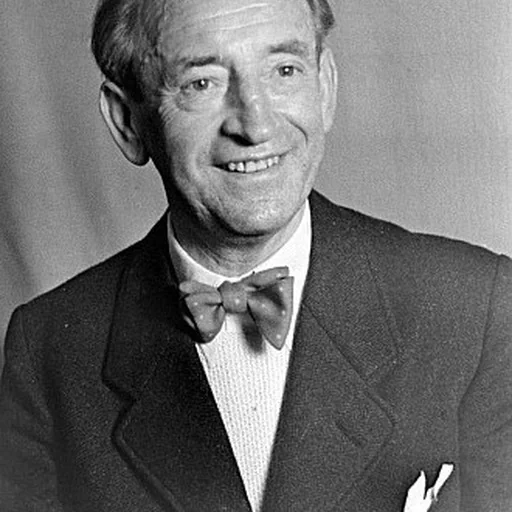
Hermann Max Pechstein (German pronunciation: ; 31 December 1881 – 29 June 1955) was a German expressionist painter and printmaker and a member of the Die Brücke group.