Artwork
Tătăroaice
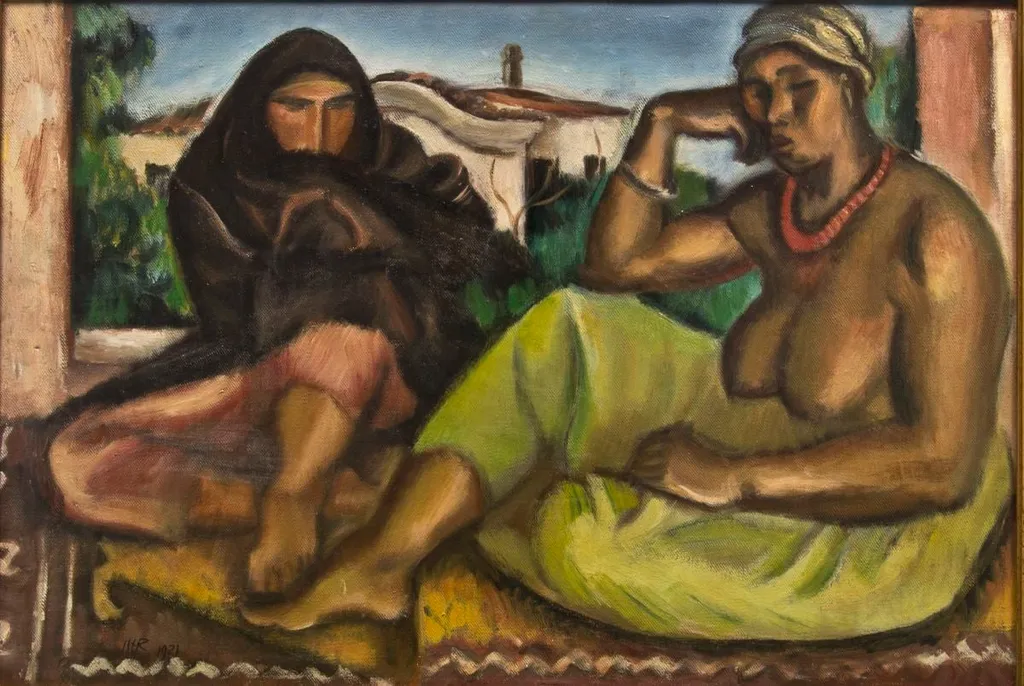
Tătăroaice is a print by Iosif Iser. It dates from 1921 and is held in the collection of the National Museum of Art of Romania.
About this work
Overview
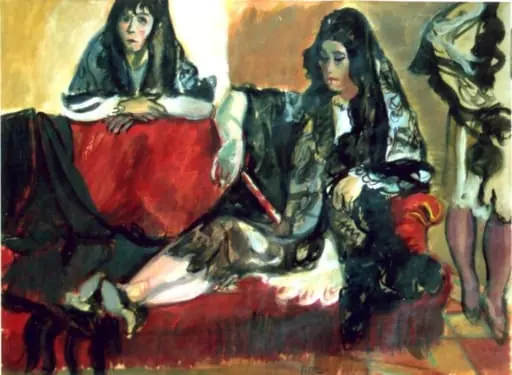
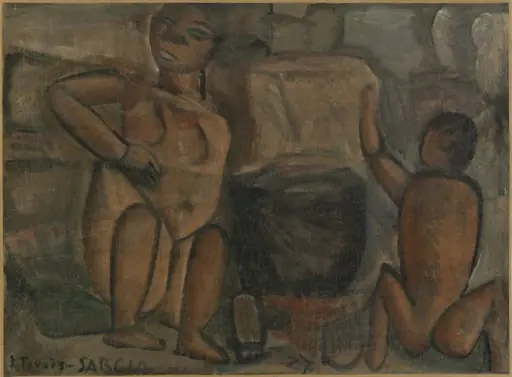
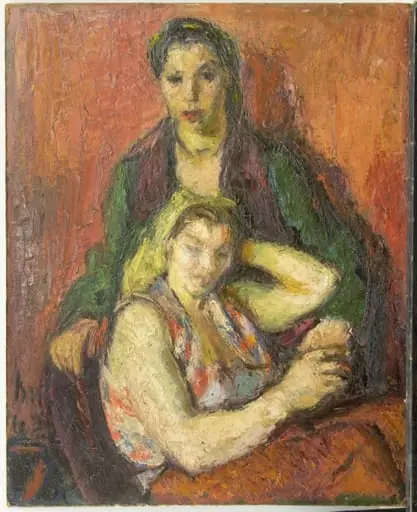
Tătăroaice, painted by Iosif Iser in 1921, depicts two women in a dimly lit interior. The composition centers on their quiet, intimate presence, with minimal background detail to emphasize their physical and emotional proximity. The scene is rendered in subdued earth tones, with selective use of color to draw attention to key elements, particularly the green wrap of one figure.
Subject & Meaning
One, draped in a dark hooded cloak, observes silently; the other, partially unclothed, holds a small object near her face, possibly a tool or amulet.
The two women, seated side by side, suggest a moment of stillness between private rituals. One, draped in a dark hooded cloak, observes silently; the other, partially unclothed, holds a small object near her face, possibly a tool or amulet. Their postures and attire hint at ritual, labor, or tradition, though the exact nature remains ambiguous, inviting contemplation rather than narrative resolution.
Technique & Style
Iser employs chiaroscuro to define form and mood, using sharp contrasts between shadow and light to sculpt the figures against a blurred interior. The green wrap, vivid against muted browns and blues, acts as a focal point. Brushwork is restrained, with soft edges in the background enhancing the three-dimensionality of the central figures through precise tonal modeling.
History & Provenance
Created in 1921, Tătăroaice emerged during a period of intense artistic exploration in Romania, following the upheavals of World War I. Iser, known for his interest in rural life and marginalized communities, likely drew from observations in the Danube Delta region. The work’s early provenance is tied to Romanian modernist circles, though its exact exhibition history remains limited.
Context
In early 20th-century Romania, artists like Iser turned to everyday scenes of peasant life as a counterpoint to urban modernization. Tătăroaice reflects this trend, portraying women engaged in quiet, possibly ritualistic acts. The painting aligns with broader European interest in psychological realism and ethnographic detail, avoiding romanticization in favor of restrained observation.
Legacy
Tătăroaice remains a quiet but significant example of Romanian interwar painting, noted for its psychological depth and restrained palette. While not widely reproduced, it has been referenced in studies of Romanian modernism and gender representation. Its enduring value lies in its unembellished portrayal of private moments, resisting overt symbolism in favor of atmospheric presence.
Artist & collection