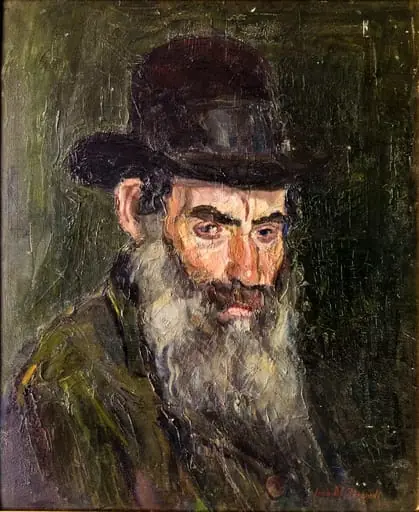
Artwork
Untitled
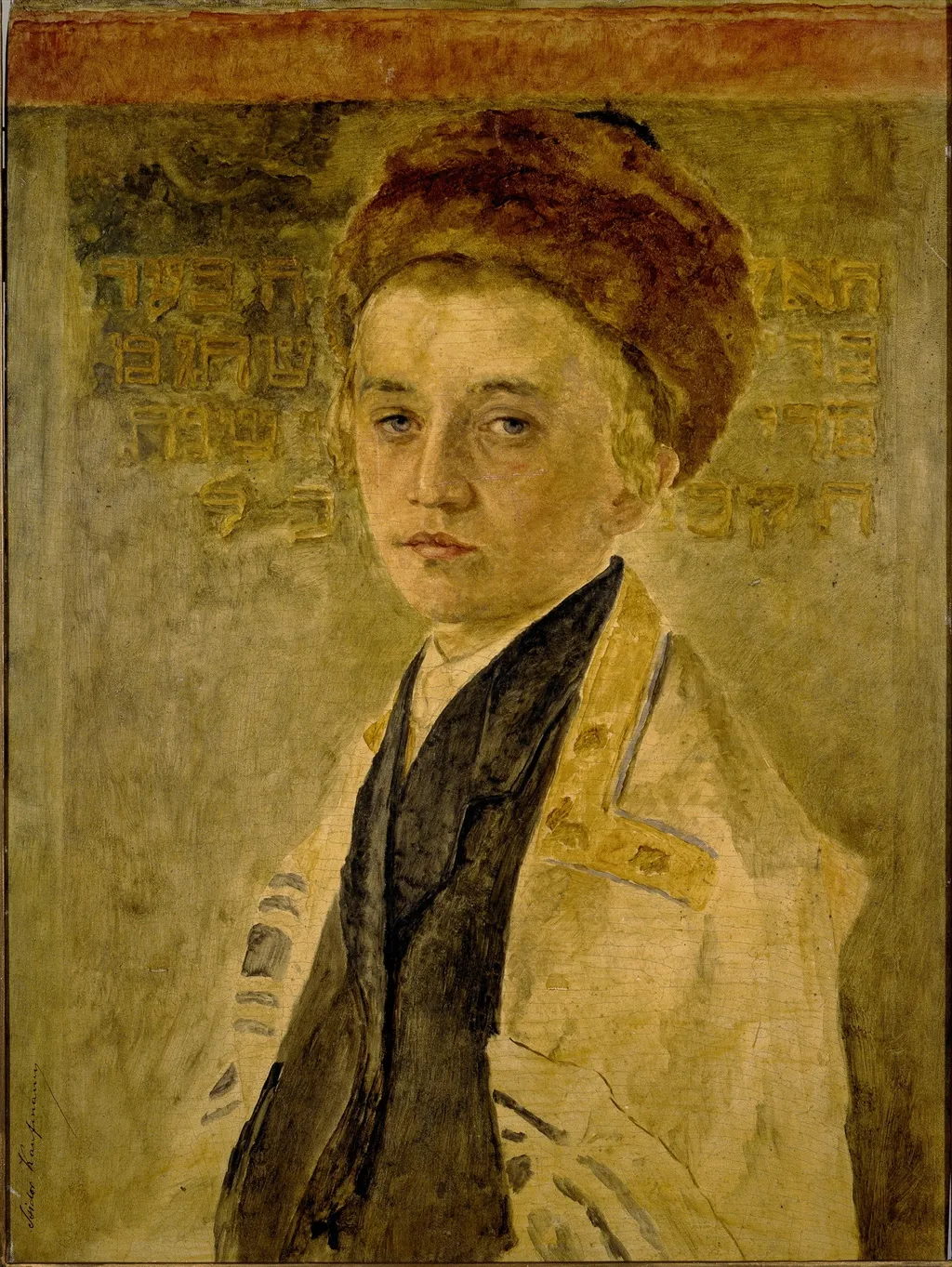
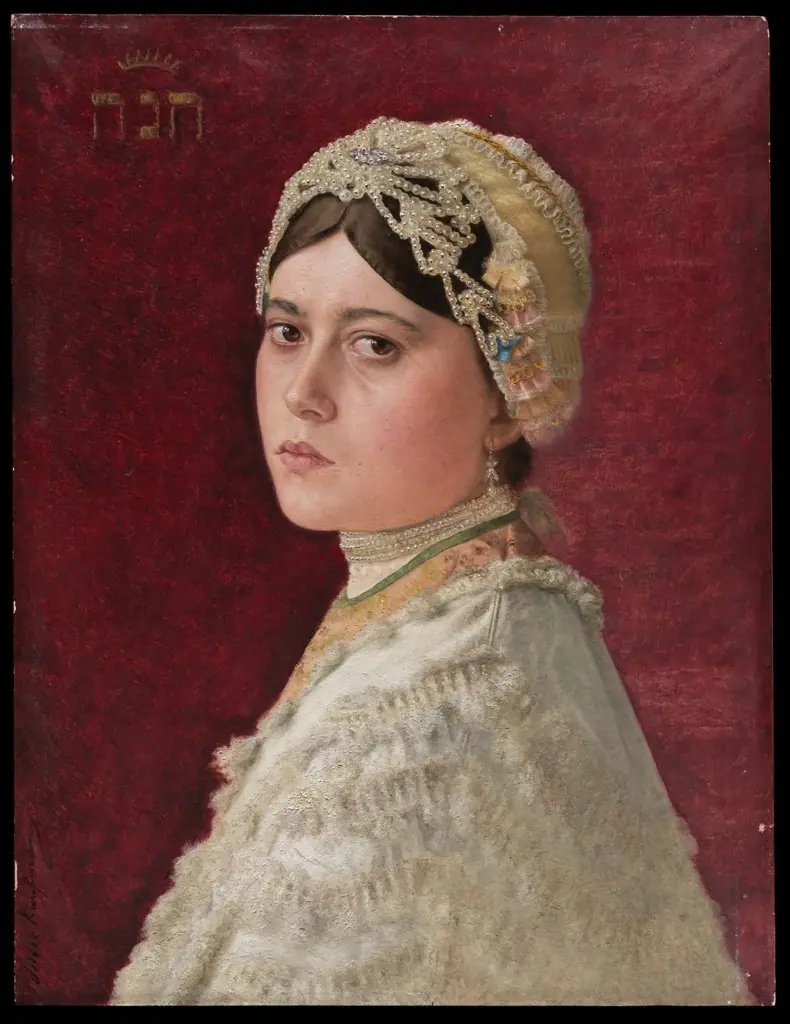
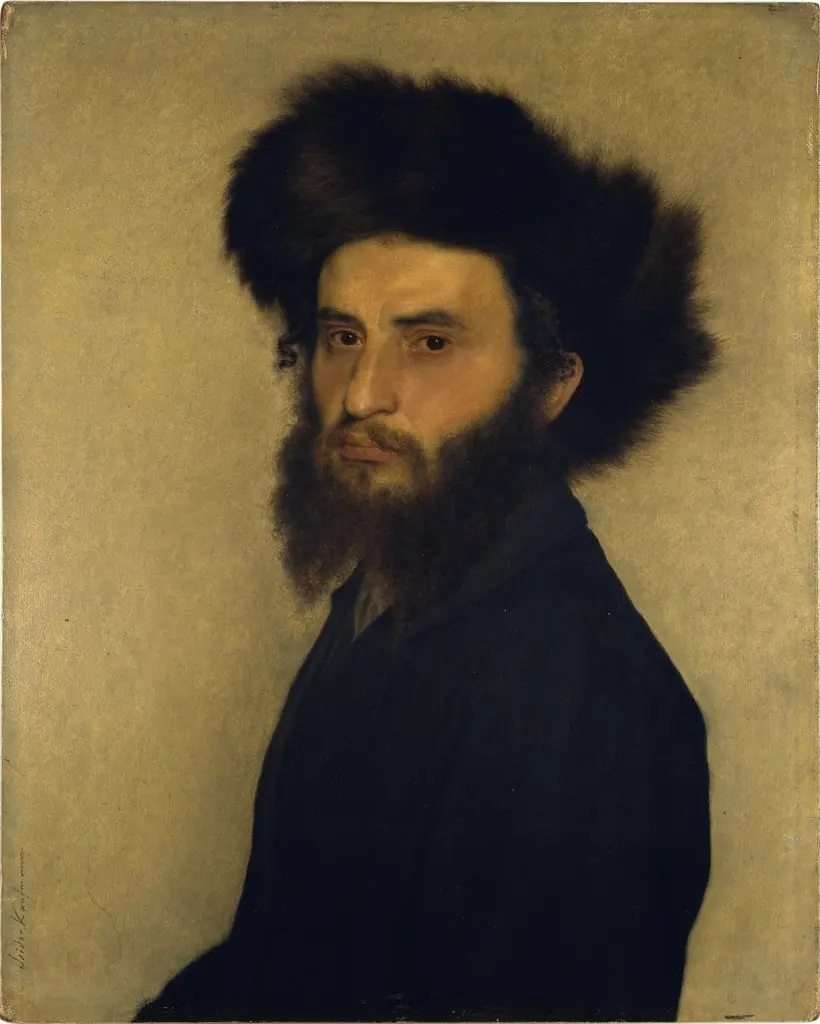
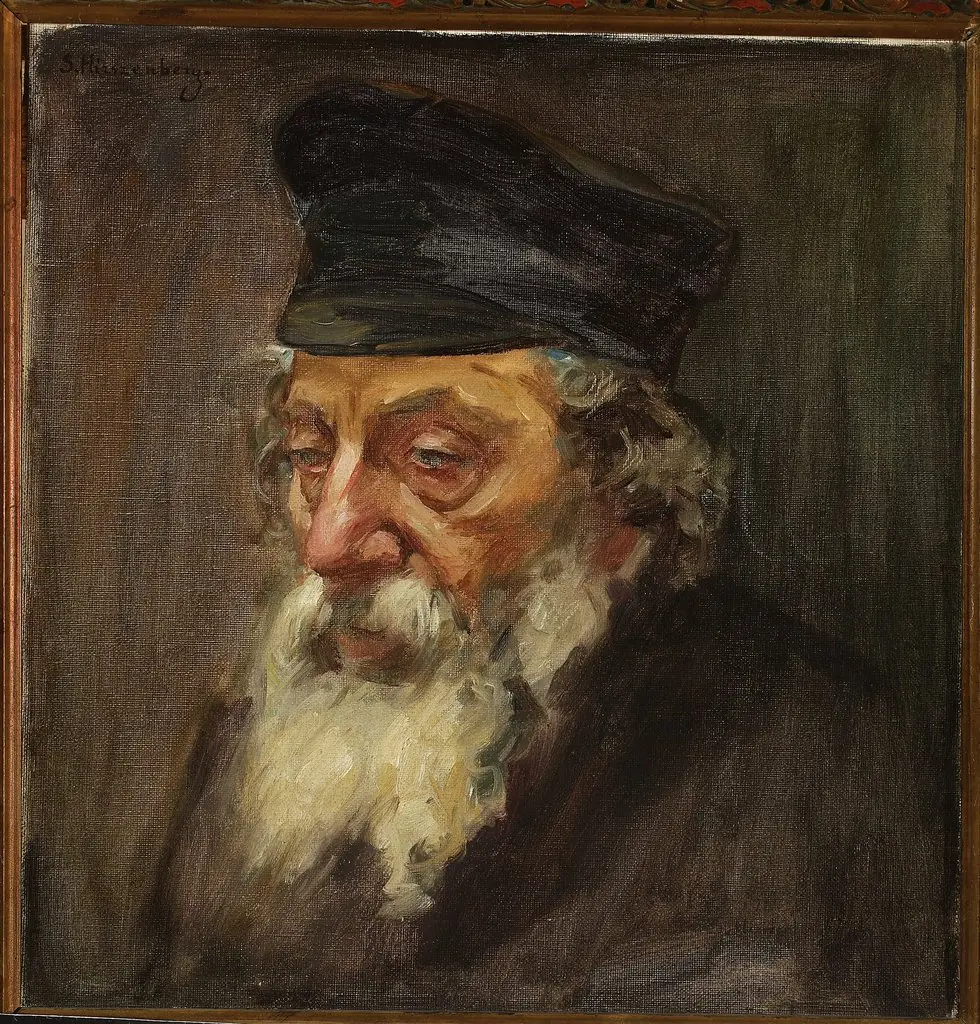
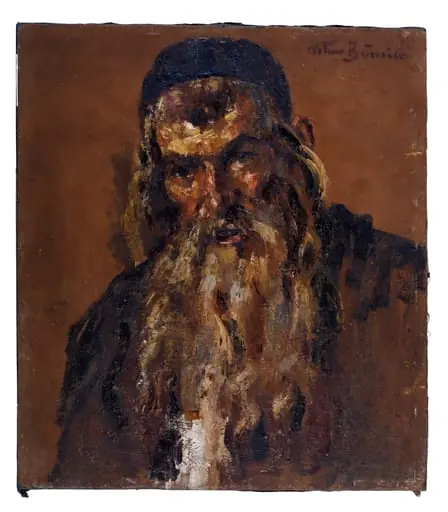
Untitled is an oil painting by Isidor Kaufmann. It dates from 1897 and is held in the collection of the Israel Museum.
About this work
Overview
Born in Arad in 1853 and based in Vienna, Kaufmann devoted much of his career to portraying religious and communal scenes with quiet precision.
This oil painting, dated around 1897, is one of several works by Isidor Kaufmann that document Jewish life in Eastern Europe. Born in Arad in 1853 and based in Vienna, Kaufmann devoted much of his career to portraying religious and communal scenes with quiet precision. The piece is part of the Israel Museum’s collection and reflects his sustained interest in capturing the dignity of Jewish traditions during a period of rapid social change.
Subject & Meaning
The figure is a man dressed in traditional attire—a brown hat, white coat, and black vest—suggesting a scholarly or devotional role within a Hasidic community. His serious expression and the presence of Hebrew script in the background imply a moment of contemplation or study. The painting avoids narrative drama, instead emphasizing stillness and inner focus, aligning with Kaufmann’s tendency to portray spiritual gravity over theatricality.
Technique & Style
Kaufmann employed muted, earth-toned colors to create a restrained atmosphere, enhancing the painting’s solemn tone. The background’s soft yellow wash and faint Hebrew lettering are rendered with subtle detail, avoiding distraction from the central figure. Brushwork is controlled and precise, favoring texture in fabric over dramatic lighting, reflecting a realist approach rooted in observation rather than idealization.
History & Provenance
The painting entered the Israel Museum’s collection after being produced in Vienna during the late 19th century. It was included in the 1995 exhibition 'Isidor Kaufmann: Jewish Life in the Austro-Hungarian Empire' at the Jewish Museum Vienna, curated by Tobias G. Natter. This exhibition helped reestablish Kaufmann’s significance in the context of Central European Jewish cultural history.
Context
Kaufmann worked during a time when Jewish communities in Eastern Europe faced increasing assimilation pressures and political instability. His paintings, made from sketches and field studies, served as ethnographic records rather than religious iconography. Unlike contemporaries who idealized Jewish life, he presented it with restrained authenticity, reflecting both respect and a sense of impending loss.
Legacy
Kaufmann’s body of work remains a key visual archive of pre-Holocaust Jewish life in the Habsburg territories. Though not widely known outside specialized circles, his paintings are valued for their quiet documentation of customs, dress, and demeanor. The persistence of his works in institutional collections underscores their role as historical testimony rather than mere artistic expression.
Artist & collection
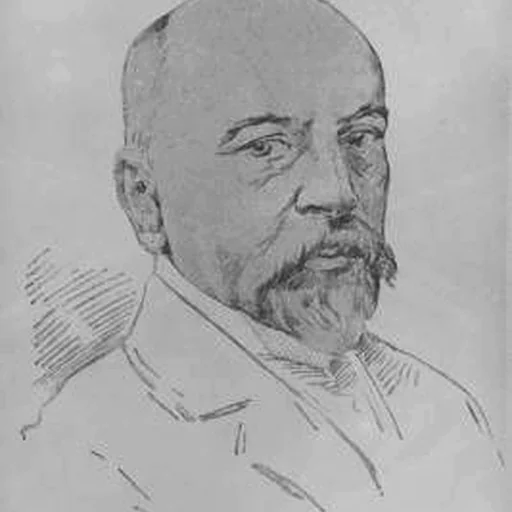
Artist
Isidor Kaufmann (Hungarian: Kaufman(n) Izidor, Hebrew: איזידור קאופמן; 22 March 1853 in Arad – 1921 in Vienna) was an Austro-Hungarian painter of Jewish themes.