Artwork
Untitled
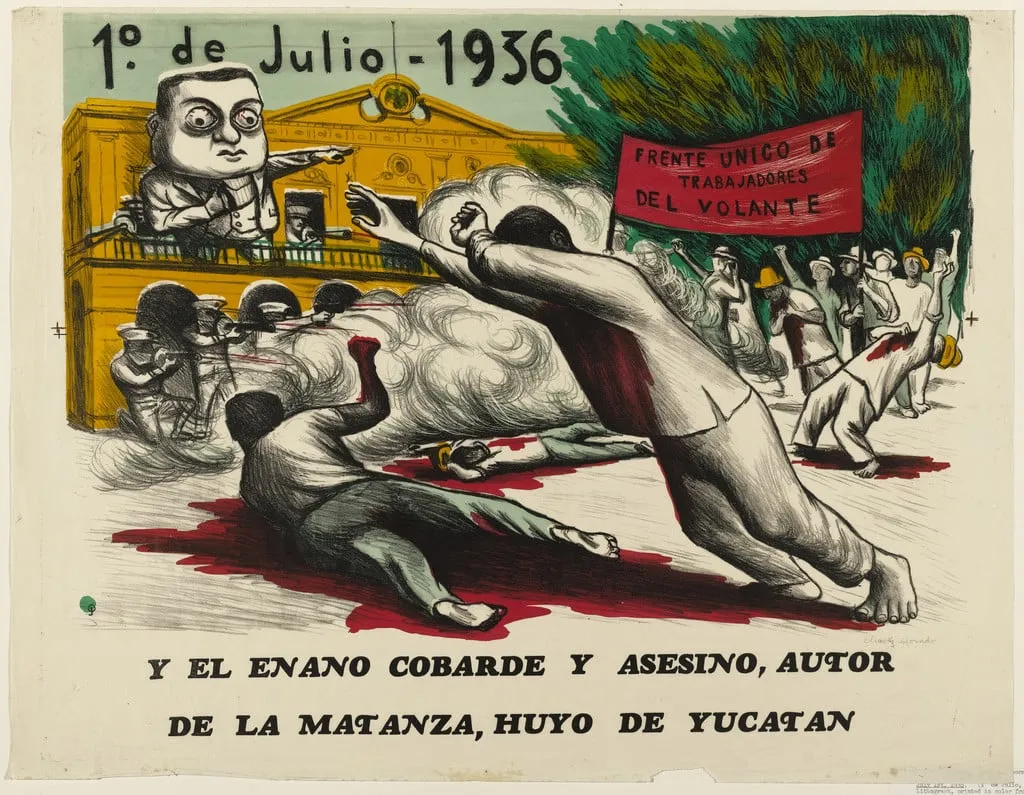
Untitled is an ink print by Isidoro Ocampo. It dates from 1938 and is held in the collection of the Museum of Modern Art.
About this work
The date "1° de Julio - 1936" is written at the top, but the rest of the text is in Spanish, pointing to a specific event.
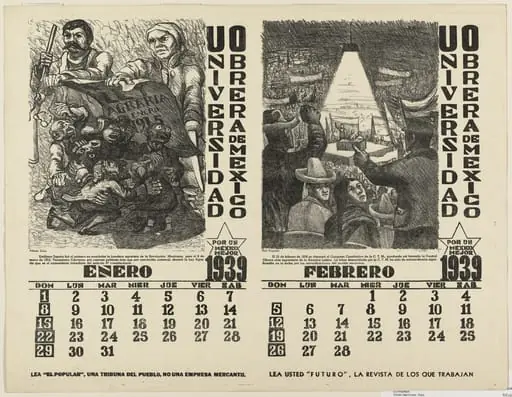
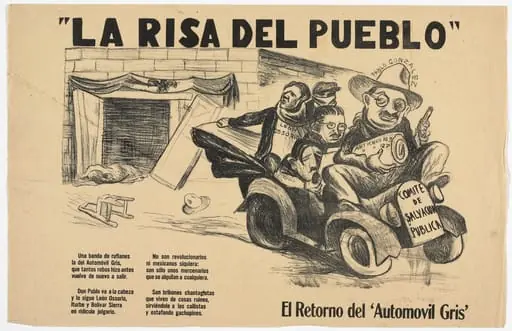
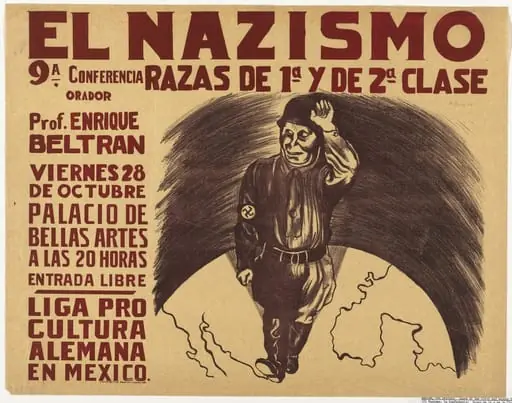
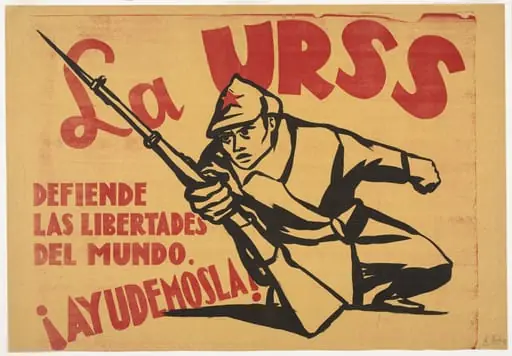
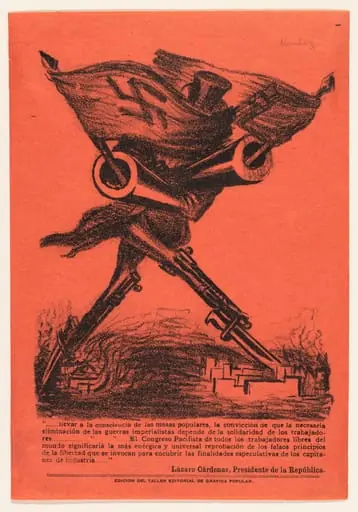
This drawing shows a chaotic scene with a big, angry man in a suit kicking a smaller person on the ground. Blood splatters everywhere. In the background, a crowd holds a red sign with white text, and a building with columns looms behind them. The text at the bottom calls out a "cowardly assassin" who fled.
The artist used bold, simple shapes and strong black lines to make the violence feel urgent. The date "1° de Julio - 1936" is written at the top, but the rest of the text is in Spanish, pointing to a specific event.
Check out lithography to see how this kind of print was made.
Overview
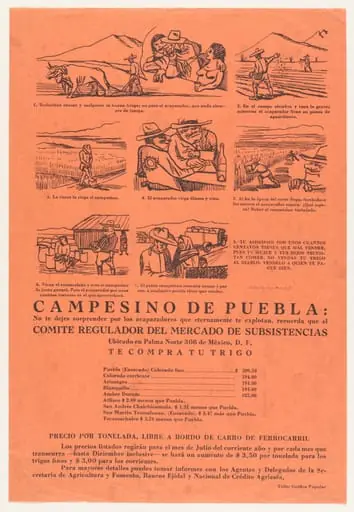
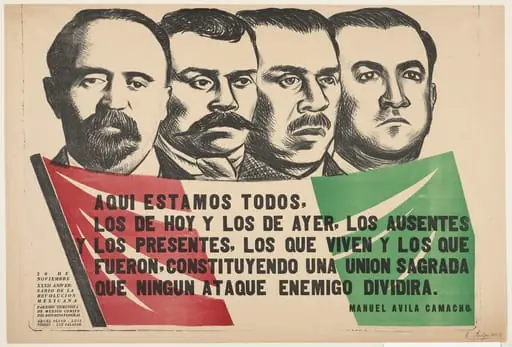
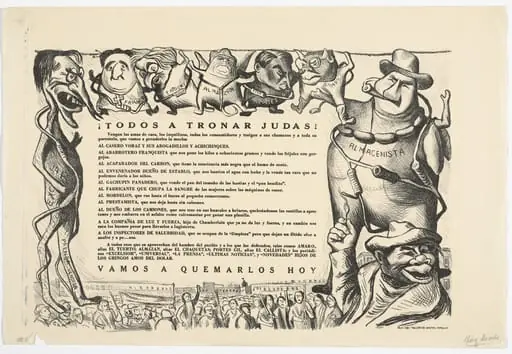
Created in 1938, this lithograph by Isidoro Ocampo is part of a body of graphic work rooted in Mexico’s political and social activism. Though unsigned as 'Untitled,' its imagery and inscriptions reference a specific historical moment. Ocampo, a key figure in Mexico’s printmaking collectives, used the accessibility of lithography to distribute visually direct messages to broad audiences, aligning with the goals of the Taller de Gráfica Popular.
Subject & Meaning
The image depicts a violent confrontation: a man in formal attire strikes a prone figure, with blood spattered across the scene. Behind them, a crowd holds a red banner and a classical building suggests institutional power. The Spanish text denounces a 'cowardly assassin' who escaped justice, while the date '1° de Julio - 1936' points to the assassination of Mexican socialist leader Julio Ángel. The work frames the act as a betrayal by those in authority.
Technique & Style
Ocampo employed bold, high-contrast lithographic lines to amplify emotional intensity. Forms are simplified into stark silhouettes, with minimal tonal variation, emphasizing the brutality of the scene. The use of strong black shapes against white paper creates a sense of immediacy, typical of politically engaged printmaking. The text is integrated as a visual element, not merely an annotation, reinforcing the work’s role as public testimony.
History & Provenance
The print was produced during a period of heightened political unrest in Mexico, following the assassination of Julio Ángel and the government’s suppression of dissent. Ocampo, as a founding member of the Taller de Gráfica Popular, contributed to a network of artists producing politically charged prints for mass circulation. This work entered the collection of The Museum of Modern Art, reflecting its recognition as a significant example of 20th-century Mexican graphic art.
Context
In the late 1930s, Mexican artists increasingly used printmaking to respond to state violence and social injustice. The Taller de Gráfica Popular, where Ocampo worked, operated as a cooperative producing posters and pamphlets for labor movements and political causes. This lithograph aligns with that mission, transforming a specific political murder into a universal condemnation of impunity and abuse of power.
Legacy
Ocampo’s work helped establish lithography as a vehicle for political expression in Latin America. His commitment to accessible, reproducible imagery influenced generations of activist artists. While less known than muralists like Rivera, his prints remain vital documents of Mexico’s mid-century struggles, preserving the visual language of resistance through clarity, urgency, and unflinching imagery.
Artist & collection
Artist
Isidoro Ocampo (20 June 1910, Veracruz — 4 February 1983, Mexico City) was a Mexican artist during the Mexican Muralism era, best known for his graphic work.