Artwork
Untitled
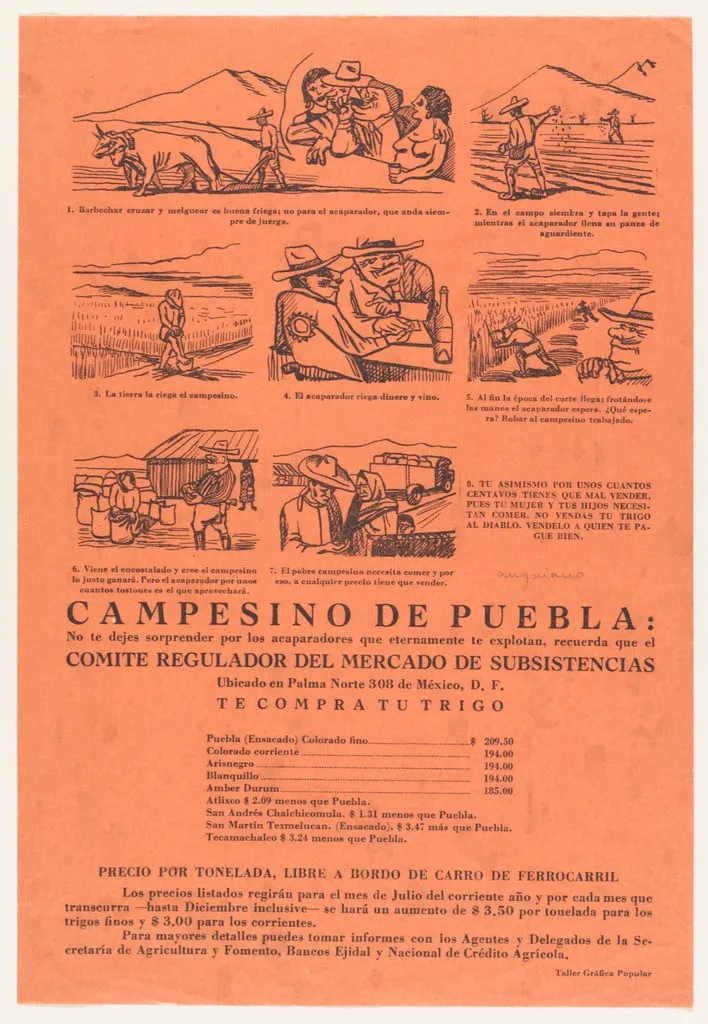
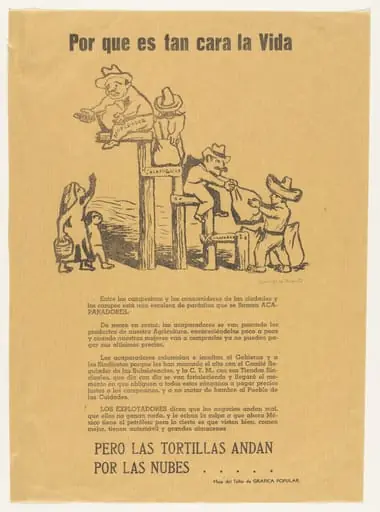
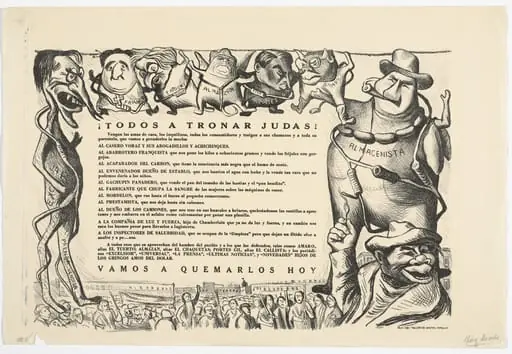
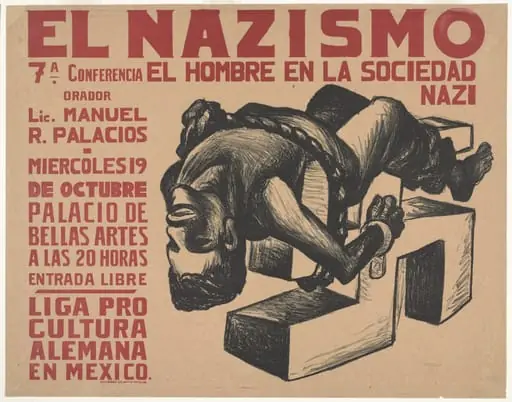
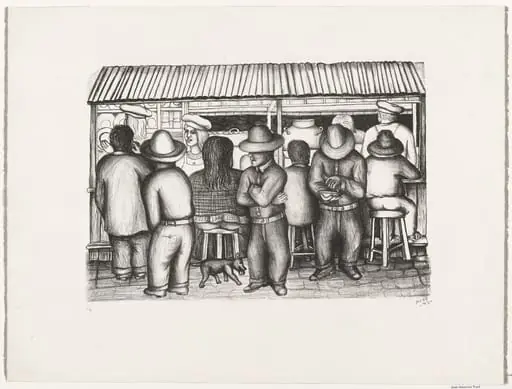
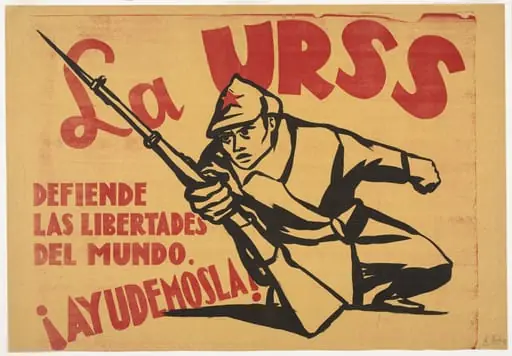
Untitled is an ink print by Raúl Anguiano. It dates from 1924 and is held in the collection of the Museum of Modern Art.
About this work
Overview
The work is executed in zinc relief etching (or lithograph) and printed entirely in black, and it is part of the collection of the Museum of Modern Art.
Created in 1924, this untitled print by Mexican artist Raúl Anguiano consists of a series of eight black-and-white images arranged as a poster. Each vignette depicts agrarian labor—plowing, harvesting, and grain sales—set against a minimal landscape of rolling hills. The work is executed in zinc relief etching (or lithograph) and printed entirely in black, and it is part of the collection of the Museum of Modern Art.
Subject & Meaning
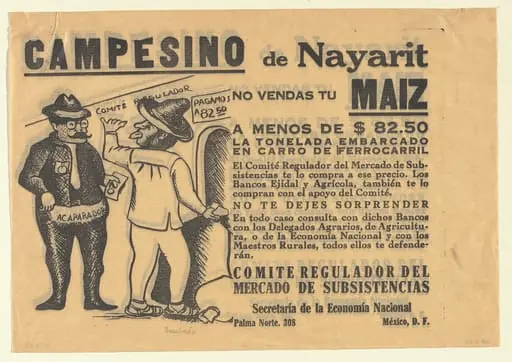
The images collectively illustrate the daily routine of rural farmers, emphasizing both the physical work of cultivation and the commercial exchange of wheat. Accompanying Spanish text lists current wheat prices and cautions against exploitative middlemen, suggesting a didactic intent to inform and protect agricultural producers.
Technique & Style
Anguiano employed a zinc relief process, a method that allows bold, high-contrast lines suitable for public notices. The stark monochrome palette and simplified forms give the composition a graphic, poster-like quality, enhancing readability and reinforcing its function as an informational flyer.
History & Provenance
The print was produced for the Comité Regulador del Mercado de Subsistencias, an organization that sought to regulate staple‑food markets and support farmers. After its original distribution, the work entered the Museum of Modern Art’s collection, where it remains on view as an example of socially engaged printmaking from the early twentieth century.
Context
The piece emerges from a period of agrarian reform and economic volatility in post‑revolutionary Mexico, when government and civic groups frequently used visual propaganda to communicate market information and protect peasant interests. Anguiano’s involvement reflects his broader engagement with Mexican social issues and the visual language of public instruction.
Artist & collection