Artwork
Untitled

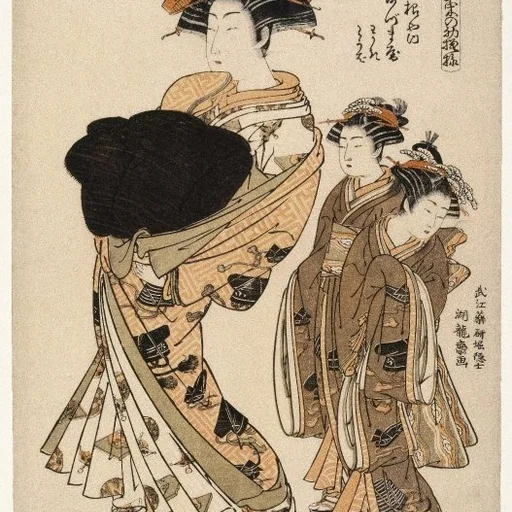
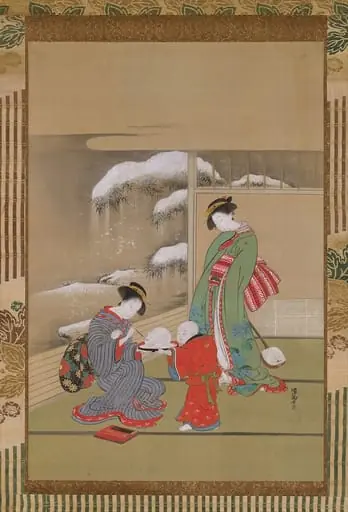
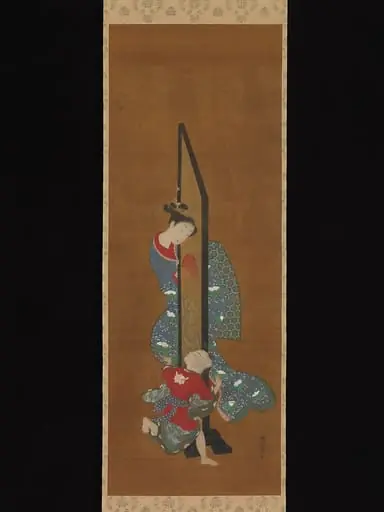
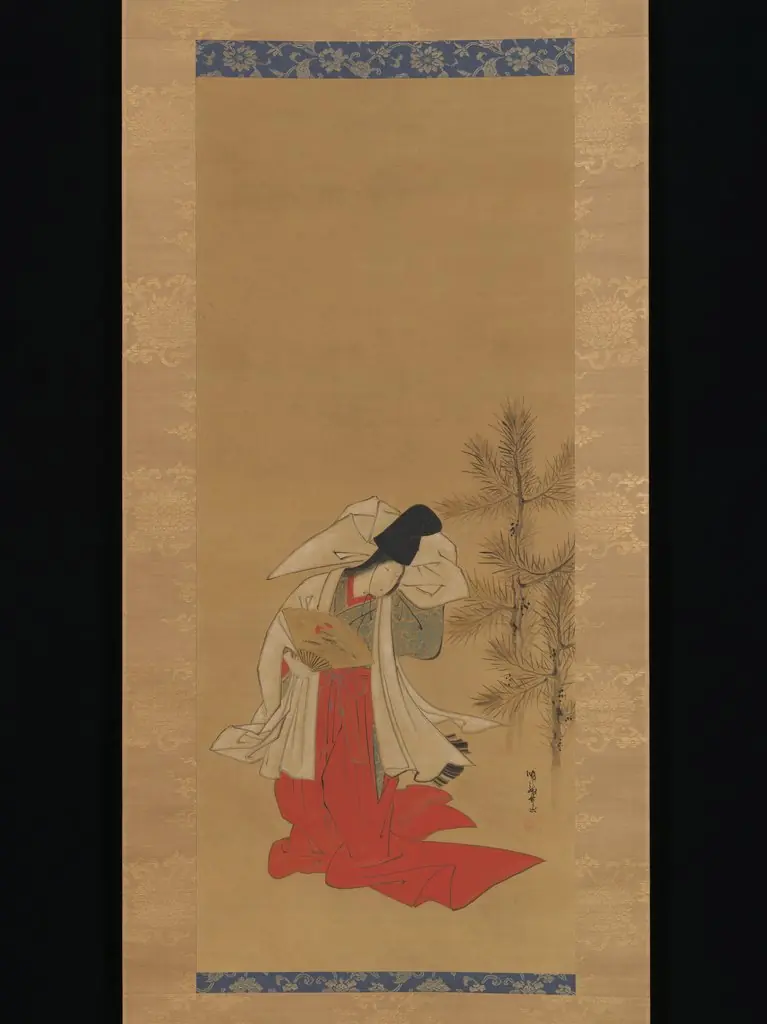
Untitled is an ink print by the Romanticist artist Isoda Koryūsai. It dates from 1783 and is held in the collection of the Metropolitan Museum of Art.
About this work
Overview
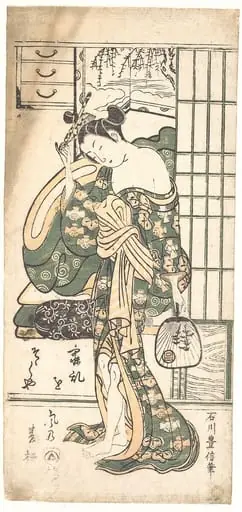
Created in 1783 by Isoda Koryūsai, this woodblock print is a hashira-e, designed to fit the narrow format of pillar panels in Japanese homes. Executed in ink and color on paper, it exemplifies the ukiyo-e tradition with its emphasis on everyday intimacy. The work is part of The Metropolitan Museum of Art’s print collection, preserved for its quiet composition and refined craftsmanship.
Subject & Meaning
A single flower lies beside her, and a bell hangs near a wooden window frame—elements that imply domestic serenity without narrative urgency.
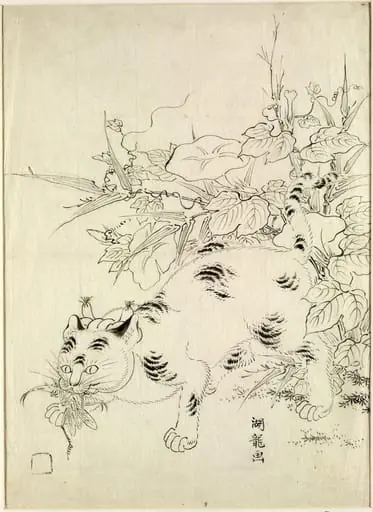
A woman reclines on a low couch, her head propped on one hand in a posture of quiet contemplation. A cat rests at her feet, gazing upward, suggesting a moment of stillness shared between human and animal. A single flower lies beside her, and a bell hangs near a wooden window frame—elements that imply domestic serenity without narrative urgency. The scene evokes private, unremarkable time rather than theatrical drama.
Technique & Style
The print employs bold, clean outlines and flat areas of color, characteristic of ukiyo-e woodblock methods. Shading is minimal, with subtle cross-hatching used sparingly to suggest texture, particularly in the cat’s fur and the folds of fabric. The simplicity of line conveys movement and mood without detail, relying on composition and posture to communicate emotion.
History & Provenance
Produced during the late Edo period, the print was likely made for domestic display in urban residences. It entered The Metropolitan Museum of Art’s collection through established acquisitions of Japanese prints in the early 20th century. Its preservation reflects the museum’s long-standing interest in Edo-period graphic arts and their role in everyday visual culture.
Context
Hashira-e prints like this one were designed for vertical spaces in traditional Japanese interiors, often placed along pillar surfaces. They depicted scenes of leisure, beauty, or domestic life, appealing to a growing urban middle class. Koryūsai’s work aligns with contemporaries who favored intimate, non-narrative moments over dramatic or theatrical subjects.
Legacy
Though unsigned and untitled, the print endures as an example of refined Edo-period printmaking that prioritized mood over spectacle. Its restrained palette and focus on quiet domesticity influenced later artists exploring similar themes of solitude and stillness. It remains a reference for understanding the subtlety achievable within the woodblock medium.
Artist & collection