Artwork
Untitled

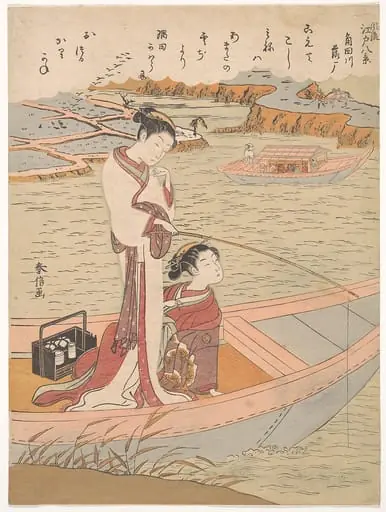
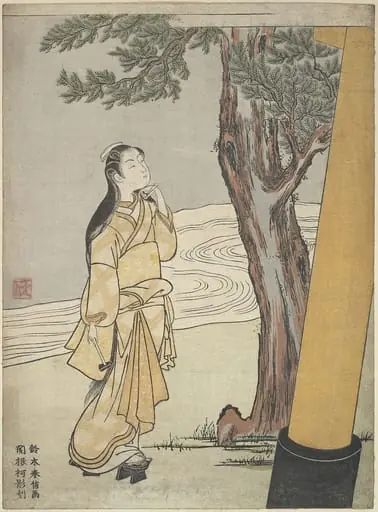
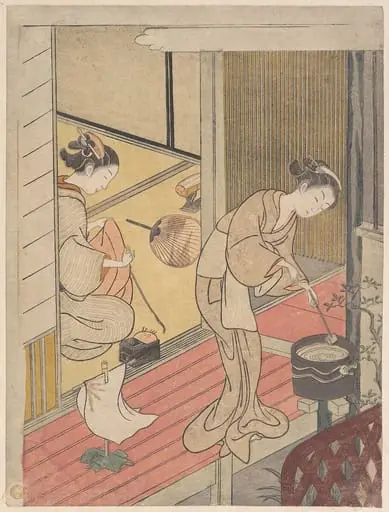
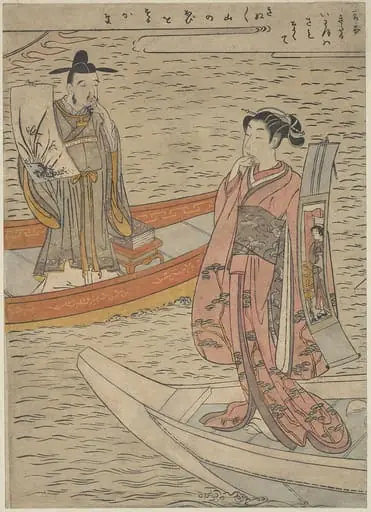
Untitled is an ink print by the Romanticist artist Suzuki Harunobu. It dates from 1750 and is held in the collection of the Metropolitan Museum of Art.
About this work
Overview
Created around 1750 by the Edo‑period artist Suzuki Harunobu, this woodblock print belongs to the hashira‑e format, a tall, narrow composition intended for display on a pillar. Executed with ink and color on paper, the image presents a whimsical scene involving a celestial woman, a hermit figure, and a mischievous demon.
Subject & Meaning
The central figure is a woman in a pink robe standing on a cloud, clutching a peach—a traditional emblem of longevity. Beneath her floats a bald man in a blue robe, arms outstretched as if attempting to seize the fruit. A horned, wild‑haired demon watches from behind, adding a playful element of disruption to the mythic tableau.
Technique & Style
Harunobu employed the hashira‑e technique, compressing narrative detail into a slender vertical space. The print combines delicate line work with subtle color washes, characteristic of his bijin (beautiful woman) genre, while the exaggerated facial features of the demon convey a light‑hearted, almost caricatural tone.
History & Provenance
The work originates from the mid‑18th century, a period when Harunobu’s innovative use of multi‑color woodblock printing was gaining popularity. As a pillar print, it would have been hung in a domestic or temple setting, serving both decorative and didactic purposes within the visual culture of Edo‑Japan.
Context
Hashira‑e prints often illustrated popular legends, folklore, or literary scenes in a format suited to interior architecture. This piece reflects the era’s fascination with blending Buddhist and Shintō motifs—here, the heavenly woman and the hermit—while also indulging in the period’s taste for humor and visual wit.
Artist & collection