Artwork
Charles von Mansfeld
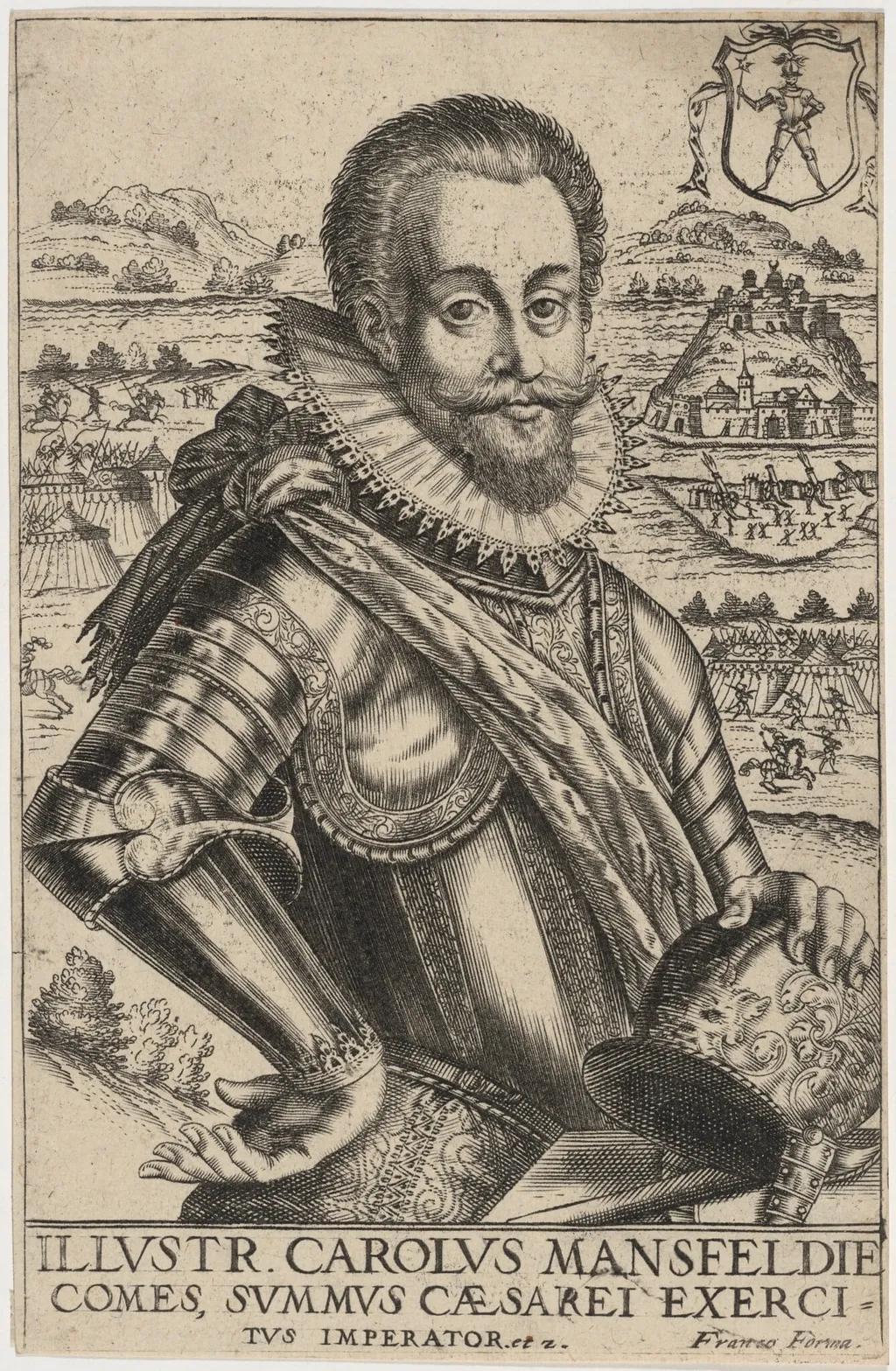
Charles von Mansfeld is an ink print by the Renaissance artist Giacomo Franco. It dates from 1585 and is held in the collection of the National Gallery of Art.
About this work
Overview
Giacomo Franco’s 1585 engraving presents a portrait of Charles von Mansfeld, a count and military commander. Rendered in stark black-and-white, the image shows the nobleman in full armor, a ruff collar, and a long beard, grasping a sword. Behind him, a finely detailed map‑like background depicts buildings, roads and diminutive figures, suggesting a landscape or fortified town.
Subject & Meaning
The portrait emphasizes Mansfeld’s martial status through his armor and weapon, while the surrounding cityscape may allude to his territorial command or recent campaigns. The inclusion of the title “count” and the identification “Carolus Mansfeld” underlines his aristocratic rank and leadership role within the military hierarchy of the late sixteenth century.
Technique & Style
Franco employed the traditional intaglio process, incising lines into a copper plate with a burin before inking and pressing onto paper. The engraving displays precise line work, especially in the intricate armor and the miniature architectural elements, reflecting the high level of craftsmanship typical of late Renaissance printmaking.
History & Provenance
Signed by the artist as “Franco Forna,” an archaic spelling of his name, the print was produced shortly after Mansfeld’s prominence in European conflicts. While specific ownership records are scarce, the work survives in several museum and library collections, attesting to its circulation among collectors of portraiture and military iconography.
Context
The portrait belongs to a broader trend of commemorative prints that celebrated military leaders during the turbulent wars of the late 1500s. Franco, active in Venice, often rendered such figures for patrons seeking to memorialize their achievements, combining portraiture with cartographic or topographic elements.
Artist & collection

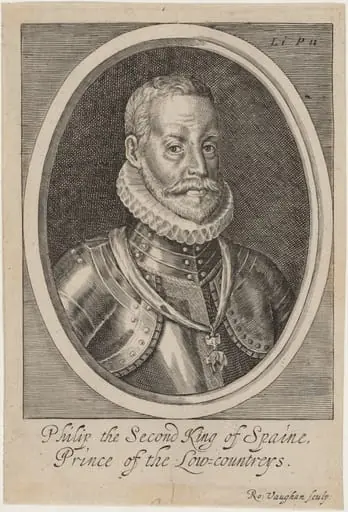 Philip II, King of Spain
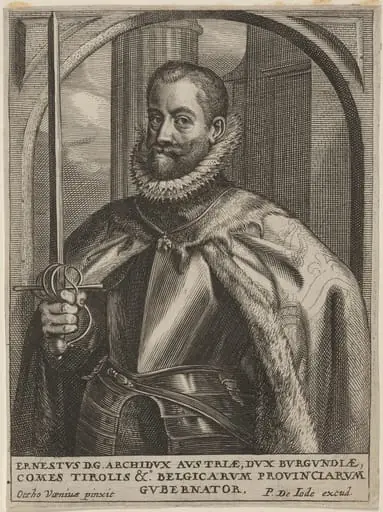 Ernest, Archduke of Austria
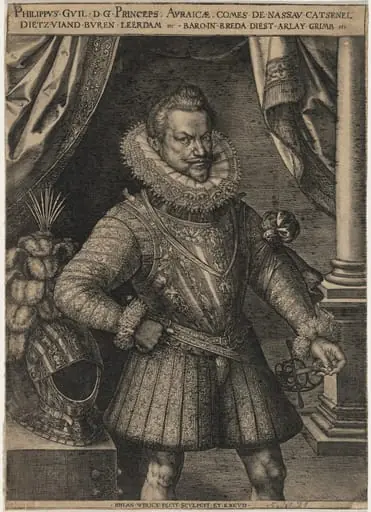 Philip William, Prince of Orange
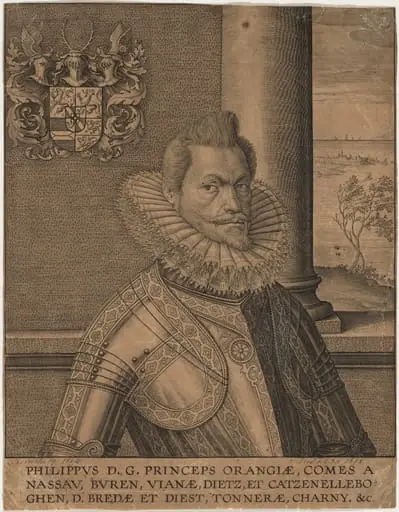 Philip William, Prince of Orange
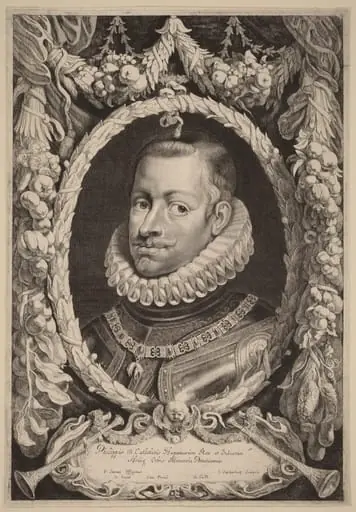 Philip III, King of Spain
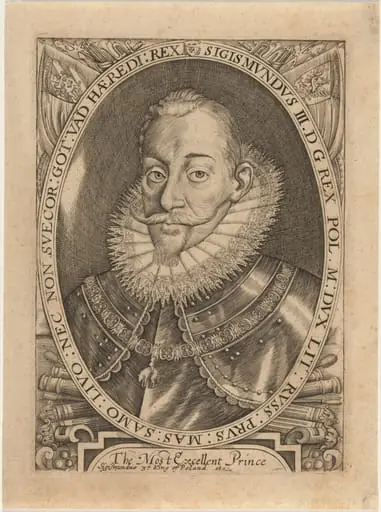 Sigismund III, King of Poland and Sweden
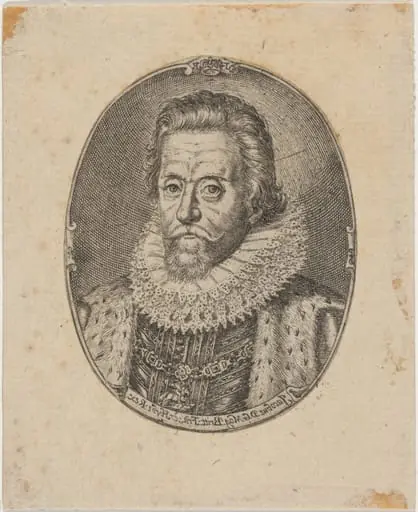 James I, King of England
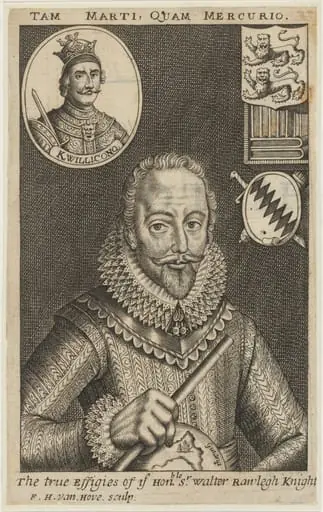 Sir Walter Raleigh
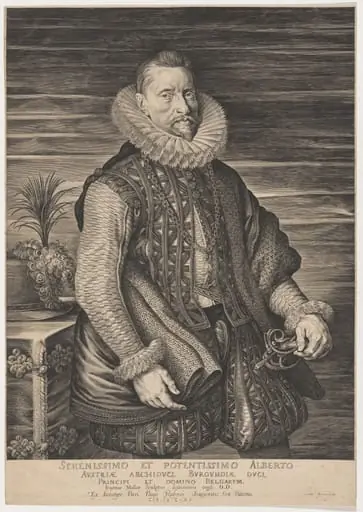 Albert, Archduke of Austria
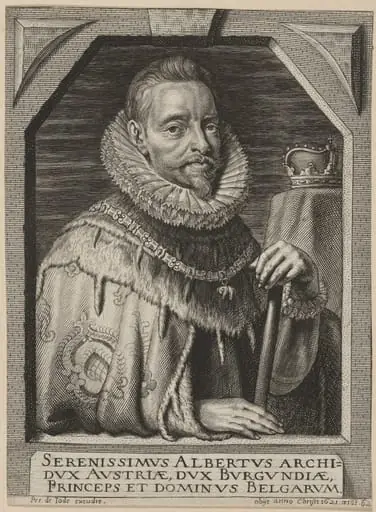 Albert VII, Archduke of Austria
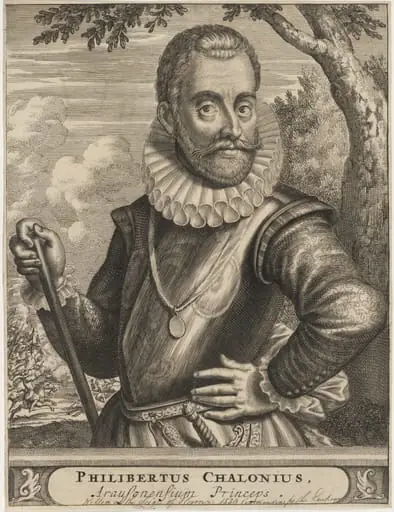 Philibert, Prince of Orange
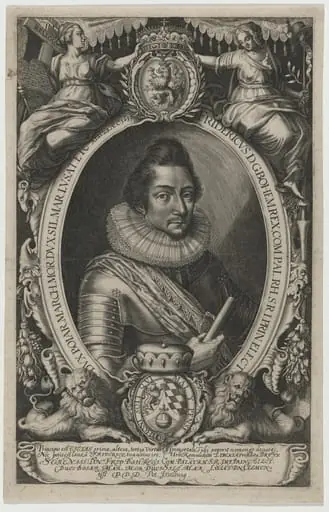 Frederick V, King of Bohemia