Artwork
Four Scenes from the First Book of Samuel
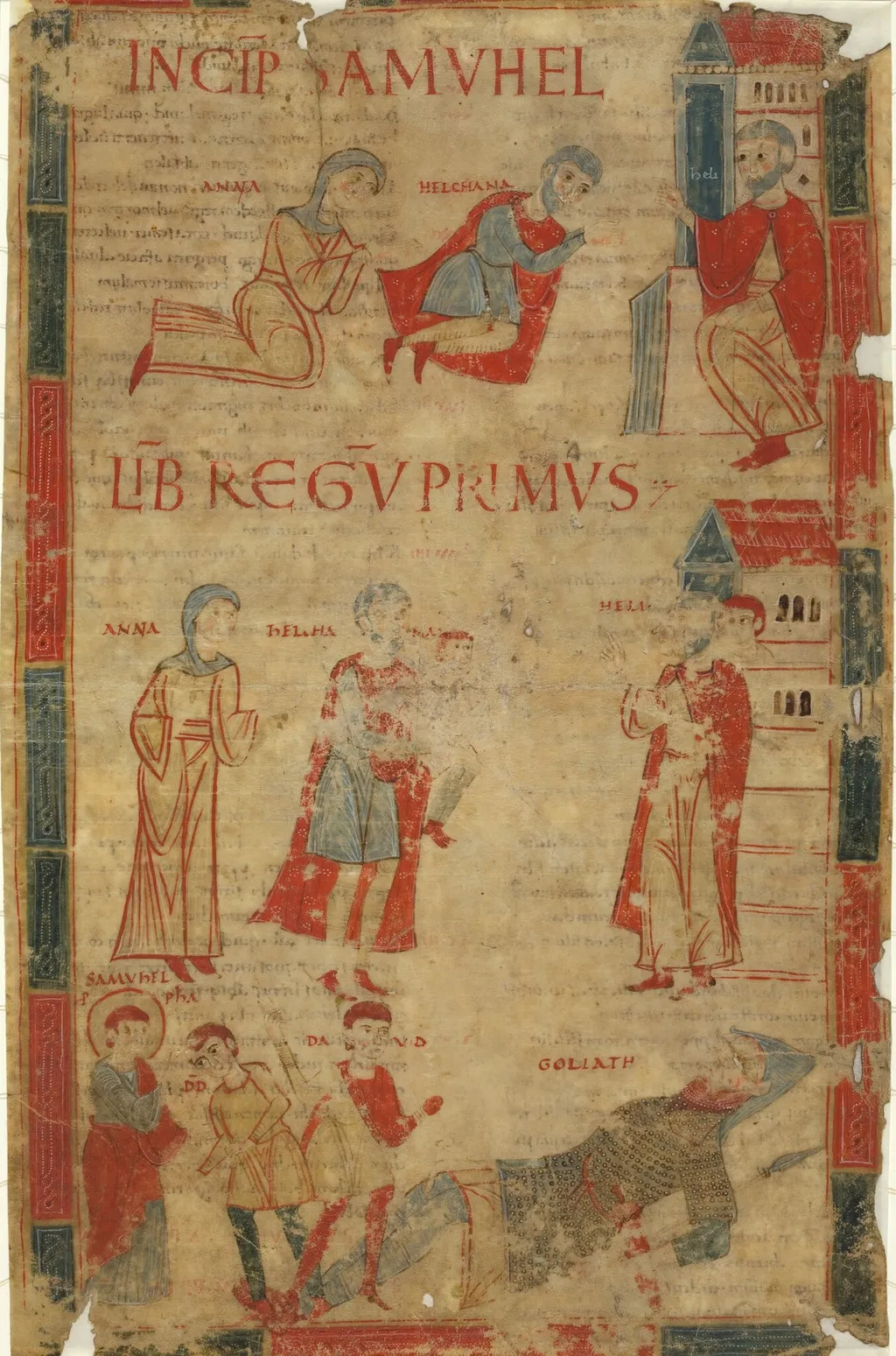
Four Scenes from the First Book of Samuel is a drawing by Italian 11th Century. It dates from 1001 and is held in the collection of the National Gallery of Art.
About this work
At the top, a woman in blue and red leans over a man in a chair, while another man in red stands nearby.
This page shows four small scenes with flat, bright colors and bold outlines. At the top, a woman in blue and red leans over a man in a chair, while another man in red stands nearby. Below, a group of people—some standing, one kneeling—face a giant figure with a sword. The background has simple buildings and text in Latin.
The page is part of a book, not a standalone painting. The figures look stiff and stylized, with no attempt at realistic movement or depth.
Check out Italian 11th Century artists for more work like this.
Overview
Four Scenes from the First Book of Samuel is a miniature drawing executed on vellum. The work comprises a single page that contains four distinct narrative episodes, each rendered with flat, vivid pigments and pronounced outlines. The composition is organized in two horizontal registers, the upper illustrating a domestic encounter and the lower depicting a confrontation with a larger, sword‑bearing figure, all set against a simplified architectural backdrop and accompanied by Latin captions.
Subject & Meaning
The upper vignette shows a woman dressed in blue and red leaning toward a seated man, while a second man in red stands nearby, suggesting a moment of dialogue or instruction. The lower register presents a group of figures—some upright, one kneeling—directed toward a towering, sword‑wielding character, likely representing a biblical confrontation drawn from the First Book of Samuel. The scenes convey key narrative moments without elaboration, relying on recognizable gestures and attributes to identify the characters.
Technique & Style
Rendered as a miniature on vellum, the work employs bright, flat colors applied in broad areas, bounded by bold, black outlines. The figures are stylized and rigid, lacking attempts at naturalistic anatomy, perspective, or spatial depth. Architectural elements are reduced to simple geometric forms, and the Latin text is integrated into the composition, reflecting the manuscript tradition of the period where illustration served a didactic function rather than a realistic portrayal.
Context
The miniature belongs to an illuminated manuscript of the First Book of Samuel, a common devotional text in medieval Europe. Its visual language aligns with Italian manuscript production of the 11th century, where artists favored schematic representation and vivid coloration. Such works were intended for private or monastic use, providing visual accompaniment to the scriptural narrative and reinforcing the text’s moral and theological messages.
Artist & collection

Artist
This artist worked in Italy during the late 1000s, painting tiny scenes on animal-skin pages.

 The Apostles of Argolell
 Saint John Dictating to the Venerable Bede
 Leaf from a Beatus Manuscript: the Angel of the Church of Sardis with Saint John
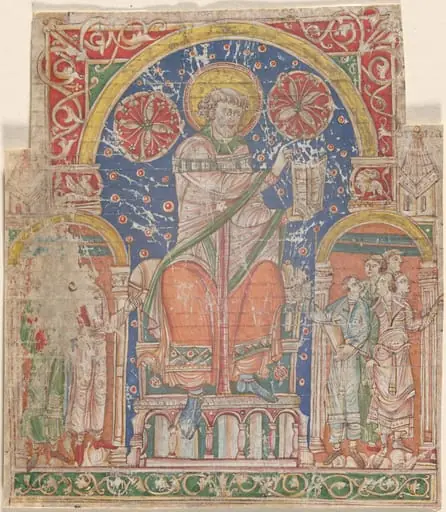 Saint Augustine
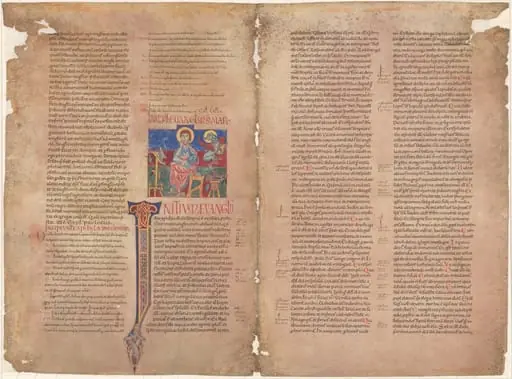 Saint Mark
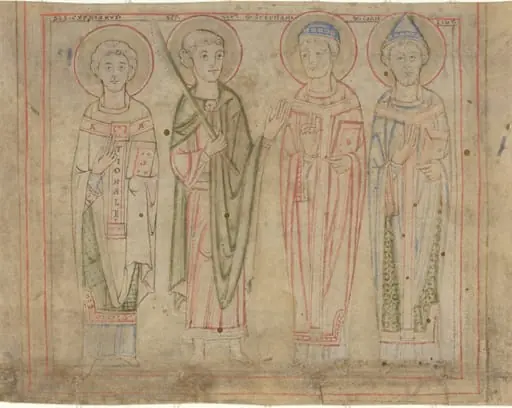 Saints Cyprian, Vitus, Stephan, and Cornelius
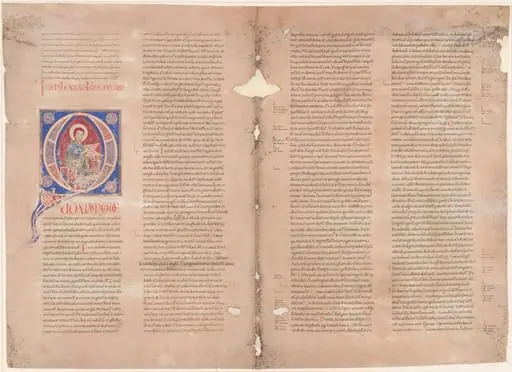 Saint Luke
![Christ in Majesty [recto], by French 12th Century](https://artifactworldgallery.com/img/french-12th-century--christ-in-majesty-recto--312aa8dd5634bdac-w320.webp) Christ in Majesty [recto]
Christ in Majesty [recto] Birth and Naming of John the Baptist
 Panels with scenes of the Martyrdom of Saint Lucy
 Madonna and Child Enthroned between Saints Petronius and Alle (Eligius); Christ in the Initial A
 Manuscript Illumination with Initial V, from a Bible