Artwork
Birth and Naming of John the Baptist
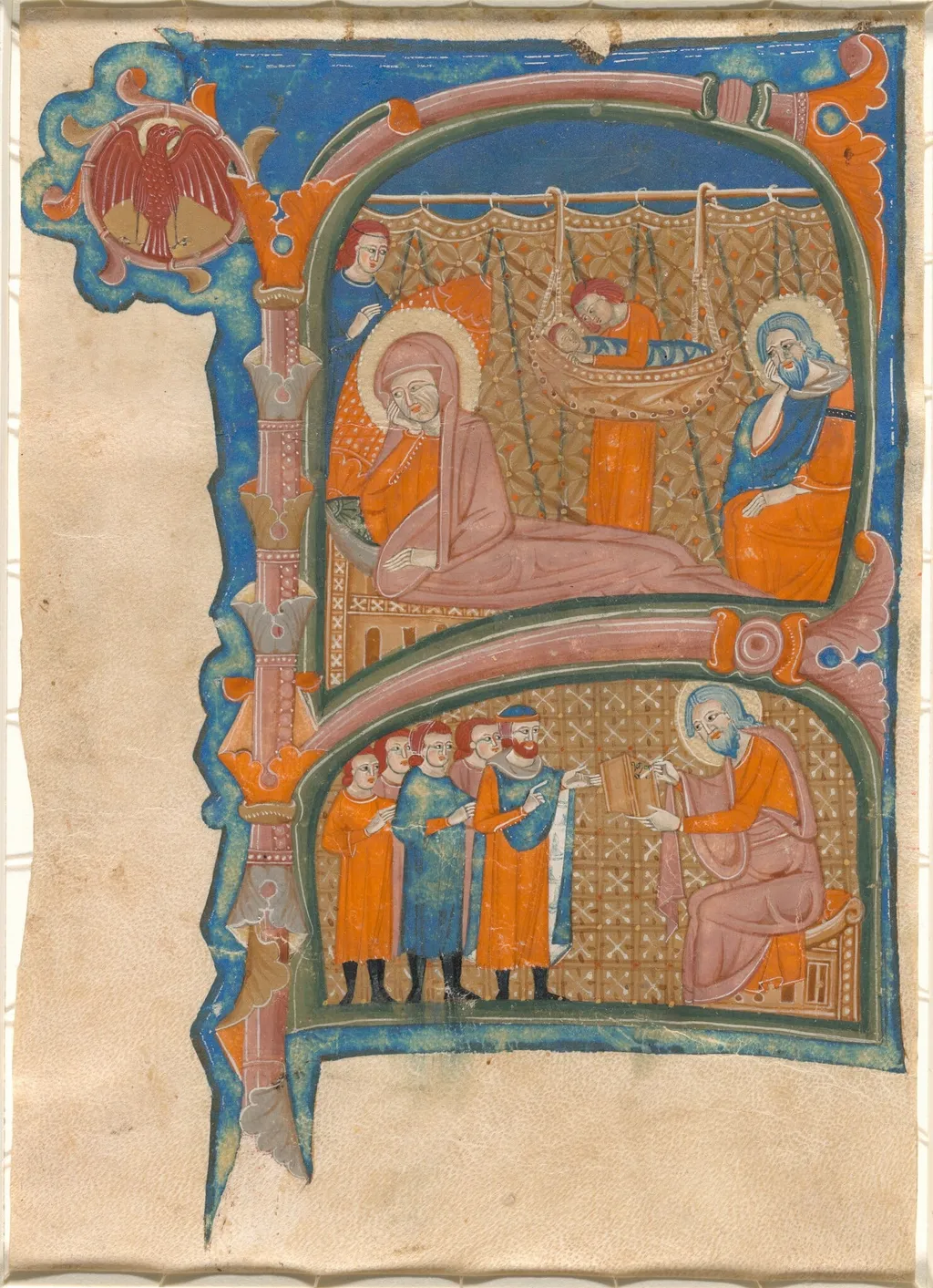
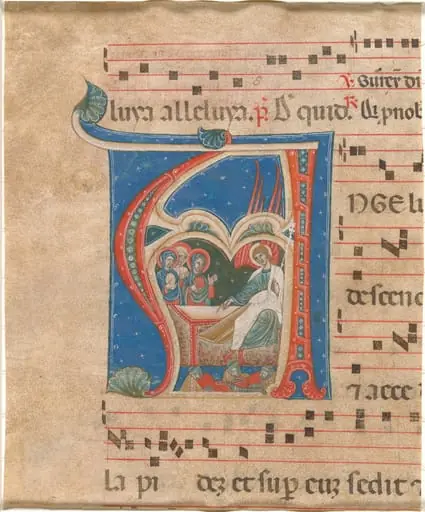
Birth and Naming of John the Baptist is a drawing by Italian 13th Century. It dates from 1201 and is held in the collection of the National Gallery of Art. This 13th‑century Italian miniature on vellum presents a two‑part narrative.
About this work
The bottom scene features a group of men gathered around a man holding a book and a quill.
This medieval miniature painting on vellum depicts two scenes. The top scene shows a woman lying in bed, with a baby in a crib beside her. A woman sits on the right side of the bed, while a man stands on the left. The bottom scene features a group of men gathered around a man holding a book and a quill.
The painting is rendered in muted colors, with intricate details and ornate borders. The scenes are set against a backdrop of geometric patterns and foliage.
The style of the painting is characteristic of the Italian 13th century. To learn more about the techniques used in this painting, explore the art of chiaroscuro.
Overview
This 13th‑century Italian miniature on vellum presents a two‑part narrative. The upper register shows a woman in bed beside a cradle holding an infant, attended by a seated female figure and a standing male figure. The lower register depicts a gathering of men surrounding a figure holding a book and a quill, all framed by decorative borders and geometric‑foliage motifs.
Subject & Meaning
The upper scene alludes to the birth and naming of John the Baptist, emphasizing the domestic setting of his mother and the presence of witnesses. The lower scene likely represents a scholarly or clerical group, perhaps recording the event or discussing its theological significance, underscoring the importance of textual transmission in medieval devotion.
Technique & Style
Executed in muted pigments on vellum, the miniature employs fine line work and delicate shading characteristic of early Italian illumination. Ornamental borders and stylized foliage frame the composition, while the use of chiaroscuro—subtle gradations of light and dark—adds depth to the figures and interior space.
History & Provenance
Created in the 13th century in Italy, the work reflects the manuscript illumination practices of the period. Its survival on vellum indicates it was likely part of a devotional codex or liturgical book, though specific ownership records are not documented.
Context
During the medieval era, images of John the Baptist’s birth served both instructional and devotional purposes, reinforcing his role as the forerunner of Christ. The miniature’s dual scenes combine narrative illustration with a scholarly element, mirroring the era’s integration of visual and textual learning.
Artist & collection

Artist
This artist shaped the look of church music between 1250 and 1299, painting bold red-and-blue initials on vellum pages meant for choirs.

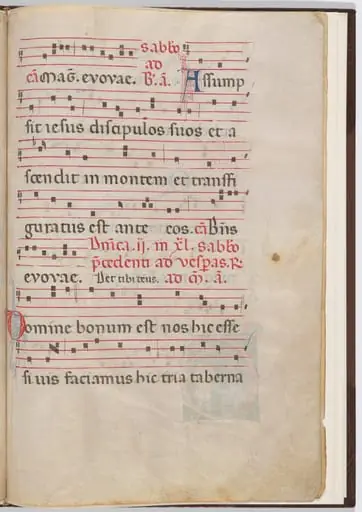 Leaf 7 from an antiphonal fragment
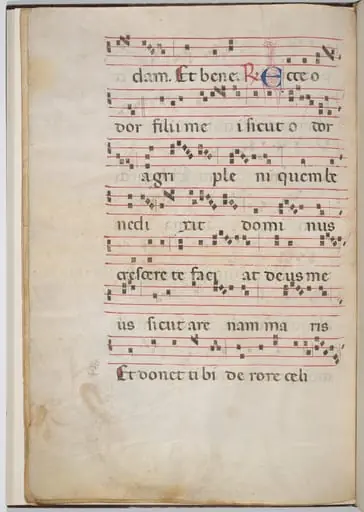 Leaf 8 from an antiphonal fragment (verso)
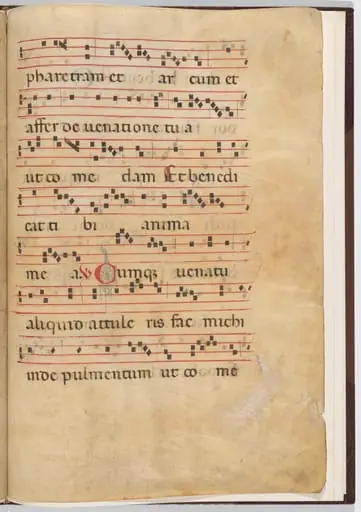 Leaf 8 from an antiphonal fragment
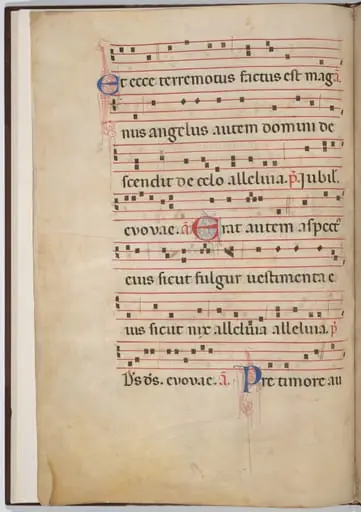 Leaf 3 from an antiphonal fragment (verso)
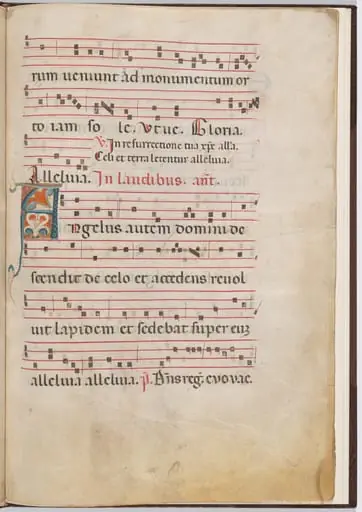 Leaf 3 from an antiphonal fragment
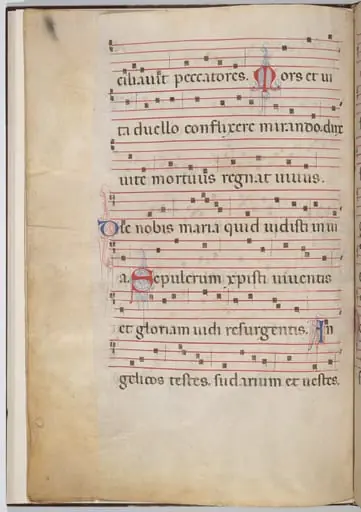 Leaf 6 from an antiphonal fragment (verso)
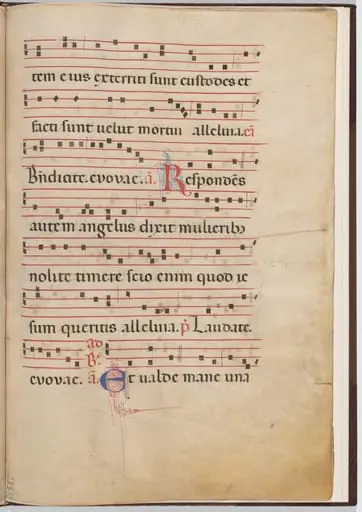 Leaf 4 from an antiphonal fragment
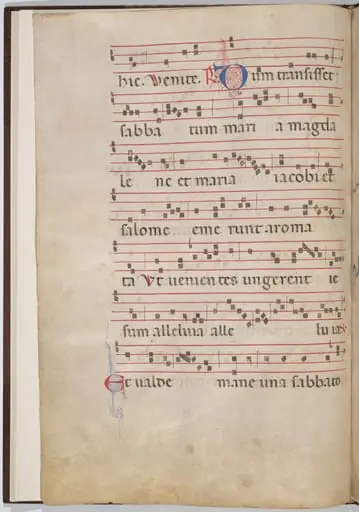 Leaf 2 from an antiphonal fragment (verso)