Artwork
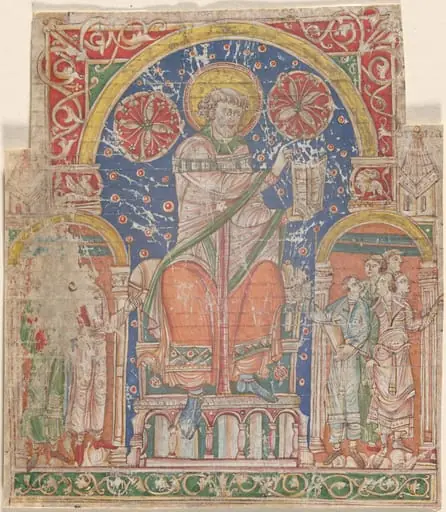
Christ in Majesty [recto]
![Christ in Majesty [recto], by French 12th Century, 1101](https://artifactworldgallery.com/img/french-12th-century--christ-in-majesty-recto--312aa8dd5634bdac-w1024.webp)
Christ in Majesty [recto] is a drawing by French 12th Century. It dates from 1101 and is held in the collection of the National Gallery of Art. This early 12th-century miniature on vellum depicts Christ in Majesty, a common theological image in medieval Christian art.
About this work
The painting is called Christ in Majesty.
It's from the early 12th century, which is interesting because that was a time when art was often used to tell stories from the Bible. The fact that it's a miniature on vellum also suggests it might have been part of a book or manuscript.
You can learn more about this kind of art at the National Gallery of Art, Washington.
Overview
Its small scale and material suggest it was created as part of a devotional manuscript, likely intended for private contemplation rather than public display.
This early 12th-century miniature on vellum depicts Christ in Majesty, a common theological image in medieval Christian art. Its small scale and material suggest it was created as part of a devotional manuscript, likely intended for private contemplation rather than public display. The use of vellum, prepared animal skin, reflects the craftsmanship and resources required for such illuminated texts during this period.
Subject & Meaning
Christ is portrayed seated in glory, surrounded by symbolic elements that affirm his divine authority. The composition draws from apocalyptic visions in the Book of Revelation, emphasizing his role as judge and ruler of heaven and earth. This representation served to reinforce theological concepts for viewers, aligning the faithful with celestial order through visual devotion.
Technique & Style
Executed with fine brushwork and pigments on vellum, the image exhibits the precision typical of monastic illumination. Gold leaf may highlight Christ’s halo or garments, enhancing luminosity. Figures are stylized, with elongated forms and flat spatial treatment, reflecting conventions of Romanesque art rather than naturalistic representation.
History & Provenance
Though its specific origin is unrecorded, similar miniatures were produced in scriptoria across Western Europe, often in Benedictine or Cistercian monasteries. The work likely belonged to a liturgical or biblical manuscript, possibly used in daily prayer. Its survival suggests careful preservation, though its path to institutional collections remains undocumented.
Context
In the early 12th century, religious manuscripts were central to monastic life and spiritual education. Images like Christ in Majesty functioned as visual sermons, conveying doctrine to both literate clergy and those who could not read. The prevalence of such imagery reflects the era’s emphasis on divine sovereignty and the Church’s role as mediator of sacred truth.
Legacy
This miniature exemplifies the enduring influence of Romanesque illumination on later medieval art. Its formal language persisted into the Gothic period, shaping how divine figures were rendered in books and stained glass. Surviving examples like this one remain vital for understanding the devotional practices and artistic priorities of medieval Christianity.
Artist & collection

Artist
In the early 12th century, a French artist illuminated vellum with vivid miniatures that brought biblical scenes to life.

 Saint Augustine
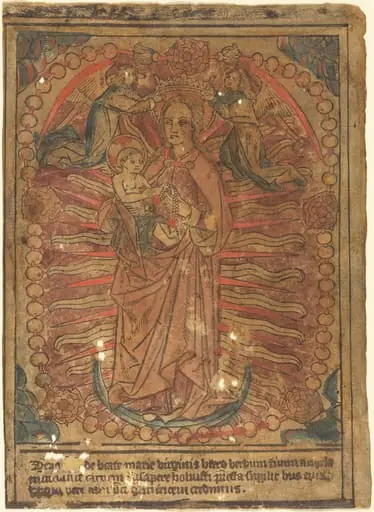 The Madonna and Child in a Rosary
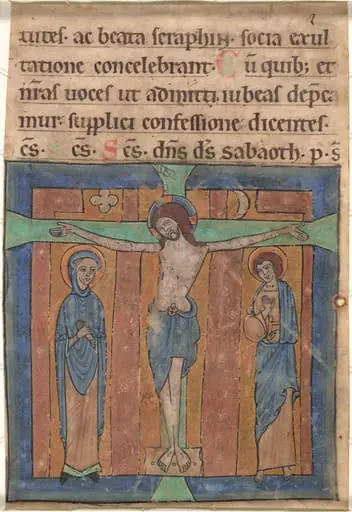
![The Crucifixion [verso], by French 12th Century](https://artifactworldgallery.com/img/french-12th-century--the-crucifixion-verso--cef697082a2df4f0-w320.webp) The Crucifixion [verso]
The Crucifixion [verso]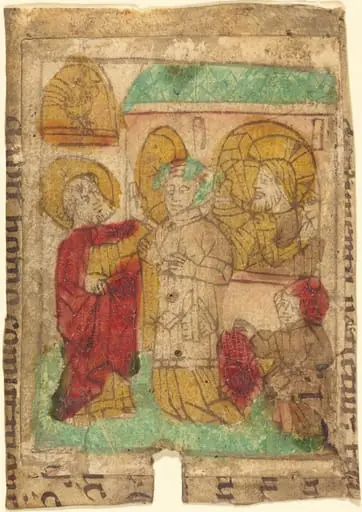 The Denial of Peter
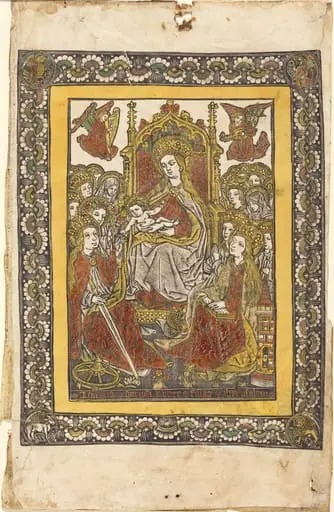 The Madonna Enthroned with Eighteen Holy Women
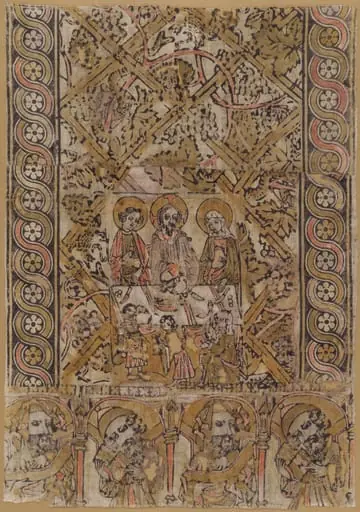 A Lectern Cloth with the Marriage at Cana
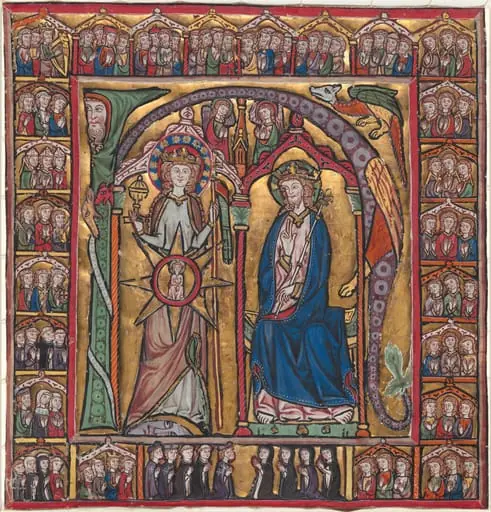 The Triumph of the Church
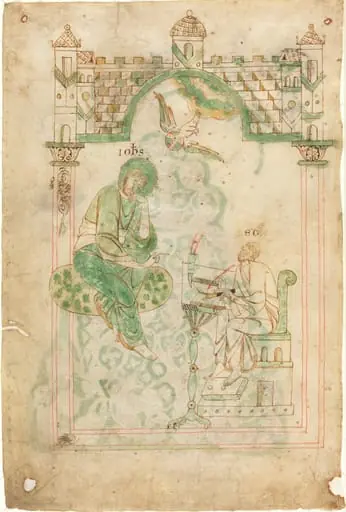 Saint John Dictating to the Venerable Bede
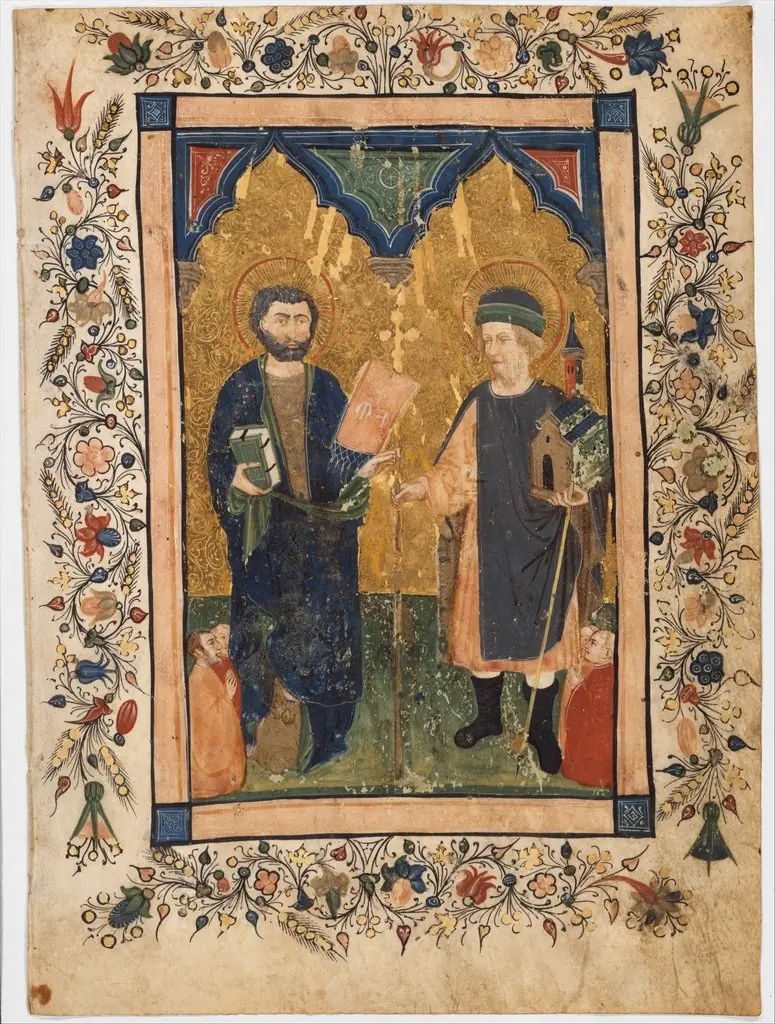 Saint Mark the Evangelist and Saint Sinibaldus Venerated by Members of a Lay Confraternity
 The Crucifixion