Artwork
Apollo
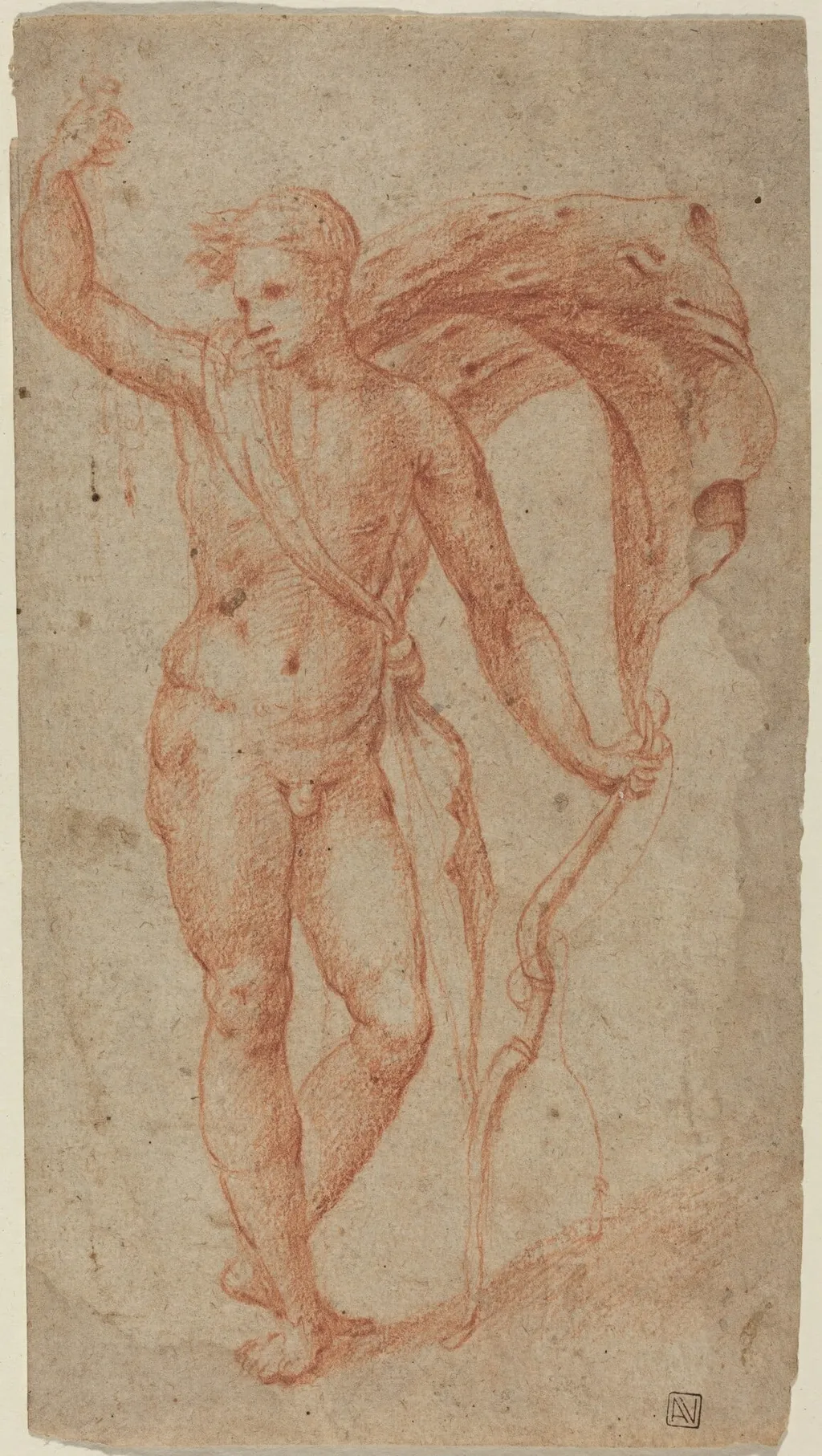
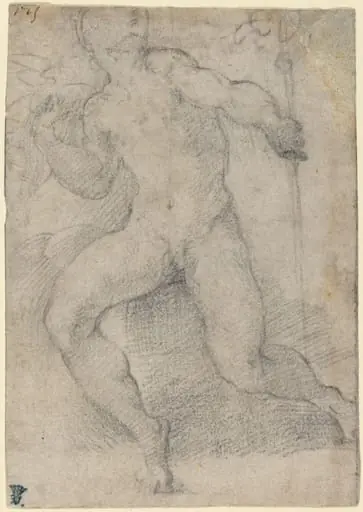
Apollo is a chalk drawing by the Renaissance artist Italian 16th Century. It dates from 1510 and is held in the collection of the National Gallery of Art.
About this work
Overview
The medium’s warm tone enhances the sense of warmth and vitality in the form, emphasizing motion over detail.
This red chalk drawing depicts Apollo in dynamic motion, captured mid-stride as if drawing a bow. The figure’s twisting pose and flowing drapery suggest urgency and physical exertion. Executed with loose, energetic strokes, the work reads as a rapid study rather than a finished composition. The medium’s warm tone enhances the sense of warmth and vitality in the form, emphasizing motion over detail.
Subject & Meaning
Apollo, the Greek god of music, prophecy, and the sun, is portrayed here not as a serene deity but as an active, athletic figure. The gesture of drawing a bow aligns with his role as an archer in myth, particularly in tales of vengeance or divine intervention. The focus on bodily tension conveys divine power expressed through physicality, reflecting Renaissance ideals that fused classical mythology with humanist anatomy.
Technique & Style
The artist employed red chalk with varying pressure to model form and suggest volume. Lighter strokes define contours, while darker areas indicate shadow and muscular tension. The rapid, fluid lines capture movement rather than precision, indicating a preparatory sketch. The absence of fine detail and the emphasis on gesture reflect a study focused on anatomy in motion, typical of artists exploring the human figure under dynamic conditions.
History & Provenance
The drawing’s origin is attributed to a Renaissance artist, likely active in Italy during the early 16th century, though the specific hand remains unconfirmed. It has been held in private collections and institutional archives since at least the 18th century, with no documented public exhibition prior to the 20th century. Its survival as a study suggests it was valued for its artistic insight rather than as a finished work.
Context
Created during a period when artists intensely studied classical sculpture and anatomy, this drawing reflects broader trends in Renaissance draftsmanship. Artists like Michelangelo and Raphael produced similar figure studies to understand movement and musculature. The use of red chalk was common for life drawing, prized for its versatility in capturing both line and tone without the permanence of ink or paint.
Legacy
This drawing contributes to the understanding of how Renaissance artists translated mythological subjects into human terms through direct observation. Its emphasis on kinetic energy influenced later figure studies and the development of gesture drawing as a foundational skill. Though unsigned and unattributed, it remains a representative example of the period’s commitment to anatomical truth and expressive motion.
Artist & collection

Artist
A 16th-century Italian sculptor left us small bronze works in dark brown and gold.

 Mercury
 Drawing
 Cupid Stealing Venus's Floral Crown
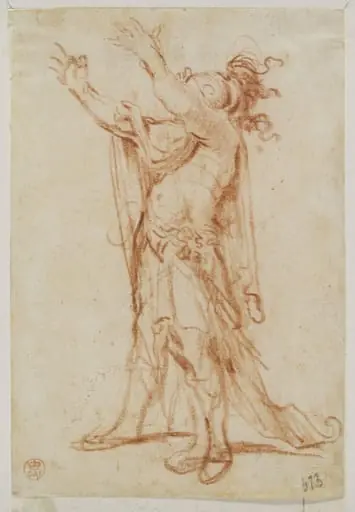 Study of a soldier in Roman dress with uplifted arms
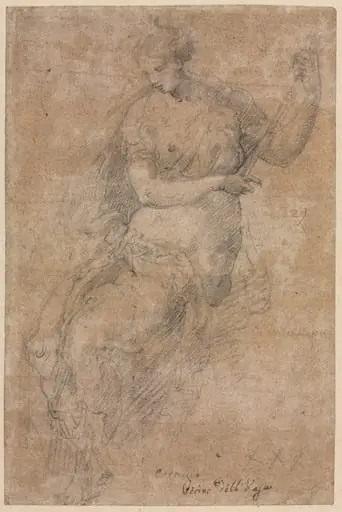 Allegorical Figure (recto)
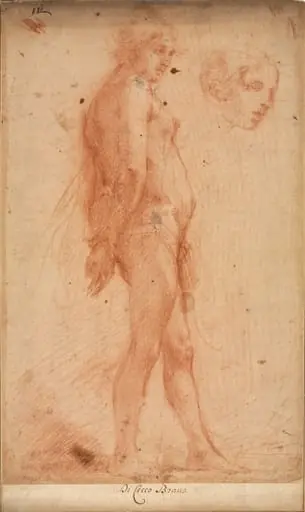 Study of a Standing Male Nude, with a Study of Head in Three-Quarter Profile
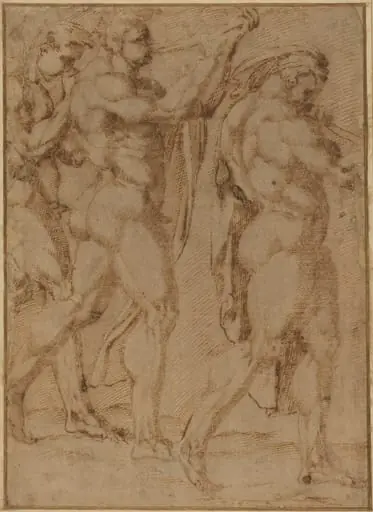 Triumphal Procession
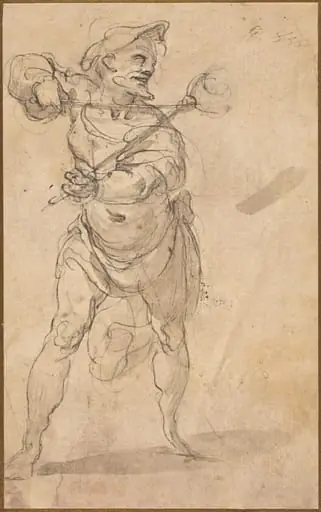 A Tormentor With Tongs
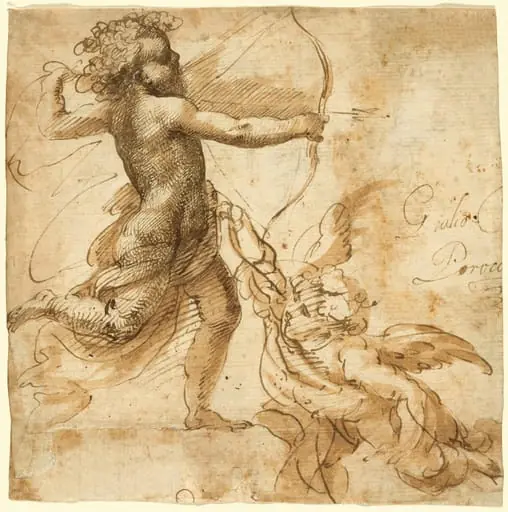 Cupid
Cupid![Nude Male Figure [recto], by Italian 17th Century](https://artifactworldgallery.com/img/italian-17th-century--nude-male-figure-recto--f1cc965df272e72c-w320.webp) Nude Male Figure [recto]
Nude Male Figure [recto]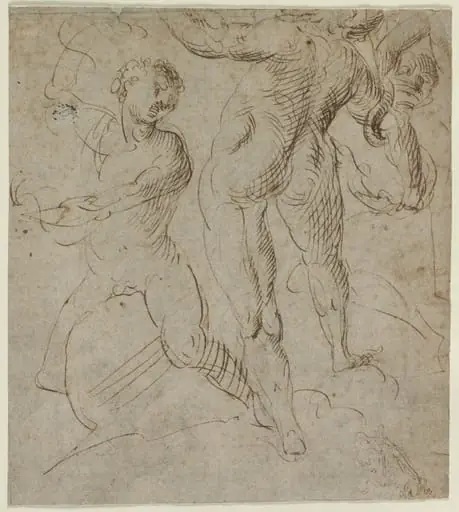 Laocoön (recto)
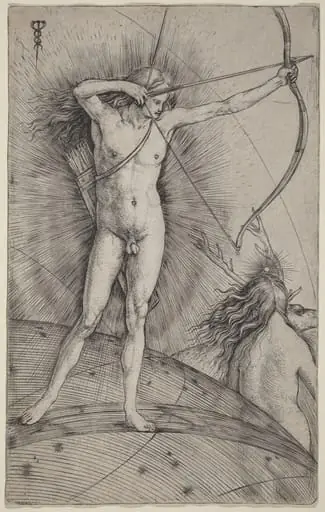 Apollo and Diana