Artwork
Horatius Cocles
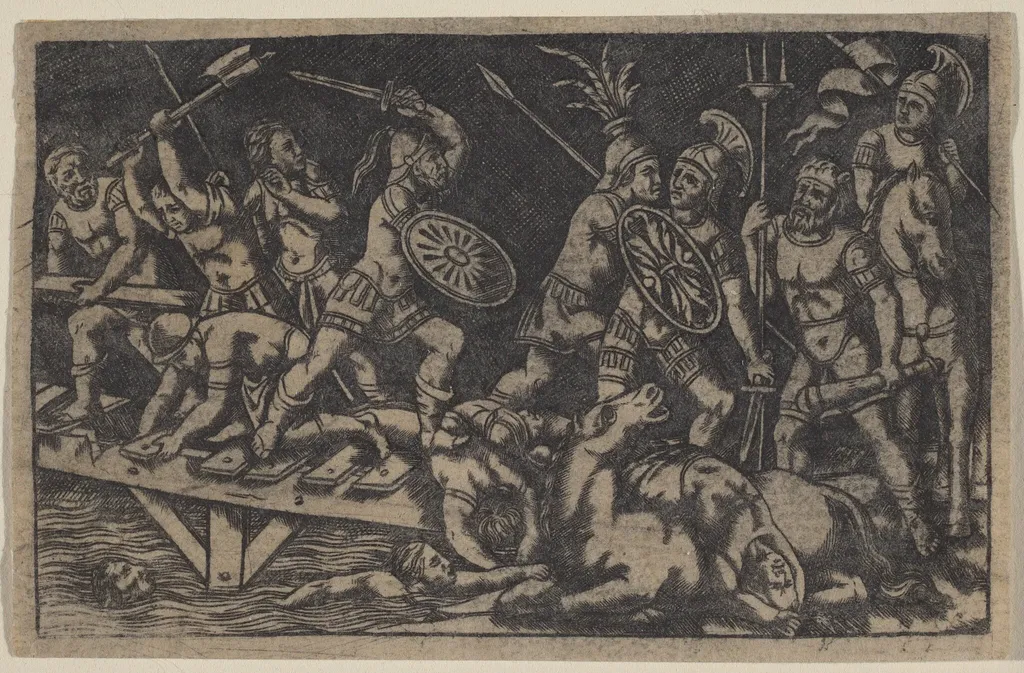
Horatius Cocles is a print by the Romanticist artist Italian 18th Century. It dates from 1800 and is held in the collection of the National Gallery of Art.
About this work
Overview
The work titled “Horatius Cocles” is a niello print depicting a tumultuous combat scene. Dark, bold lines dominate the composition, focusing attention on a central figure poised on a wooden platform with sword and shield, while other warriors clash, fall, or flee. The medium’s characteristic black alloy creates pronounced contrast and texture, enhancing the dramatic atmosphere.
Subject & Meaning
The image illustrates the legendary Roman hero Horatius Cocles defending the Sublician Bridge, a narrative of bravery against overwhelming odds. By portraying the hero atop the bridge’s structure, the print emphasizes his resolve and the peril faced by his opponents, underscoring themes of sacrifice and civic duty.
Technique & Style
Niello, a process that fuses a dark metallic alloy into engraved metal, is employed to achieve the work’s stark tonal range. The technique’s capacity for deep blacks and fine lines aligns with the Romantic emphasis on emotional intensity, rendering the scene with a sense of immediacy and vigor.
Context
Created within the Romantic movement, the print reflects the era’s fascination with heroic history and dramatic storytelling. Romantic artists often revisited classical subjects to evoke strong feelings, and this piece follows that tradition by dramatizing a moment of ancient Roman valor.
History & Provenance
The print is catalogued as a type of print artwork, though specific details of its creation date, artist, or ownership history are not provided in the source material.
Artist & collection

Artist
This Italian artist carved bronze figures in the 18th century, blending myth and motion in metal.

![Design for a Wall of a Music Room [recto], by Italian 18th Century](https://artifactworldgallery.com/img/italian-18th-century--design-for-a-wall-of-a-music-room-recto--1582534309a804bd-w320.webp)
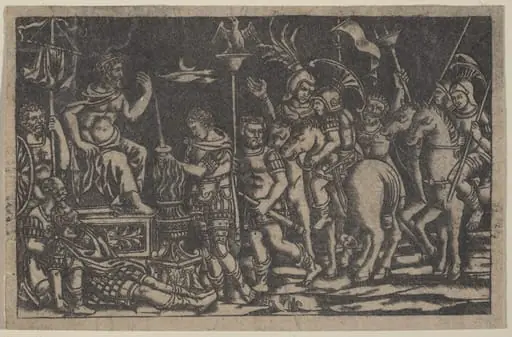 Mucius Scaevola
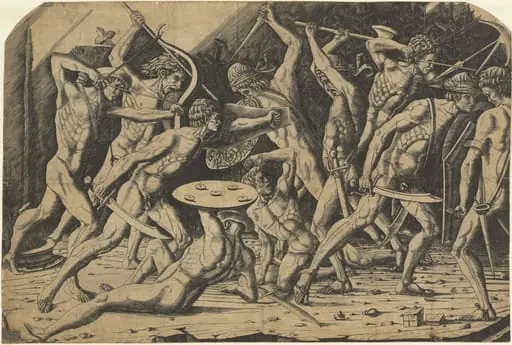 Battle of Naked Men
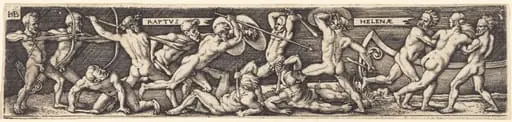 The Abduction of Helena
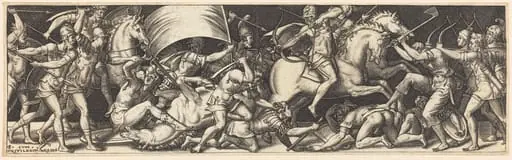 Battle of Horsemen and Foot Soldiers
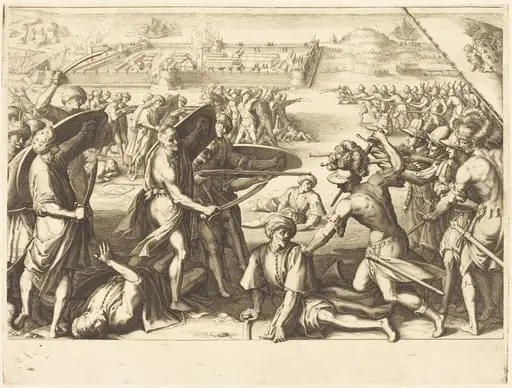 Assault on the Outer Forts of Bone
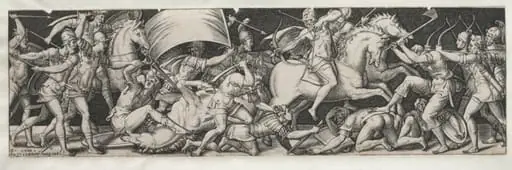 Combats and Triumphs No. 9
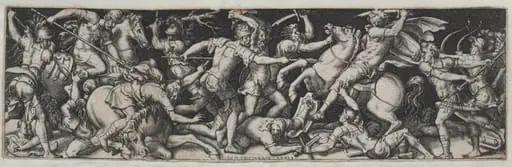 Combats and Triumphs No. 11
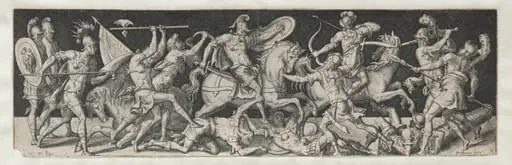 Combats and Triumphs No. 12
 Christ Tells His Disciples of the Last Judgment
 Achilles Dragging the Body of Hector
 Greeks and Trojans
 The Betrayal