Artwork
The Betrayal
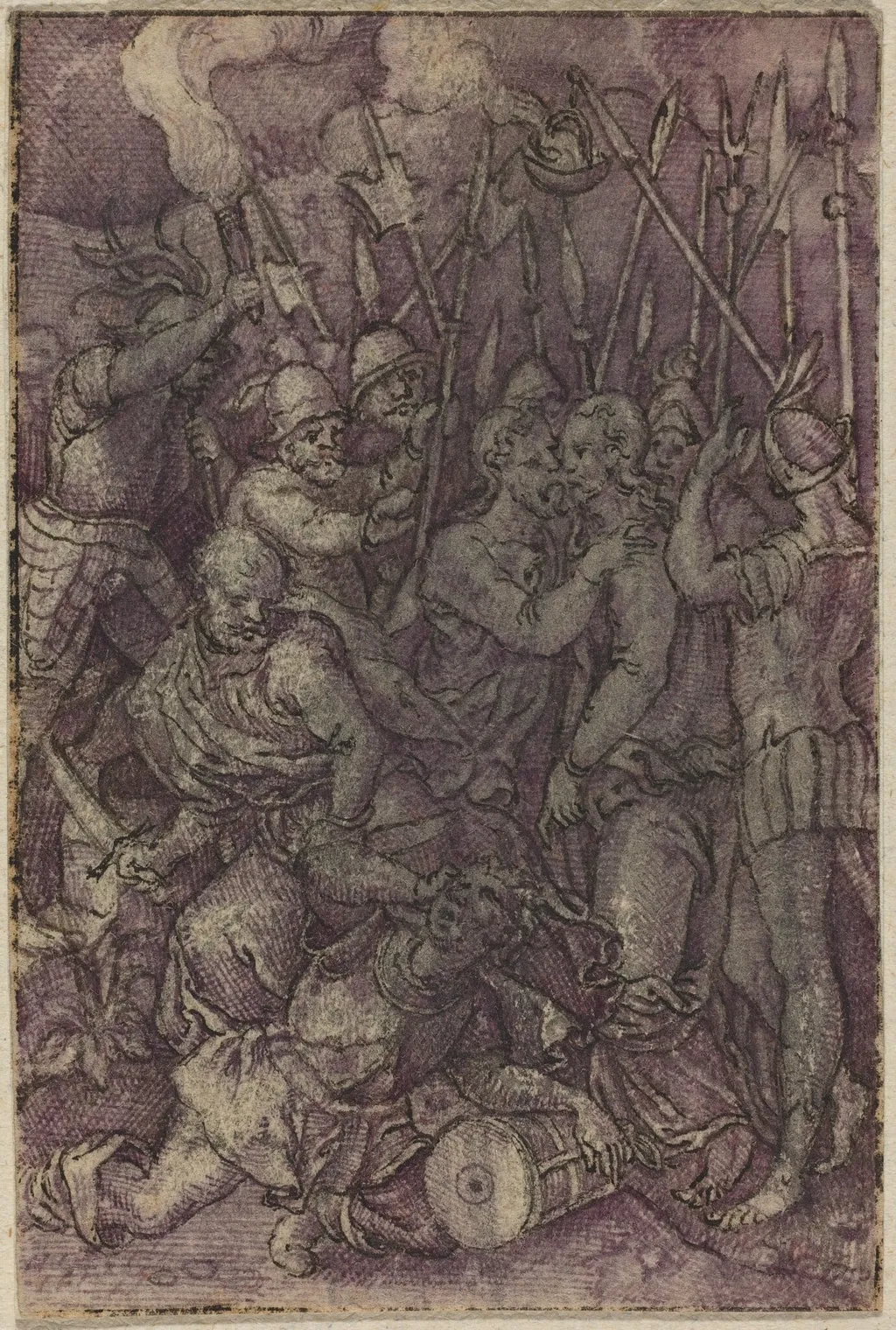
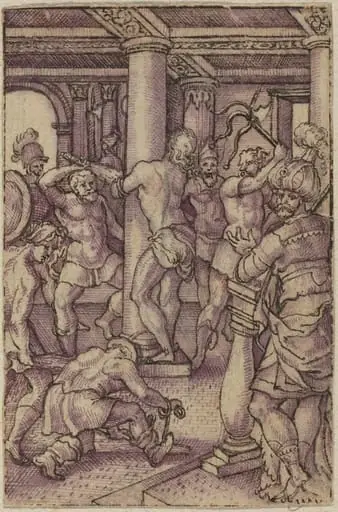
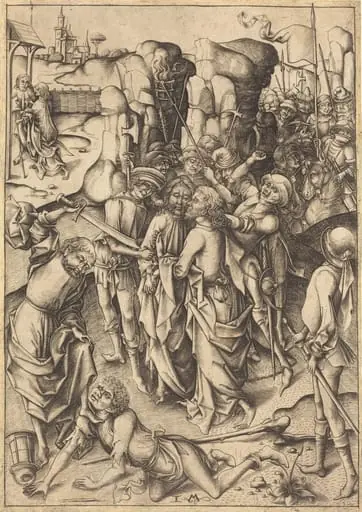
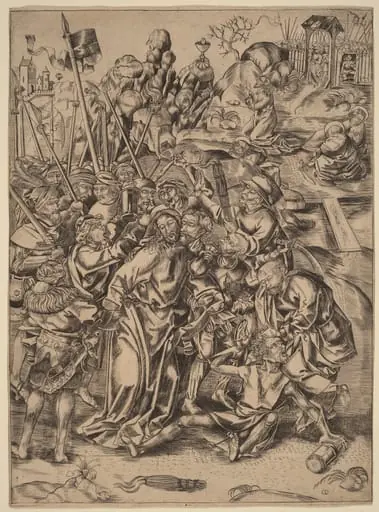
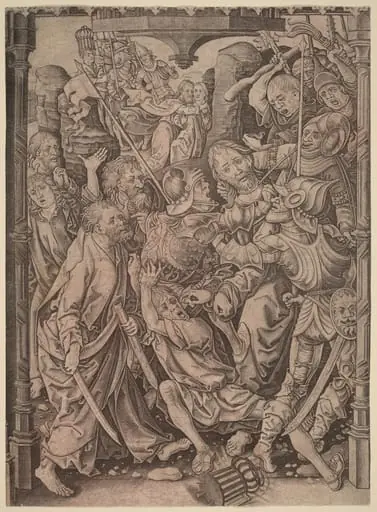
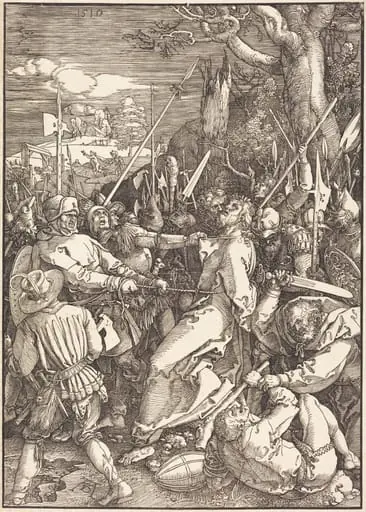
The Betrayal is an ink drawing by the Renaissance artist Virgil Solis. It dates from 1538 and is held in the collection of the National Gallery of Art.
About this work
Overview
Created in 1538, *The Betrayal* is a drawing by German artist Virgil Solis. Executed on laid paper, the work combines pen work with black and violet ink, a gray wash, and graphite. It belongs to Solis’s extensive output of ink drawings and reflects the vigorous printmaking culture of 16th‑century Nuremberg.
Subject & Meaning
The composition depicts a tumultuous melee of intertwined figures whose limbs are tangled in a chaotic knot. Expressions range from shock to pain, suggesting a moment of violent confrontation or treachery. The dense grouping and obscured faces convey a sense of confusion and emotional intensity, aligning with the title’s implication of betrayal.
Technique & Style
Solis employs a network of criss‑crossed lines and cross‑hatching to model volume and shadow, allowing the ink to suggest solid, three‑dimensional bodies despite the medium’s flatness. Violet ink and a subtle gray wash add tonal variation, while graphite accents reinforce contours. The overall effect is a densely textured surface that heightens the scene’s frenetic energy.
History & Provenance
Virgil Solis, a member of a prolific Nuremberg artistic family, was primarily known for engravings, etchings, and woodcuts.
Virgil Solis, a member of a prolific Nuremberg artistic family, was primarily known for engravings, etchings, and woodcuts. *The Betrayal* illustrates his competence in pure drawing, a less documented facet of his practice. The piece has remained in private collections before entering its current institutional holding, where it serves as a representative example of mid‑16th‑century German draughtsmanship.
Artist & collection

Artist
Virgil Solis or Virgilius Solis (1514 – 1 August 1562), a member of a prolific family of artists, was a German draughtsman and printmaker in engraving, etching and woodcut who worked in his native city of Nuremberg.