Artwork
Landscape with Ruins
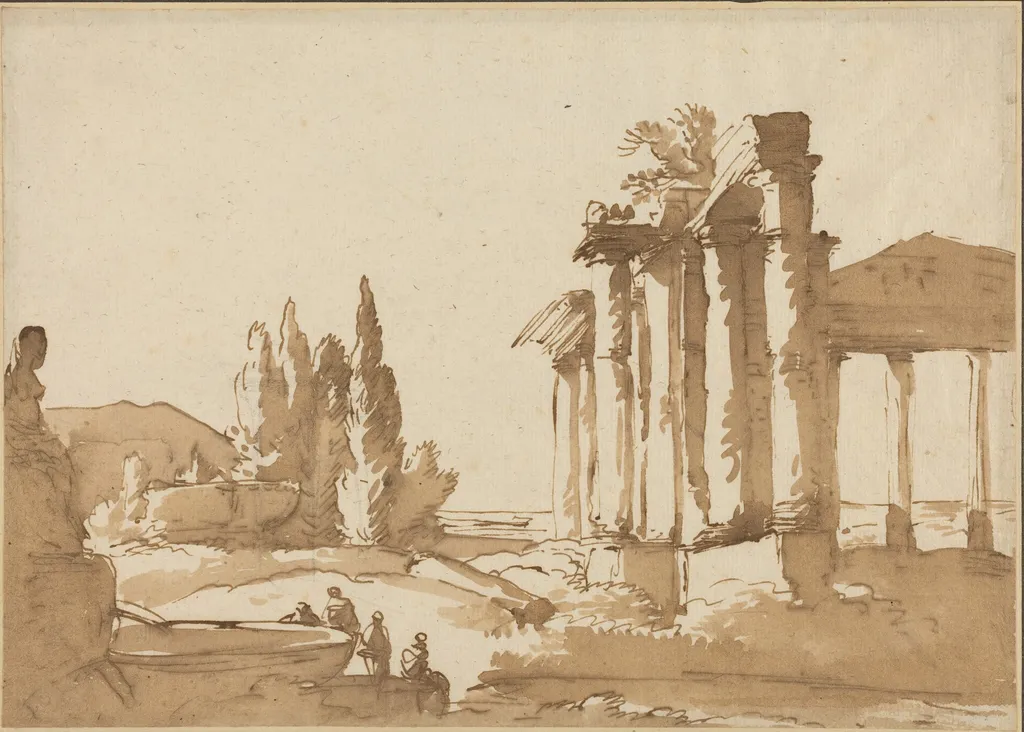
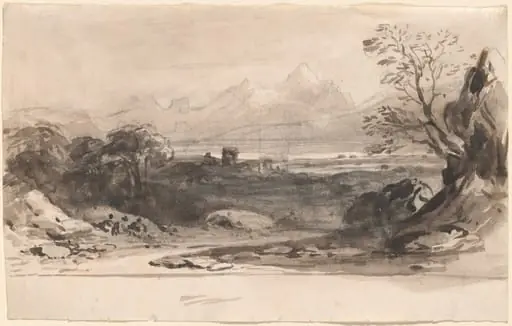
Landscape with Ruins is an ink drawing by the Baroque artist Italian 18th Century. It dates from 1701 and is held in the collection of the National Gallery of Art. This drawing, executed in pen and brown ink with wash on laid paper, depicts a tranquil coastal ruin.
About this work
Overview
The composition balances decay and vitality through restrained tonal gradations and fluid, spontaneous linework that suggests atmosphere rather than detail.
This drawing, executed in pen and brown ink with wash on laid paper, depicts a tranquil coastal ruin. Fragile columns, partially submerged, lean beside a low-roofed structure, while dense foliage frames the scene. Figures and a small boat introduce quiet human presence. The composition balances decay and vitality through restrained tonal gradations and fluid, spontaneous linework that suggests atmosphere rather than detail.
Subject & Meaning
The scene presents ruins not as monuments of grandeur, but as integrated elements of a lived-in landscape. The weathered columns and crumbling architecture suggest time’s quiet erosion, while the distant figures and boat imply daily continuity. There is no narrative drama—only an observation of nature reclaiming human traces, evoking a sense of peaceful impermanence.
Technique & Style
The artist employed loose, rapid pen strokes and diluted brown washes to model form and light. Cross-hatching and sparse ink deposits create texture in foliage and stone without precise definition. The washes soften edges, unifying the scene in muted earth tones. This method prioritizes mood over detail, reflecting a spontaneous, observational approach common in preparatory sketches of the period.
History & Provenance
The work’s origin is unattributed in available records, though its materials and handling align with 17th-century European drawing practices. It likely served as a study for a larger composition or a personal record of a journey. Its survival in good condition suggests careful preservation, possibly within a collector’s album of topographical or antiquarian sketches.
Context
During the 17th century, artists increasingly turned to ruins as subjects of contemplation, not just antiquarian interest. This drawing reflects a broader trend in Northern European art: observing ancient remains not as relics to be idealized, but as quiet witnesses to time, integrated into natural and everyday settings.
Legacy
Though unsigned and undocumented in major exhibitions, the drawing exemplifies a quiet tradition of topographical sketching that influenced later landscape studies. Its emphasis on atmosphere over monumentality anticipates 19th-century approaches to naturalism, valuing the subtle interplay of decay, light, and human presence.
Artist & collection

Artist
This Italian artist carved bronze figures in the 18th century, blending myth and motion in metal.

![Design for a Wall of a Music Room [recto], by Italian 18th Century](https://artifactworldgallery.com/img/italian-18th-century--design-for-a-wall-of-a-music-room-recto--1582534309a804bd-w320.webp)
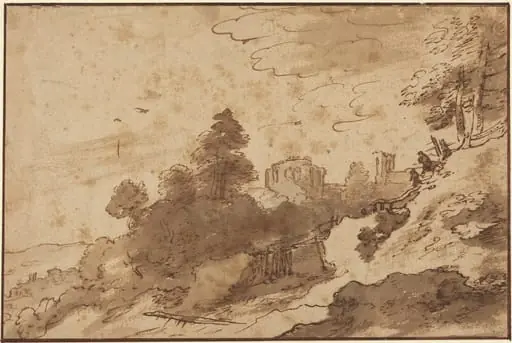 Landscape with Bridge and Ruins in Background
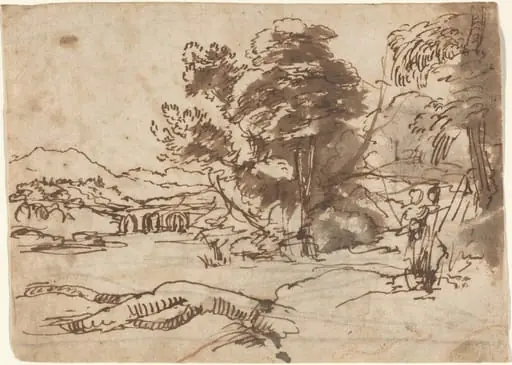 River Landscape
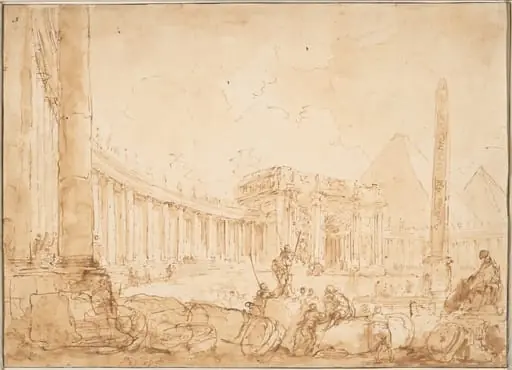 A Roman Capriccio
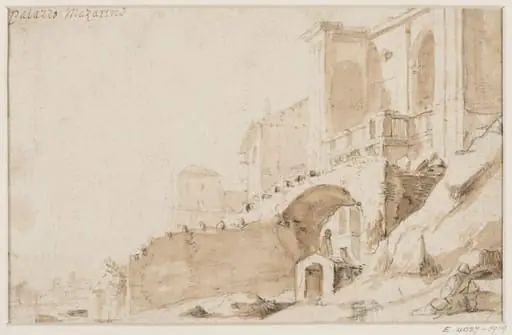 Palazzo Mazzarini, Rome
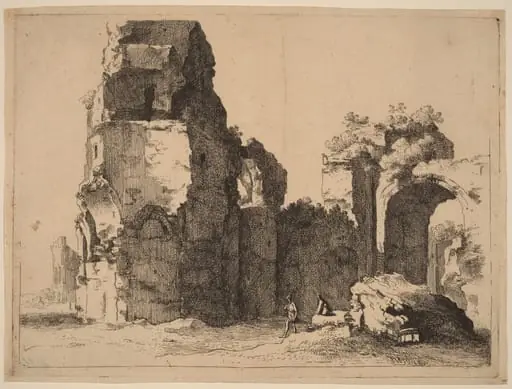 Ruins
Ruins![The Fantastic Rocks and Castle at Bomarzo [recto], by Bartholomeus Breenbergh](https://artifactworldgallery.com/img/bartholomeus-breenbergh--the-fantastic-rocks-and-castle-at-bomarzo-recto--e05f03da6f1f9c0a-w320.webp) The Fantastic Rocks and Castle at Bomarzo [recto]
The Fantastic Rocks and Castle at Bomarzo [recto]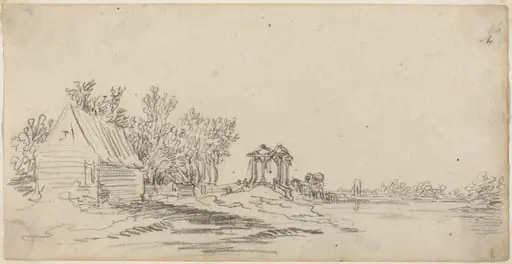 River Landscape with a Distant Bridge
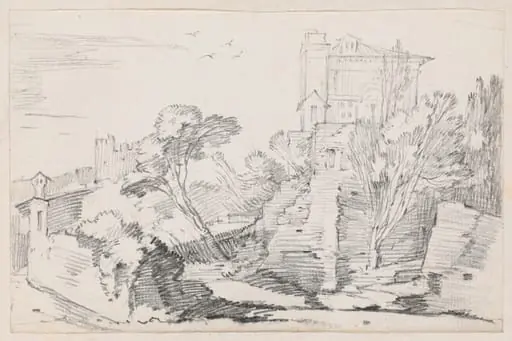 Casino Farnese on the Palatine Hill, Rome
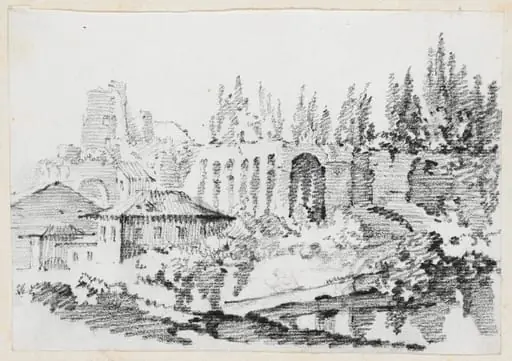 Ruins of the Imperial Palaces on the Palatine Hill
 Roman Rooftops
 View across the Wall of an Italian Garden
 Landscape with Ruins