Artwork
A Roman Capriccio
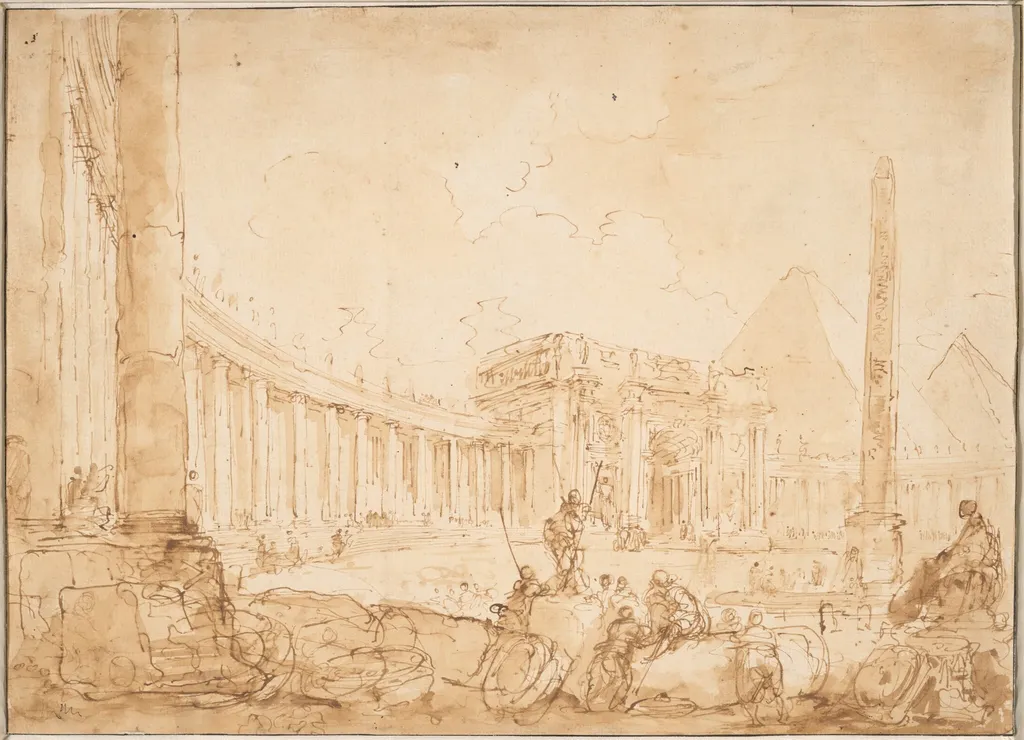
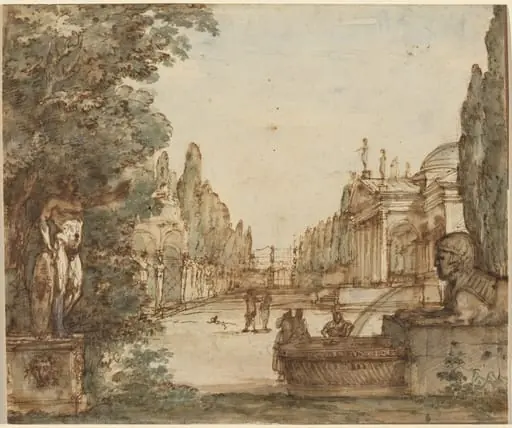
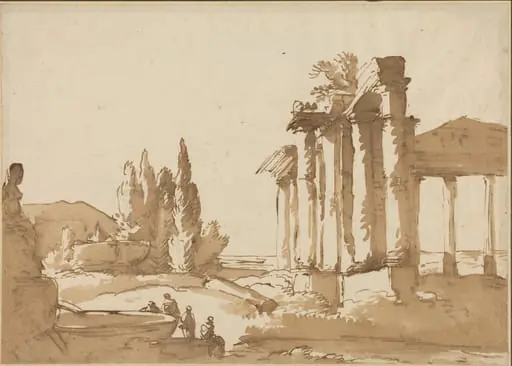
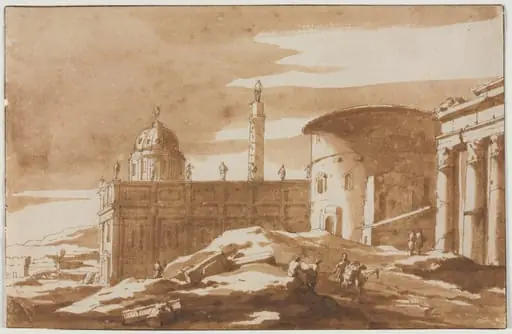
A Roman Capriccio is an ink drawing by the Romanticist artist Hubert Robert. It dates from 1764 and is held in the collection of the National Gallery of Art.
About this work
Overview
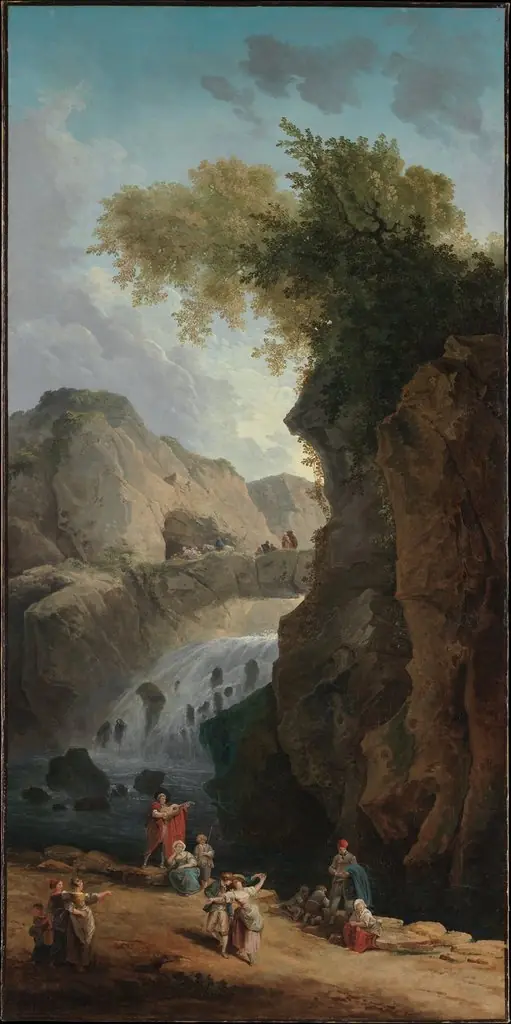
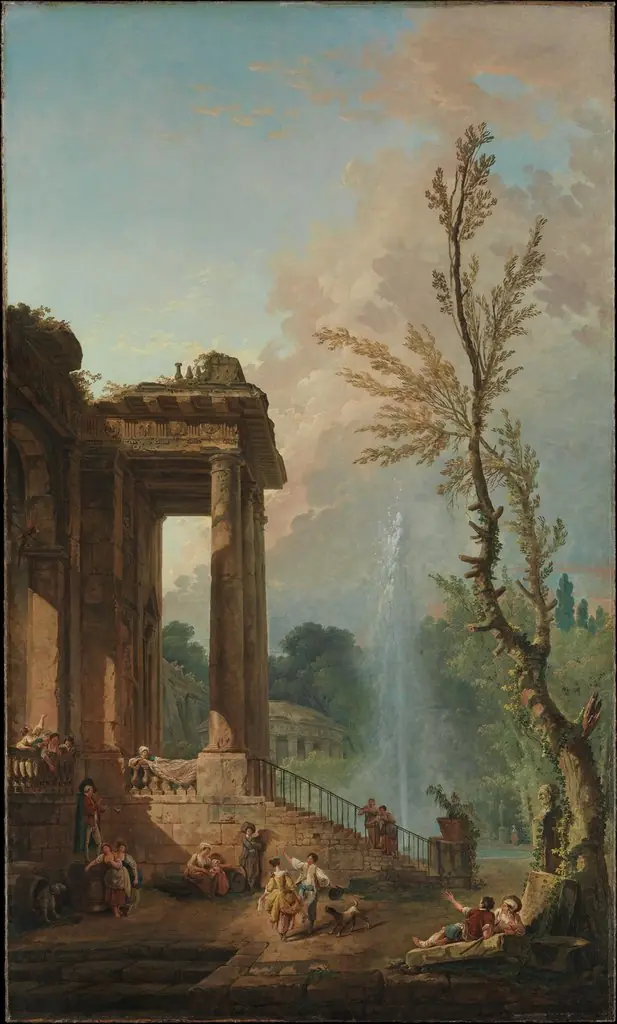
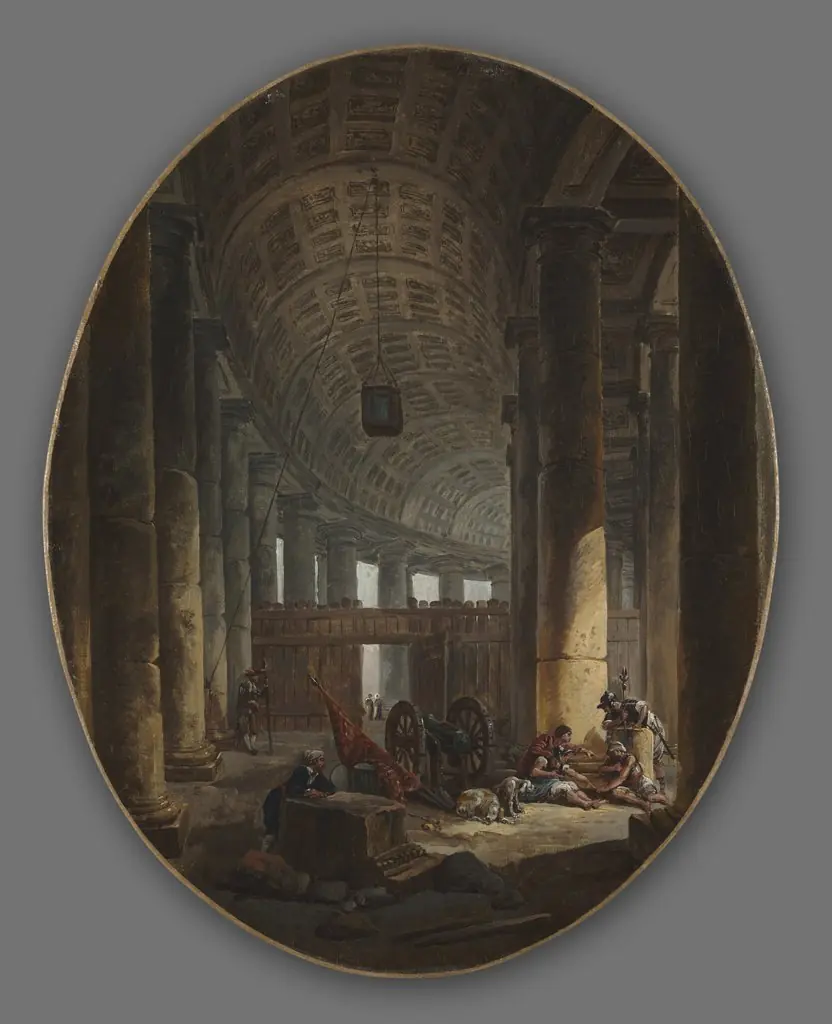
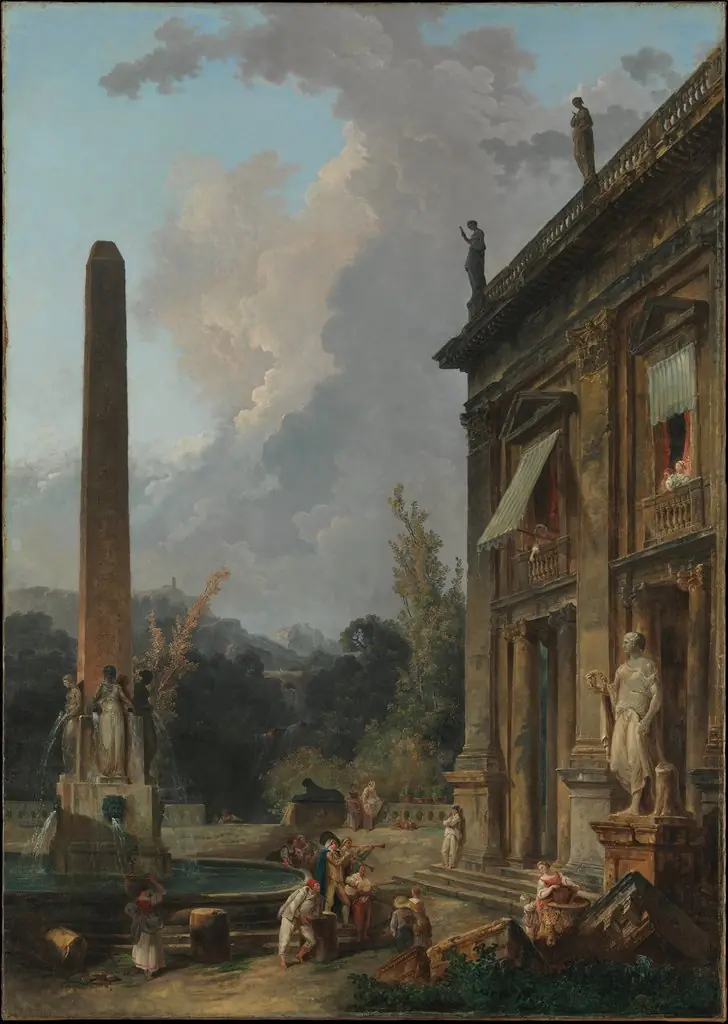
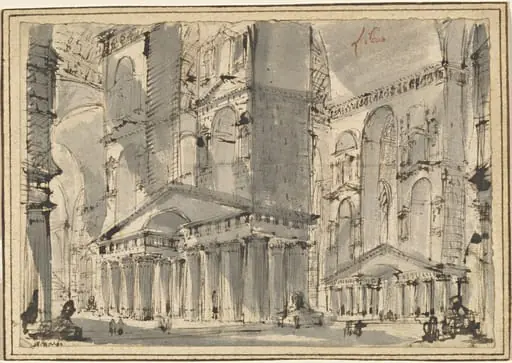
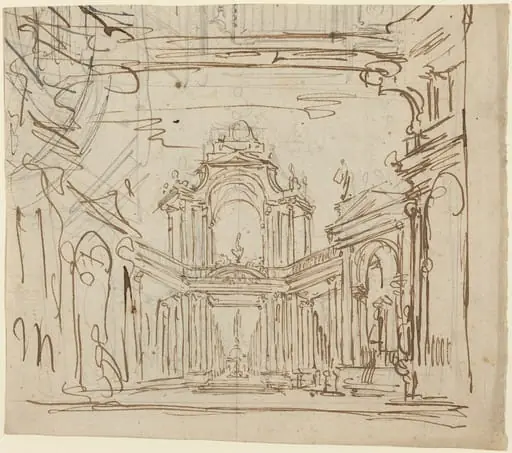
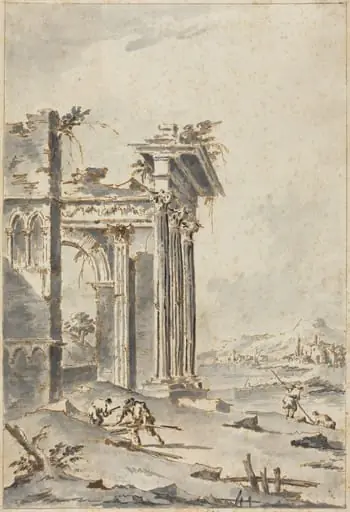
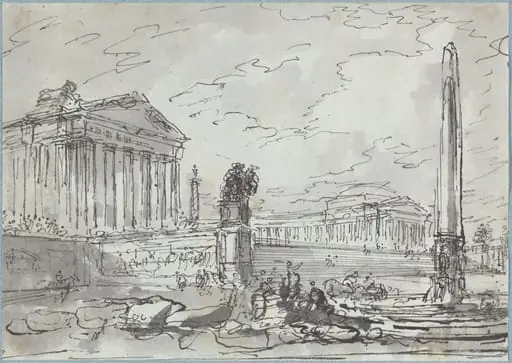
A Roman Capriccio is a drawing created by French artist Hubert Robert around 1764, executed in pen and brown ink with brown wash on laid paper. The work exemplifies the capriccio genre, characterized by imaginative, semi-fictional depictions of architectural scenes.
Subject & Meaning
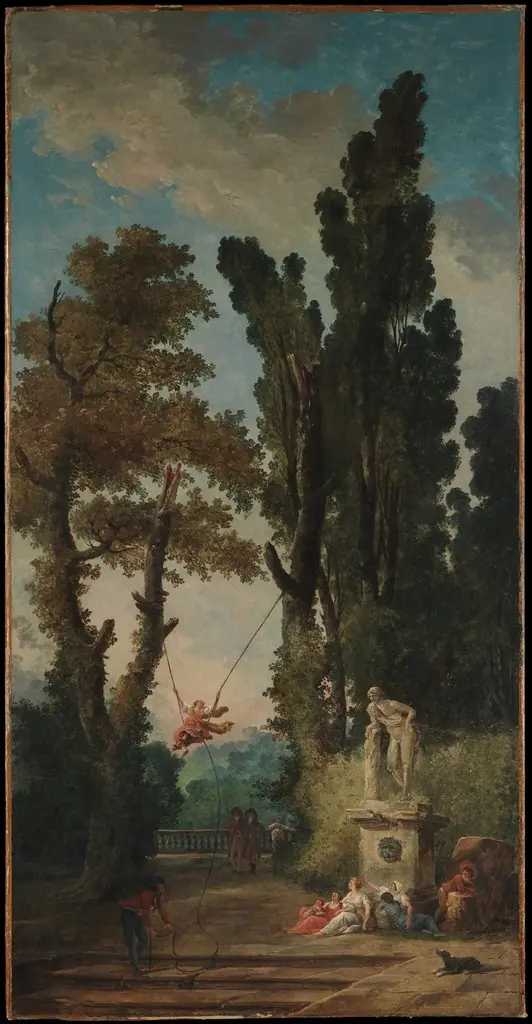
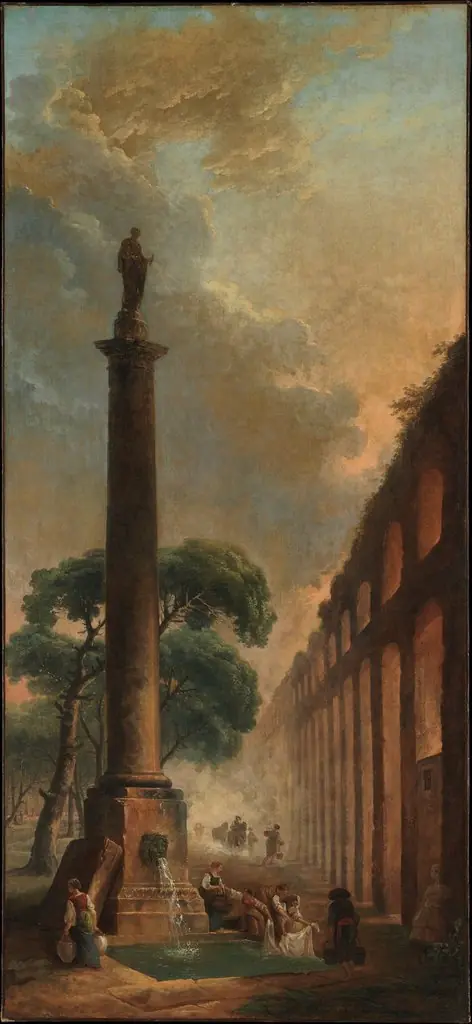
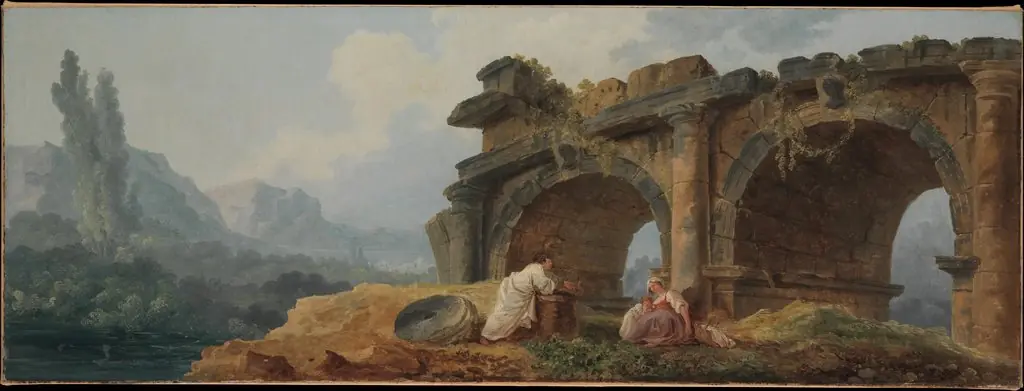
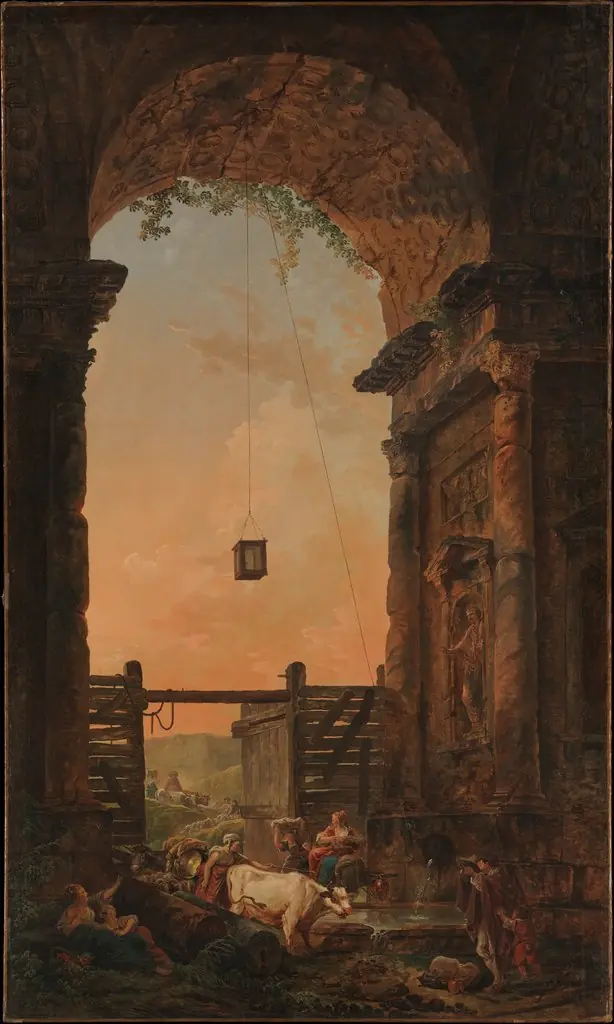
The drawing depicts a grand, abandoned classical building with tall columns and a flat roof, set against a backdrop of everyday life: people, horses, and a solitary figure on a bench. This juxtaposition reflects Robert's blend of observed architectural detail and inventive composition, typical of his Romantic approach to landscape and ruin scenes.
Technique & Style
Robert employed loose, sketchy lines, varying ink densities from dark outlines to faint washes, to convey depth and movement. Quick, rough strokes suggest a rapid capture of an imagined scene, consistent with the expressive, idea-capturing nature of sketches from this period.
History & Provenance
Created circa 1764, A Roman Capriccio falls within Robert's prolific output of landscape and capriccio drawings, influenced by his focus on Italian and French architectural themes during the mid-18th century.
Context
This work is part of a broader artistic tradition of rendering classical ruins in an imaginative, picturesque manner, popular among 18th-century European artists fascinated with antiquity and the sublime.
Artist & collection
Artist
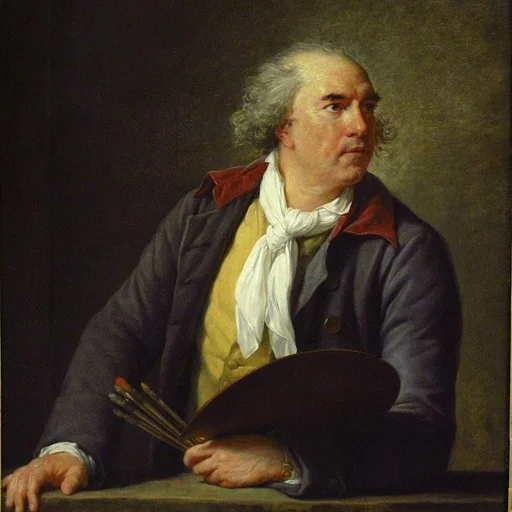
Hubert Robert (French pronunciation: ; 22 May 1733 – 15 April 1808) was a French painter in the school of Romanticism, noted especially for his landscape paintings and capricci, or semi-fictitious picturesque depictions of ruins in Italy…