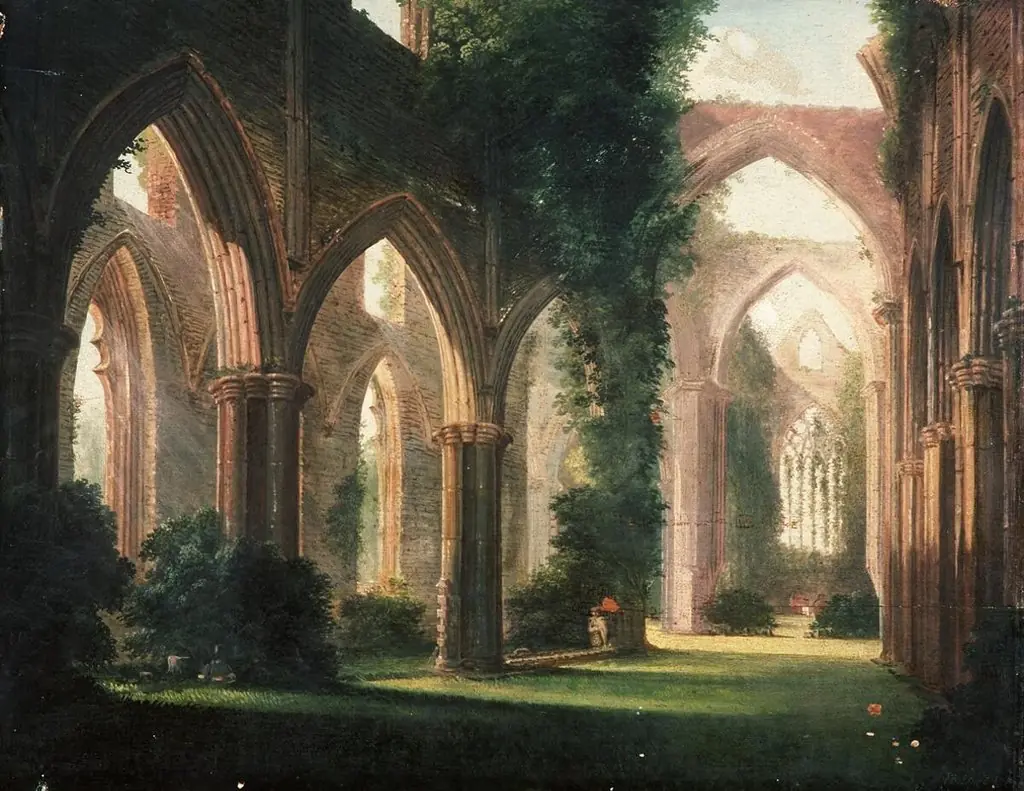
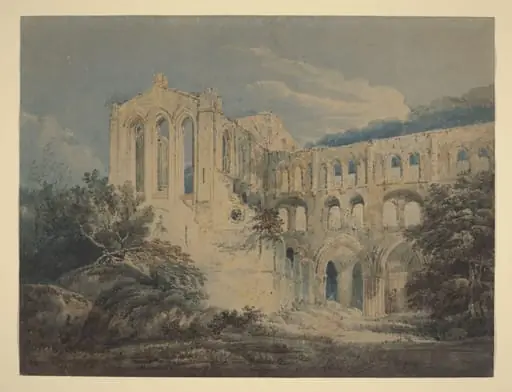
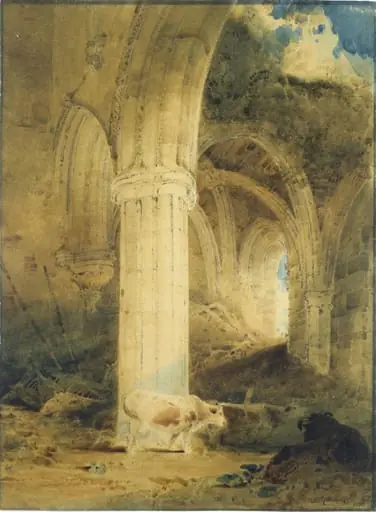
Artwork
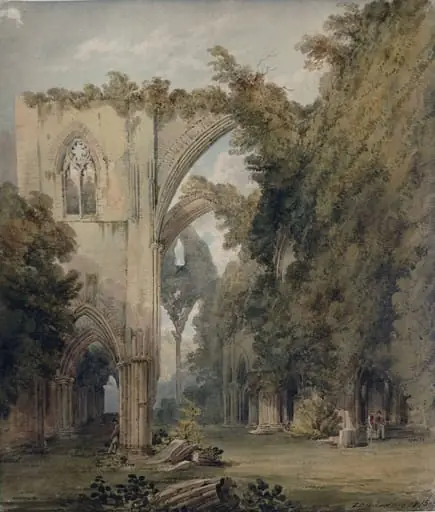
Interior of Tintern Abbey, Monmouthshire
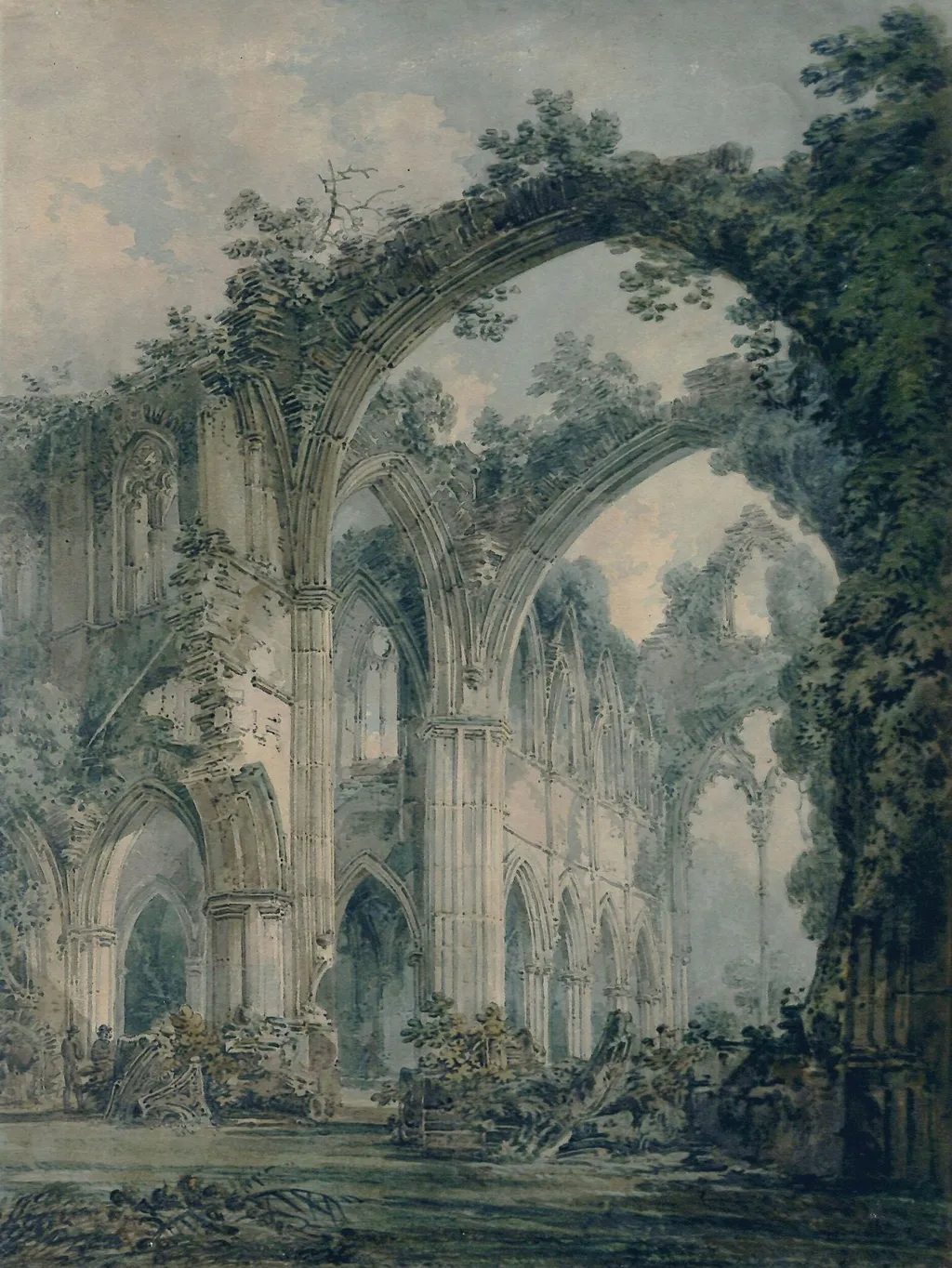
Interior of Tintern Abbey, Monmouthshire is a watercolor work on paper by the Romanticist artist Joseph Mallord William Turner. It dates from 1794 and is held in the collection of the Victoria and Albert Museum.
About this work
Overview
Its modest scale and medium suggest it was intended as a preparatory sketch rather than a finished exhibition piece.
Turner’s watercolour of Tintern Abbey, exhibited at the Royal Academy in 1794, captures the ruined monastic structure in Monmouthshire with delicate washes and subtle tonal shifts. The work belongs to a series of topographical studies he produced during travels in Wales, reflecting both observational precision and an emerging sensitivity to atmosphere. Its modest scale and medium suggest it was intended as a preparatory sketch rather than a finished exhibition piece.
Subject & Meaning
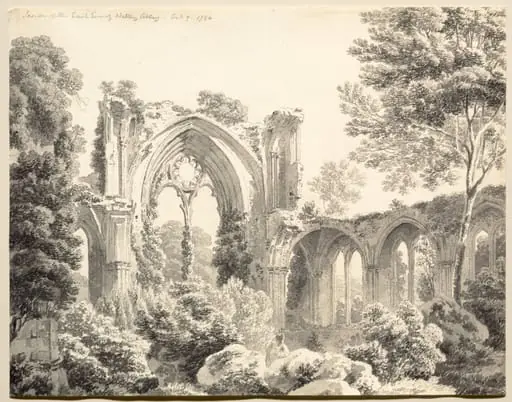
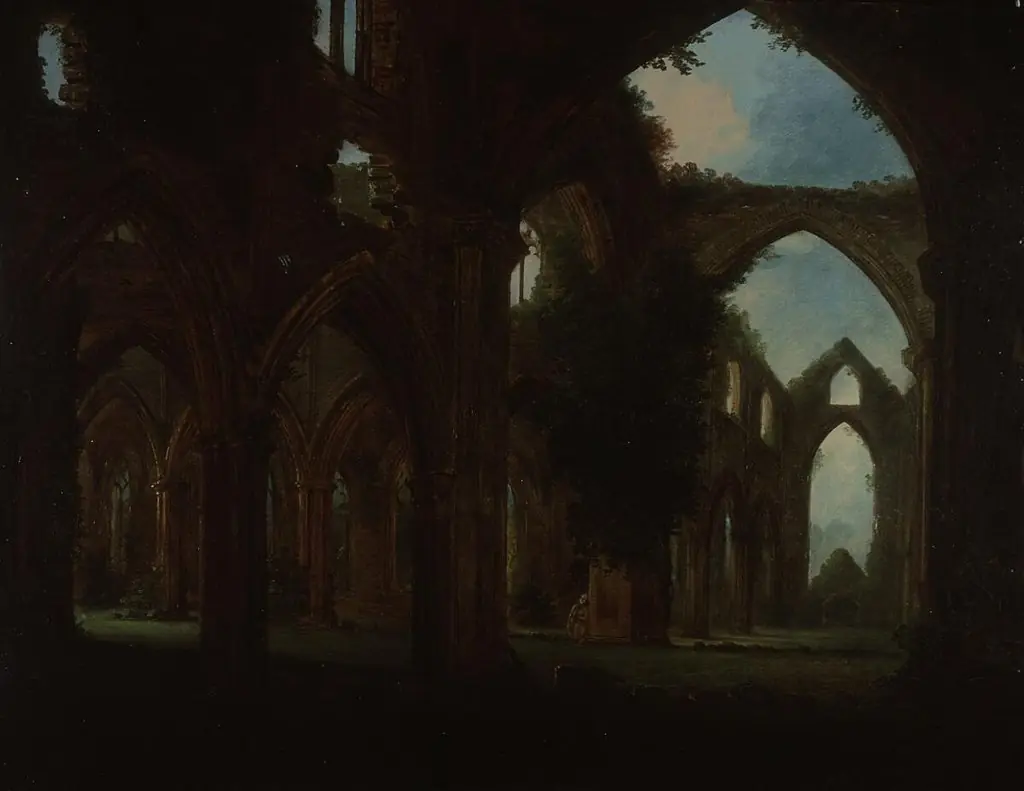
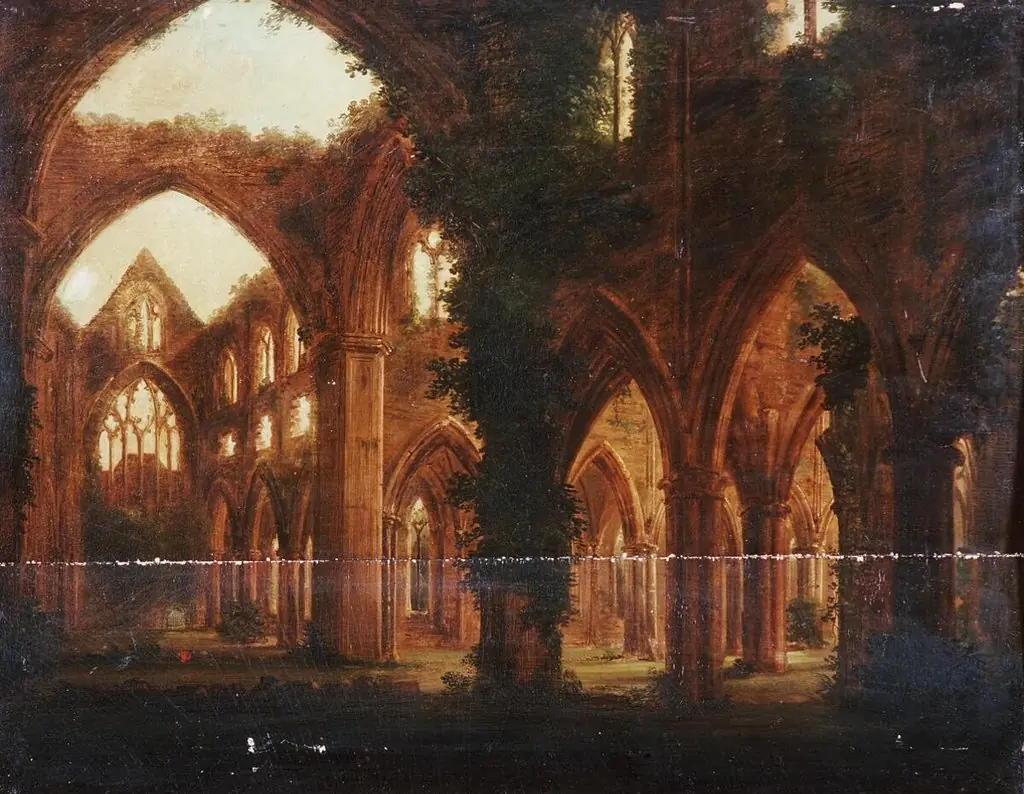
The abbey, once a thriving Cistercian monastery, is depicted in advanced ruin, its arches and walls softened by ivy and moss. This portrayal aligns with late 18th-century tastes that valued decay as a symbol of time’s passage and the transience of human endeavors. The absence of figures emphasizes solitude and quiet contemplation, inviting reflection rather than narrative.
Technique & Style
Turner employed transparent watercolour washes to suggest the play of light across weathered stone and foliage. Subtle gradations create depth without heavy outlines, while areas of reserved paper serve as highlights. The composition directs the eye through the nave toward the distant sky, using atmospheric perspective to dissolve the far walls into misty haze.
History & Provenance
Painted during Turner’s early career, the work was part of his documented tour of the Wye Valley in 1792. It was exhibited the following year and later entered private collections before being acquired by the Tate. Its survival as a watercolour—less durable than oil—underscores its value as a personal record of the site before widespread romantic tourism altered its perception.
Context
The painting emerged alongside a cultural shift in which ruins became sites of emotional and philosophical inquiry. While Turner’s version predates Wordsworth’s 1798 poem on the same subject, both respond to a broader movement that saw nature reclaiming human architecture as a form of natural sublime. The abbey’s depiction here is neither idealized nor sentimental, but observed with quiet fidelity.
Legacy
Though less famous than later oil paintings of the abbey, this watercolour established a visual language for Turner’s treatment of architectural decay. It influenced subsequent artists who sought to convey mood through light and erosion rather than grandeur. Its restrained palette and focus on texture helped define the British watercolour tradition’s capacity for emotional nuance.
Artist & collection
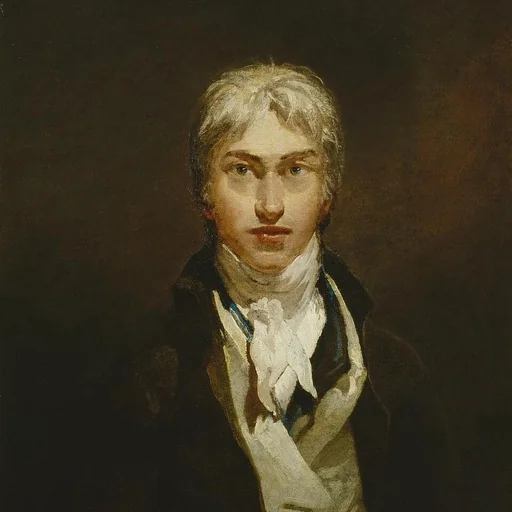
Artist
Joseph Mallord William Turner was born in 1775 at Maiden Lane, Covent Garden, where his father kept a barber and wig-making shop.