Artwork
Customs House, from the Thames River
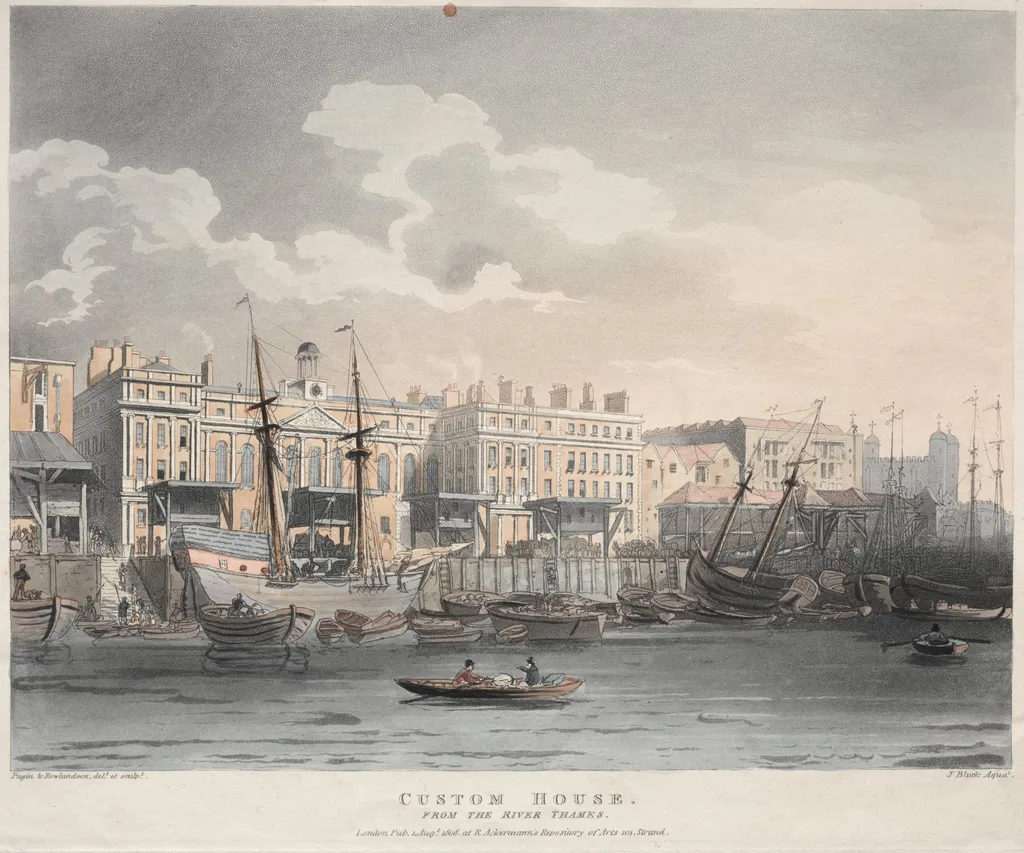
Customs House, from the Thames River is a print by the Romanticist artist J. Bluck. It dates from 1808 and is held in the collection of the Cleveland Museum of Art. Created in 1808 by J.
About this work
Overview
Created in 1808 by J. Bluck, this print captures a quiet moment along the Thames River near London’s Customs House. Rendered in fine detail, the scene presents a harmonious blend of maritime activity and architectural presence. The work is part of the collection at The Cleveland Museum of Art, offering a glimpse into early 19th-century river life through the lens of topographical observation.
Subject & Meaning
The composition centers on the Customs House, a symbol of state authority, framed by the bustling river traffic below. Small rowboats and larger vessels coexist, suggesting the economic pulse of the port. The calm sky and orderly arrangement of ships convey a sense of routine rather than drama, emphasizing the building’s role as a quiet anchor in daily commerce and regulation.
Technique & Style
Bluck employed precise linework and subtle tonal gradations to render textures of water, wood, and stone. The clouds are softly modeled, lending atmospheric depth without overt sentiment. Buildings are rendered with architectural clarity, while the human figures are minimized, reinforcing the scene’s documentary tone rather than emotional intensity.
History & Provenance
The print was produced during a period of heightened interest in London’s riverfront infrastructure. Though little is known of Bluck’s broader career, this work survives as a record of the Customs House’s prominence before major 19th-century renovations. It entered the Cleveland Museum of Art’s collection in the 20th century as part of a broader acquisition of British topographical prints.
Context
In the early 1800s, the Thames was a vital artery for trade and transport, and the Customs House regulated the flow of goods entering the capital. Such prints were often made for local audiences or collectors interested in civic landmarks. The scene reflects a transitional moment—pre-industrial yet already shaped by bureaucratic order and commercial expansion.
Legacy
This print contributes to a genre of British topographical art that valued accuracy over embellishment. While not widely known today, it remains a useful visual document of London’s riverfront during the Napoleonic era. Its quiet realism stands in contrast to the more dramatic landscapes of Romantic painting, offering instead a measured record of urban function.
Artist & collection

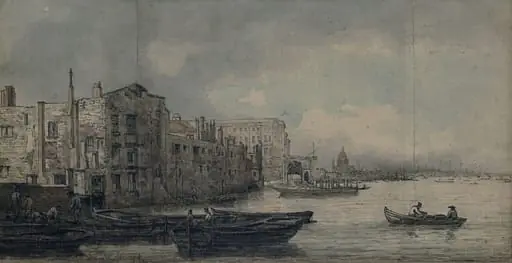 The Thames, showing Somerset House in the course of construction
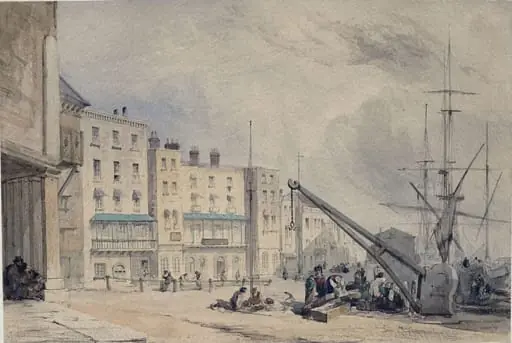 Ramsgate near the Harbour
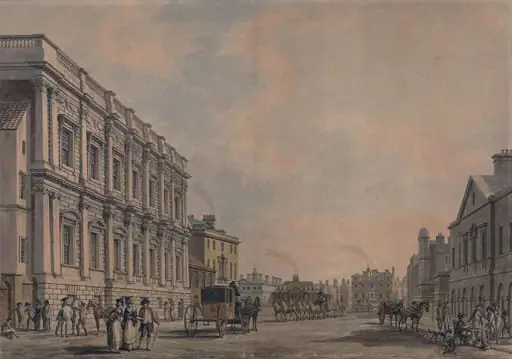 Whitehall, with the Banqueting House
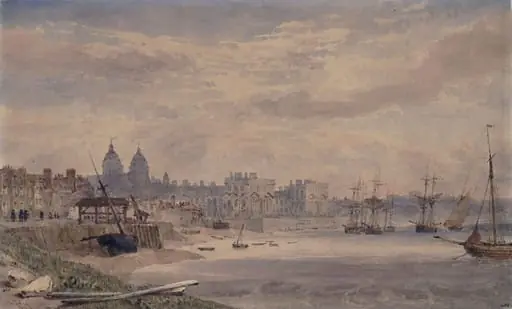 Greenwich Hospital
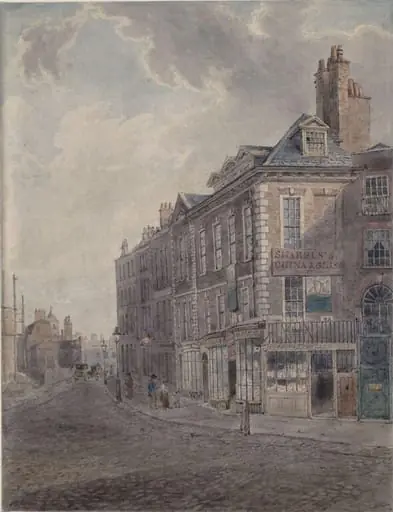 Old houses in Cockspur St, London
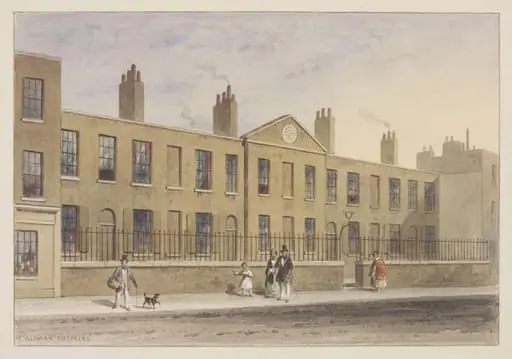 Untitled
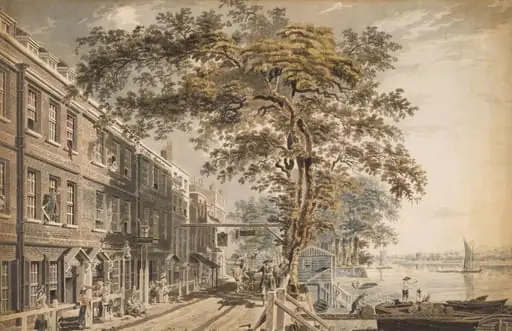 Cheyne Walk, Chelsea
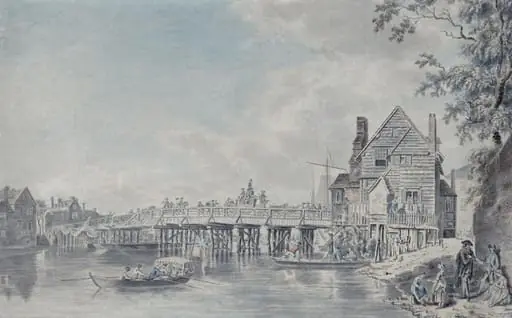 Old bridge at Windsor, coach and horsemen crossing, and a barge passing under
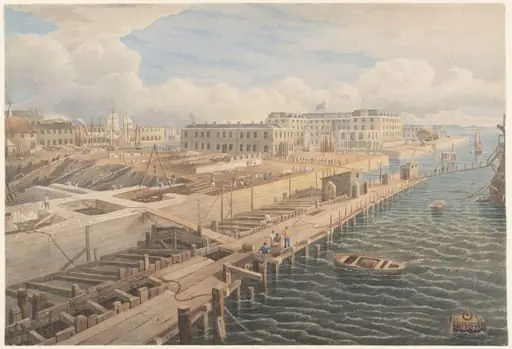 Construction of Docks