Artwork
Whitehall, with the Banqueting House
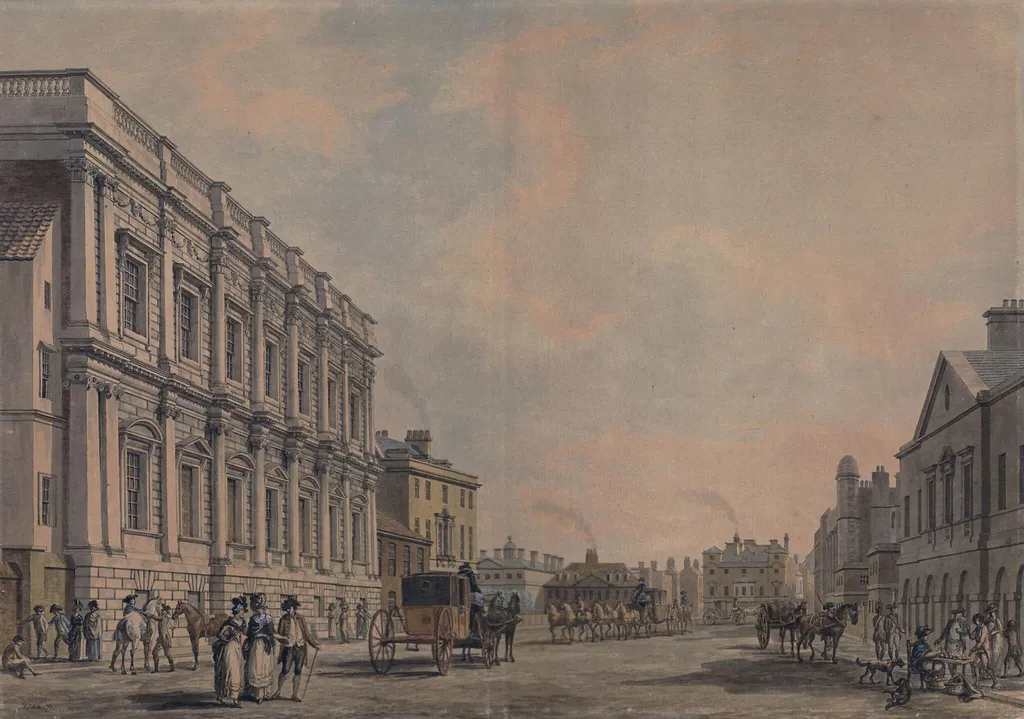
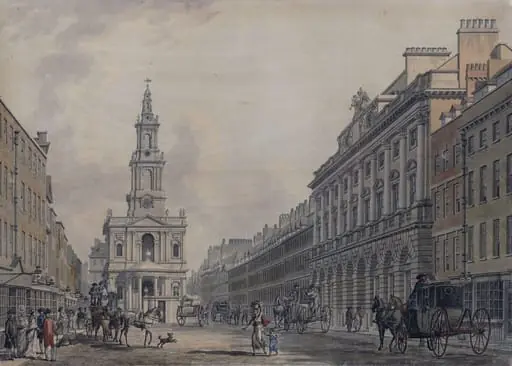
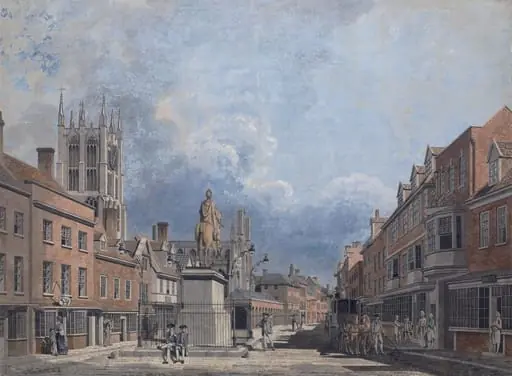
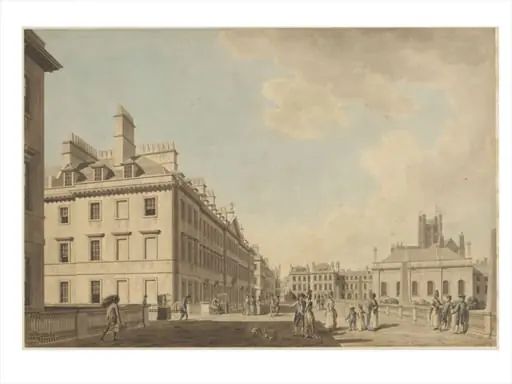
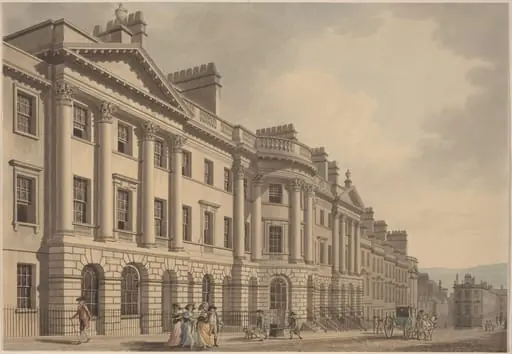
Whitehall, with the Banqueting House is a watercolor work on paper by the Rococo painting artist Malton. It dates from 1780 and is held in the collection of the Victoria and Albert Museum.
About this work
Overview
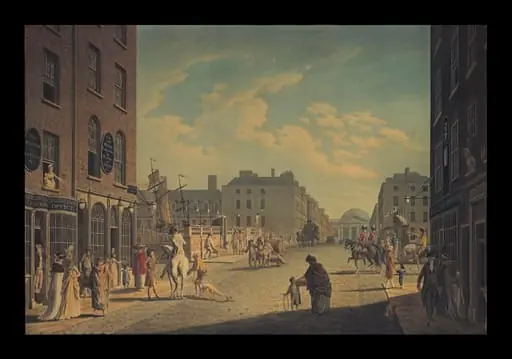
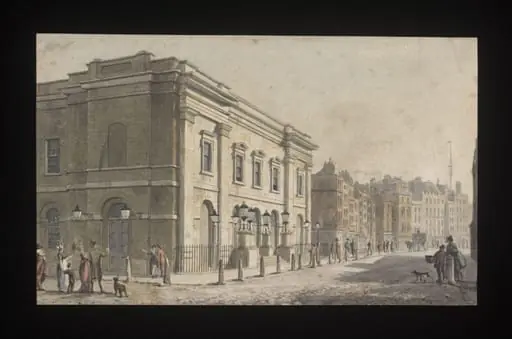
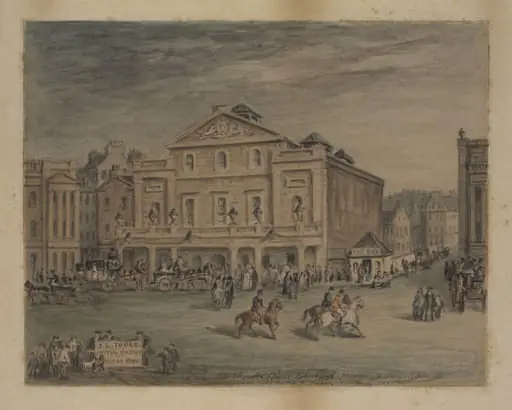
Thomas Malton’s 1780 watercolour depicts Whitehall in London, centering on the Banqueting House as the dominant architectural feature. The scene captures a quiet urban moment with pedestrians, horse-drawn vehicles, and onlookers moving through the space. Rendered in soft, muted tones, the work conveys a subdued atmosphere, emphasizing the daily rhythm of city life rather than grand spectacle.
Subject & Meaning
The Banqueting House, a symbol of royal authority, stands as a static backdrop to the bustling activity below. Malton’s focus on ordinary citizens—walking, conversing, riding—shifts attention from monument to milieu. The painting suggests a quiet coexistence between state power and civilian life, reflecting the social fabric of late 18th-century London without overt political commentary.
Technique & Style
His method prioritizes atmospheric tone over dramatic contrast, creating a sense of calm observation typical of topographical watercolours of the period.
Malton employed delicate watercolour washes to render the pale stone facade and hazy sky, using subtle gradations to suggest depth and atmosphere. Fine linear details define windows, columns, and clothing, while the overall palette remains restrained. His method prioritizes atmospheric tone over dramatic contrast, creating a sense of calm observation typical of topographical watercolours of the period.
History & Provenance
Created in 1780, the work belongs to Malton’s series documenting London’s architecture and street life during a period of urban expansion. It likely originated as part of a private collection or commission, given its precise architectural detail. The piece remained within British collections, later entering institutional holdings where it is now studied as an example of topographical art.
Context
In the late 1700s, London was undergoing rapid growth, and artists like Malton responded by recording its evolving streetscapes. Watercolour, valued for its portability and immediacy, became a favored medium for documenting architecture and public life. Malton’s work aligns with a broader trend of civic documentation, capturing the city not as idealized vision but as lived environment.
Legacy
Malton’s watercolours, including this view of Whitehall, contributed to the development of topographical art in Britain. His attention to everyday detail influenced later topographers and urban recorders. Though not widely known today, his works remain valuable for historians seeking visual evidence of London’s 18th-century urban texture and social patterns.
Artist & collection
Artist
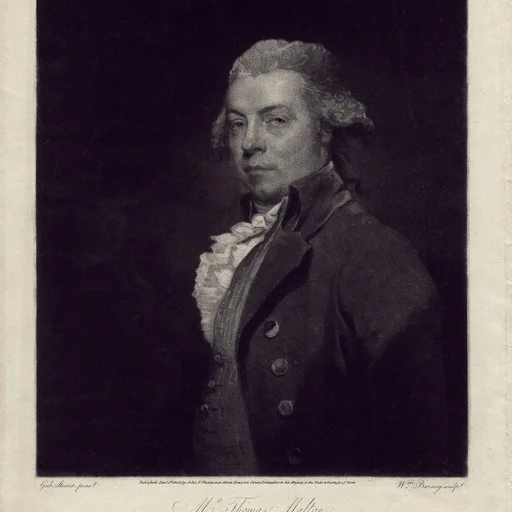
Thomas Malton (1748 – 7 March 1804; also known as Thomas Malton the Younger), was an English painter of topographical and architectural views, and an engraver.