Artwork
Drawing of scenery and props in Sardanapalus
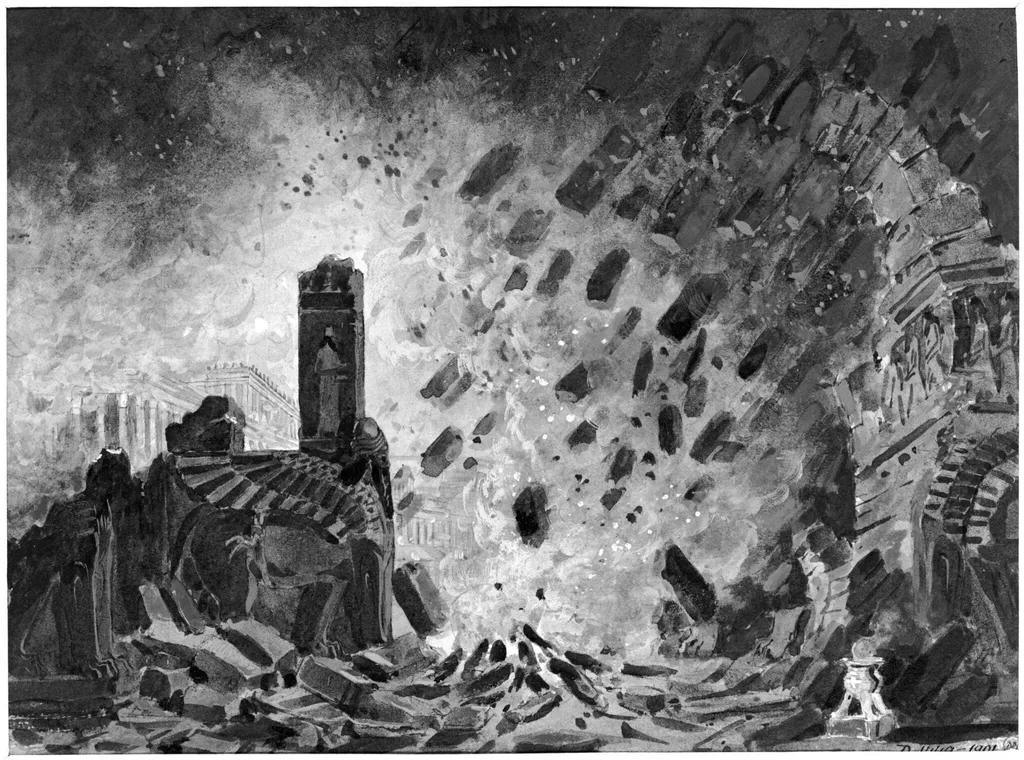
Drawing of scenery and props in Sardanapalus is a drawing by the Impressionist artist J. Days. It dates from 1855 and is held in the collection of the Victoria and Albert Museum. This 1855 drawing by J.
About this work
Overview
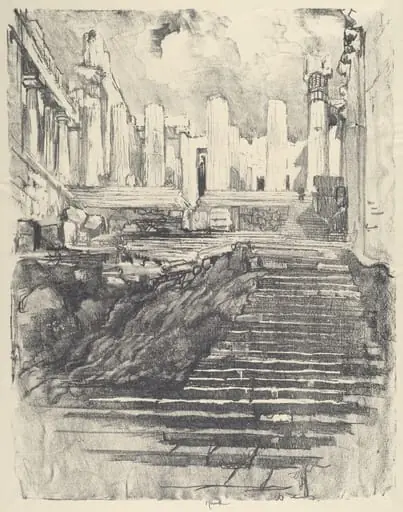
This 1855 drawing by J. Days was produced as a stage design for the theatrical production of Sardanapalus. Executed in pencil and ink, it documents architectural elements and props intended for use in performance. The work resides in the Victoria and Albert Museum’s collection of theatrical designs, reflecting its function as a practical blueprint rather than a standalone artwork.
Subject & Meaning
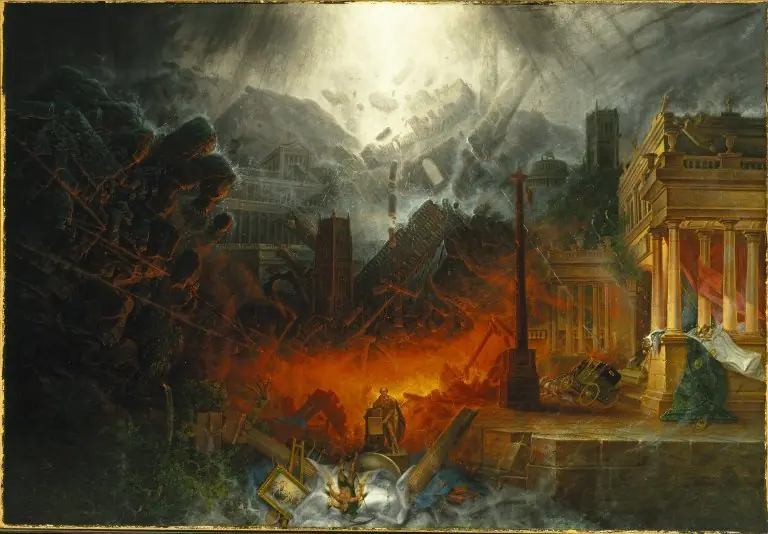
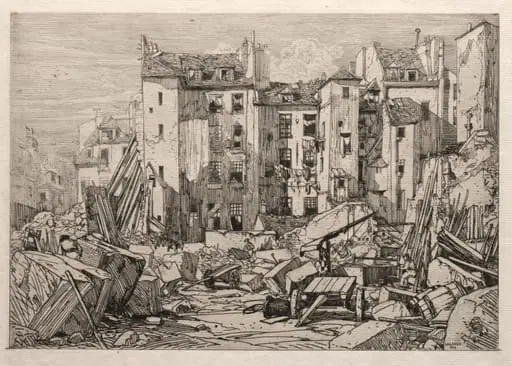
The crumbling structure and scattered debris symbolize collapse and ruin, while the fleeing figures suggest chaos and impending doom.
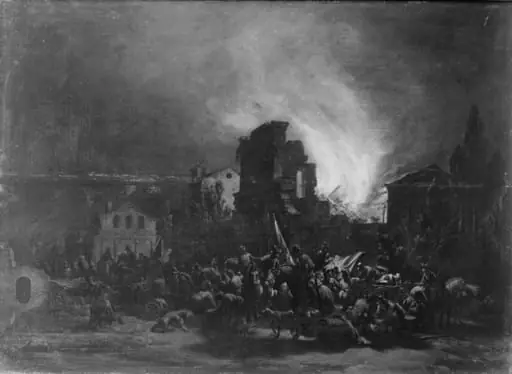
The scene depicts the fall of Sardanapalus, the legendary Assyrian king who, according to classical accounts, destroyed his palace and possessions in a final act of defiance. The crumbling structure and scattered debris symbolize collapse and ruin, while the fleeing figures suggest chaos and impending doom. The imagery aligns with 19th-century romanticized interpretations of ancient tragedy and imperial decline.
Technique & Style
Rendered with precise linework and subtle tonal gradations, the drawing emphasizes architectural detail and spatial depth. Shading is used to suggest volume in the ruins and to differentiate surfaces such as stone, fabric, and smoke. The style is observational and restrained, prioritizing clarity for stage construction over expressive flourish, typical of theatrical design practices of the period.
History & Provenance
Created in 1855, the drawing was likely used during rehearsals or production of a stage adaptation of Lord Byron’s play Sardanapalus. It entered the Victoria and Albert Museum’s collection as part of its broader archive of British theatre design, preserving the material culture of 19th-century performance. Its provenance traces directly to the production team, not to a private collector.
Context
The drawing emerged during a period of heightened interest in historical and orientalist themes on the British stage. Theatrical productions of Byron’s Sardanapalus were popular in the mid-19th century, often featuring elaborate sets to evoke ancient Assyria. This design reflects the era’s demand for visually immersive storytelling, grounded in archaeological and literary sources, however loosely interpreted.
Legacy
As a surviving example of mid-Victorian stage design, the drawing contributes to the understanding of how literary narratives were translated into physical spectacle. It offers insight into the collaborative nature of theatre production and the role of designers in shaping audience perception of historical drama. Its preservation ensures continued study of 19th-century performance aesthetics.
Own this work as a print
Artist & collection
Artist
J. Days drew the cluttered stage before the curtain went up. In a graphite sheet titled Drawing of scenery and props in Sardanapalus, you see painted flats, a gilded throne, and the angled legs of a side table—every…