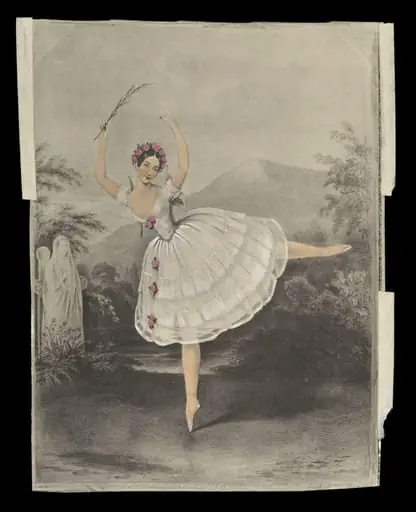
Artwork
Adeline Plunket
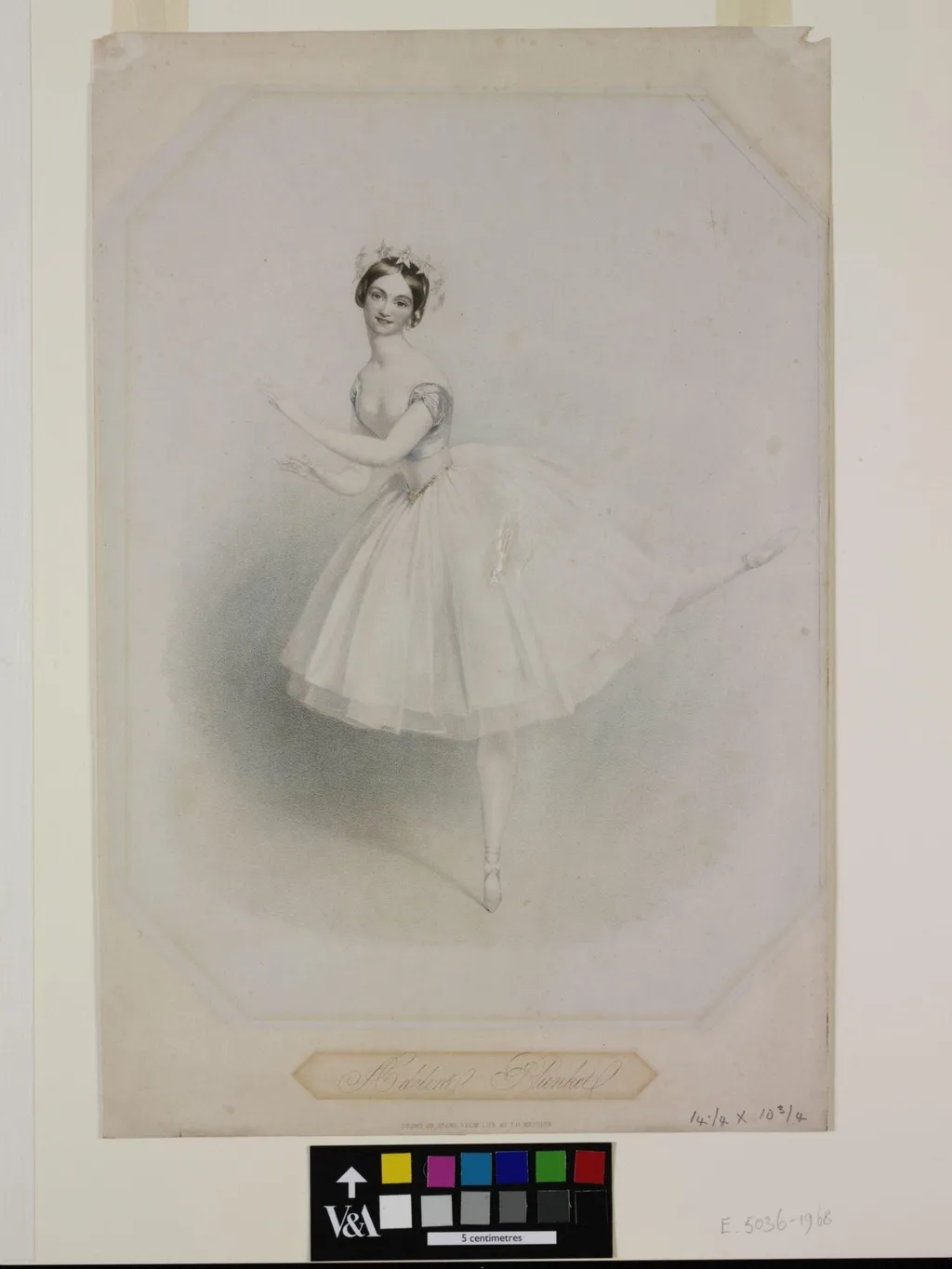
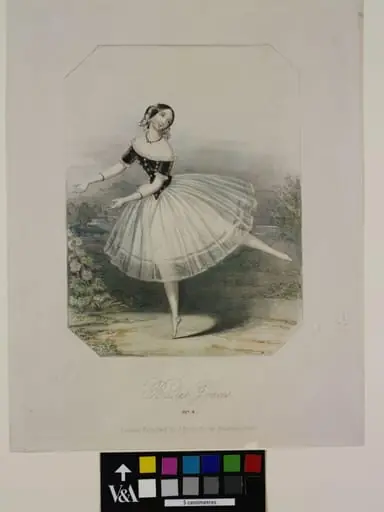
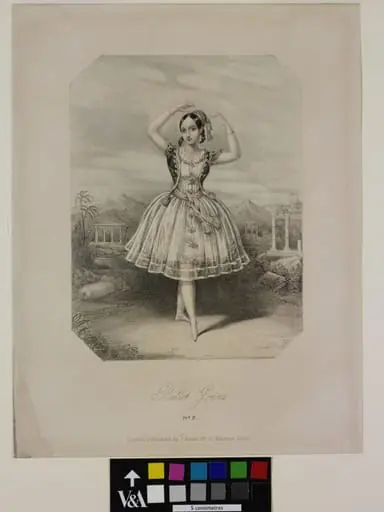
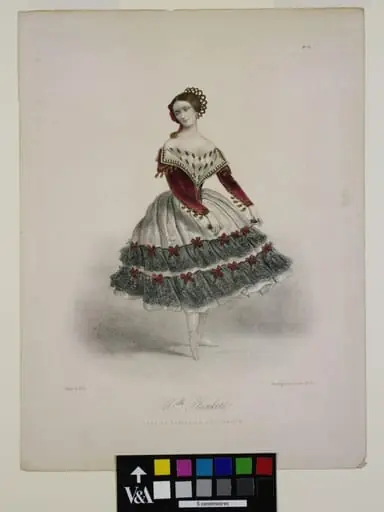
Adeline Plunket is a print by the Romanticist artist T. H. Maguire. It dates from 1847 and is held in the collection of the Victoria and Albert Museum.
About this work
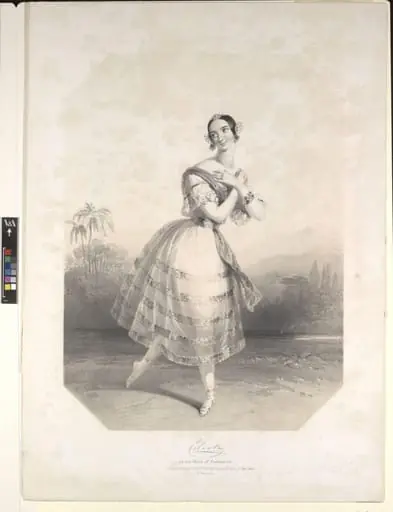
It shows Adelina Plunkett as a péri—a graceful, superhuman being from Persian myths.
Here’s a dreamy print from 1847. It shows Adelina Plunkett as a péri—a graceful, superhuman being from Persian myths. Romantic artists loved this stuff. Her costume mixes Indian-looking jewels with a stiff bell skirt. Ballet shoes peek out, a new style back then.
The print captures the ballet craze. Mid-1800s stage stars were seen as untouchable spirits. Exotic far-away places were the vibe, not real history.
Look up the Victoria and Albert Museum next.
Overview
The 1847 print depicts Adelina Plunkett in the guise of a péri, a mythic figure from Persian legend celebrated for extraordinary grace and beauty. Rendered in the Romantic style of the mid‑nineteenth century, the image presents the dancer as an ethereal, unattainable spirit, aligning her with contemporary ballet icons who were portrayed as otherworldly beings.
Subject & Meaning
In the context of 1840s ballet, the péri functioned as a symbol of escape from ordinary life, similar to sylphs and nymphs that populated Romantic stage productions. By casting Plunkett as this supernatural entity, the print emphasizes the ideal of transcendent artistry and the allure of exotic, imagined locales rather than any historical accuracy.
Technique & Style
The costume combines short‑sleeved, jeweled chains and belts that recall Indian court dress with a bell‑shaped mid‑century skirt, creating a hybrid exoticism. Plunkett’s footwear is recognizable as early ballet shoes, evolved from heelless satin slippers tied with ribbons; they are reinforced and stiffened, foreshadowing the development of modern pointe technique.
History & Provenance
Created in 1847, the print reflects the height of the ballet craze that swept Europe in the 1840s, when star dancers were celebrated as near‑divine figures. The work entered the collection of the Victoria and Albert Museum, where it remains part of the institution’s holdings on nineteenth‑century performance art.
Context
Romantic artists of the period frequently employed mythological and far‑away settings to dramatize the emotional intensity of ballet. The period’s fascination with the exotic, coupled with a burgeoning interest in technical advances in dance, informs both the visual composition and the symbolic content of the image.
Artist & collection

Artist
Thomas Herbert Maguire was an English artist and engraver, noted for his portraits of prominent figures.