Artwork
Ballet Graces
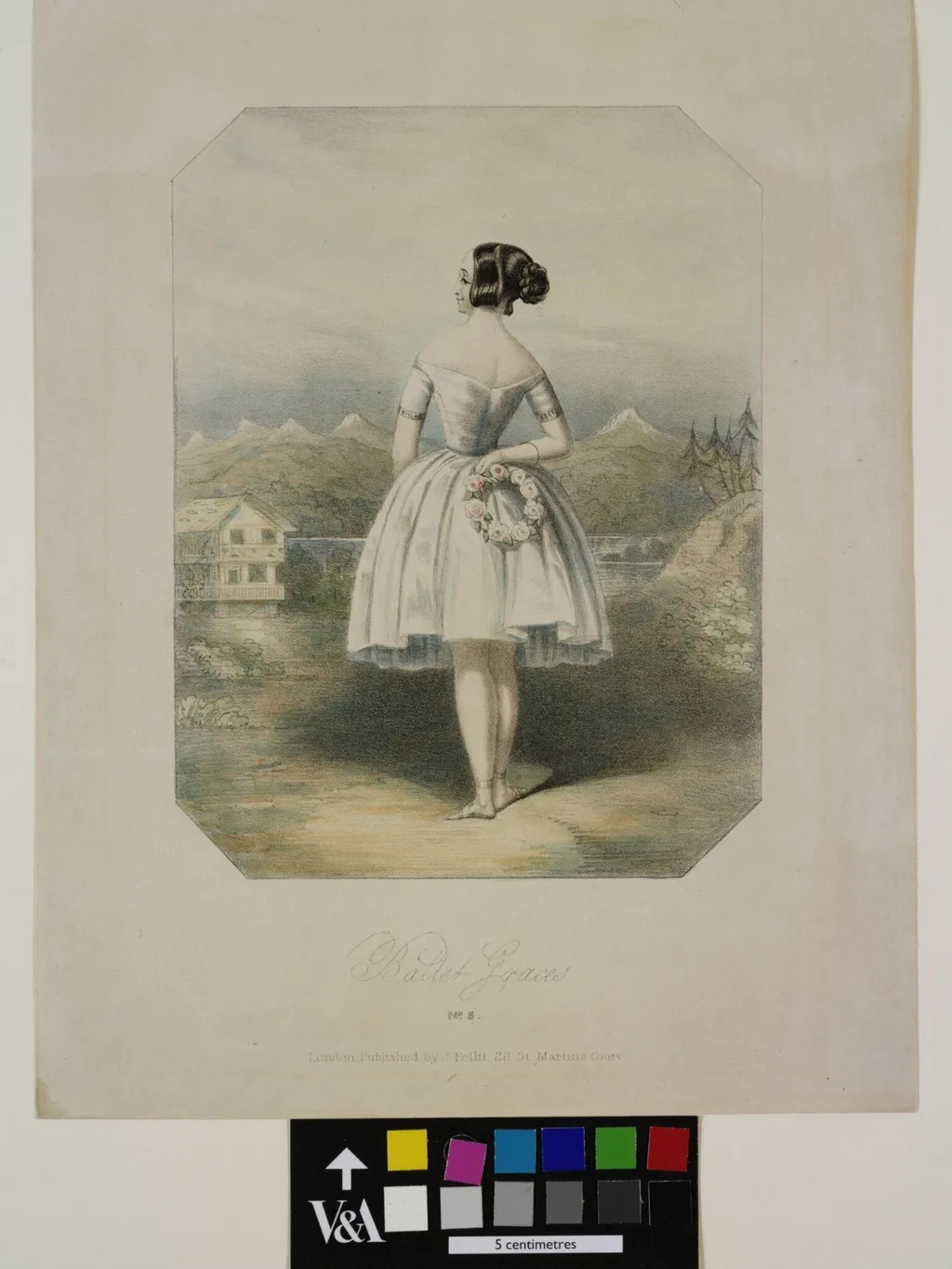
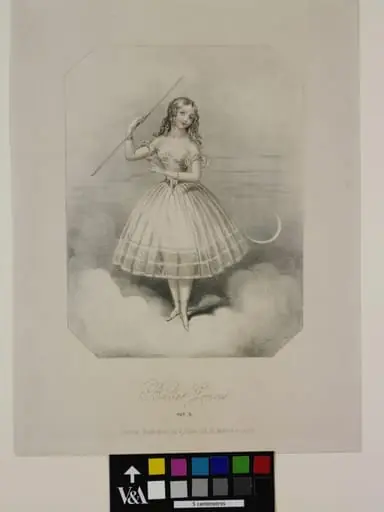
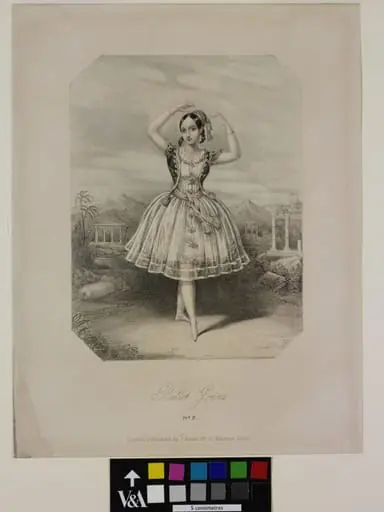
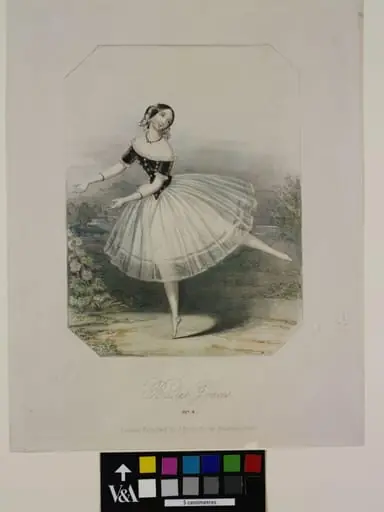
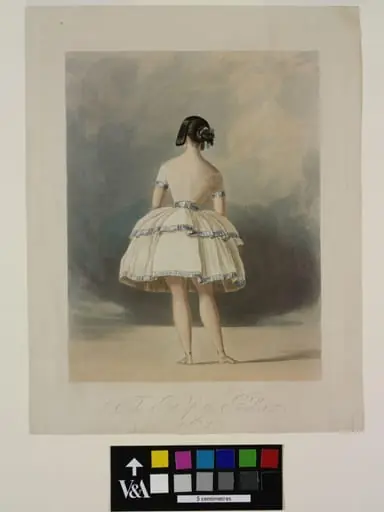
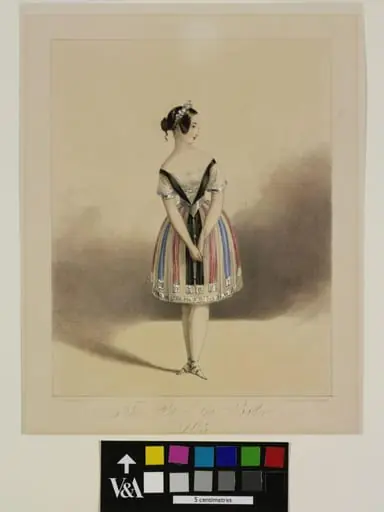
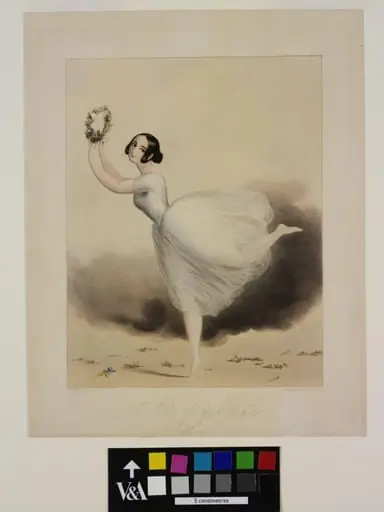
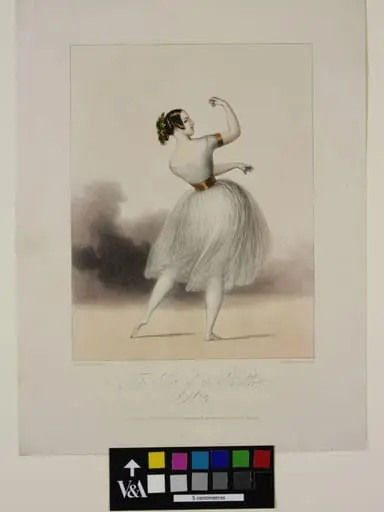
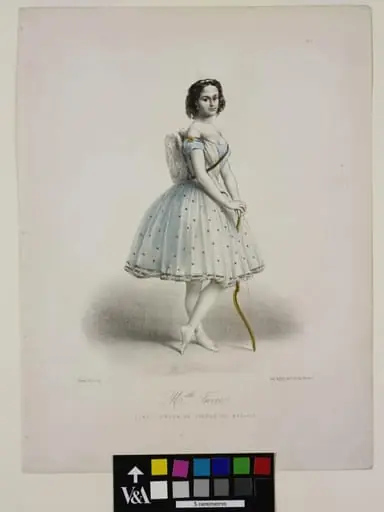
Ballet Graces is a print by J. Follit. It dates from 1850 and is held in the collection of the Victoria and Albert Museum. This print is part of a mid-19th-century series depicting ballet performers, produced for popular consumption.
About this work
Overview
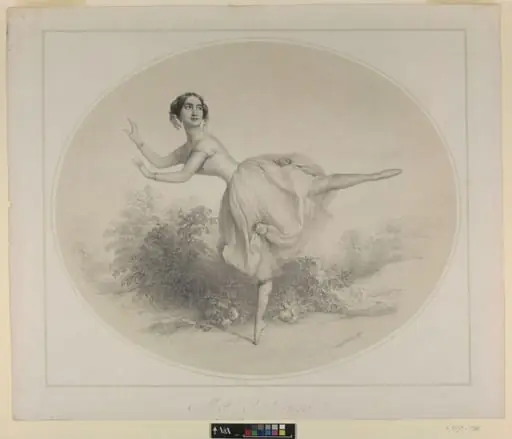
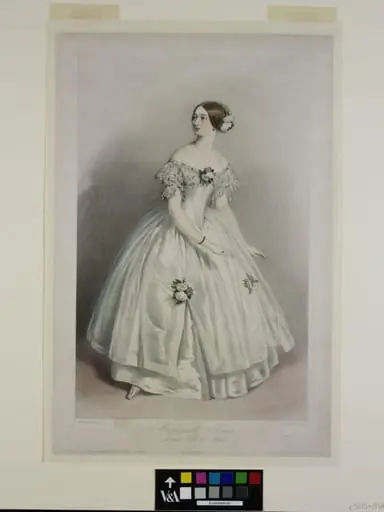
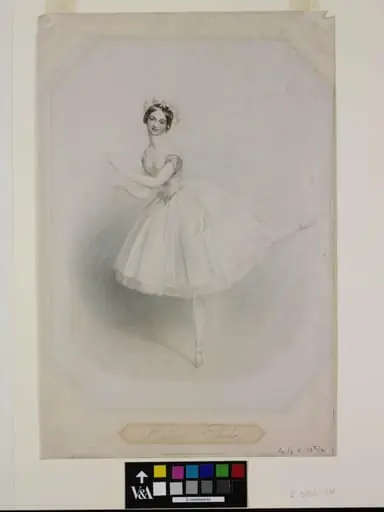
This print is part of a mid-19th-century series depicting ballet performers, produced for popular consumption. Unlike portraits of specific artists, these images generalize the dancer as a type, emphasizing costume and posture over individual identity. The series reflects a growing public fascination with ballet as a visual spectacle rather than a narrative art.
Subject & Meaning
The figures are not identifiable performers but archetypal representations of ballet dancers. Their standardized appearance—tight bodices, layered tarlatan skirts, and neatly coiffed hair—was designed to convey grace and discipline. These visual conventions transformed ballet into a symbol of elegance, detached from any single performance or dancer.
Technique & Style
Executed as a printed image, likely an engraving or lithograph, the work uses fine lines and tonal contrasts to suggest movement and texture. The costumes are rendered with attention to fabric layers and drapery, while the figures are posed in classical ballet stances, reinforcing a sense of formalized motion and stillness simultaneously.
History & Provenance
Produced during the 1840s, these prints circulated widely in Europe and beyond, appearing in illustrated journals and as standalone images. Their popularity coincided with the rise of Romantic ballet and the fame of dancers like Marie Taglioni, though the prints themselves avoid specific references to real performers or productions.
Context
The visual language of these prints emerged alongside industrial print technologies and expanding middle-class audiences. Ballet, once confined to court and theater, became a cultural icon through mass reproduction. The standardized dancer image served as both entertainment and a model of idealized femininity in an era of social change.
Legacy
The aesthetic established in these prints endured well beyond their time, shaping how ballet is visually represented in popular culture. Even today, simplified versions of their costumes and poses appear in illustrations, advertisements, and children’s books, demonstrating how a 19th-century visual formula became a universal shorthand for ballet.
Artist & collection
Artist
Mid-19th-century prints of ballet dancers in graceful poses, titled Ballet Graces, line up in numbered sheets.