Artwork
Melle O. Priora
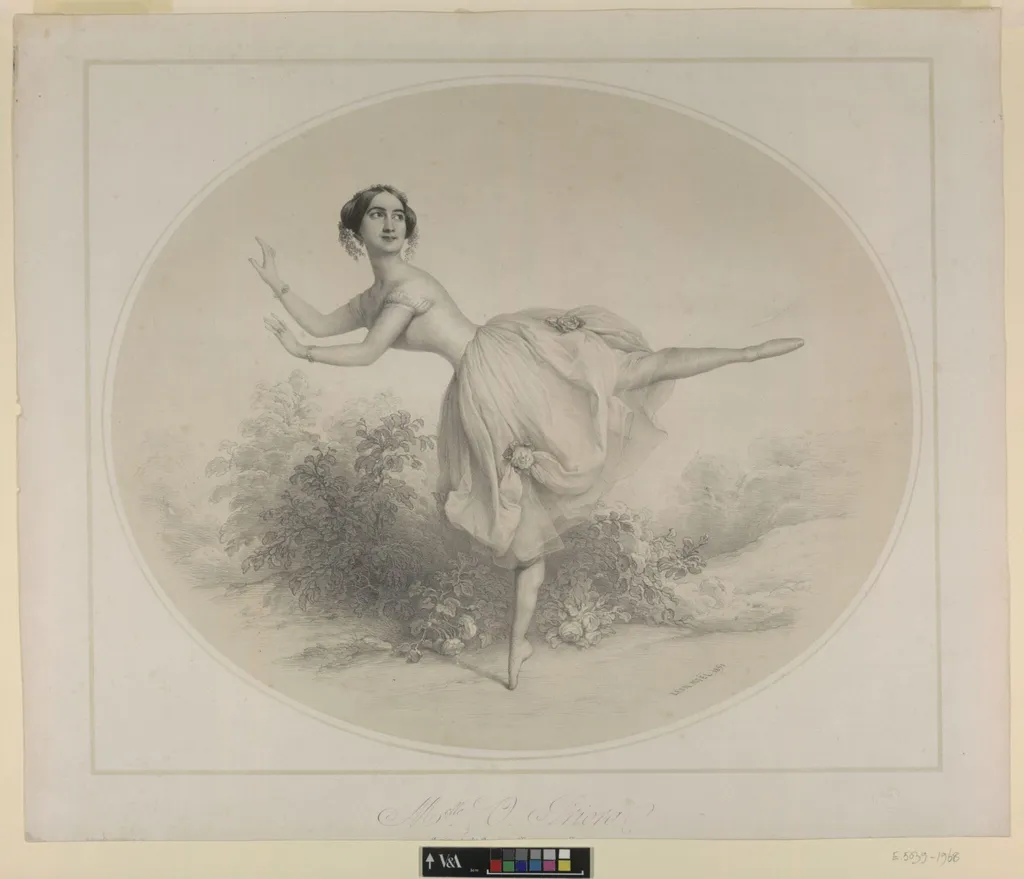
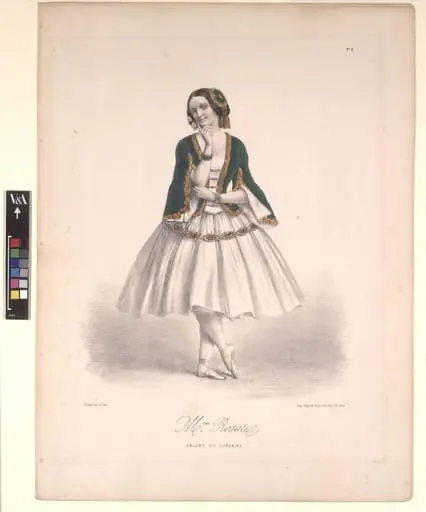
Melle O. Priora is a print by the Impressionist artist Léon Nöel. It dates from 1851 and is held in the collection of the Victoria and Albert Museum.
About this work
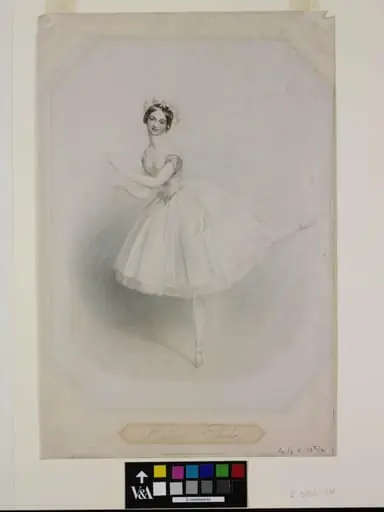
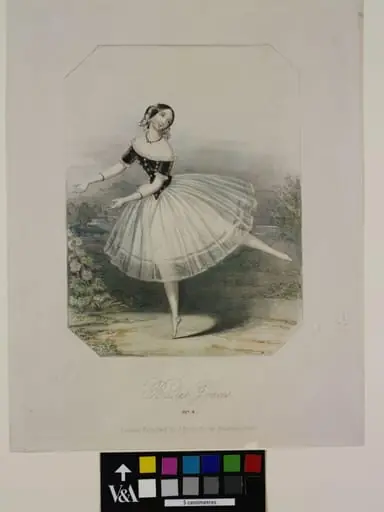
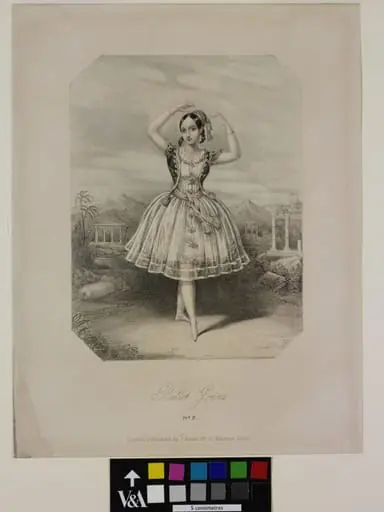
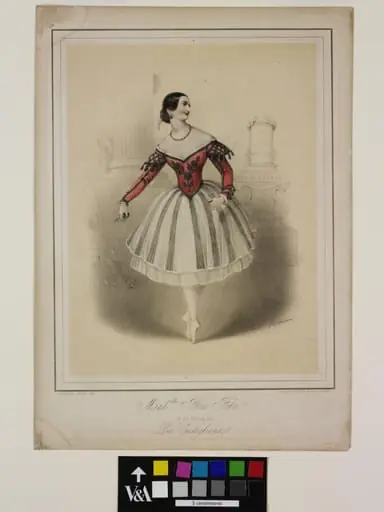
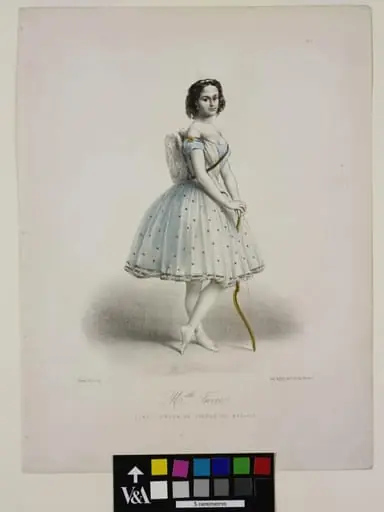
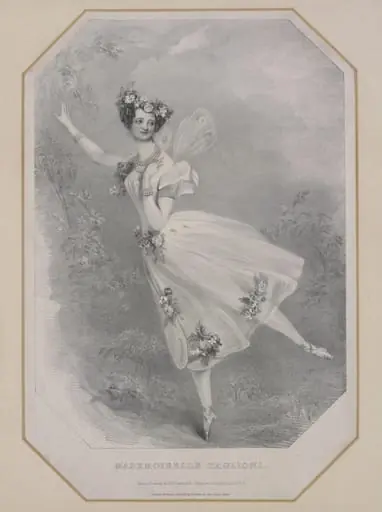
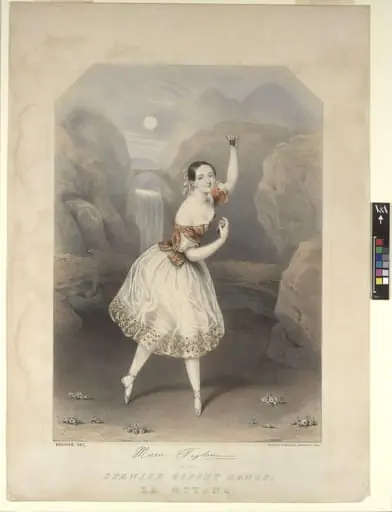
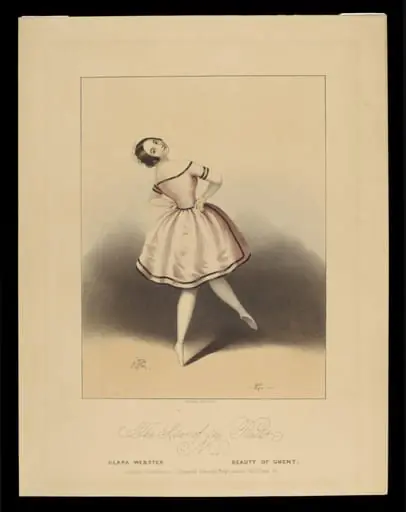
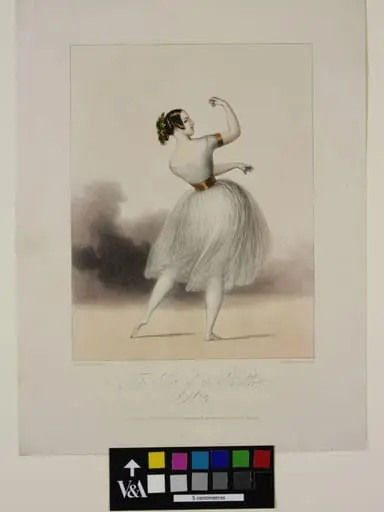
This print shows a dancer by Léon Nöel from 1851. It’s a quiet moment, not tied to any show or role.
Melle O. Priora was only 15 when she danced in Paris and helped create the look we still picture for ballet today—low-necked bodice, bell skirt, and those early pointe shoes.
If you want to see more, look up the Victoria and Albert Museum.
Overview
This 1851 print by Léon Nöel depicts the young Italian dancer Olimpia Priora, then fifteen, during her brief but influential career in Paris. The image captures her in a private, untheatrical pose, free from any specific ballet role. It serves as a record of her physical presence and the emerging aesthetic of ballet costume that would become standard in the decades to follow.
Subject & Meaning
The image reflects a moment when ballet was transitioning from theatrical spectacle to a discipline defined by grace, discipline, and visual uniformity.
Olimpia Priora is portrayed not as a character in a narrative, but as a dancer in her everyday form. Her stillness and unadorned posture shift focus from performance to presence, emphasizing the dancer’s body as a vessel of evolving artistic norms. The image reflects a moment when ballet was transitioning from theatrical spectacle to a discipline defined by grace, discipline, and visual uniformity.
Technique & Style
Nöel’s line work is precise and restrained, capturing the dancer’s form with clarity rather than flourish. The rendering of fabric—smooth bodice, layered skirt, and ribboned slippers—demonstrates attention to textile detail. The composition avoids theatrical lighting or background, isolating Priora to highlight her attire and posture as symbols of a new ballet ideal.
History & Provenance
Created in 1851, the print emerged during Priora’s short time on the Parisian stage. Though her career was brief, her appearance in this image coincided with the codification of ballet dress. The print’s survival and circulation suggest its value as a document of fashion and movement, later preserved in institutions like the Victoria and Albert Museum as a reference for dance history.
Context
In the early 1850s, ballet was shedding its ornate, aristocratic trappings for a more streamlined aesthetic. Priora’s costume—low neckline, fitted bodice, bell skirt, and ribboned slippers—reflected this shift. These elements, once experimental, became the template for the classical ballet look. The shoes, reinforced with darning and stiffening, were early steps toward the pointe shoe, transforming how dancers moved and were seen.
Legacy
Though Priora’s career faded quickly, her image in this print helped fix a visual archetype of the ballerina that endures today. The costume and footwear she wore became standard across European stages, influencing generations of designers and choreographers. The print remains a quiet but pivotal artifact in the material history of dance, marking the moment when form began to define the art.
Artist & collection
Artist
Léon Nöel made delicate mid-19th-century prints that sit between portraiture and social scene.