Artwork
Distant View of Plymouth
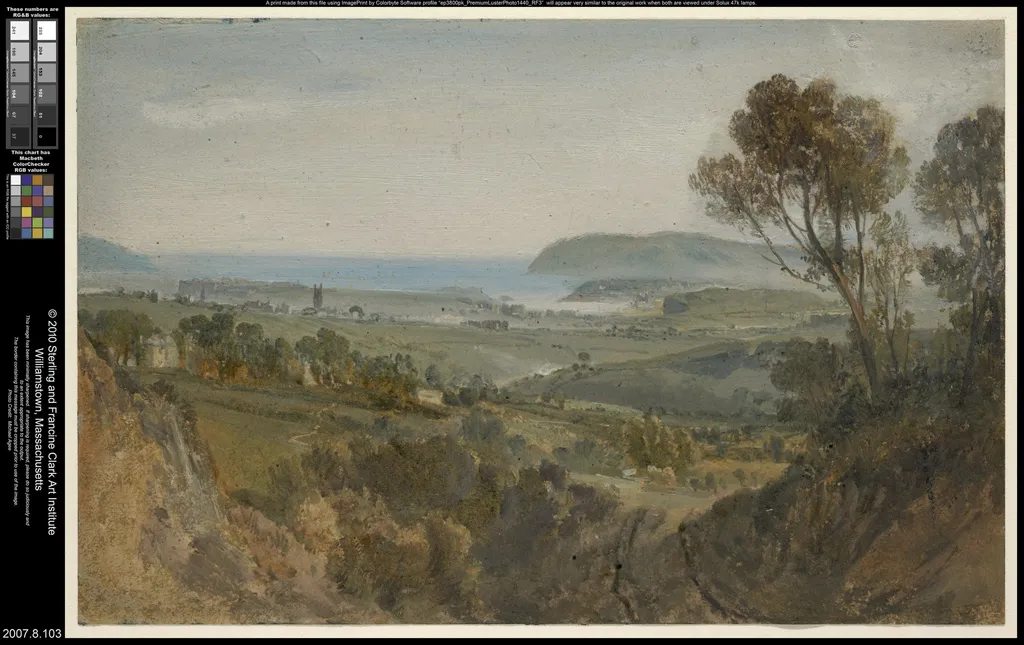
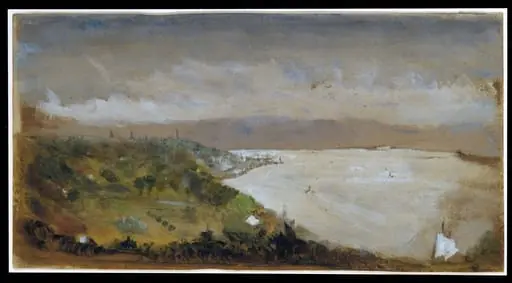
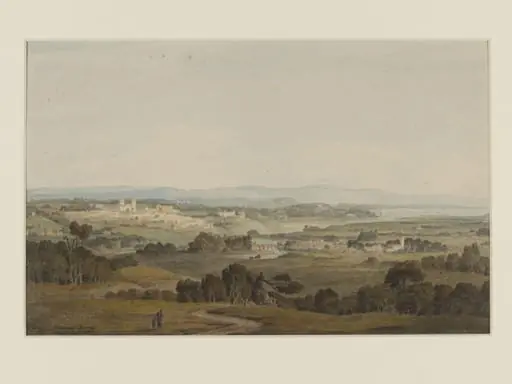
Distant View of Plymouth is an unspecified painting by Joseph Mallord William Turner. It dates from 1813 and is held in the collection of the Clark Art Institute.
About this work
Overview
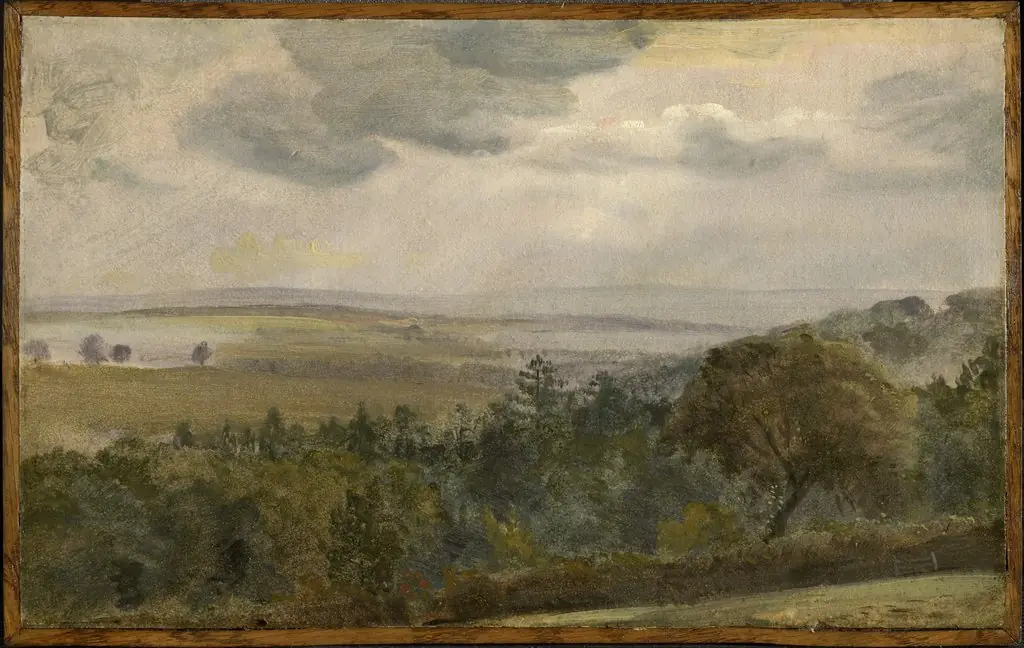
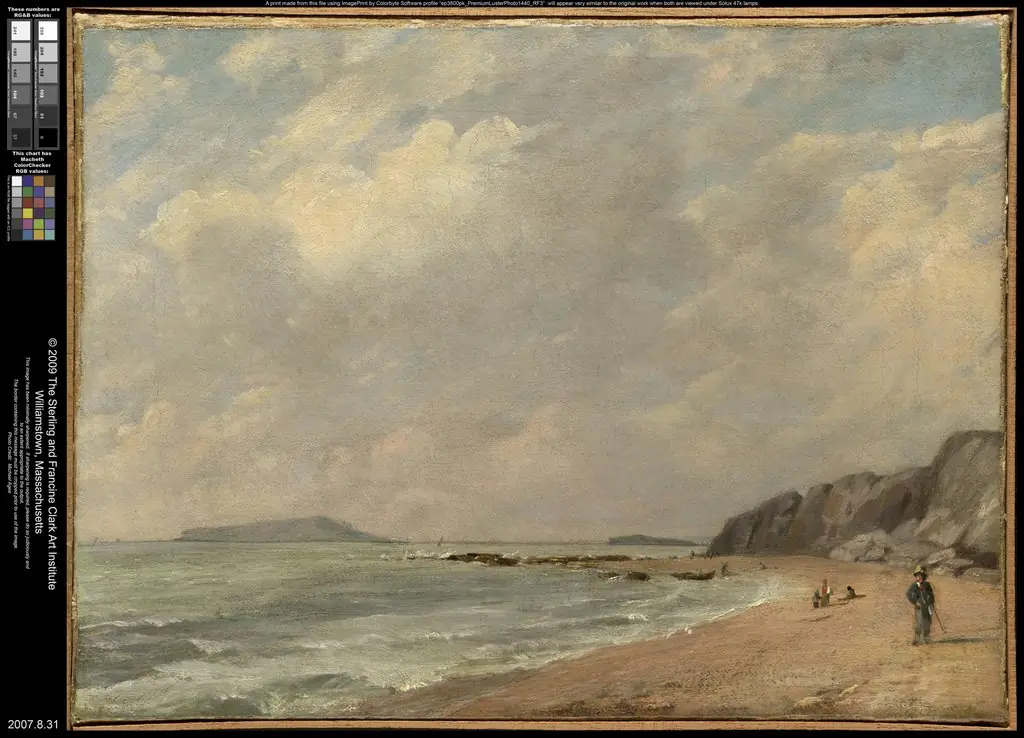
Painted in 1813 by Joseph Mallord William Turner, *Distant View of Plymouth* captures a hazy coastal scene with subtle tonal shifts and a quiet, contemplative mood. Unlike his later, more abstract seascapes, this work balances observed detail with atmospheric suggestion, reflecting Turner’s transitional phase between topographical representation and emotional landscape.
Subject & Meaning
The painting presents a distant glimpse of Plymouth, its buildings and church steeple softened by distance and atmospheric haze. Foreground elements—trees, rolling hills, and small figures with livestock—anchor the composition without dominating it. The scene evokes solitude and the quiet passage of time, emphasizing nature’s dominance over human settlement rather than celebrating urban life.
Technique & Style
Turner employed delicate brushwork and layered washes to dissolve edges between land, sea, and sky. Light is diffused through cloudy skies, creating soft contrasts that suggest depth without sharp definition. The use of chiaroscuro is restrained, favoring gradual tonal transitions over dramatic illumination, a technique that anticipates later explorations of light in Impressionism.
History & Provenance
Created during Turner’s mature period, the painting remained in private collections before entering the Clark Art Institute’s holdings. Its journey reflects broader 19th-century interest in British landscape art, though it was never among Turner’s most publicly exhibited works. The Clark acquired it as part of a significant collection of Romantic-era British paintings.
Context
In 1813, Turner was refining his approach to landscape beyond topographical accuracy, responding to Romantic ideals that valued emotion and nature’s sublime. While Plymouth was a known naval port, Turner avoids its military associations, instead focusing on quiet rural periphery. This choice aligns with his broader interest in the poetic potential of ordinary places.
Legacy
Though less celebrated than his later marine studies, *Distant View of Plymouth* illustrates Turner’s early mastery of atmospheric perspective and emotional tone. Its influence is seen in artists who prioritized mood over detail, contributing to the gradual shift from representational to impressionistic modes in 19th-century painting.
Artist & collection
Artist
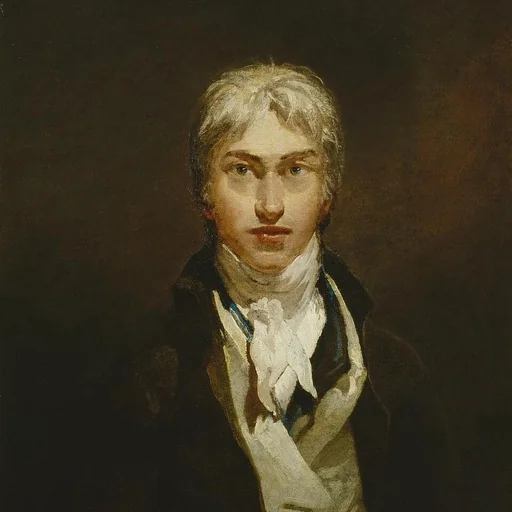
Joseph Mallord William Turner was born in 1775 at Maiden Lane, Covent Garden, where his father kept a barber and wig-making shop.