Artwork
Saint-Maurice bridge
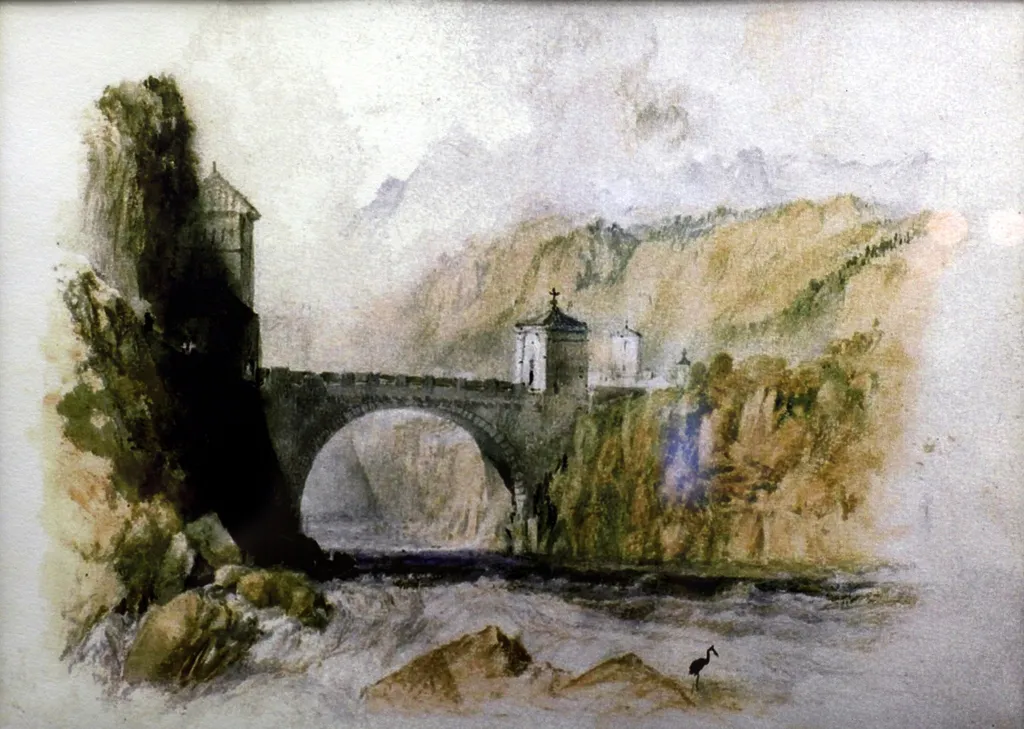
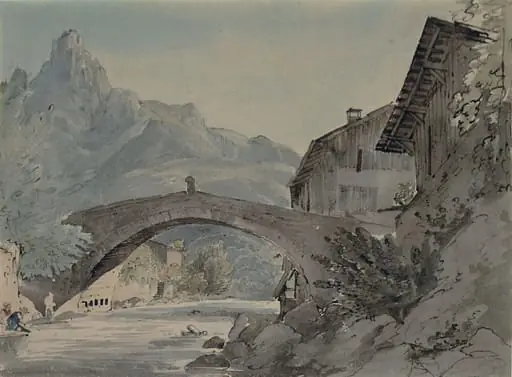
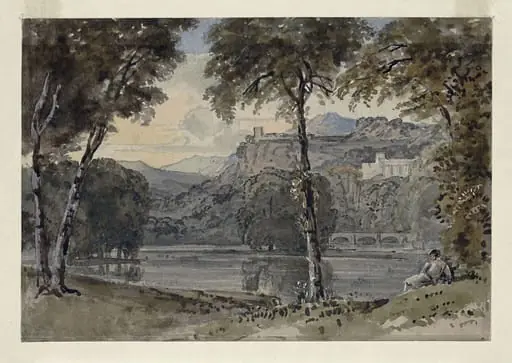
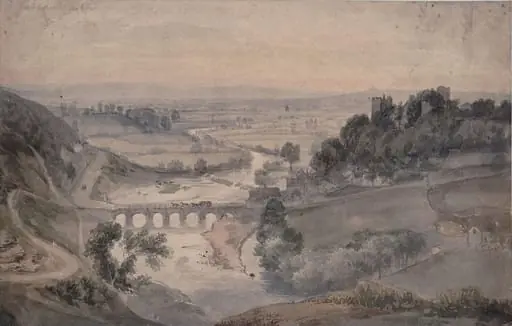
Saint-Maurice bridge is a watercolor painting by Joseph Mallord William Turner. It dates from 1820 and is held in the collection of the Tate Britain.
About this work
Overview
Saint-Maurice bridge is a watercolor painting created by J.M.W. Turner in 1820, characteristic of the Romantic period. It captures a serene landscape of a stone arch bridge spanning the Rhône River in Switzerland, set against a backdrop of mountains, trees, and a light sky.
Subject & Meaning
The subject is a tranquil Swiss scene focusing on a stone bridge, adjacent buildings, and surrounding natural elements. The peaceful atmosphere may reflect Turner's emphasis on capturing the sublime in everyday landscapes.
Technique & Style
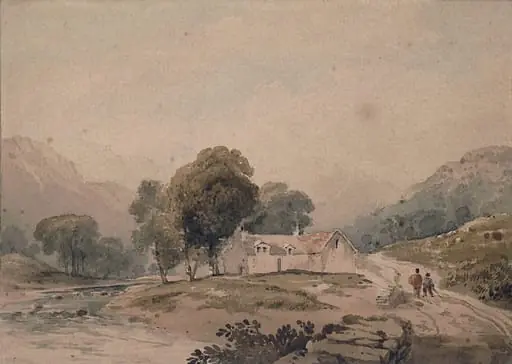
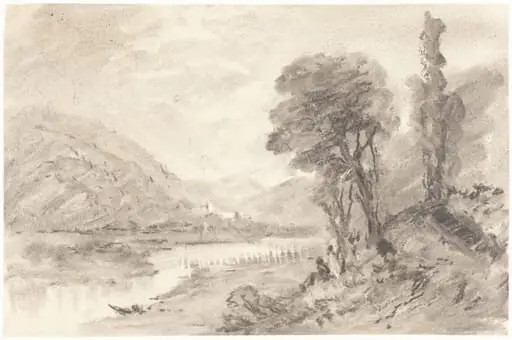
Executed in watercolor, the painting showcases Turner's mastery of the medium with gentle brushstrokes, muted colors (browns, greens, grays), and soft, delicate textures, achieving a sense of serenity and atmospheric depth.
History & Provenance
Created in 1820, this work exemplifies Turner's frequent use of watercolor alongside oil painting. Specific provenance details are not provided in the available information.
Context
Part of the broader Romantic movement, the painting aligns with Turner's innovative and expressive approach to natural landscapes, emphasizing mood and light.
Legacy
As a characteristic example of Turner's watercolor output, Saint-Maurice bridge contributes to the artist's reputation for capturing the beauty of landscapes in a unique, imaginative manner.
Artist & collection
Artist
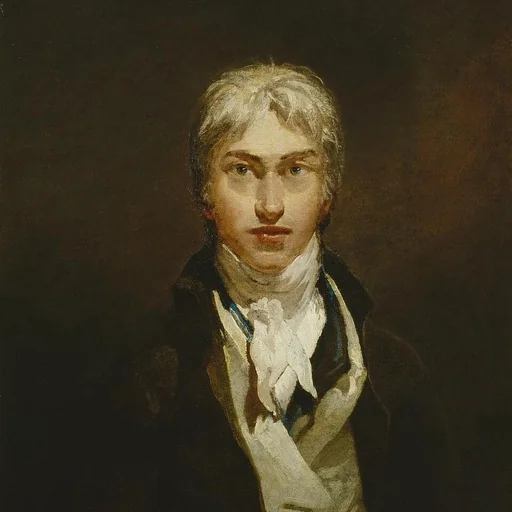
Joseph Mallord William Turner was born in 1775 at Maiden Lane, Covent Garden, where his father kept a barber and wig-making shop.