Artwork
Comus
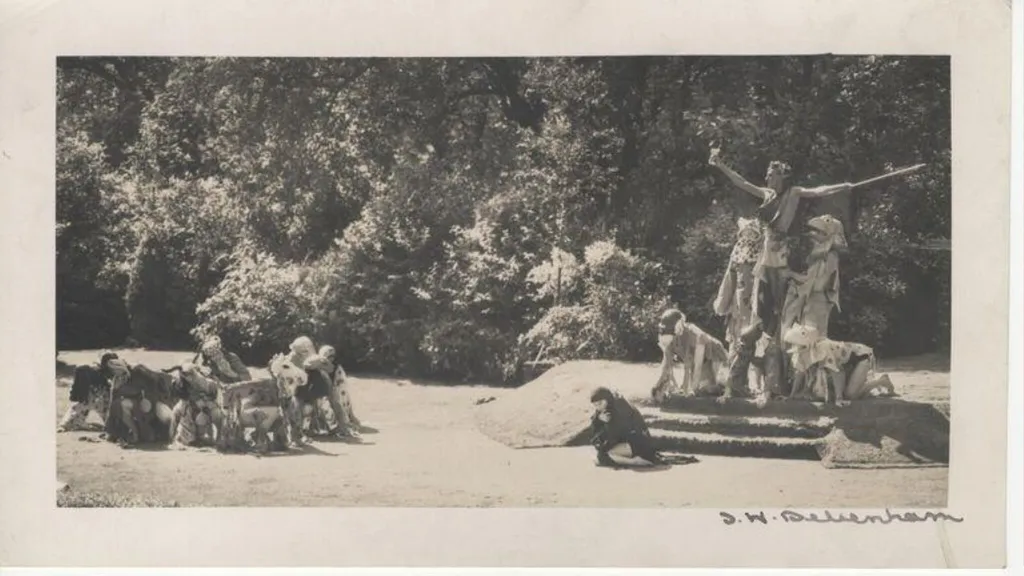
Comus is a photographic photography by J. W. Debenham. It dates from 1935 and is held in the collection of the Victoria and Albert Museum. Taken in 1935 by J.
About this work
The figures are arranged in a way that suggests a dramatic scene, with one person standing out in the center, possibly the main character.
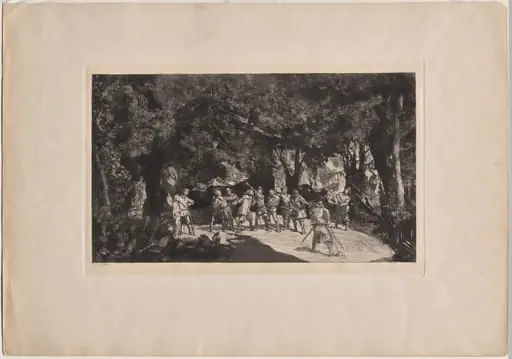
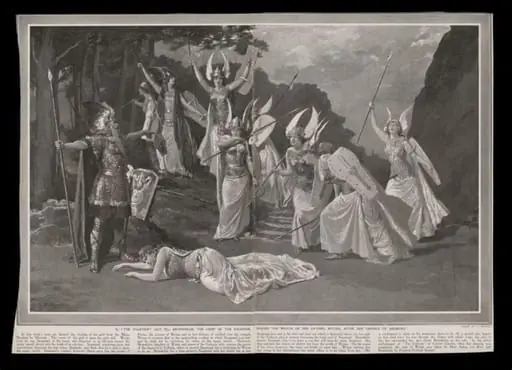
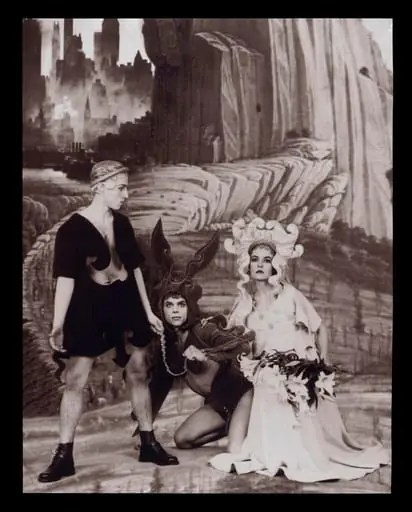
This black-and-white photograph, titled "Comus," presents a scene of a theatrical performance. A group of people, dressed in costumes, are positioned in a clearing surrounded by trees. The figures are arranged in a way that suggests a dramatic scene, with one person standing out in the center, possibly the main character.
The photograph captures a moment of action, with the central figure appearing to be in motion. The surrounding trees and foliage create a sense of depth and atmosphere, adding to the overall drama of the scene. The use of black and white photography adds a sense of timelessness to the image.
The photograph, taken by J. W. Debenham in 1935, is part of the collection at the Victoria and Albert Museum. For more information on the artist's use of chiaroscuro, explore J. W. Debenham's other works.
Overview
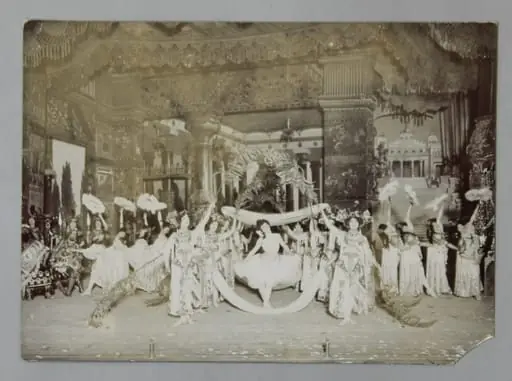
Taken in 1935 by J. W. Debenham, this black-and-white photograph documents a live theatrical performance of Comus, a masque by John Milton. The image captures a moment from a staged production, freezing the actors mid-scene in a natural woodland setting. The composition emphasizes spatial depth through layered foliage and the positioning of figures around a central character.
Subject & Meaning
The central figure, actor Clifford Evans, portrays Comus, a mythological figure associated with revelry and temptation. Surrounding him are costumed performers representing supernatural beings from the masque’s allegorical narrative. The arrangement suggests a confrontation or entrapment, reflecting the story’s themes of moral vulnerability and the struggle between virtue and seduction.
Technique & Style
Debenham used a documentary approach, favoring natural light and unposed gestures to preserve the immediacy of the performance. The monochrome palette enhances the dramatic contrast between figures and shadowed woodland, while the shallow depth of field draws focus to the central actor. The photograph avoids theatrical staging, instead recording the scene as it unfolded on location.
History & Provenance
The photograph was made during a 1935 production of Comus, likely staged by an amateur or university theatre group. It entered institutional collections shortly after its creation, preserved as a record of early 20th-century performance practice. Its survival offers rare visual evidence of how Milton’s text was interpreted outside professional theatre circles during the interwar period.
Context
In the 1930s, there was a revival of interest in Renaissance masques among British educational and amateur theatre groups. Comus, with its moral allegory and mythological imagery, was frequently adapted for performance in schools and universities. Debenham’s photograph reflects this cultural moment, capturing a performance rooted in literary tradition rather than commercial spectacle.
Legacy
The image remains a significant archival document for scholars of theatre history and Miltonic adaptation. It provides insight into how classical texts were visually interpreted by non-professional performers during a period of limited photographic documentation. Its quiet composition contrasts with later, more stylized theatrical photography, preserving an unembellished record of live performance.
Artist & collection
Artist
This photographer made a single night-time image called *Comus* in 1935, a silver print of a lone figure carrying a lantern through a dark, misty street.