Artwork
Portrait of Mikhail Kutuzov (Golenishchev-Kutuzov, Prince of Smolensk)
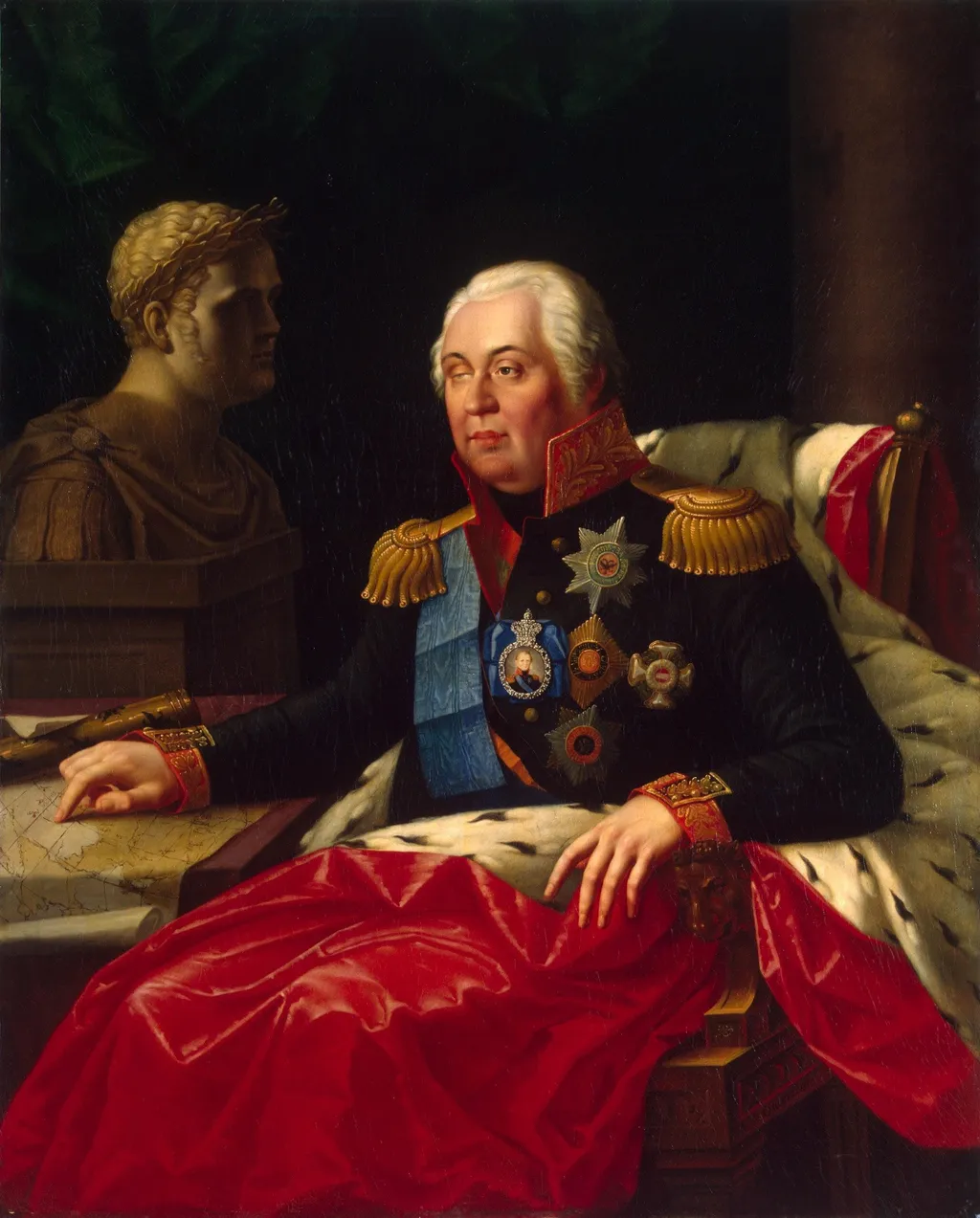
Portrait of Mikhail Kutuzov (Golenishchev-Kutuzov, Prince of Smolensk) is an oil painting by Józef Oleszkiewicz. It dates from 1820 and is held in the collection of the Hermitage Museum.
About this work
Overview
Oleszkiewicz, a Polish artist working within the imperial Russian court, rendered Kutuzov in formal attire, reflecting his status and service.
Painted in 1820 by Józef Oleszkiewicz, this oil portrait captures Mikhail Kutuzov, the Russian field marshal and Prince of Smolensk. Oleszkiewicz, a Polish artist working within the imperial Russian court, rendered Kutuzov in formal attire, reflecting his status and service. The painting resides in the State Hermitage Museum, where it stands as a documented example of early 19th-century Russian portraiture tied to military leadership.
Subject & Meaning
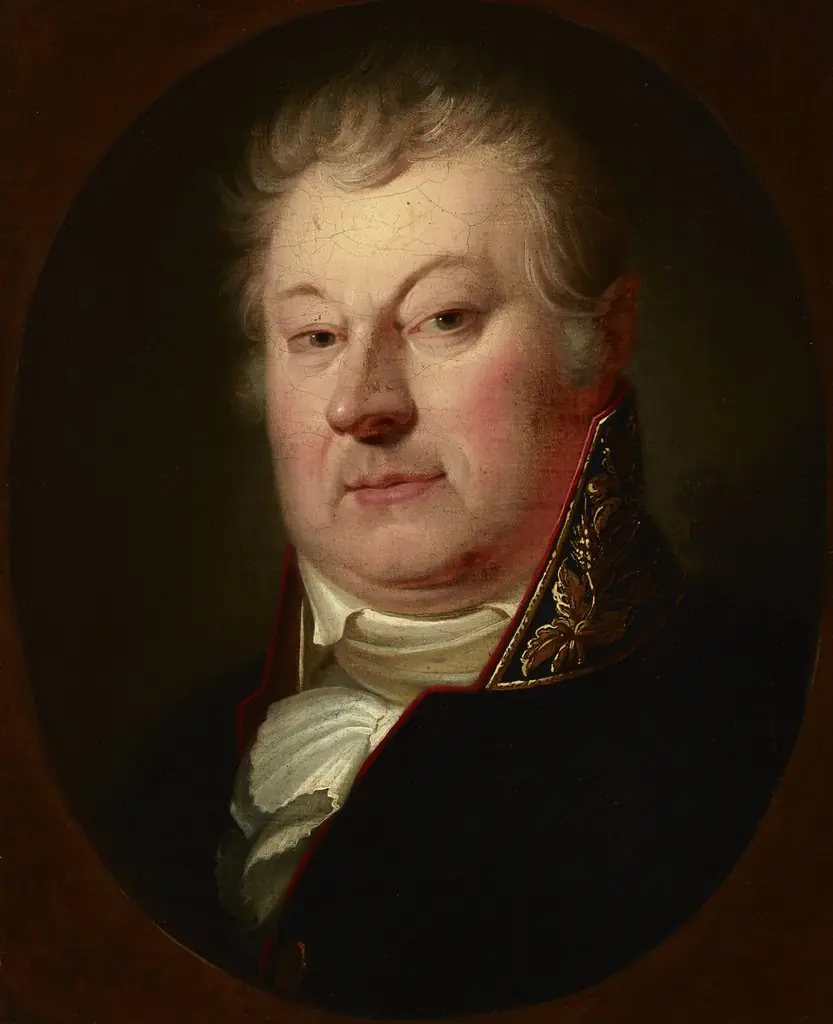
Kutuzov is depicted as a seasoned commander, his white hair and composed gaze conveying experience and gravitas. The red sash and numerous medals signify his high rank and honors earned during the Napoleonic Wars. The bust behind him, likely representing a classical hero, alludes to his role as a modern embodiment of ancient military virtue. The map on the table reinforces his strategic role, anchoring his identity in leadership and wartime planning.
Technique & Style
Oleszkiewicz employed a restrained, detailed approach typical of academic portraiture of the era. The dark jacket with gold trim and the crisp rendering of medals demonstrate careful attention to texture and insignia. Lighting is even, emphasizing form over drama, and the background remains muted to focus attention on the figure. The composition is balanced, with the bust and map framing Kutuzov without distracting from his presence.
History & Provenance
Commissioned during the reign of Tsar Alexander I, the portrait was created shortly after Kutuzov’s death in 1813, likely as part of an official effort to memorialize key military figures. Oleszkiewicz, based in Saint Petersburg, had access to imperial circles and was known for his portraits of nobility. The work entered the Hermitage collection soon after completion, preserving its connection to the Russian state’s historical narrative.
Context
This portrait emerged in a period when Russia sought to consolidate its national identity through imagery of wartime leadership. Kutuzov’s victory over Napoleon in 1812 made him a symbol of resilience. Oleszkiewicz’s depiction aligns with broader trends in European portraiture that fused personal likeness with allegorical elements, using classical references to elevate contemporary figures into enduring historical icons.
Legacy
The portrait remains a primary visual record of Kutuzov’s later years and the visual language of Russian military honor in the early 1800s. While Oleszkiewicz is less widely known today, this work endures as a key example of court portraiture in the Russian Empire. It continues to inform historical understanding of how leadership was visually constructed during a pivotal era in European warfare.
Own this work as a print
Artist & collection
Artist
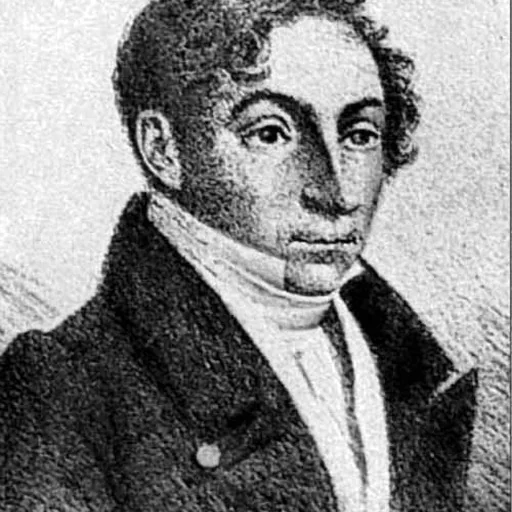
Józef Oleszkiewicz (Lithuanian: Juozapas Oleškevičius, Russian: Юзеф Иванович Олешкевич; c.1777 – 5 October 1830) was a Polish painter, active in Vilnius and then in Saint Petersburg during Tsar Alexander I's reign,…

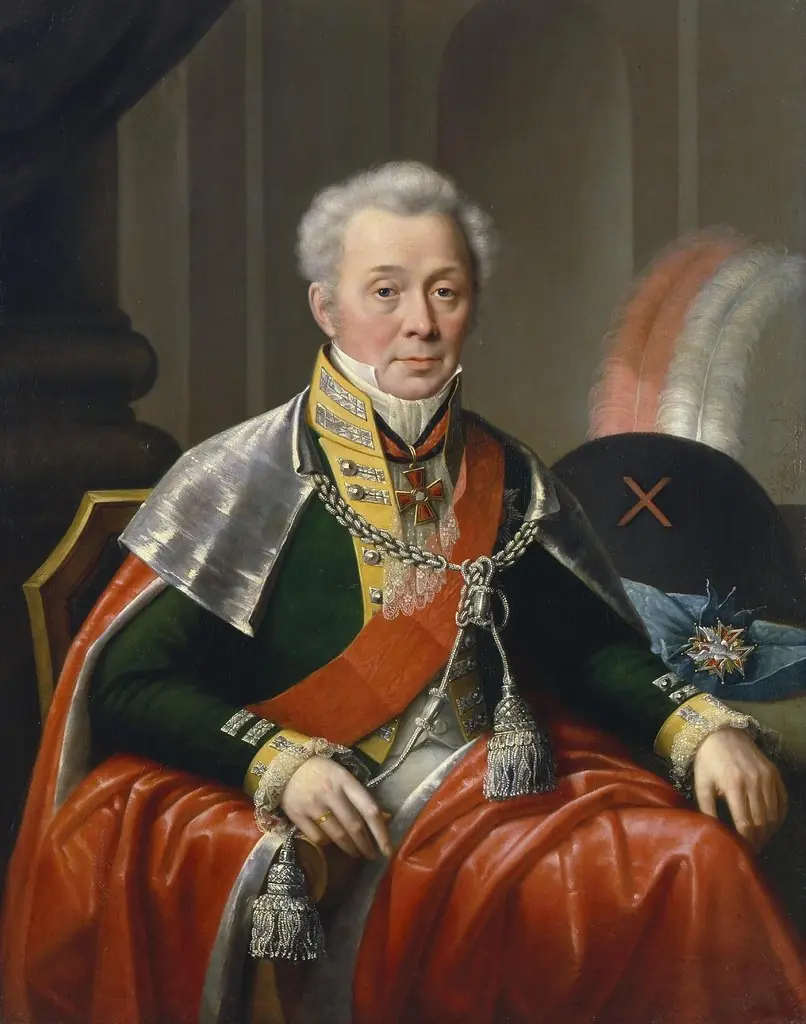
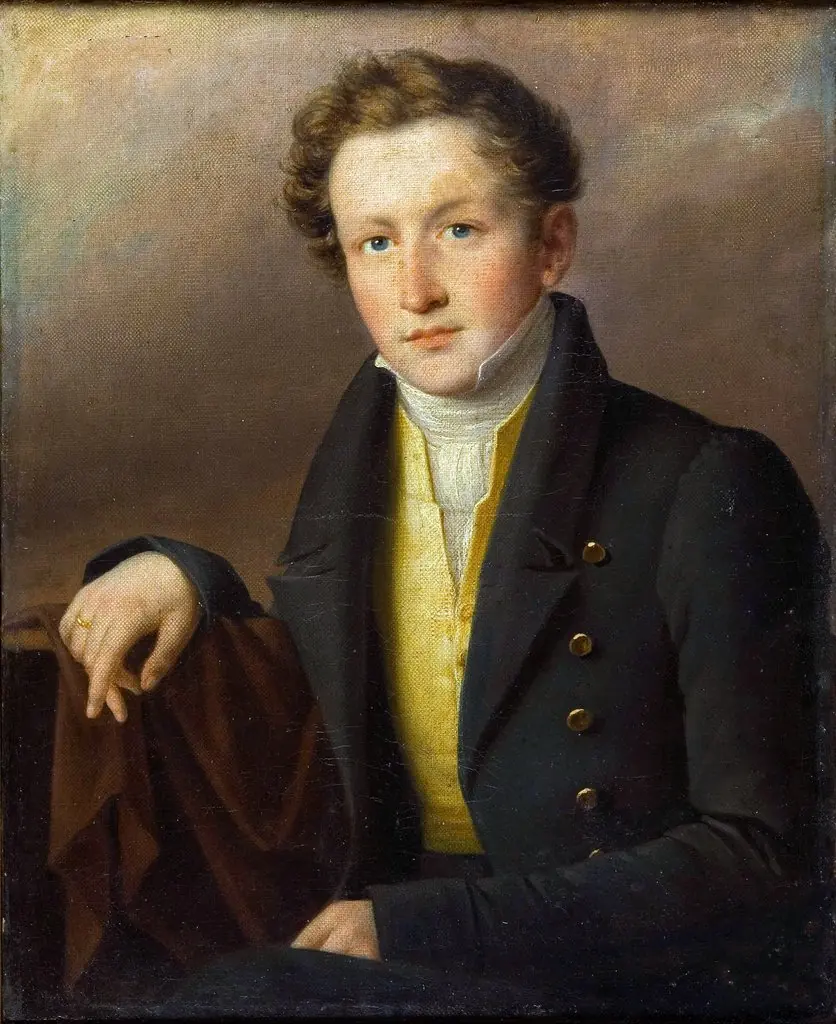
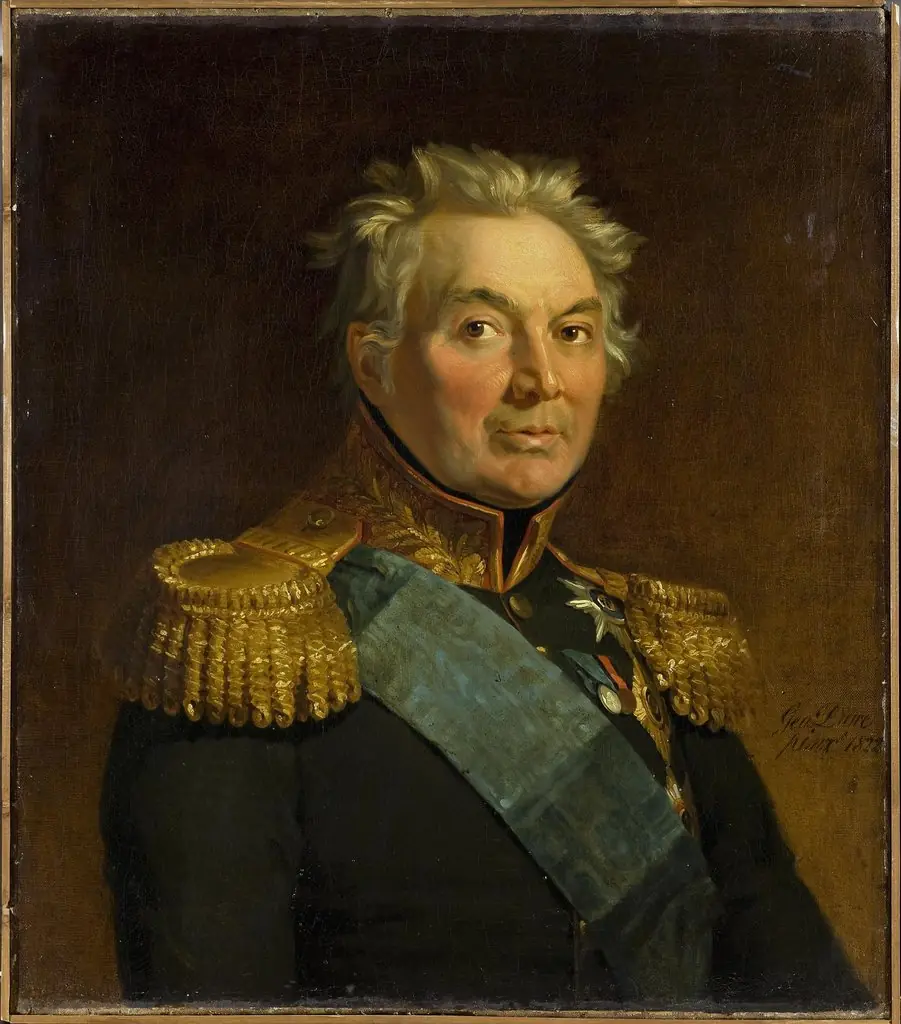 Portrait of Fabian Gottlieb von der Osten-Sacken (1752-1837)
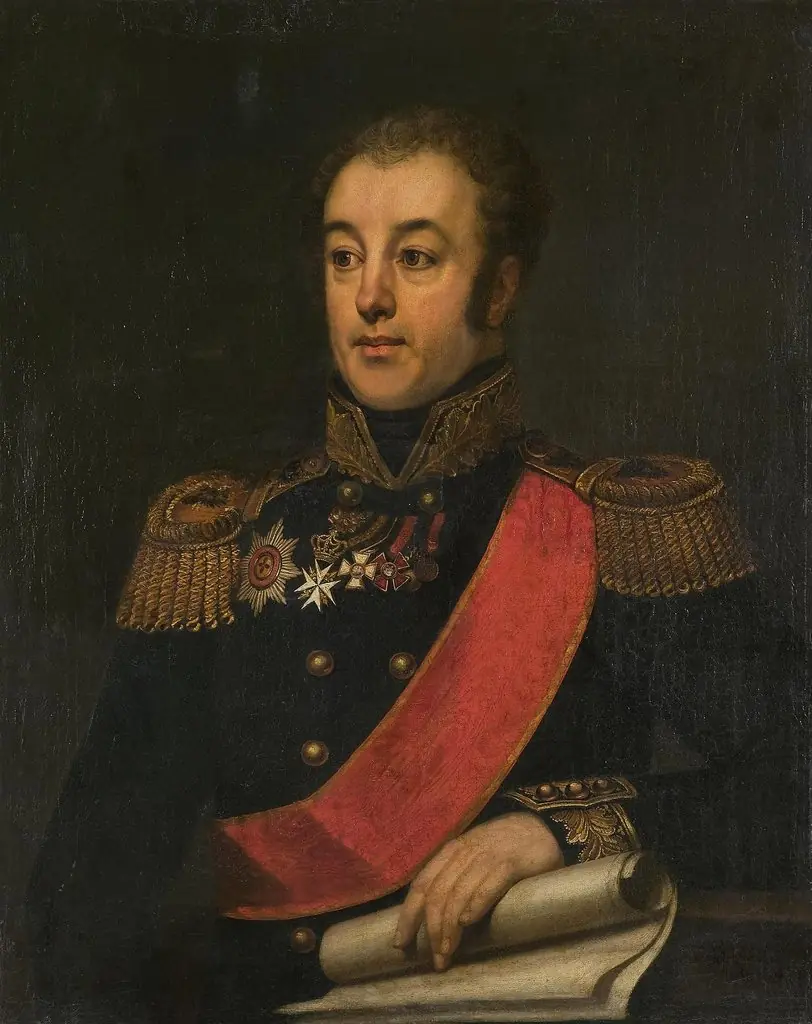 Portrait of A.F. Klokachev
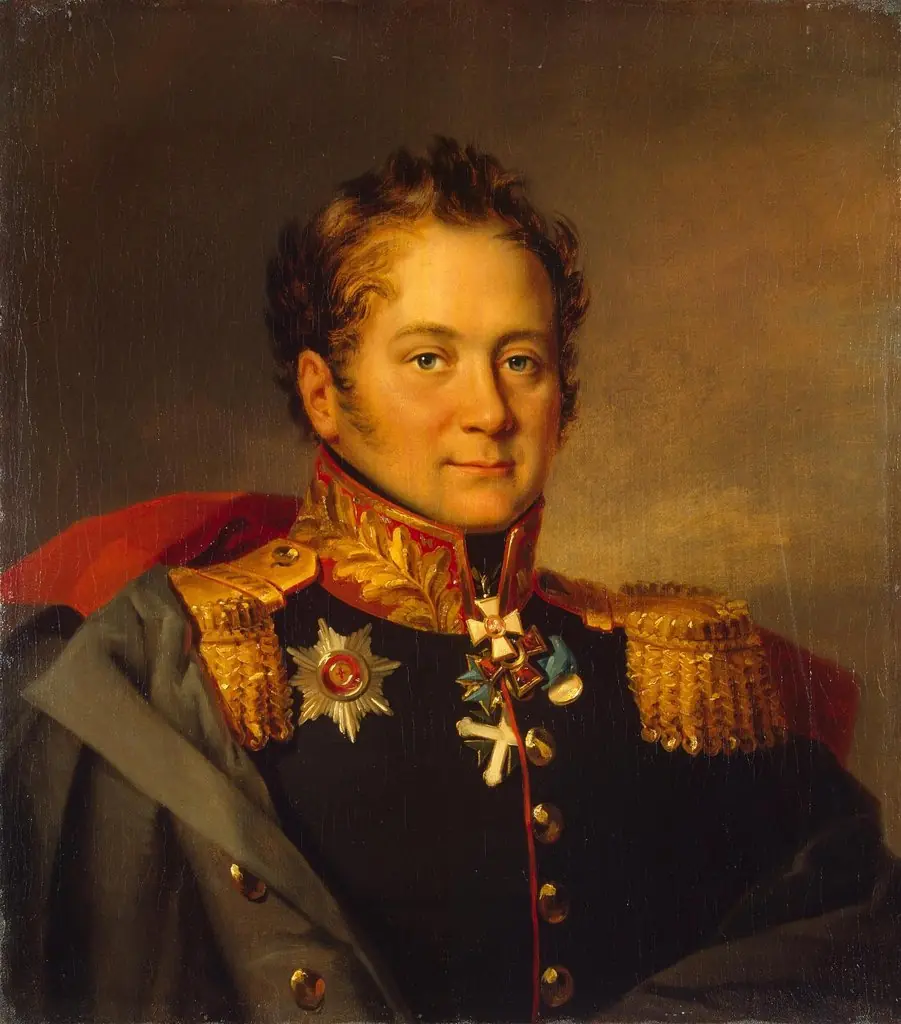 Portrait of Alexander A. Pisarev (1780-1848)
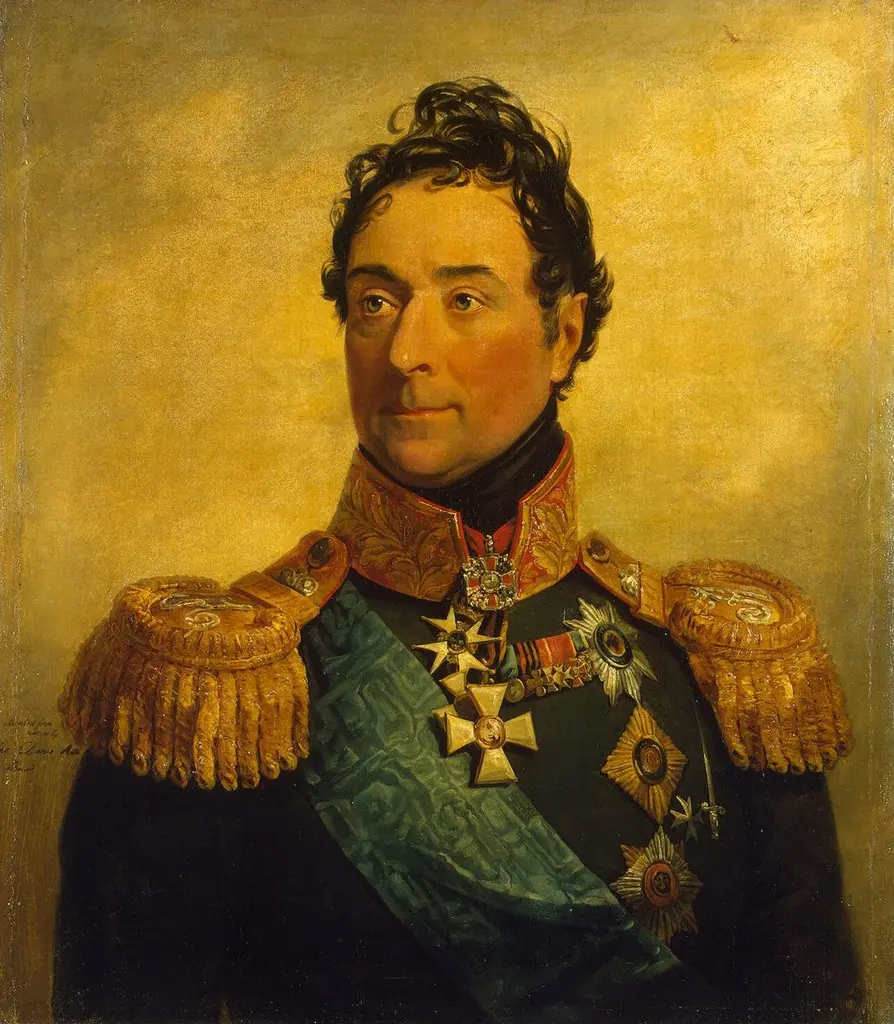 Portrait of Alexander F. Langeron (1763-1831)
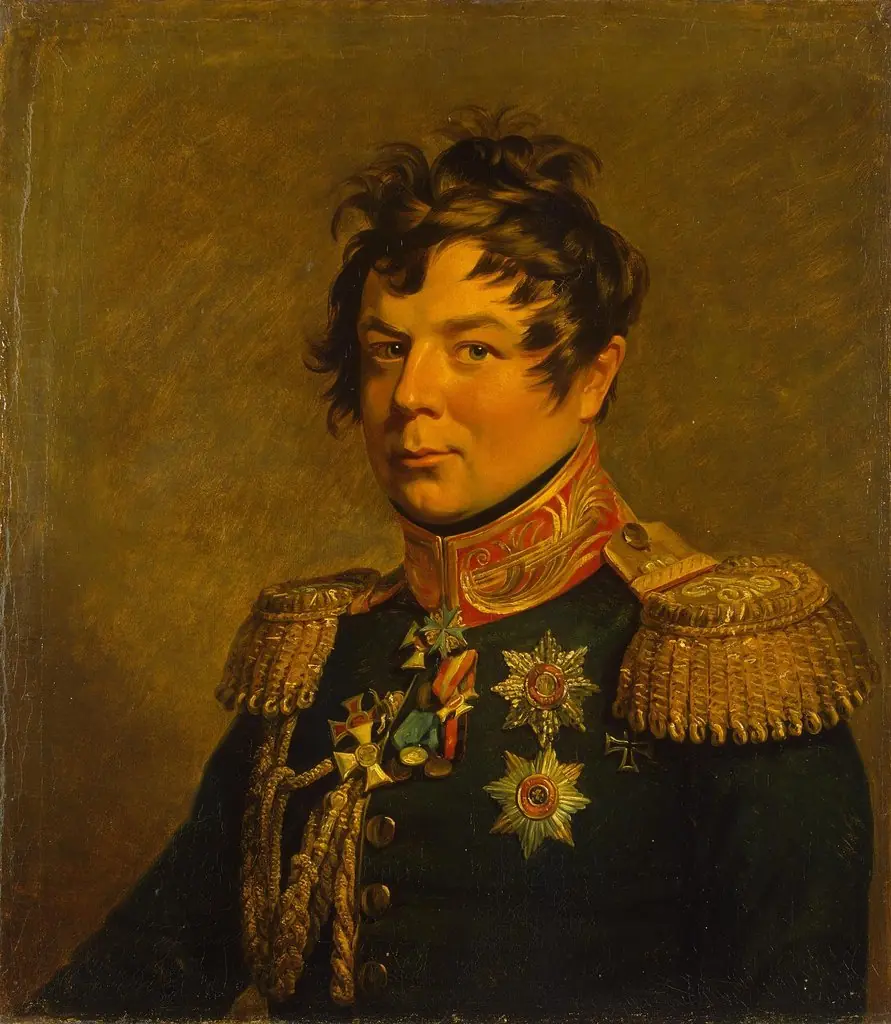 Portrait of Ivan I. Diebitsch-Zabalkansky (1785-1831)
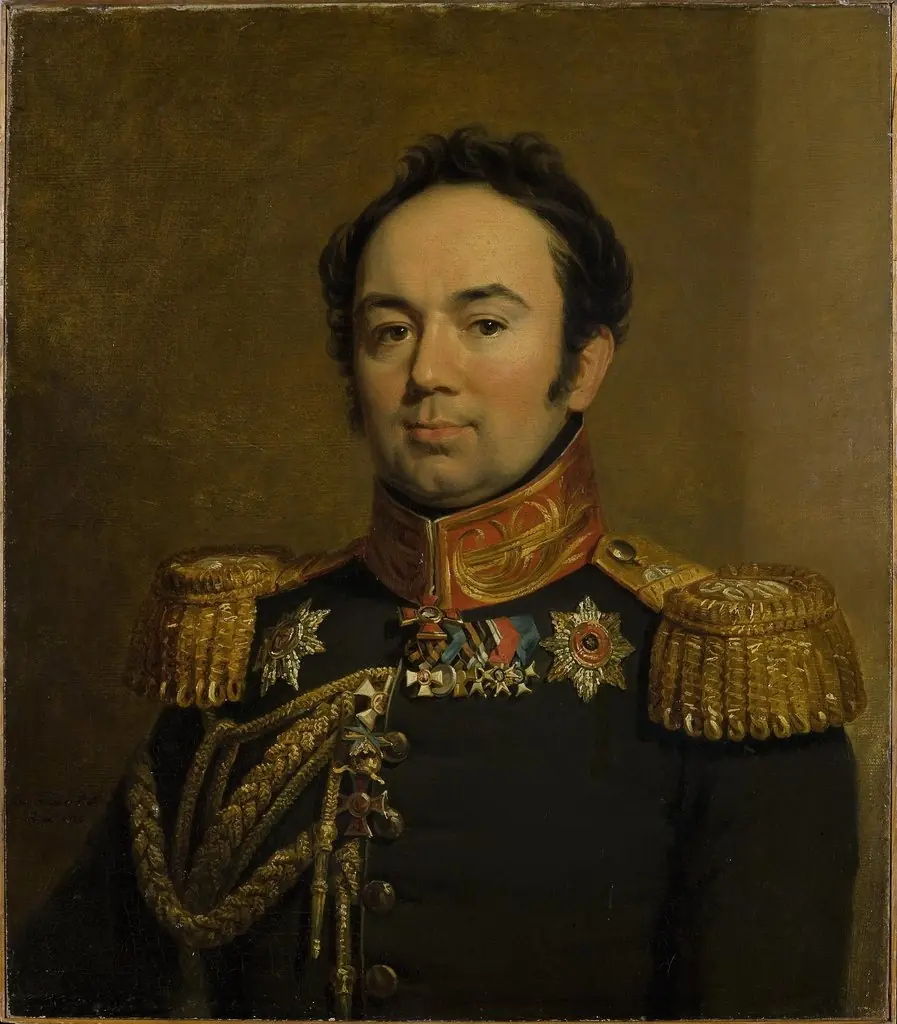 Portrait of Arseny A. Zakrevsky (1783-1865)
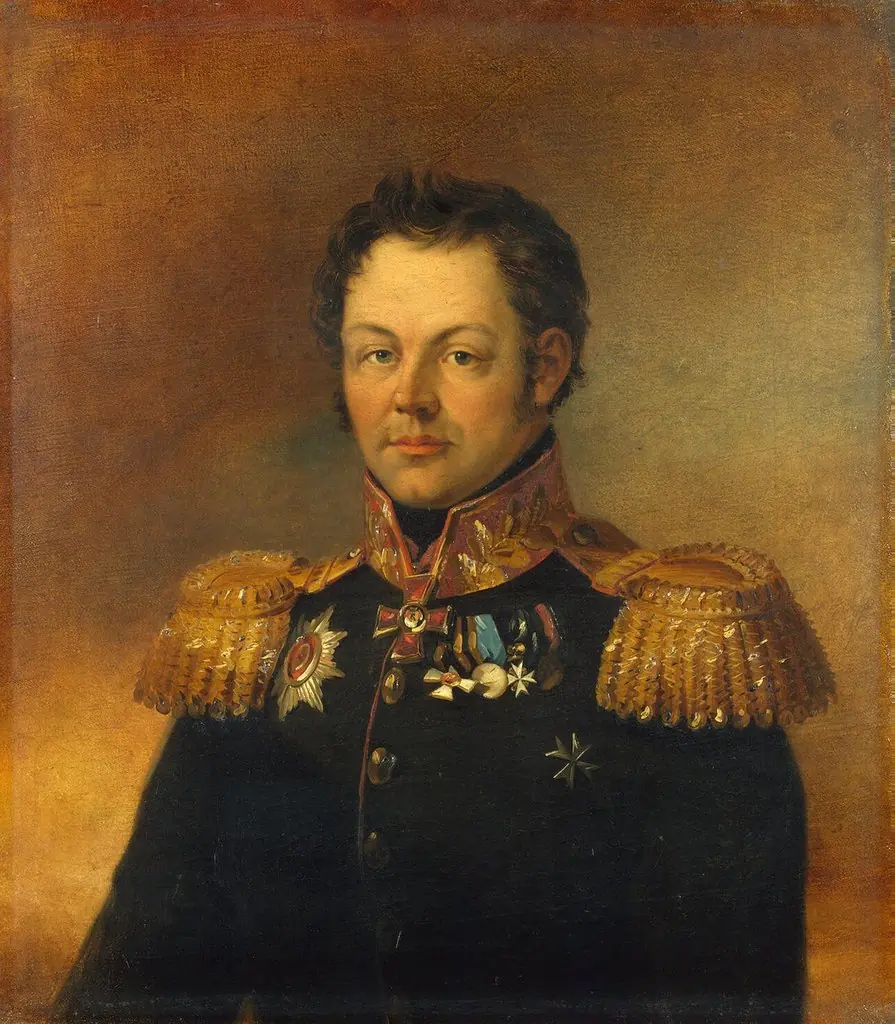 Portrait of Alexander E. Pyker (1776-1834)
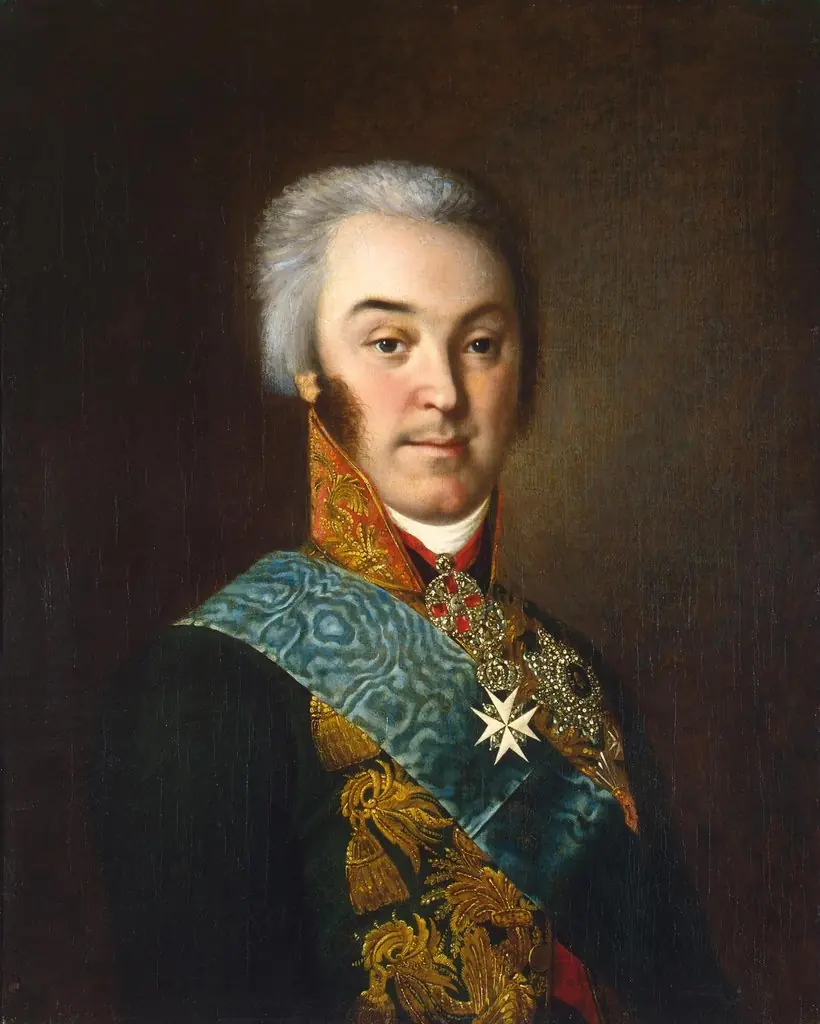 Portrait of Count Nikolay Sheremetev
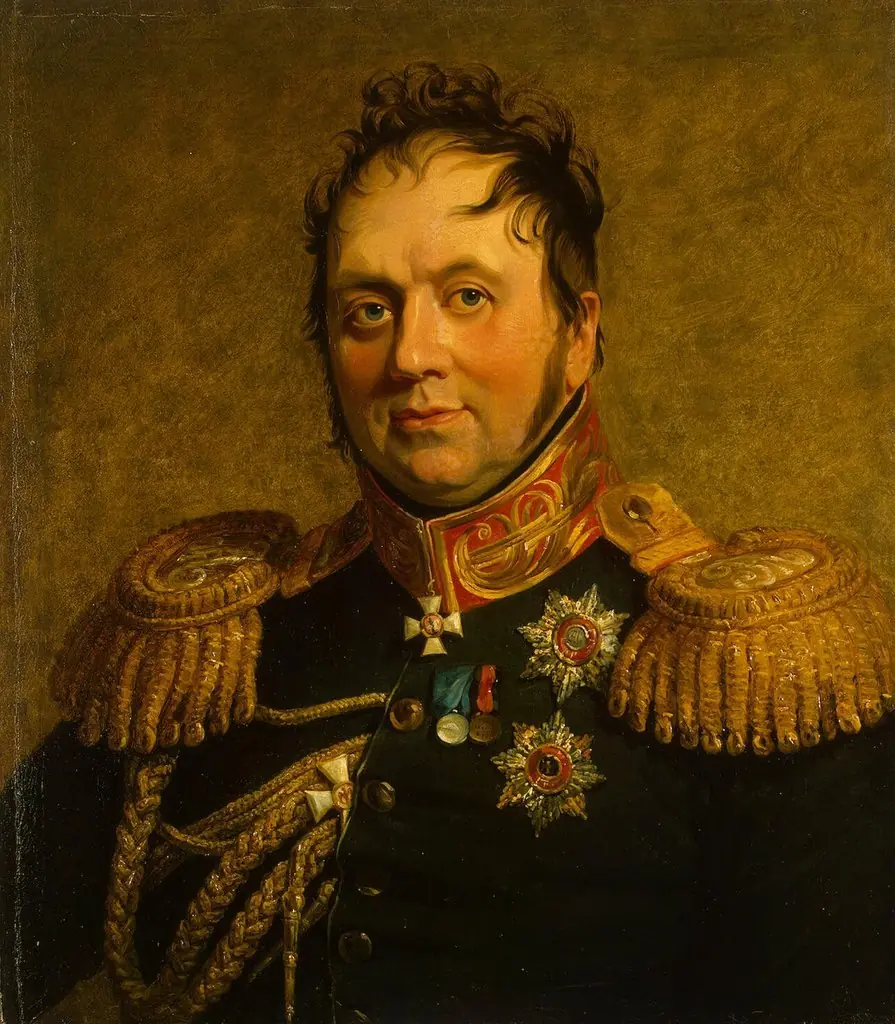 Portrait of Fyodor K. Korff (1773/74-1823)
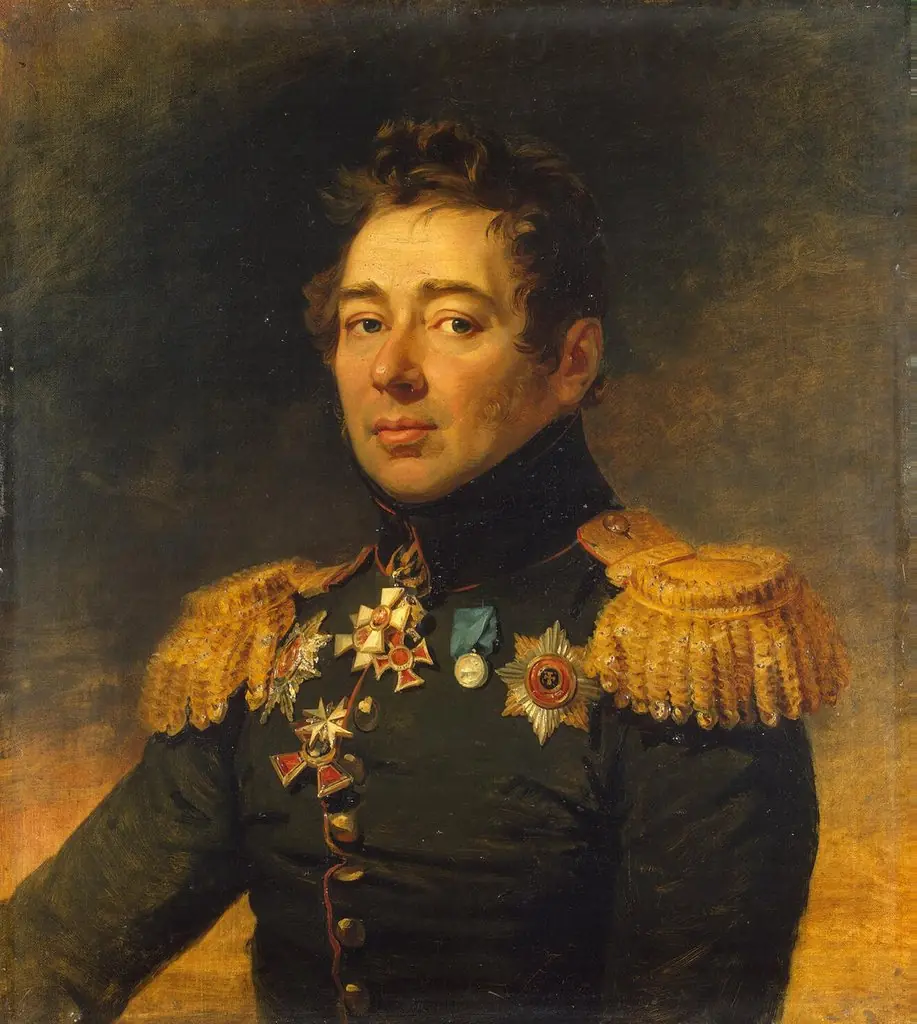 Portrait of Alexey P. Nikitin (1777-1858)