Artwork
Pastoral Landscape with Village
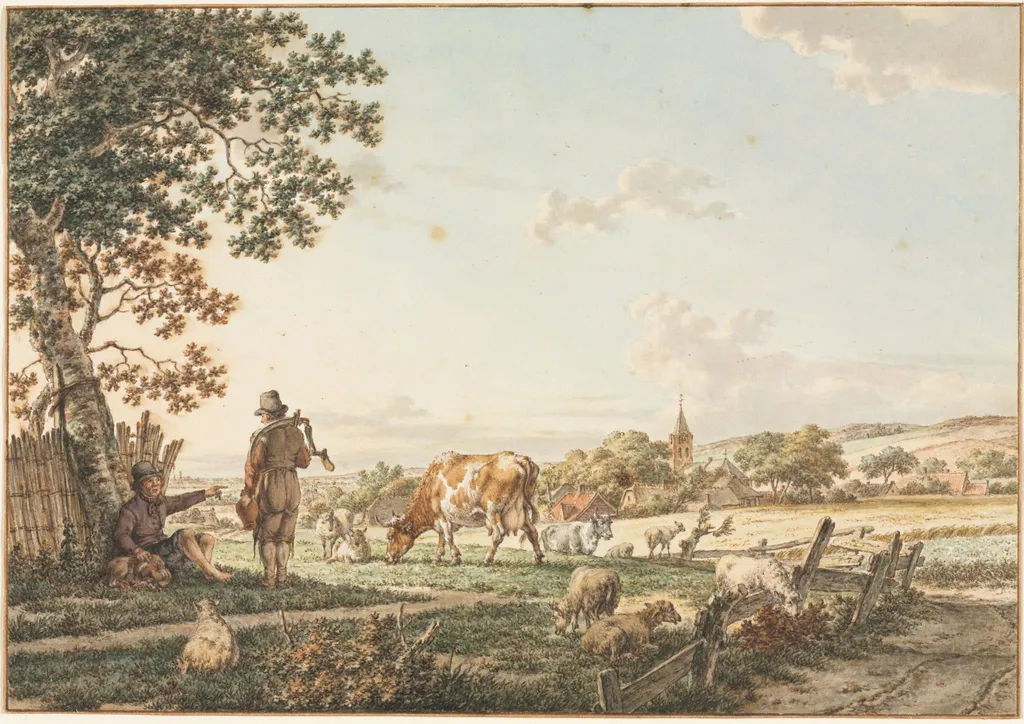
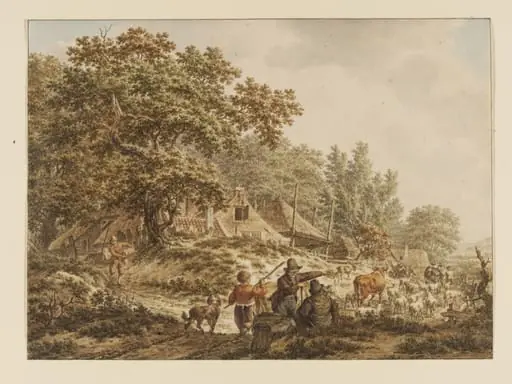
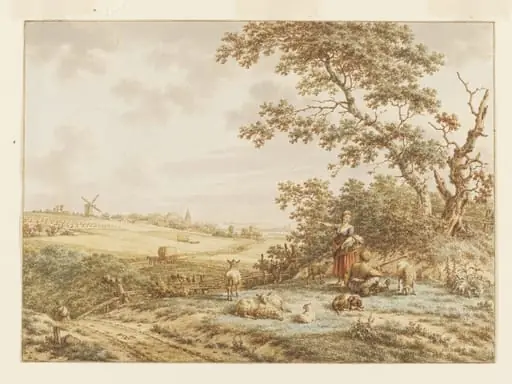
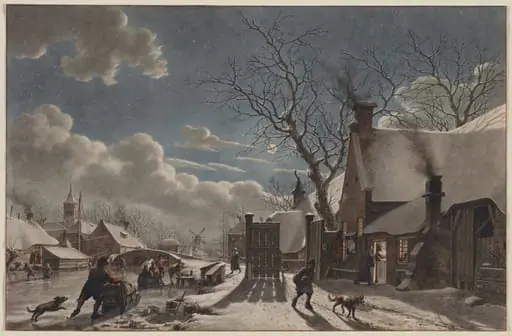
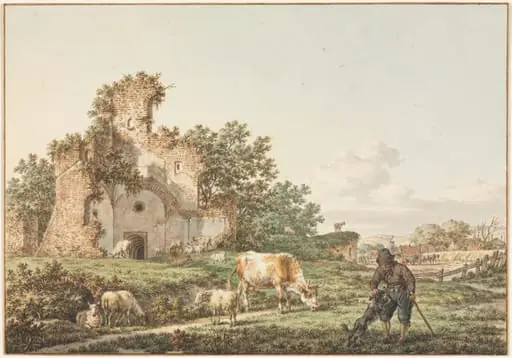
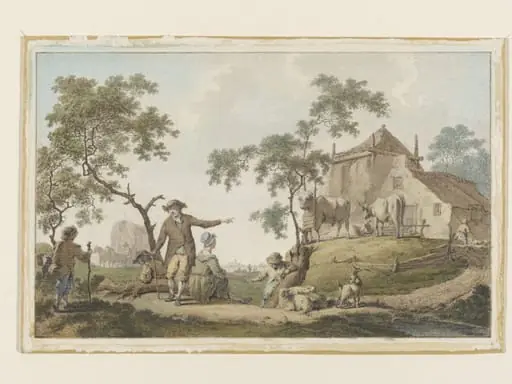
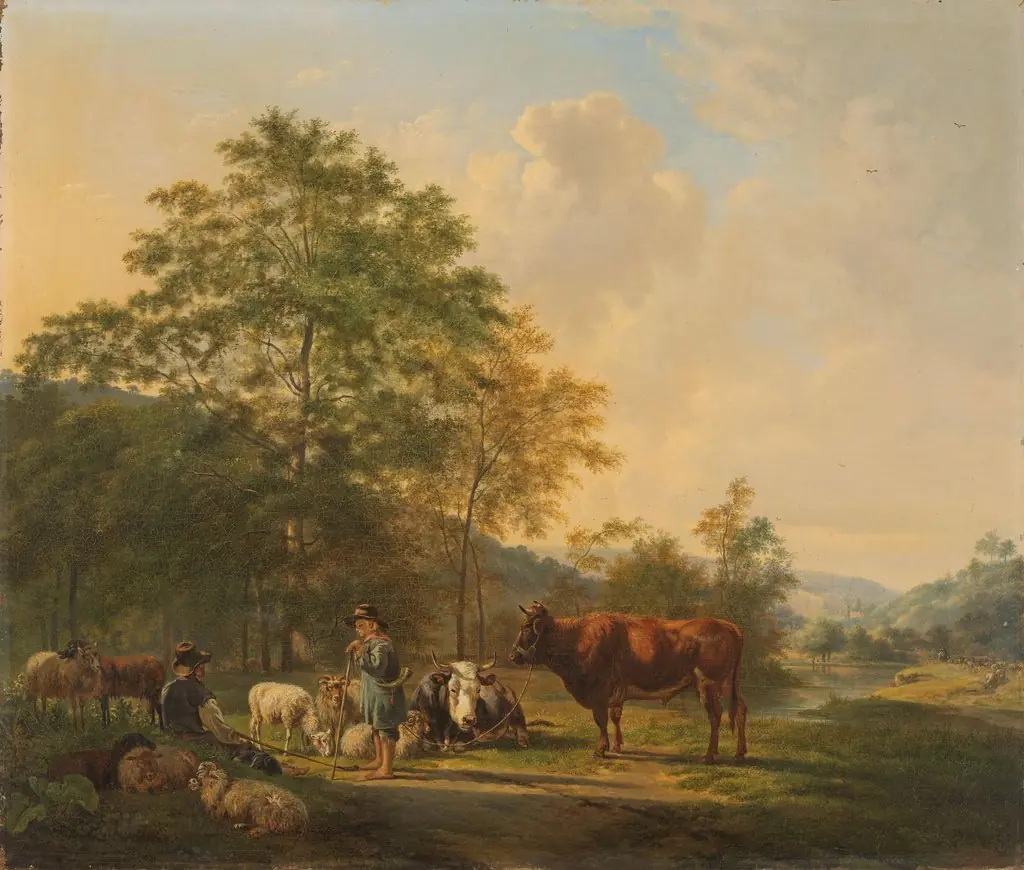
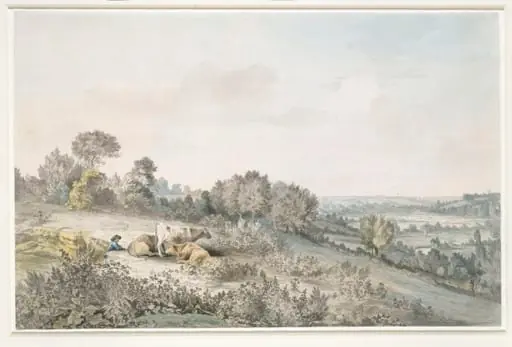
Pastoral Landscape with Village is a drawing by the Romanticist artist Jacob Cats. It dates from 1799 and is held in the collection of the Cleveland Museum of Art.
About this work
Overview
Jacob Cats, born in 1741 in Altona to a Mennonite bookselling family, began his career in decorative arts before transitioning to fine drawing and painting.
Jacob Cats, born in 1741 in Altona to a Mennonite bookselling family, began his career in decorative arts before transitioning to fine drawing and painting. After training under Abraham Starre and Pieter Louw, he worked with a wall-painting firm before focusing on independent landscape work. By the late 18th century, as wallpaper demand waned, Cats gained recognition for his detailed drawings. *Pastoral Landscape with Village* (1799) reflects this mature phase, now held in The Cleveland Museum of Art.
Subject & Meaning
The drawing portrays a quiet rural scene: a seated figure beneath a tree, another holding a horn, and grazing livestock amid gentle hills. A distant church steeple anchors the composition, suggesting community and spiritual presence. The absence of human activity beyond these figures emphasizes stillness, evoking a contemplative harmony between people and the land. It reflects an idealized vision of rural life, not a specific location, rooted in the enduring cultural value of pastoral peace.
Technique & Style
Cats rendered the scene with precise, delicate linework typical of 18th-century draftsmanship. Soft tonal gradations suggest atmospheric depth, while the sparse use of washes adds subtle volume to the hills and clouds. The composition is carefully balanced, with foreground figures framing the distant village. His approach avoids dramatic contrast, favoring quiet modulation of light and form, aligning with the restrained aesthetic of late Enlightenment landscape drawing.
History & Provenance
Created in 1799, the drawing emerged during Cats’s shift from commercial wall decoration to fine art. It remained in private hands until entering The Cleveland Museum of Art’s collection, where it is preserved as an example of Dutch drawing from the period. No significant exhibition or publication history is documented prior to its acquisition, suggesting it was appreciated primarily within collector circles rather than public display.
Context
In late 18th-century Holland, landscape drawing flourished as a refined practice distinct from grand historical painting. Artists like Cats responded to urbanization by idealizing rural life, a trend shared across Northern Europe. While Romanticism would soon emphasize emotion and sublime nature, Cats’s work remains grounded in observation and calm order, reflecting a transitional moment between Enlightenment rationality and emerging Romantic sensibilities.
Legacy
Cats’s later drawings, including this one, are valued for their technical precision and understated mood. Though not widely known outside specialist circles, his work contributes to the broader understanding of Dutch graphic art in the decades before Romanticism fully took hold. His transition from decorative to fine art mirrors a wider professional shift among artists adapting to changing markets and aesthetic priorities.
Own this work as a print
Artist & collection
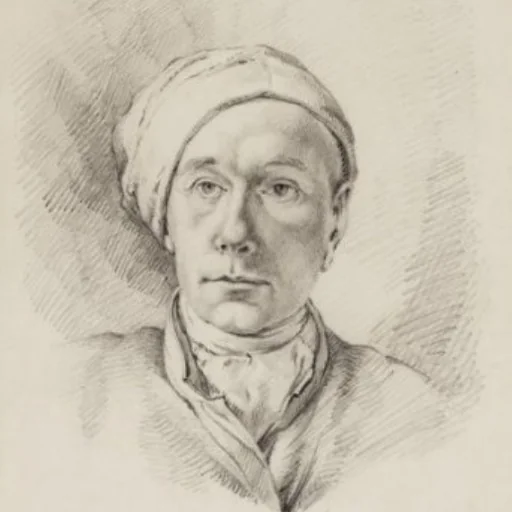
Artist
Jacob Cats (1741–1799) was a Dutch draughtsman who also etched and painted. He was born at Altona in 1741 as the son of a Mennonite bookseller who had to flee Amsterdam because of a controversial publication. The family…