Artwork
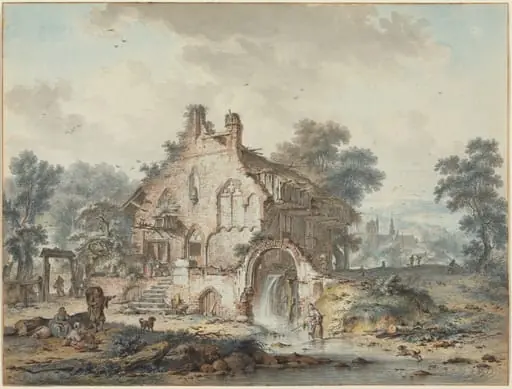
Pastoral Landscape with a Ruin
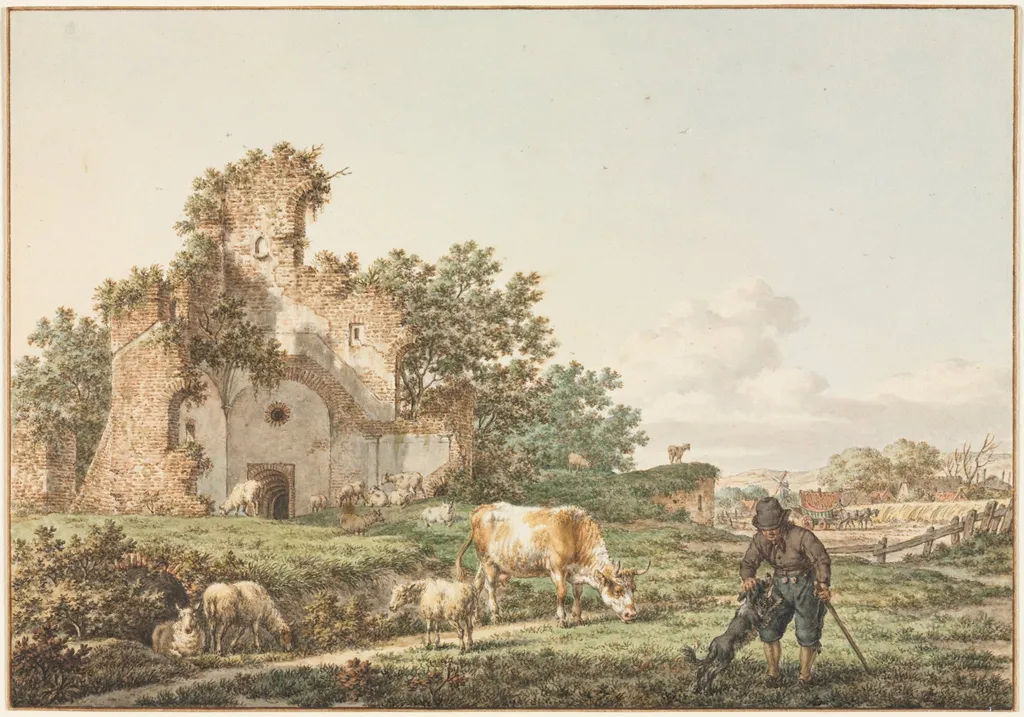
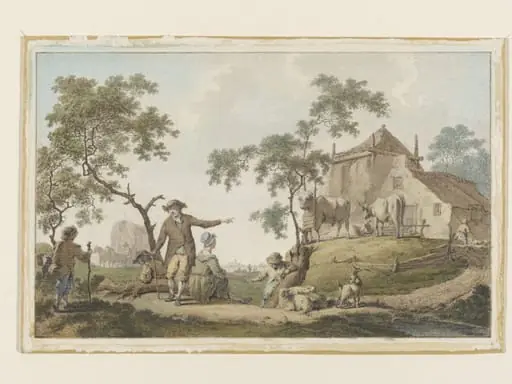
Pastoral Landscape with a Ruin is a drawing by the Romanticist artist Jacob Cats. It dates from 1799 and is held in the collection of the Cleveland Museum of Art.
About this work
Overview
*Pastoral Landscape with a Ruin*, dated 1799, exemplifies his mature work, characterized by quiet observation and restrained detail.
Jacob Cats, born in 1741 in Altona to a Mennonite bookseller, began his career in decorative wall painting before transitioning to drawing and etching in the late 18th century. As demand for wallpaper waned, he turned to intimate landscape studies. *Pastoral Landscape with a Ruin*, dated 1799, exemplifies his mature work, characterized by quiet observation and restrained detail. The piece is now in the collection of The Cleveland Museum of Art.
Subject & Meaning
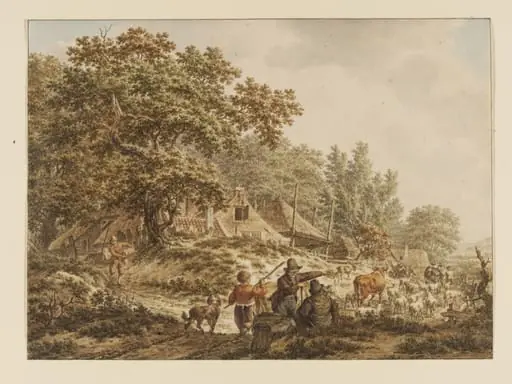
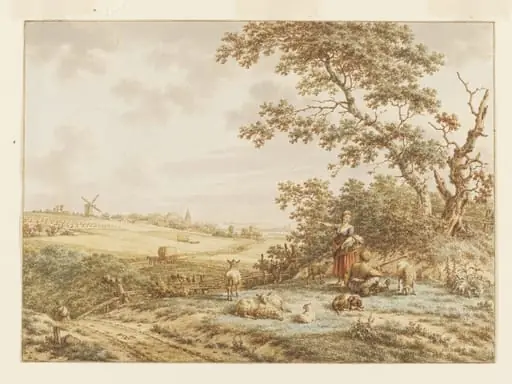
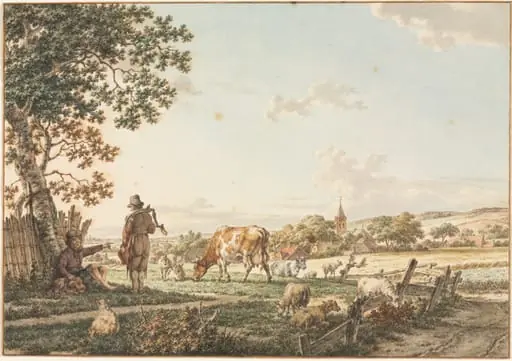
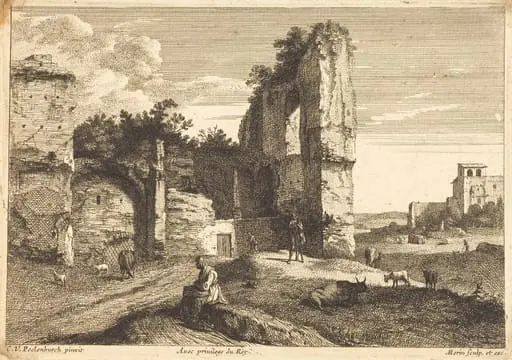
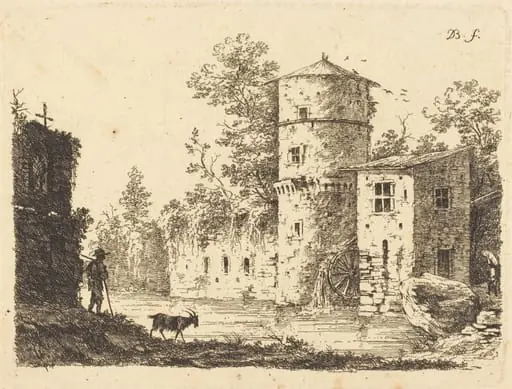
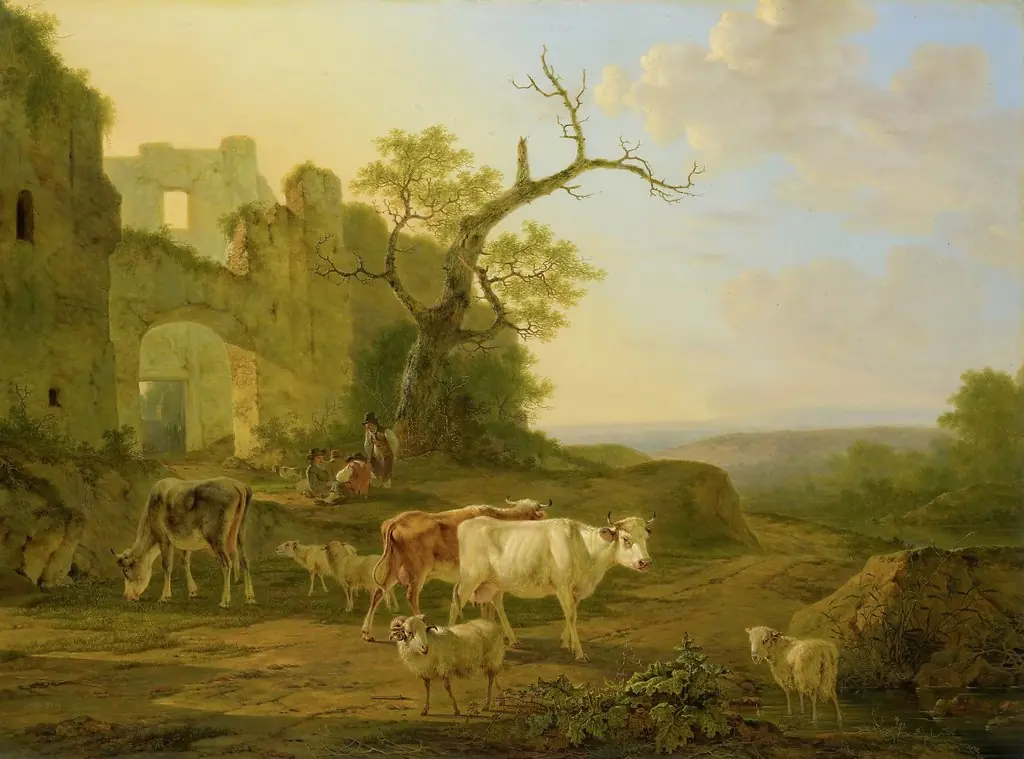
The drawing depicts a tranquil rural scene centered on a weathered brick ruin, overgrown with ivy, suggesting the passage of time. A solitary figure in dark clothing leans on a staff, observing livestock grazing in the foreground. Distant figures and animals near a fence reinforce the theme of quiet rural life. The absence of narrative drama emphasizes contemplation over action, evoking a sense of stillness and endurance.
Technique & Style
Cats rendered the scene with delicate pencil or ink lines, using subtle tonal variations to suggest depth and texture. The ruin is rendered with careful attention to architectural decay, while the landscape recedes softly into a pale, atmospheric sky. Figures are minimized and loosely defined, directing focus to the environment rather than human activity. The composition balances structure and spontaneity, reflecting a shift from decorative work to personal observation.
History & Provenance
Cats trained under Abraham Starre and Pieter Louw, initially working for a wall-painting workshop and collaborating with artists such as Egbert van Drielst. As the market for decorative surfaces declined, he redirected his efforts toward independent drawings and etchings. *Pastoral Landscape with a Ruin* emerged from this later phase of his career and entered the Cleveland Museum of Art’s collection as part of its 18th-century Dutch graphic arts holdings.
Context
In late 18th-century Holland, interest in landscape as a subject grew beyond idealized or topographical representations. Cats’s work aligns with a broader trend toward intimate, unidealized views of the countryside, influenced by emerging Romantic sensibilities. His focus on ruins and solitary figures reflects a cultural fascination with time, memory, and the quiet persistence of nature amid human decline.
Legacy
Cats’s later drawings, including this one, are valued for their understated sensitivity and technical precision. Though not widely known during his lifetime, his work contributes to the understanding of Dutch graphic art’s evolution from commercial decoration to personal expression. His landscapes offer a quiet counterpoint to the more dramatic visions of his contemporaries.
Own this work as a print
Artist & collection
Artist
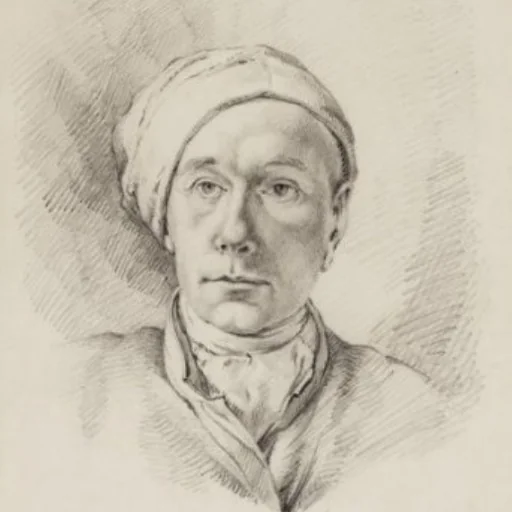
Jacob Cats (1741–1799) was a Dutch draughtsman who also etched and painted. He was born at Altona in 1741 as the son of a Mennonite bookseller who had to flee Amsterdam because of a controversial publication. The family…